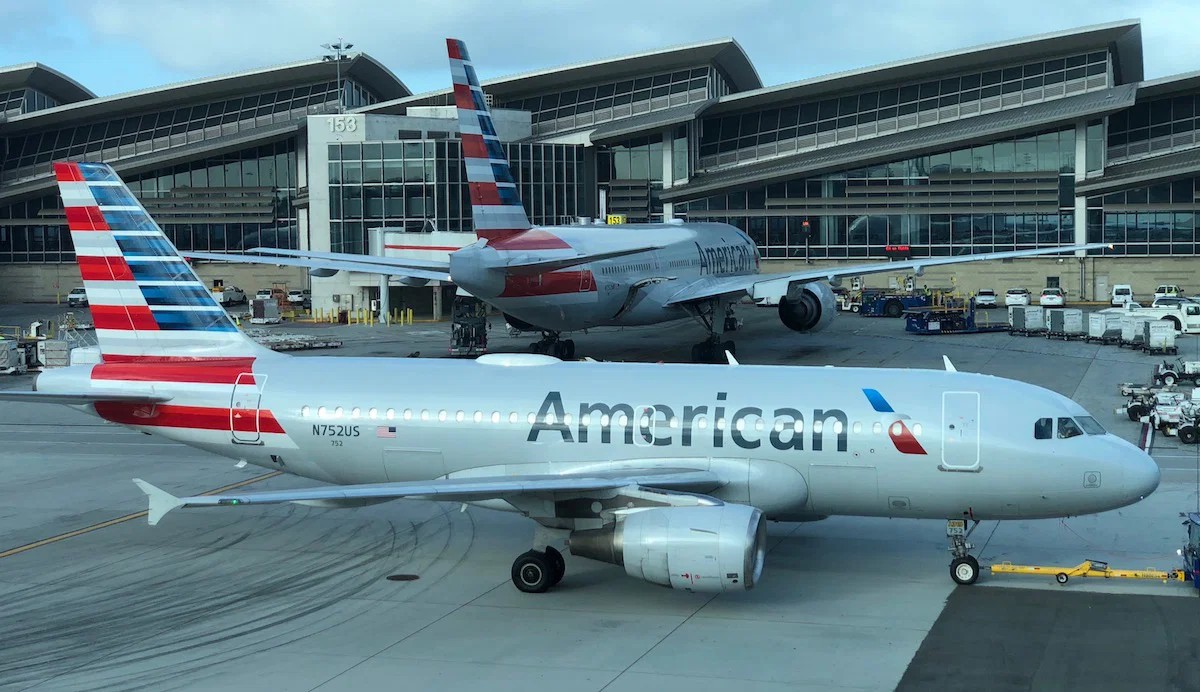
American Airlines is finally going to install free Starlink Wi-Fi.
In 2027.
Catch this part.
It won’t be on every plane. Only the Airbus fleet.
Boeing? Not so much. At least, not from SpaceX.
The Wi-Fi Wars Are Getting Personal
There’s a guy named Tim.
Tim writes a lot. He seems to believe Delta is winning the high-speed Wi-Fi race by a mile.
He argues Delta is the clear leader in “in-service” installations. That they have the better strategy.
He thinks American is just “playing catch up” on everything. Including connectivity.
He claims American only half-equipping their fleet is due to a lack of available bandwidth from Starlink.
“AA is just playing catch up like everything AA is doing.”
This is wrong.
It is wrong in ways that are almost funny if it weren’t so dense with incorrect facts.
First of all. American Airlines has already completed the mainline high-speed Wi-Fi installation across their entire fleet.
Yes.
Every mainline bird has it.
The Panasonic birds can stream. It isn’t as good as Starlink or Viasat. But it is high-speed. It works.
Delta? Still not done. Their 717s are stuck on Gogo. A dial-up era technology in a fiber optic world.
So when Tim says American is behind?
That isn’t just inaccurate.
It’s backwards.
The Bandwidth Lie
Tim claims Starlink can’t handle the bandwidth.
He suggests American is forced to leave out the Boeing planes because there simply isn’t enough signal in the sky.
If you look at the satellites already orbiting? You have to wonder what world he is reading from.
Let’s do some very generous, worst-case math.
American has about 1,580 mainline planes.
Average capacity is 143 passengers.
Assume 100% full load factor. Everyone streaming 4K video simultaneously.
That’s 225,000 users.
Is the internet overloaded?
No.
Why? Because satellites don’t all cover one tiny square mile in Atlanta. The constellation spreads out.
The load factor is rarely 100%. The planes aren’t all stacked on top of each other.
To believe a constellation of thousands of operational satellites is “full” while a non-operational Amazon constellation is somehow a “safe bet”?
It makes no sense.
Yet Delta is betting big on ViaSat again. And Amazon’s Kuiper.
ViaSat? The same satellite tech that has caused years of delays and poor global coverage for Delta.
Amazon isn’t even airborne yet.
Their business core isn’t connectivity.
SpaceX is proven. Delta is betting on a hope.
Who Is Actually Free?
Who offers free Wi-Fi across their entire global network?
United is planning it.
Delta hasn’t figured out how to give away free Wi-Fi on the planes that can actually support it.
American?
American was the first airline to finish rolling out high-speed Wi-Fi on every mainline plane.
American offers global Wi-Fi coverage.
Delta? Still chasing the ghosts of 717 limitations.
The Strategy Difference
Delta prides itself on “zigging” while others “zag”.
It has worked some of the time.
With wide-body aircraft.
They took more Airbus deliveries than all Boeing 787 orders for AA, Alaska, and United combined. That’s a win for procurement.
With Wi-Fi?
It looks like a lose.
Delta relies on multiple providers. Viasat, Hughes, Amazon.
Diversification is good.
Diversifying into unproven tech when a working, faster alternative exists? That is risk.
And American isn’t doing anything reckless with Starlink.
They are matching tech to hardware. Airbus gets Starlink.
Boeing planes? American will likely wait. Or find another provider.
Or fix the Boeing cabin architecture issues that make Starlink antennas difficult.
Tim calls American late to the party.
The truth?
American has free Wi-Fi. It is fast. It covers the globe.
Delta’s Wi-Fi is fragmented. Sometimes free. Often slow. And heavily reliant on satellite launches that have already disappointed.
Which strategy will pay off?
The proven one. Or the one waiting on a space launch that might not happen on time.
History is about to repeat itself.
Again.