Delta Air Lines has officially revealed the details of its next-generation Delta One business class product. This new suite is set to debut on the airline’s upcoming fleet of Airbus A350-1000 aircraft, marking a significant step in the ongoing premium cabin arms race among major U.S. carriers.
As American Airlines rolls out its “Flagship Suite” and United continues to enhance its “Polaris” product, Delta is positioning its new A350-1000 configuration as its most premium offering to date.
The New Hardware: Thompson Aero VantageNOVA
Delta will serve as the launch customer for the VantageNOVA seat, developed by Thompson Aero. While Delta currently uses the Vantage XL product on its A350-900s, this new iteration represents a major technological and comfort upgrade.
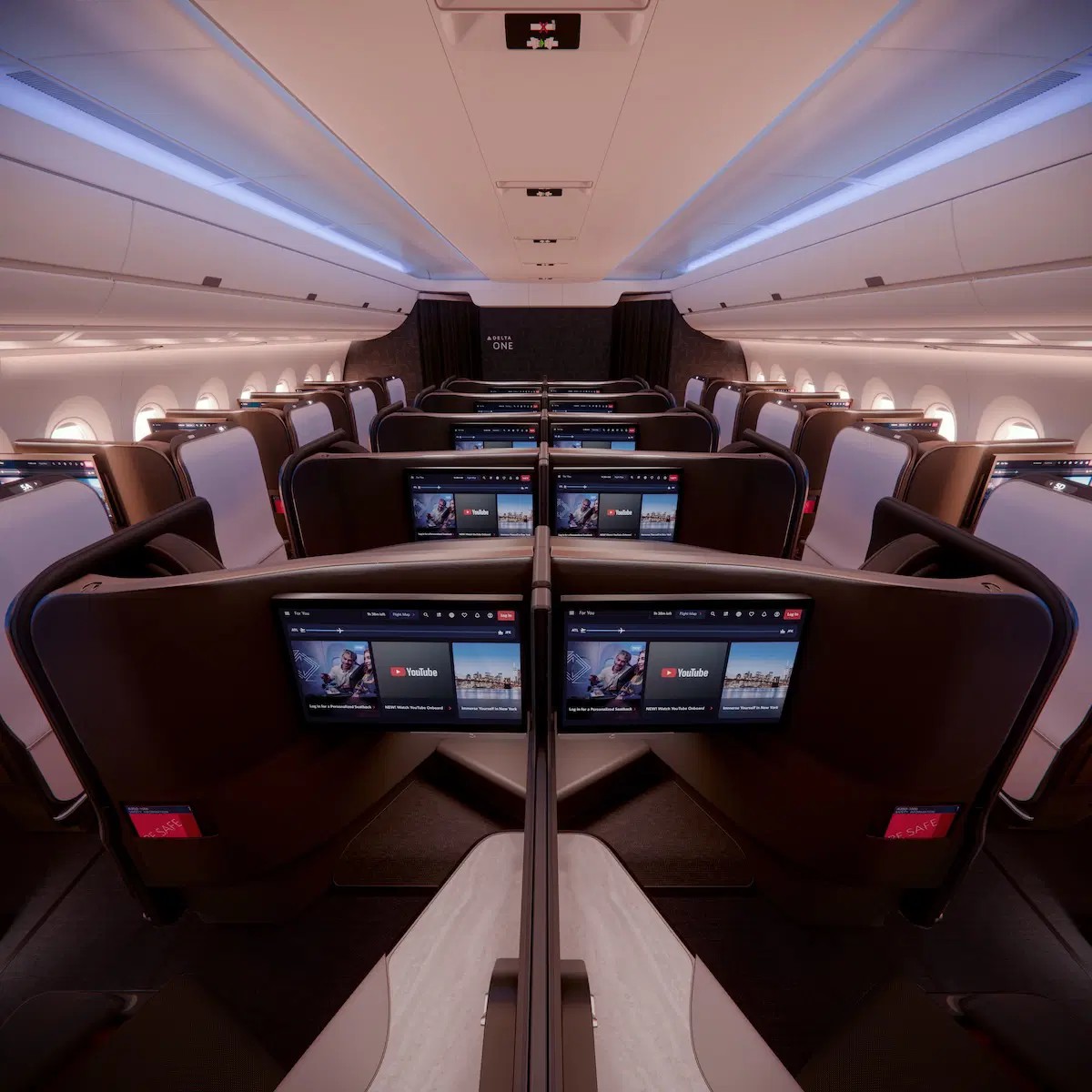
The new cabin configuration will feature a 1-2-1 layout utilizing a reverse herringbone design. This means window seats will face the side of the aircraft, while center seats will face inward toward the aisle, providing a sense of privacy and direct aisle access for all passengers.
Key Features of the Delta One Suite:
- Enhanced Comfort: The new bed is approximately 3 inches longer than the current Delta One product, reaching a length of nearly 80 inches. It also features a specialized pillow-top cushion over memory foam.
- Industry-Leading Tech: Each suite will be equipped with a 24-inch 4K OLED monitor —the largest currently offered by any U.S. airline—alongside Bluetooth connectivity, wireless charging, and USB-A/AC ports.
- Smart Storage: The design includes dedicated spaces for shoes, a phone tray under the armrest, and exposed storage areas to keep personal items accessible.
- Onboard Amenities: Passengers will have access to a dedicated snack bar located near the aircraft’s second set of doors for self-service refreshments.
Fleet Configuration and Capacity
The Airbus A350-1000 is set to become Delta’s flagship aircraft. The airline has ordered 20 of these models, which are expected to begin arriving in 2027.
The cabin will be highly optimized for premium travel, with roughly 50% of the total seats dedicated to premium classes. The total capacity of 314 seats is distributed as follows:
– 53 Business Class seats (Delta’s highest density for this class on a single aircraft)
– 48 Premium Economy seats
– 51 Extra Legroom Economy seats
– 162 Regular Economy seats
The Broader Industry Trend: Tech Over Space
Delta’s move highlights a shifting trend in long-haul aviation. As airlines reach the physical limits of how much space they can allocate to a single passenger without sacrificing profitability, the competition has moved from physical dimensions to digital experience and privacy.
The “battleground” for business class has shifted toward:
1. Privacy: The inclusion of sliding doors to create a “suite” feel.
2. Connectivity: High-definition screens, wireless charging, and seamless Bluetooth integration.
3. Efficiency: Using seat designs like the VantageNOVA that allow for high density without a perceived loss in luxury.
However, a challenge remains for airlines: the gap between announcement and availability. While the technology is impressive, the first aircraft won’t enter service for another three years, and because this specific seat design is difficult to retrofit, it may remain exclusive to the new A350-1000 fleet rather than being rolled out across Delta’s existing widebody aircraft.
Conclusion
Delta’s new Delta One product focuses on maximizing high-end technology and privacy within a highly efficient cabin layout. While it sets a new standard for in-flight entertainment, the true test will be how these suites perform in real-world long-haul service starting in 2027.