Venedik is not just another Italian city with a few canals. It is a place where water determines the rhythm of everyday life and every corner looks like a museum exhibit that forgot to close. People flock here for the architecture, art and sheer surrealism of the metropolis built on wood piles. There’s also the ominous, slightly melancholy fact that it is slowly sinking. This fragility seems to make the experience more urgent. You go because it’s nice. You go because you’re not sure how long it will be exactly the same.
This guide is aimed at travelers who want to escape the noise. No vague suggestions. Only the places that define the city. We’ve compiled a list of the most popular locations to make it easier for you to navigate the maze. If you are planning a trip, start here.
1. St. Mark’s Square (Piazza San Marco)
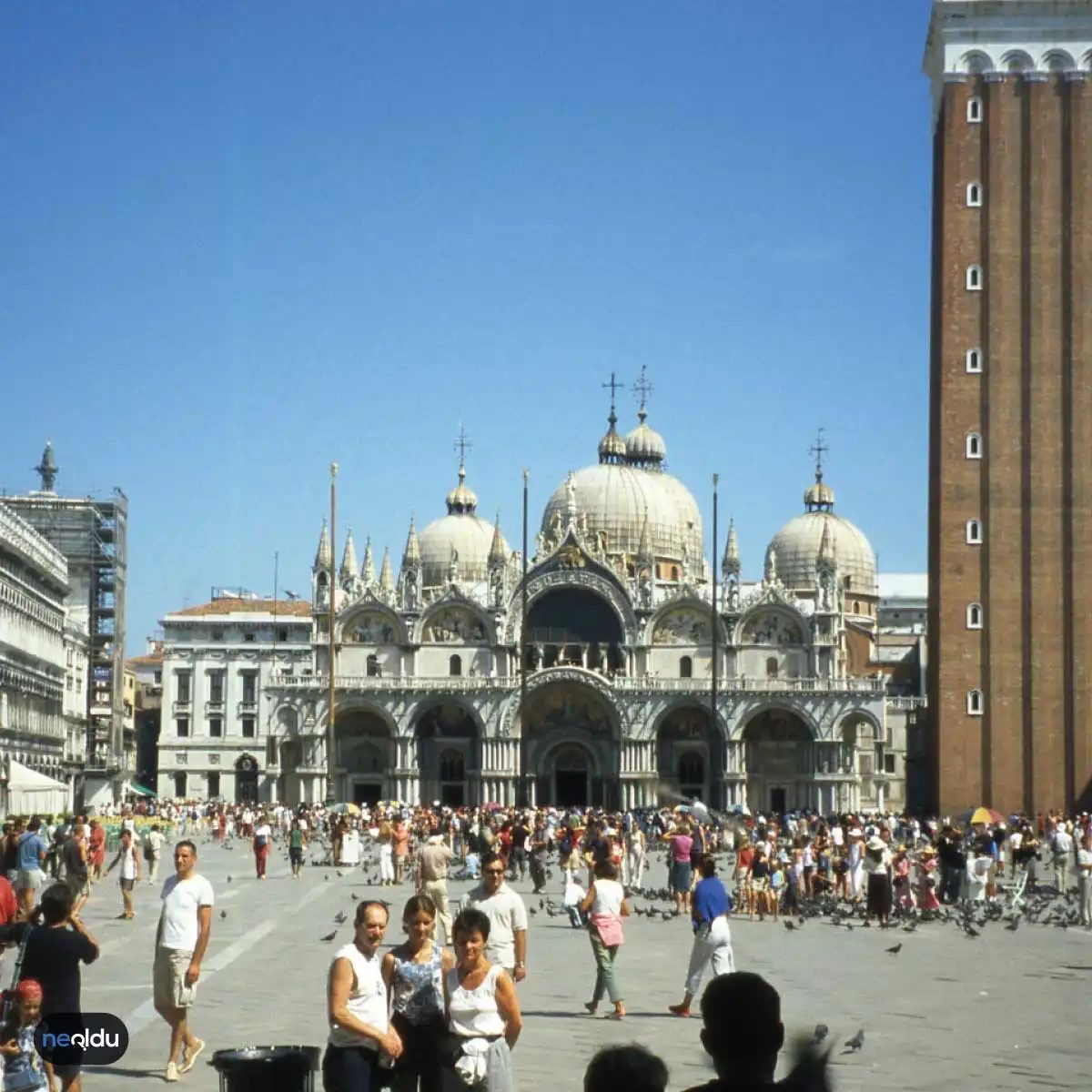
You can’t talk about Venedik without starting with concentration. St. Mark’s Square is less a public space than a huge open-air living room for tourists from all over the world. It’s overwhelming. It’s grand. This is where you need to be.
The square is framed on one side by two centuries-old cafes and on the other by the Basilica. The architecture here does not whisper; it screams. The Basilica of San Marco is a mosaic-clad Byzantine-style beast, imported stone and gold leaf that will blind you if you look up too long. Inside, the light hits the mosaics and transforms the ceiling into a glittering, chaotic narrative of saints and scenes.
Get there early. At 10 o’clock in the square there is a sea of selfie sticks and guided flags. Before the crowds arrive, stand in the center and look at the Campanile. It’s a brick tower that burned down and was rebuilt several times. It still stands. It looks at everything.
“The square is the stage. The buildings are the background. You are just an actor trying to find your mark.”
Logistics matter here. Unlike the rest of the city, the square is flat which is essentially a staircase over water. It’s the only place you can walk without avoiding a gondola or a puddle. Use that advantage. Plan your next move before the crowd swallows you up.
2. Doge’s Palace (Palazzo Ducale)
Right next to the square. If the Basilica is the spiritual heart of Venedik, the Doge’s Palace is its political brain. It is a Gothic masterpiece of white and pink marble, intricate carvings and soaring arches.
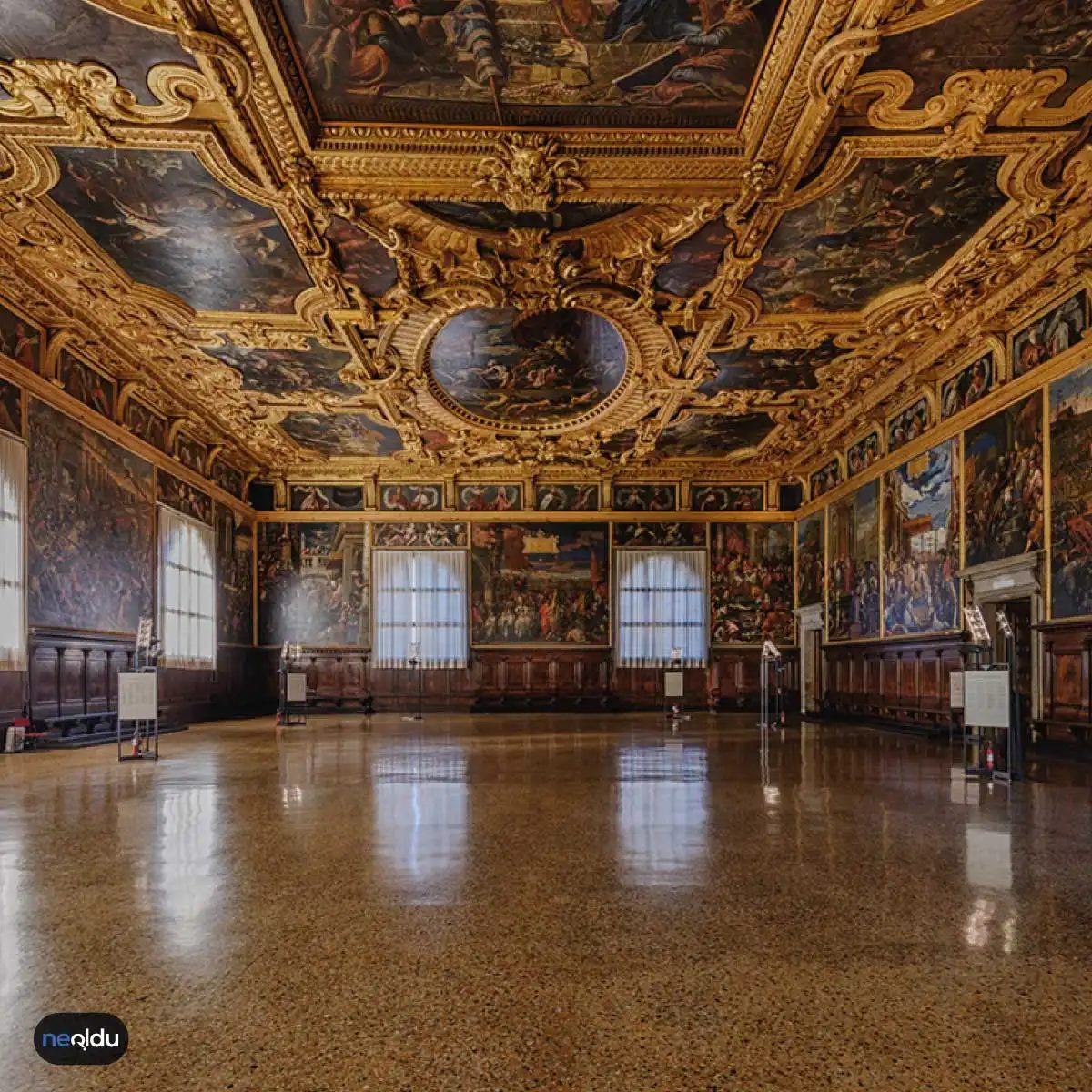
You go through it to get to the prisons, but you don’t just walk through it. You stop. The rooms are full of paintings by Titian, Tintoretto and Veronese. The ceiling of the great council hall is a massive canvas that depicts the power and splendor of Venedik. It’s propaganda, but it’s beautiful propaganda.
The Bridge of Sighs connects the palace to the new prisons. It is named after the prisoners who sighed through the stone windows when they saw the last glimpse of beautiful Venedik. Don’t just take a photo from the outside. Go inside. The contrast between the opulent palace and the stark, damp
Grand Canal: Venice’s waterfront backbone
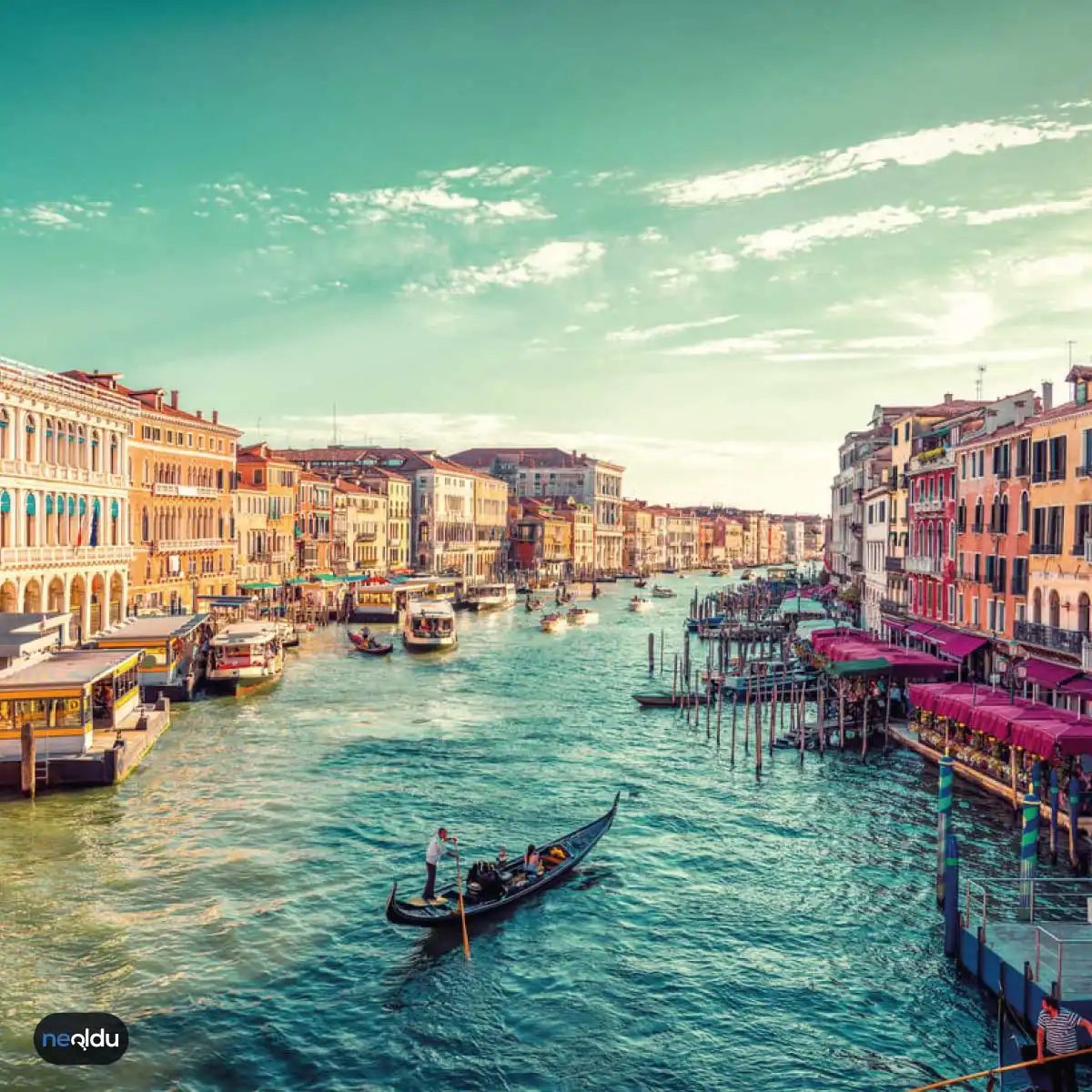
If St. Mark’s Square is the heart of Venice, the Grand Canal is its arteries. It is the main waterway that runs through the city in an inverted S shape, and for many travelers it is the first thing they see when they arrive by boat. You can’t miss it. It is wide enough to accommodate gondolas, water taxis and crowded vaporettos (public water buses) at the same time.
The canal is lined with centuries-old palaces, each of which symbolizes Venice’s wealth and power as a maritime superpower. Palazzo Ducale, Palazzo Grassi and Ca’ d’Oro are just some of the architectural giants that overlook the water. However, the real magic lies not only in finding these buildings, but in moving through them.
Navigation on the Grand Canal
The line 1 vaporetto along the Grand Canal is probably the cheapest tour you can book. It’s not just about transportation; It’s a guided visual history lesson. The journey from Santa Lucia station to the Rialto Bridge and beyond takes about 45 minutes. You will pass three bridges, each with its own story. The Rialto Bridge is the most famous, but the Ponte dell’Accademia offers the most photographed view of the canal itself.
Of course there are water taxis. They are fast, private and incredibly expensive. A short trip across the channel can cost €80 or more. Vaporetto is slower, but you can enjoy the atmosphere. You can buy a one-time ticket for around €9.50 or choose a multi-day ticket if you want to zigzag around the lagoon.
Why the channel is important
The Grand Canal is not just a beautiful backdrop. It was the engine of the Venetian economy for centuries. Eastern goods—spices, silk, precious metals—floated along this waterway to the Rialto market. Today, it is still a working channel, but the rhythm has changed. The hustle and bustle of the trade has settled into a calmer pace, dominated by tourists as well as locals commuting.
A walk along the edges of the canal, especially on the side of Cannaregio and Dorsoduro, reveals a different Venice. It is less crowded than near St. Mark’s Church and the light hits the buildings differently. Try to visit early in the morning or late in the afternoon. The crowds thin out, the water calms down and you catch a glimpse of the quiet, enduring beauty of the city.
What you should pay attention to
Just don’t look at the palaces. Pay attention to details. The mixture of Gothic and Renaissance styles tells the story of the evolving tastes of Venice. Notice the arched windows, stone balconies and weathered facades that bear the scars of floods and time. Ca’ d’Oro, or “golden house”, got its name from the gold leaf that once decorated its exterior. It’s now a gallery, but the exterior alone is worth a visit.
The Rialto Bridge is a busy place. If you cross it, be prepared to be squeezed. Locals move with purpose. Tourists stop to take photos. It’s a clash of rhythms, but that’s also part of it
Navigation on the Grand Canal
The city’s pulse beats along the Grand Canal, a winding waterway that stretches for about 4 kilometers through the heart of Venice. It’s not just a charming setting; It’s the main artery here. You’ll see water taxis whizzing by and the ubiquitous Vaporettes – those orange public water buses – going up and down the route.
A gondola ride may be a cliché, but it’s also a legitimate way to see the city’s facades up close. However, for a more practical approach, you should take the vaporetto. It’s cheaper, faster and allows you to enjoy the splendor of the architecture without the romantic slowness of a gondola rider’s song. If you want to understand how Venice works, you have to be on the water. The canal is lined with centuries-old palaces, the lower levels of which are often damp or stained by high tides, showing that this city is always negotiating with the sea.
3. San Marco Basilica
Stepping into St. Mark’s Square feels less like stepping into a square and more like stumbling into a museum that never closes. In the center is the Basilica of San Marco, a structure so steeped in gold leaf and history that it almost overwhelms the senses. It’s not just the church; It is a testament to Venetian power during the heyday of the Republic.
The exterior looks Byzantine, with five huge domes dominating the skyline, but the interior is a kaleidoscope of mosaics covering every inch of wall and ceiling. The Basilica di San Marco is famous for its gilded bronze doors known as the Porta della Mandorla, but the Pala d’Oro, a golden altarpiece with hundreds of jewels, really demands attention.
Visiting here requires strategy. Entrance to the main basilica is free, but wait in line. In high season, queues can last an hour or longer. To avoid the wait, book a timed entry online or go early in the morning when the doors open. If you have the budget and stomach for stairs, climb St. Mark’s Terrace and enjoy the view of the square that highlights the dome of the basilica. It’s steep, the steps are worn smooth by centuries-old feet, but the views of the lagoon and the bell tower are worth the sweat.
Inside, the atmosphere changes. Light filters through the stained glass windows and reflects off the gold mosaics, creating a space that feels both ancient and intensely alive. The Lion of Saint Mark, a winged lion statue, is the symbol of the city itself and can be found everywhere from the Basilica to the entrance to the Arsenale. It’s a reminder that Venice wasn’t just a collection of islands; it was a maritime empire.
The basilica also has a Treasury where relics such as the alleged skull of St. Mark are kept. The entrance fee for the treasury is modest, but is often included in the museum’s combination tickets. If you are interested in the religious and political connections of Venetian history, this is a must see. The artifacts here tell the story of a city that trades not only in goods but also in holy power, acquiring relics from the plunder of the Fourth Crusade.
The gilded heart of Venice
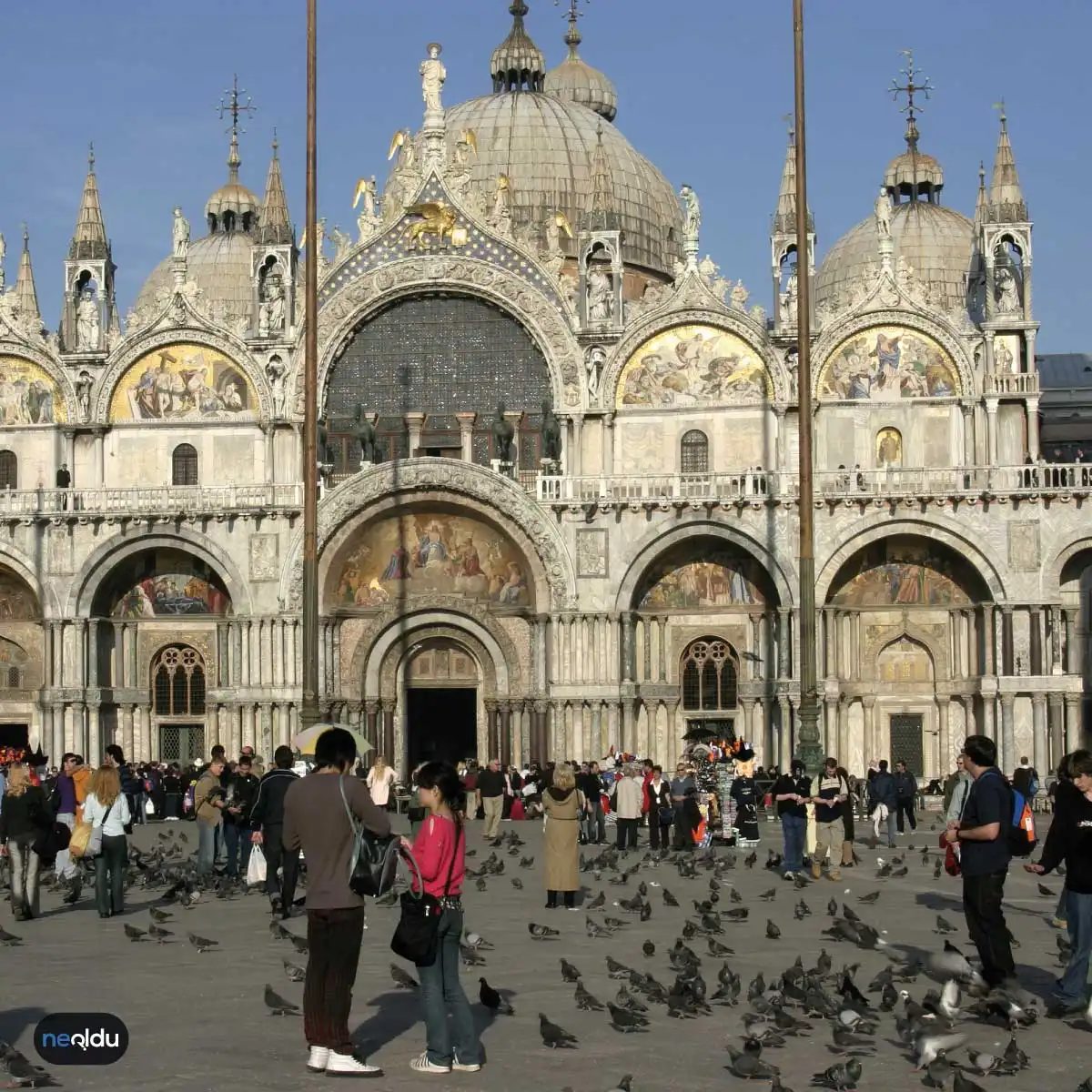
You can’t walk through Venice without coming across San Marco. It’s not just a landmark; It is the beating heart of the city and is located right in the middle of St. Mark’s Square. The basilica has stood here since the 9th century and has observed the rise and fall of the lagoon for over a thousand years. It’s tall – 43 meters from the ground to the main dome – and it screams power.
The architecture is a chaotic, beautiful mix of Gothic and Roman styles, which is why it looks so out of place compared to the rest of Europe. It may be the city’s main cathedral, but the real draw is the gold. Almost every inch of the interior is covered with it. The mosaics are so dense that they seem to vibrate. There is a reason to call it the “golden church”.
And those four horses on top? Yes, these are stolen goods. They were originally brought from Constantinople (present-day Istanbul) during the Fourth Crusade in 1204 and placed there to show the dominance of Venice. They were moved inside the museum to protect them from the elements, but they remain the most famous bronze statues in Italy. If you look up, you can see the spoils of war.
It’s intimidating. The size of the place forces you to slow down. You can’t rush a building with so much history in its mortar.
Crossing the Rialto Bridge
Just a short walk from the basilica, the Grand Canal cuts through the city like a dark vein. The Rialto Bridge is the only one of the four bridges that has remained in place since 1591. Before that, there were wooden pontoon bridges that collapsed or burned. The stone version we see today was designed by Antonio da Ponte.
It’s steep. If you’re going to cross, be prepared. The bridge is narrow and has shops on both sides which means it is crowded. Constantly. Tourists, locals, traders and water taxis fight for space here. It’s chaotic, but that’s the point. This was the commercial center of Venice for centuries. Spice merchants, silk merchants, bankers—they all did business here.
The view from the top is the best in town. You look out onto the Rialto Market and towards the Bacino di San Marco. It’s the perfect place to watch the gondolas and vaporetti (water buses) navigate the canal. It’s touristy, sure. But it is also historic. The stone arches have lasted four hundred years. That’s more than most modern buildings can claim.
Why do people cross it? To get from the Rialto Market to the San Polo district. Or take a photo with the Grand Canal in the background. Either way, you’re on the same path that traders have traveled for centuries. The gold in the jewelry shops on the bridge are not just decorations. It’s a reminder of why this city exists in the first place. Trade. Wealth. Power.
The bridge doesn’t care about your itinerary. It just stands there, wet with fog, bearing the weight of history. And you’re just another pedestrian trying not to slip on worn stone steps.
Rialto Bridge: more than just photography
Forget the crowded glass bridges for a moment. Go to the Rialto. It’s not just an intersection; It’s the artery of Venice.
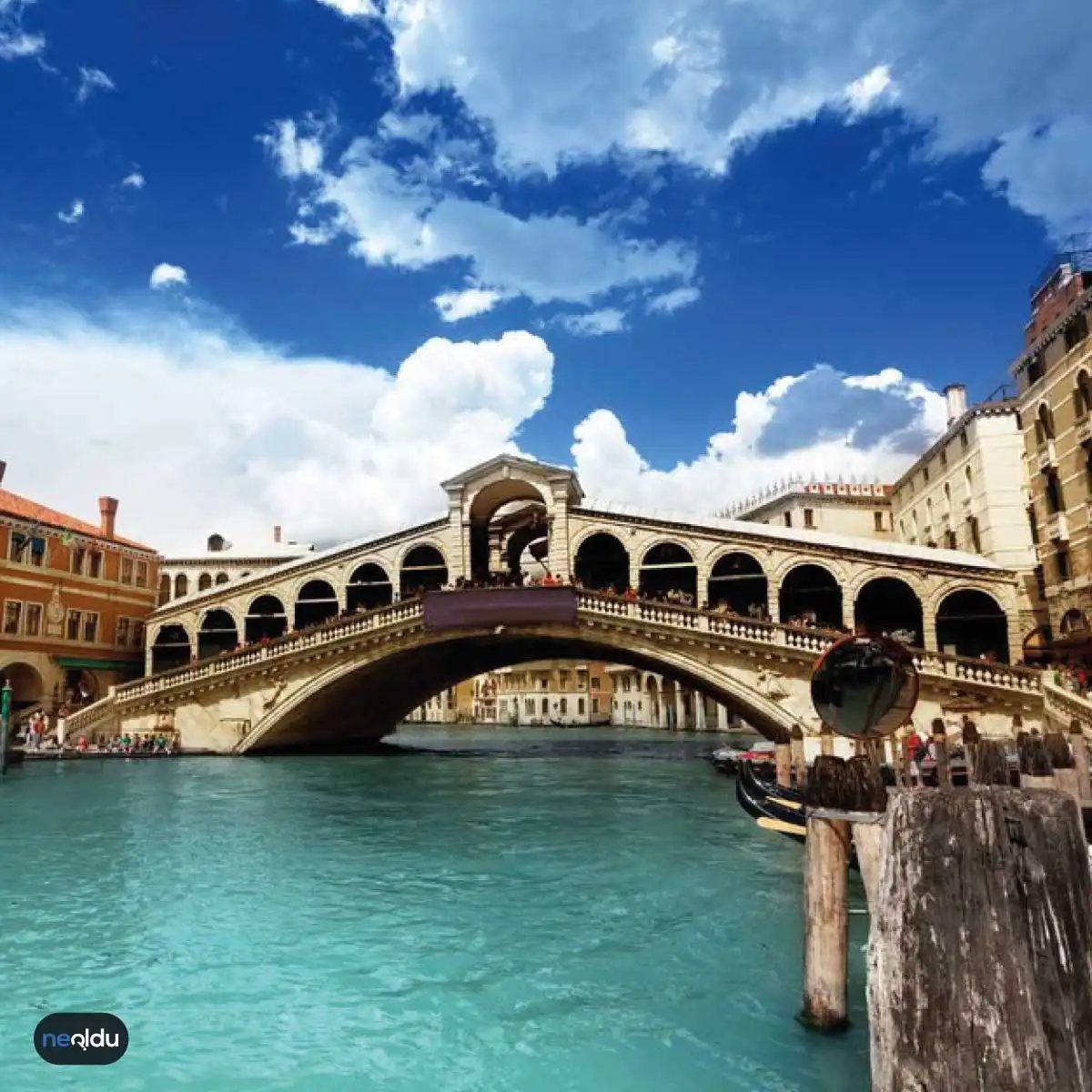
This stone arch was built in 1591 to replace an old wooden structure that repeatedly collapsed or burned. It’s a marvel of engineering. It stretches 48 meters across the Grand Canal. You can feel the weight. Thousands of people walk this path every day between sunglass sellers and tourists looking for the perfect Instagram angle.
It connects the two sides of the city like a thumb. The arch rises high above the water. Boats pass below, their horns echoing off the damp stone. If you stand still long enough, you won’t see it as a bridge anymore. You see it as a stage. At sunset, the light falls on the arch in a different way. It turns the whole channel into gold.
Basilica Frari Santa Maria Gloriosa
Cross the bridge and head inland. The noise subsides. You will end up in Frari or Santa Maria Gloriosa dei Frari.
This is not a small chapel. It is a huge Gothic church. Franciscan monks built it in the 14th century. The facade is made of ordinary red brick. Inside, a cave-like space full of history opens up. The acoustics here are strange. A whisper reaches the back row.
Why go? For the sake of art. Venice is full of small churches with only frescoes. The Frari has the real heavy hitters.
Look up at the altar. Tintoretto’s Paradise hangs there. It is the largest oil painting in the world. The canvas is huge. You have to take a step back to see the whole thing. The figures spin in a chaotic, divine storm. It overwhelms you. The scale is almost ridiculous.
Titian’s tomb is nearby. The painter himself is buried here. It’s a quiet moment in a noisy city. You can stand next to his marble sarcophagus and wonder how he painted light before anyone could capture it.
There is a ticket counter outside. It costs about 5 euros. Cash is safer, although cards are now accepted. They open at 9:30 AM. Go early. Light then streams in from tall windows. It hits the gold leaf on the altars. Dust particles dance in the rays. It is the best time to visit.
Don’t rush. There are other works by Bellini and Titian in the sacristy. Here they are quieter. Less crowded. You can actually look at a face painted five hundred years ago without someone elbowing you in the ribs.
The clock tower outside is closed for renovations, so you won’t be able to enjoy that panoramic view. But you don’t need it. The Frari is its own elevation.
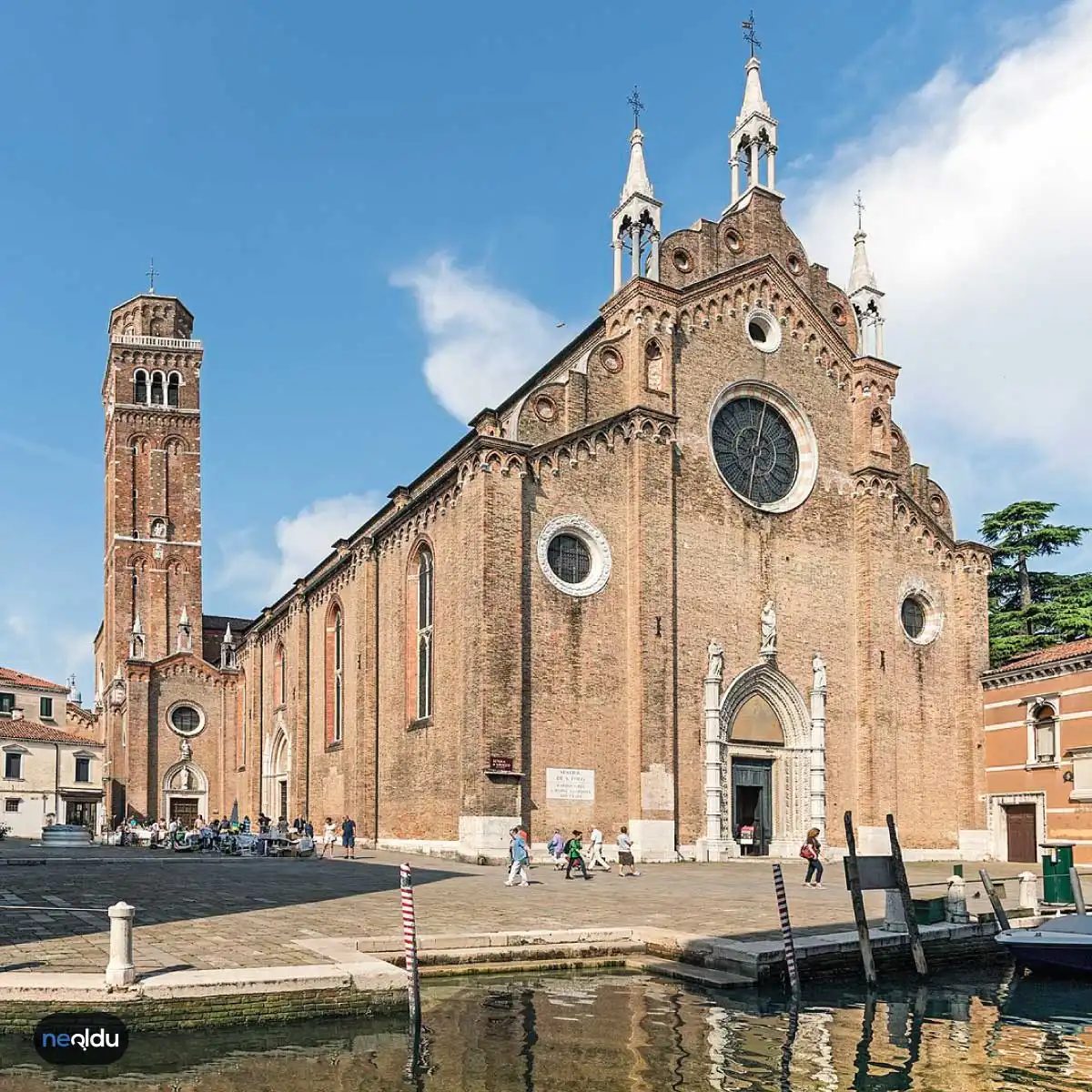
The construction of the Basilica of Santa Maria Gloriosa dei Frari only started in the 13th century. Its completion took exactly 100 years. Delays? Many reasons: money, politics, maybe just bad weather. Today it is considered one of the largest and most important religious buildings in Venice.
Italian Gothic architecture defines its structure. But the real attraction is not the stone. It’s art. Especially Titian’s Assunta. This huge painting hangs on the high altar. That’s why people flock here. The church also has the second largest bell tower in the city. And yes, there is an entrance fee. It’s not free.
6. Palazzo Ducale
Doge’s Palace. You can’t miss it. It is right by the water, next to St. Mark’s square. This is not just a palace. It is a political machine set in stone. The Venetian Gothic style dominates the facade. White and pink marble create a lace effect. It looks delicate. That wasn’t it. Power was used here. And where the secrets were kept.
Visiting the Doge’s Palace means walking through centuries of history. They cross the Bridge of Sighs. It connects the palace to the prisons. The prisoners walked over this bridge. They saw the lagoon for the last time. The name comes from sighs. Not romantic. Heavy ones.
Inside, the size is overwhelming. The large council hall took up two full floors. Tintoretto and Veronese painted the walls. Tintoretto’s Paradise is the world’s largest oil painting. It covers the whole wall. You need to look up. And down. And around. The ceilings are equally detailed. Gold leaf everywhere. It should be blinding. To intimidate.
You will also see the torture chamber. It’s not for the faint of heart. Iron Maidens. Strappado. The physical reality of Venetian law. It’s a stark contrast to the opulence upstairs. One moment you are admiring the painting. Next, read about broken bones.
How long should you stay? Allow two to three hours. Queues can be long. Buy tickets online. Skip the line. It’s worth it. The palace is now a museum. But it still feels like a living, breathing creature. Ceremonies of the Duke. Election. Plot.
Which part is the most worth seeing? Council Chamber. View from the windows. Bridge. Don’t rush. Venice rewards slowness. Especially here.
The palace overlooks the pool. Boats pass by. Life goes on. You stand there. Looking at marble. Thinking about time. It’s heavy.
7. Basilica of San Giorgio Maggiore
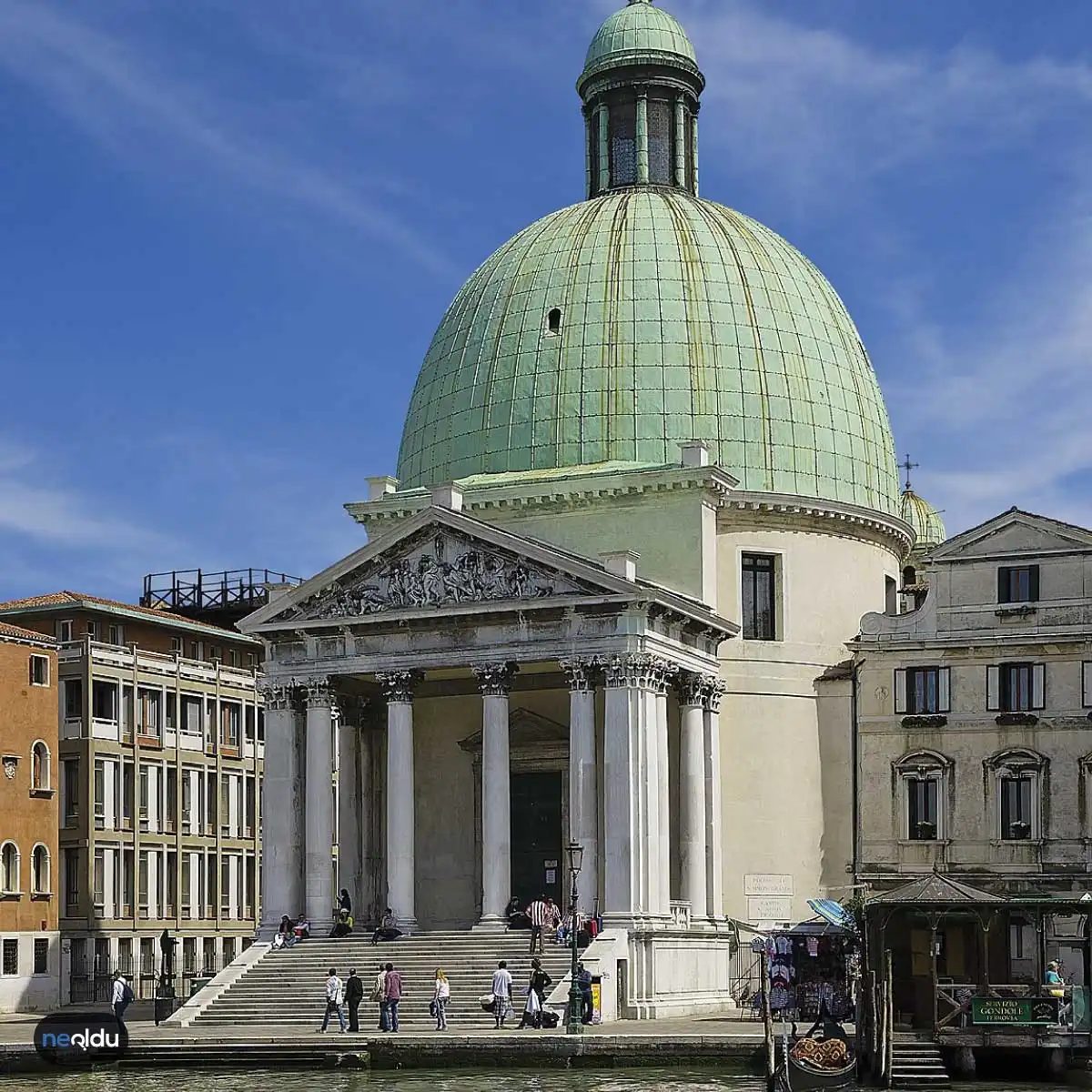
Cross the water. Not only the views, but the approach offers one of the best in Venice: a direct, unobstructed line to the Doge’s Palace and the Bell Tower. You take the vaporetto to Giudecca Isola. The trip takes about twelve minutes. It’s cheap. It is part of the public transport pass.
The destination is San Giorgio Maggiore. It is located on its own island, separated from the historic center by a narrow channel. This distance is important. It forces you to stop. Escape the crowds of St. Mark’s Square. To breathe.
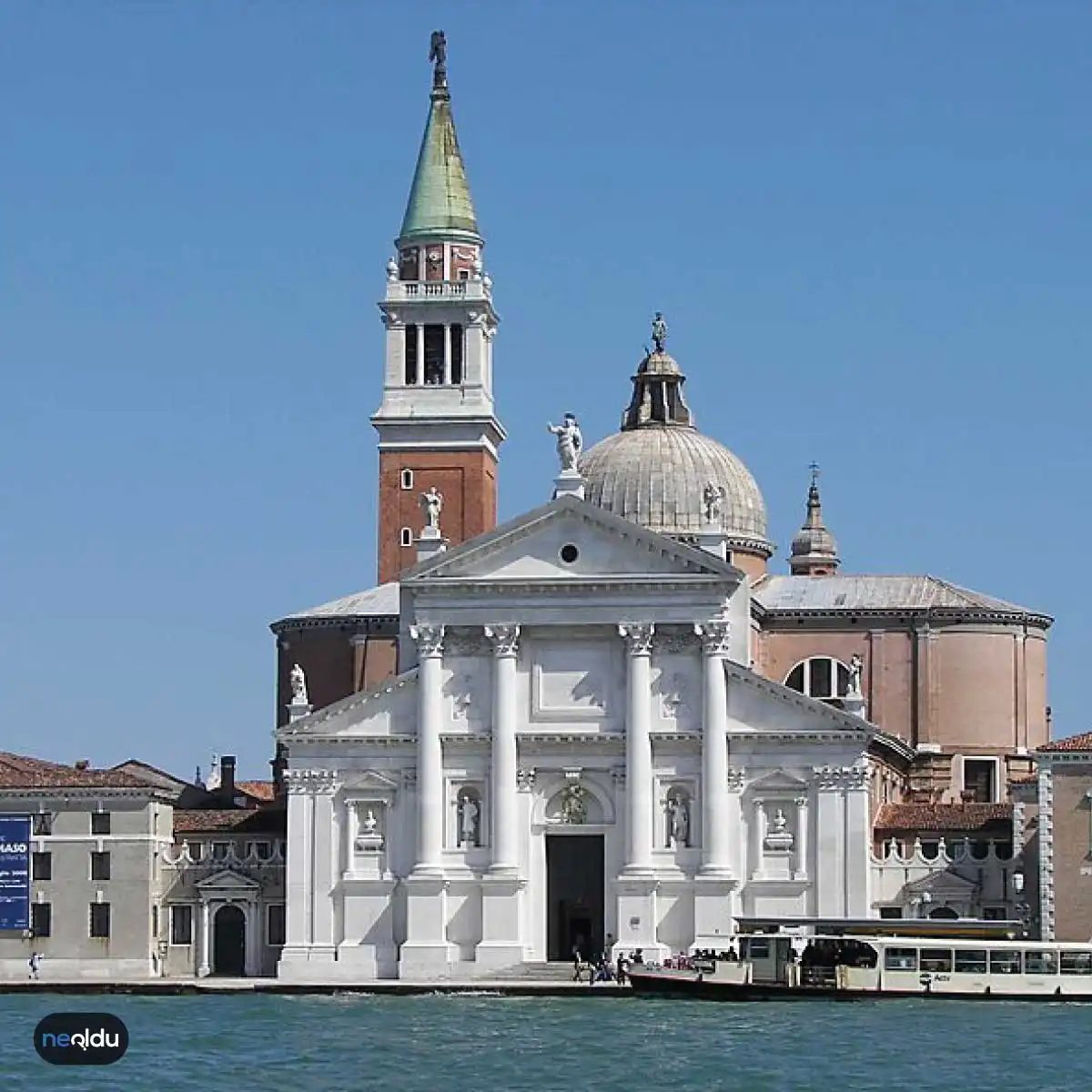
This church is not just another basilica. It is Palladio’s masterpiece. It was designed by Andrea Palladio in the 16th century, combining Renaissance symmetry with distinct Venetian lightness. The facade is made of white Istrian stone. It stands out clearly against the blue sky. Simply. Elegant. No excessive decoration. Just geometry and proportions.
“San Giorgio Maggiore offers a typical Venetian postcard view: the facade of the basilica is reflected in the lagoon and is framed by the campanile designed by Jacopo Sansovino.”
Climb the Campanile. It is separate from the church. You can take the elevator or walk over 200 steps if you’re stubborn. The top offers a 360-degree panoramic view. You can see the Venetian grid. You can see the lagoon stretching to the horizon. In the fog you can see the islands of Murano and Burano. It’s the best vantage point in town. Period.
Look up in the church. The interior is spacious. Light colors. High ceilings. On the altar is Tintoretto’s painting: The Last Supper. It’s huge. It rules the room. The colors are deep, almost violent and contrast with the calm architecture. Tintoretto did not appreciate conventions. He painted the scene with dramatic perspective, with the table receding seemingly infinitely.
Why go here when St. Mark’s Church is right there?
- Scale : The church is smaller, quieter. You can actually hear your own thoughts.
- View : The campanile ride is better than St. Mark’s Square in terms of panorama.
- Architecture : Palladio’s work is a balanced study. St. Mark’s is Byzantine overload. Both are worth seeing, but for different reasons.
Practical tips. Vaporetto line 1 or 2 stops here. Check the schedule. boats run frequently during the day, but thin out in the evenings. Entrance to the church is free. A Campanile ticket costs around 8 euros. Buy it online if you come here during high season (summer, October, April). Lines form quickly.
Spend twenty minutes here. Walk around the perimeter. The water ripples at the foot of the island. It is a reminder of Venice’s fragility. Its beauty. Its uncertainty.
Then go back. As the sun sets, the light on the water changes. The white stone of the basilica glows golden. For a moment, the whole city seems to be floating. Not on land. But in the water.
San Giorgio Maggiore: The View Worth the Trek
Leave the crowds of the Grand Canal behind for a moment. Cross the water to the small island of San Giorgio Maggiore. The church located there, completed in 1610, is a masterpiece of Renaissance architecture. It shares its name with the island it is on and is honestly the best part of the visit.
You don’t just look at a building. You are looking from the building.
The clock tower is a real sight. Climbing to the top offers one of Venice’s most famous vantage points. You get a full panorama of the city, unobstructed by the narrow streets below or water traffic. Photographers love this place. From there, the light falls into the lagoon in a different way. Long shadows stretch across the water. It’s the kind of view that makes you stop for five minutes and forget about your travel plans.
The church itself is simple and beautiful. White stone. Clear lines. Compared to the chaotic energy of St. Mark’s Square, it feels peaceful. If you want to understand Venetian design without the tourist crowds, this is the place.
Bridge of Sighs
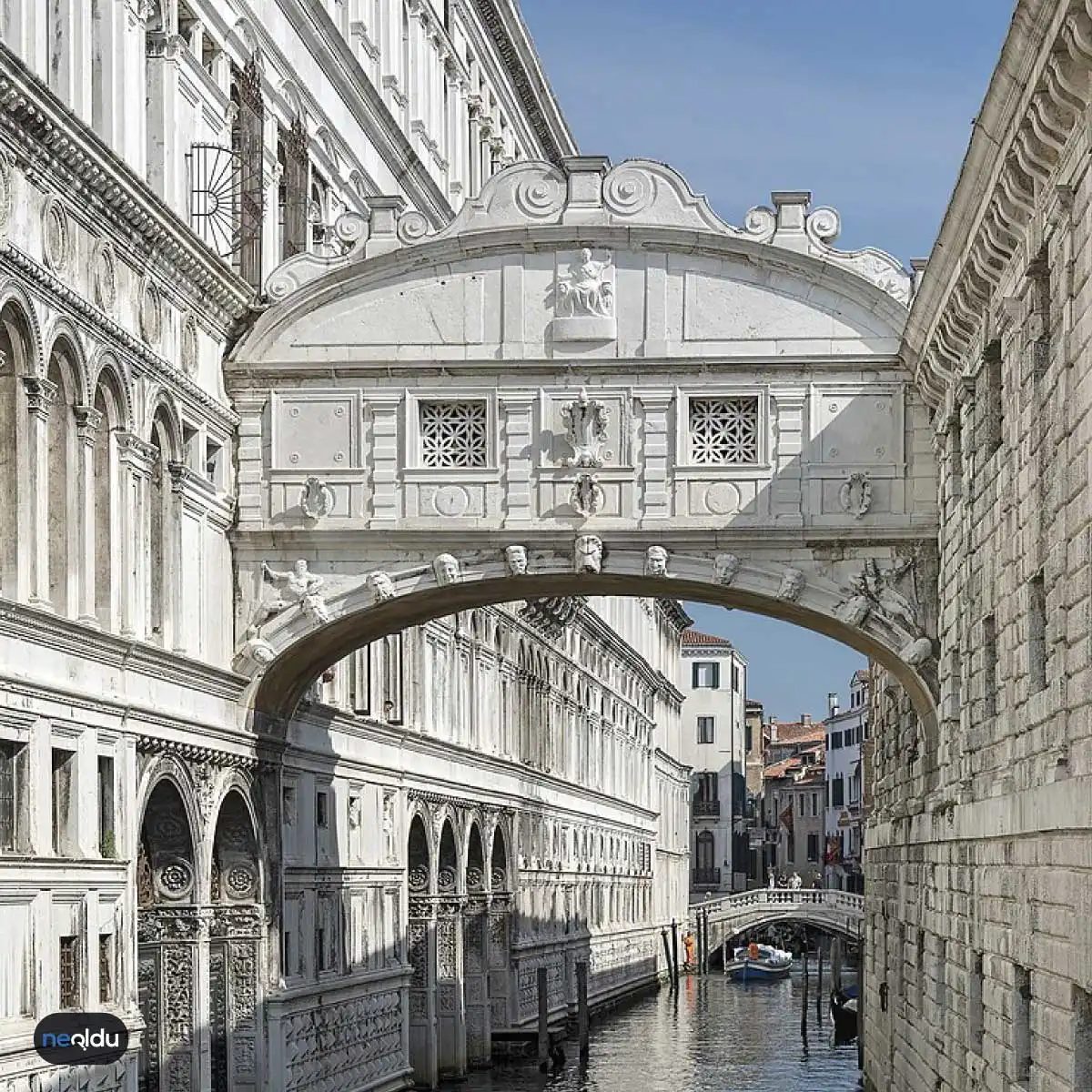
Directly opposite the Doge’s Palace is the Bridge of Sighs. It is made of white limestone. It connects the palace to the old prisons. The name comes from the sighs of the prisoners who saw the sky for the last time when crossing.
Looks pretty innocent now. Closed windows. Stone arches. But here the story is heavy. You will see the cell from which Casanova famously escaped. The interrogation rooms can be seen. The palace itself is a mixture of Gothic and Renaissance styles. It was the seat of power of the Venetian Republic. Today it is a museum.
A visit to the Doge’s Palace is a must. You will walk through rooms where political decisions changed the course of European history. You cross the bridge. You can see the prison cells. It’s a short walk, but it covers centuries of intrigue.
Book tickets in advance. Queues can be long, especially in summer. If you go early in the morning, you might have the place to yourself. The light coming from the prison windows is dramatic. The view from the bridge is limited, but you can see the lagoon from the small windows. It is enough to understand why the prisoners sighed.
Plan your move
San Giorgio Maggiore is easy to get to. Take the vaporetto from Saint Mark’s Square. Line 2 or Line 3 stops directly there. The trip takes about five minutes. It’s cheap. It is scenic. It’s the best way to see the city from the water.
You can get to the Bridge of Sighs with a Doge’s Palace ticket. A combination pass often includes access to other museums. Check prices online. They change according to the season.
Bring your camera. Bring a lens that handles low light well. The interiors are dark. The outside light is bright. The contrast is sharp.
Venice is small. But it feels infinite when you look closely. Churches, bridges, canals. They tell a story. All you have to do is listen.
9. Murano
If Venice is romance, Murano is fire.
The islands, which are often reached by short vaporetto rides from the mainland, feel like another world. The air here smells different. More hot glass and intense labor than salt water and rot. This is the historic center of Venetian glassmaking, known for centuries of strict state protection and dangerous alchemy.
Why go? To see the craft, not just buy the craft.
Of course, there are also modern tourist traps. Everywhere there are shops selling cheap and colorful souvenirs made in factories. Ignore them. Instead, look for open studios where maestri (masters) work. The heat of the oven hits you before you see the light.
Which furnaces are worth watching?
Three major schools define the island’s identity today.
- Venini: The most famous name. Their showroom in Fondamenta Manin is a museum of design history. Although it is polished, commercial and expensive, you can see the blowing technique. Helps to understand the development of forms.
- Barovier & Toso: One of the oldest family-owned studios. They used murrine (multicolored glass canes) and lattimo (milky glass). This process is slower and more careful. The glass is softer and looks almost organic.
- Paolo Venini: Don’t confuse the brand with the man. His legacy is the vetro di Murano we know today. The showroom is a more intimate atmosphere, more like a serious atelier than a gallery.
How much does it cost?
You don’t need a ticket to walk down the street. The glass itself is a where the price tags hurt. A small paperweight? 50-100 euros. A lamp? 300-800. Important works of art? Several thousand.
“Glass is liquid light. It requires respect and a steady hand.”
It’s not just marketing copy. Pay attention to the artisans. They move with frightening precision. If it slips once, the suction will be uneven and the workpiece will fall. This explains why Murano glass is so expensive. You don’t have to pay for silica or soda ash. The price you pay is 300 years of accumulated skill, passed down from father to son and protected like state secrets.
When to visit?
Avoid noon in August. The heat inside the workshops has become unbearable. Come late afternoon. The light is good for photography and the workers are usually finishing their main blows for the day. You will see cooling racks, annealing ovens and piles of finished products waiting for inspection.
What to look for?
Ask for avventurina. This glass has small metallic inclusions that shine like starlight. This is the classic Murano look. Or look for reticello, a fine mesh pattern that looks like woven lace. Both are technically difficult. Both are proof of the artist’s skill.
Skip the gondola ride. Skip the crowded Rialto Market for now. Stroll along Murano’s peaceful canals. The silence here is heavier. The history is heavier. Glass is fragile, but the industry survived empires falling
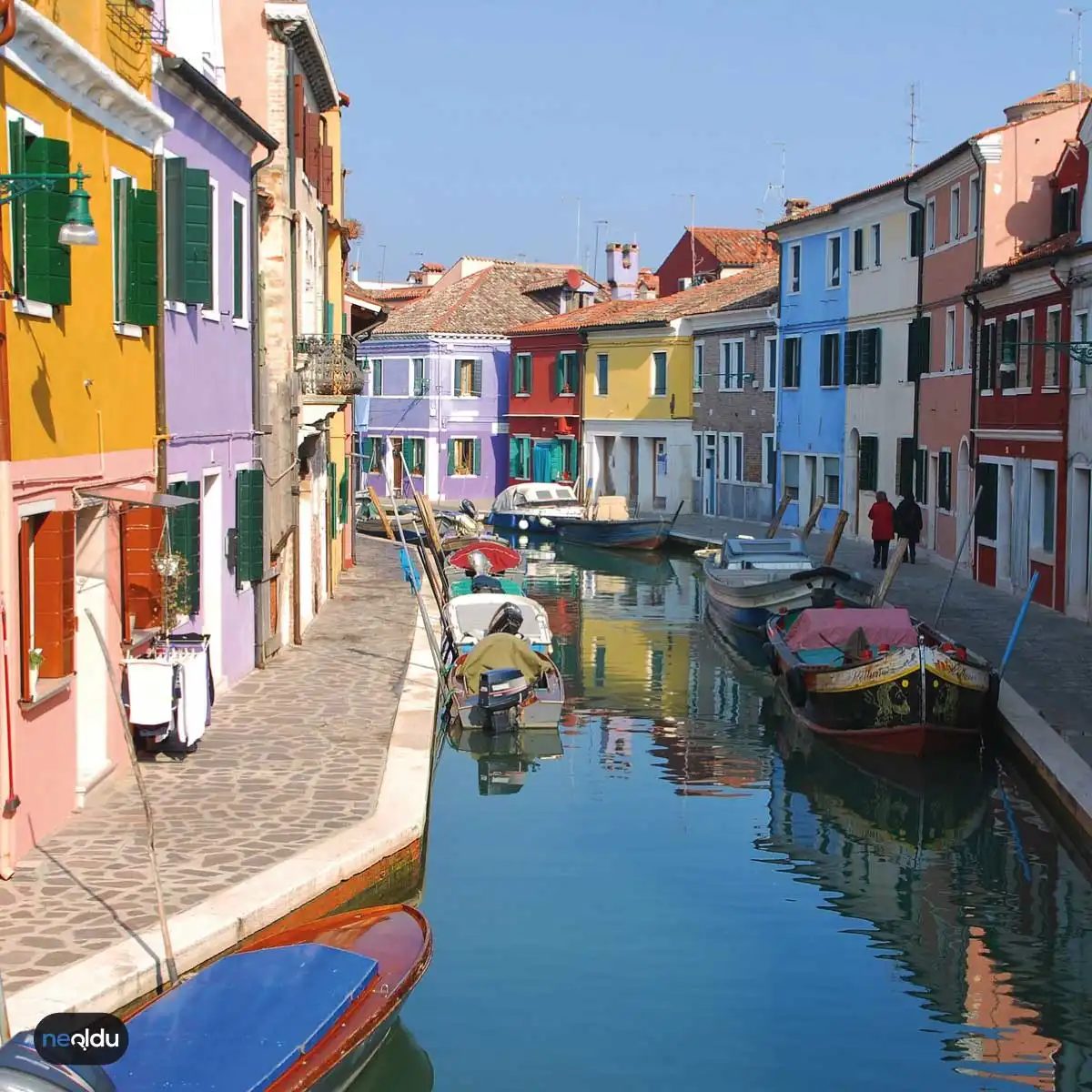
Murano is not just a stop on a water bus; it is a lesson in survival. For centuries, Venice’s glassmakers were kept on this small island, isolated by design. The Venetian Republic feared they would take their secrets to rival cities and flee. So they locked them in. You can still feel that history in the air here, thick with heat and the clink of metal tools against molten silica.
The island is famous for two things: the glass and the painted houses. The homes are bright, almost garish, splashes of yellow, blue, and pink against the gray canal water. They look like they were designed by a child with an oversupply of crayons. It is charming. It is also practical, making the narrow streets easy to navigate when the fog rolls in.
The Glass Experience
You do not just look at glass in Murano. You watch it being born.
The major factories—Bovetti, Barovier & Toso, Venini—have showrooms. You walk in, you look at the vases, the chandeliers, the tiny figurines that look like they are frozen in a dance. Prices range from a few euros for a small bead to tens of thousands for a signed masterpiece.
But the real draw is the demo. Most shops let you sit and watch a master work. He pulls a gather of glowing orange glass from the furnace. He blows into a pipe. He rolls it on a table. He shapes it with heavy wooden blocks. It is mesmerizing. It is also dangerous. One slip and the heat can burn you. The masters do not flinch.
If you care about the craft, skip the big souvenir shops near the vaporetto stop. Walk further inland. The smaller workshops are less touristy, more focused on the art than the sale. You might find a young artist blowing a simple bowl. It will cost less than a hotel breakfast. It will also be unique.
When to Go
Summer is crowded. The vaporetto lines are packed with groups following flags. The heat in the glass furnaces must be unbearable.
Go in late autumn or early spring. The light is softer. The streets are quieter. You can actually talk to the artisans. You can ask why they use gold in the glass (they add it for color, not just value). You can ask how they make the “millefiori” pattern (it is literally a thousand flowers, created by fusing rods of colored glass).
The island is small. You can walk it in an hour. But if you only look at the glass, you miss the rest. Look at the canals. Look at the way the light hits the water. Look at the silence between the tourists.
Beyond the Glass
There is a church here, the Church of St. Stephen, that is often overlooked. It houses a painting by Titian. It is small. It is dark. It is worth the detour.
There are also narrow alleys that lead to the water’s edge. You can sit there. You can watch the boats go by. You can think about how glass is made of sand and fire, and how Venice is made of mud and wood. Both are fragile. Both require constant care.
Most visitors leave with a keychain. Some leave with a story. A few leave with a piece of history
走过威尼斯的工业区,你不可能不感受到炎热。 穆拉诺岛的空气中弥漫着火炉的轰鸣声,与您刚刚离开的安静运河形成鲜明对比。 这不仅仅是一个明信片目的地; 它是威尼斯玻璃制造的核心,这种手工艺几个世纪以来定义了这座城市的经济和艺术形象。
穆拉诺玻璃的历史
故事从恐惧的法令开始。 1291年,威尼斯共和国命令所有玻璃制造商将铸造厂从主城迁至穆拉诺。 为什么? 因为烧木头的窑炉给威尼斯的木结构建筑带来了巨大的火灾风险。 这确实是一个明智之举。 通过将行业聚集在一个地方,国家还可以对工匠进行更严格的监视。 他们不仅保护技术,而且保护技术。 他们正在保护国家机密。
几个世纪以来,共和国执行了严格的法律。 玻璃制造商被禁止离开威尼斯,违者处以死刑。 他们的薪水很高,但他们也是自己才华的囚徒。 这种孤立孕育了创新。 穆拉尼斯人开发了其他人不具备的技术,从水晶般的透明度到复杂的珐琅。
Glass Museum (Museo del Vetro)
If you want to understand what you see, you have to start at the source. The Glass Museum in the historic Ca’ d’Oro on the Grand Canal is an obvious starting point. It is more than just a collection of beautiful objects. It is an archaeological and artistic timeline.
The museum follows the development of glass from ancient Egypt and Rome to the Byzantine era and the golden age of Murano. See Roman beakers, Byzantine mosaics and an explosive collection of 15th and 16th century creativity. The contribution of the Barovier family is particularly impressive, presenting fine glass art in “avventurina ” decorated with gold and copper filigree.
“Glass is more than just a material; it captures light.”
The museum is located at Fondamenta Giustinian, 8. It is easily accessible by vaporetto (water bus) from San Marco or Rialto. Tickets are cheap, but the background is priceless. Without it, all you see is shiny objects. This allows us to see centuries of planning, art and political manipulation.
Modern glass factory
From history to the present, why not visit an active factory? These are more than just showrooms. They are production lines. The most famous factories, such as Venini and Barovier & Toso, offer guided tours that reveal the demystify of the process.
Watching a “master” glassblower at work is a visceral experience. The heat is so intense that it radiates from the furnace like a physical wall. The glass glows orange and white, and the tools look easy to use but require decades of muscle memory. The soffiato (blower) works together with the Maranghini (an assistant who uses wet wood and steel jacks to shape the glass). It is a dance of speed and precision. If the glass cools too quickly, it breaks.
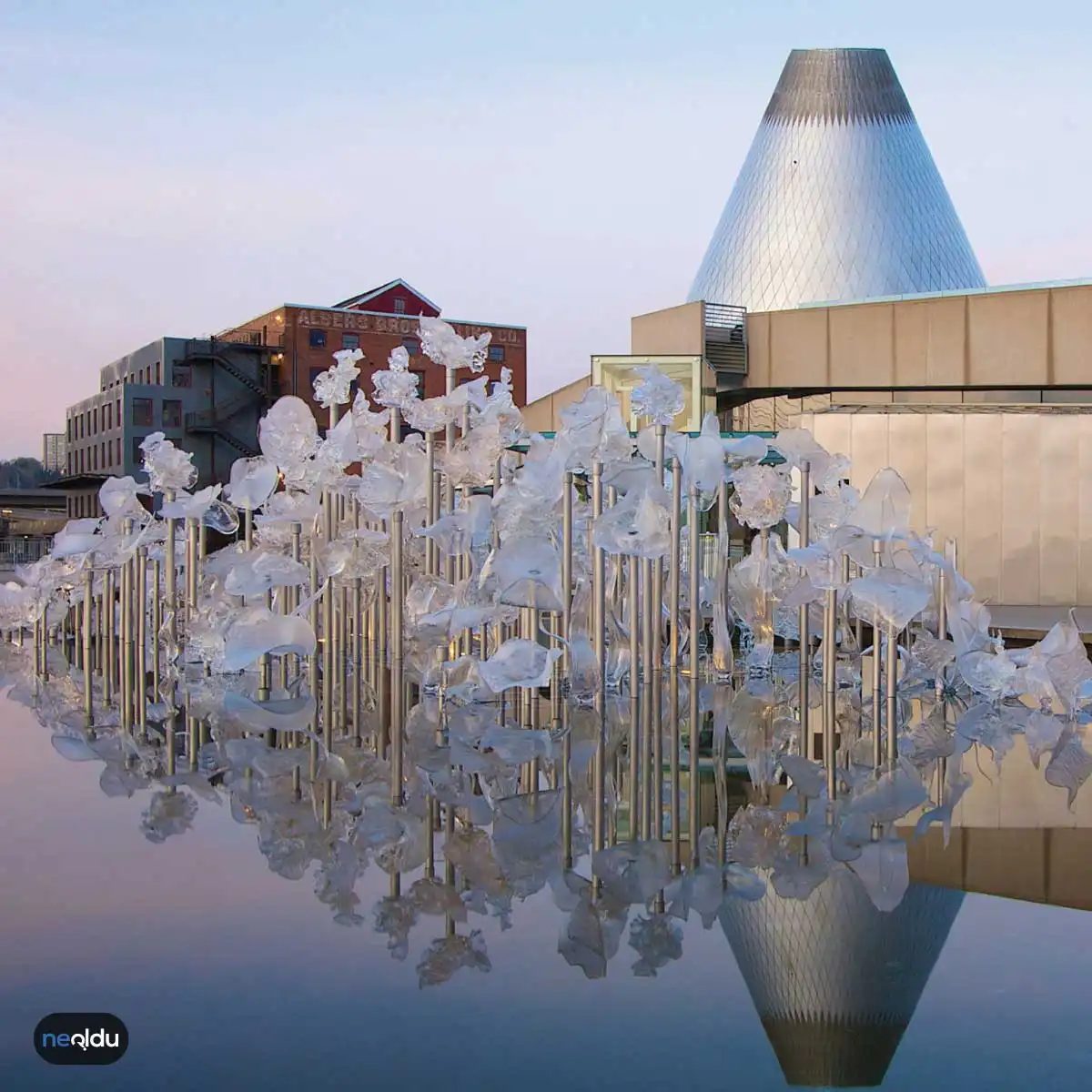
The Murano glass museum is beautiful to look at. It is more than just a collection. It’s a testament to the island’s centuries-old obsession with turning sand into art. You’ll be waiting for a glass. See why Murano has become a global brand. Exhibits trace craft traditions from early Roman techniques to the intricate and almost impossibly delicate works produced today. Every table, vase and chandelier tells a story about fire and breath. It’s immersive. There was a loud sound in the silence.
12. Academia Gallery
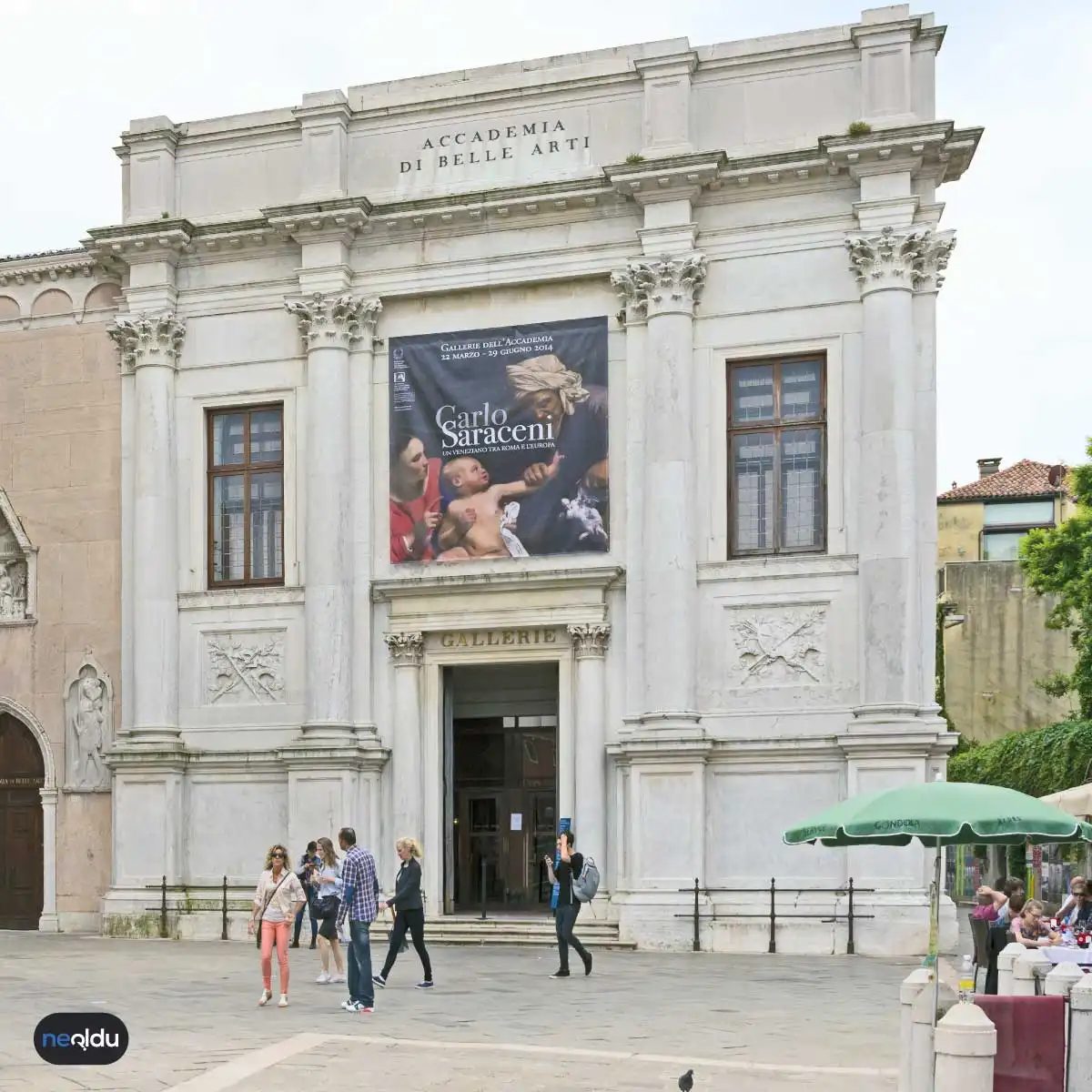
If you think Venice is just a tourist trap, the Accademia Gallery will change your mind. Located on the Grand Canal, it houses one of Venice’s most important collections of pre-18th-century art. Most people flock to the Doge’s Palace and St. Mark’s Church. They skipped the academy. This is wrong.
This museum specializes in Venetian paintings. Especially from the 14th century to the 18th century. It has works by Giorgione, Bellini, Titian, Veronese and Tiepolo. The number of masterpieces is staggering. Standing in front of Titian’s Ascension, you can feel the weight of its religious intensity. This is huge. This is dramatic. The work is on display in the Sala dell’Albergo, a room specially designed for its exhibition.
Why go? Because the Academy offers a timeline of Venetian identity. The early works are gilded and stylized. Later works are full of colors and emotions. We are moving from Byzantine harshness to Renaissance humanism. This change will happen in stages. Then suddenly it was all there.
Logistics is key here. Museums can be crowded. Let’s go early. The morning light streams in through the window and illuminates the painting with purpose. Tickets are required. Skip the line by booking online. The queue outside is long. If you’re not careful, the lines inside can get long.
What to expect:
– Bellini Baptism of Christ : A study of composition and light.
– Titian Venus of Urbino : controversial at the time, now iconic.
– VERONESE The Hen’s Wedding : It’s awesome. Overwhelming. beautiful.
The building itself is noteworthy. It is said that it was originally a monastery. Architecture is art without competing with it. The ceiling is high. stone floor. A quiet corridor. I can also hear my own steps. It forces you to slow down. In a fast-growing city, the Academy is a pause button.
Is it worth the effort? Completely. You may not recognize all the names. You may not understand all the historical background. However, I feel the power of work. This comes from the heart. That’s true. It is unlike anything you would see in Rome or Florence.
ヴェネツィア often has a post card-like atmosphere.
13.布拉诺岛
如果您认为威尼斯是一座水迷宫,那么布拉诺岛就是灰色泻湖上的一抹色彩。 它不仅仅是一座博物馆小镇;更是一座活生生的明信片, 这是一张活生生的明信片,历史渗透到当下。 该岛因两件事而闻名:它的花边和它的房屋。 但不要指望能在真空中找到任何一个。 蕾丝? 仍然由遵循代代相传的模式的女性手工制作。 房子? 漆成如此明亮的色调,似乎可以抵抗潮湿的影响。
为什么布拉诺岛值得加入您的行程
ほとんどの観光客はガラスを買うためにムラーノ島に集まります。 彼らはブラーノ島を「人里離れた場所」に感じたためスキップしました。 これは間違いです。 ブラーノ島では、静かでより本格的なヴェネツィアの生活を体験できます。 運河は狭いです。 船は比較的小さいです。 みんなが手を振った。 サンマルコ広場ほど混雑していませんが、同じくらい美しいです。
Place and time of arrival
Take vaporetto line 12 from Fondamenta Nuove. It takes about 40 minutes. The ride itself is part of the experience. You pass a swamp, then open water, and suddenly color appears. Go early. By 10 a.m., the cruise ship’s passengers had been evacuated and the attraction had dissipated. Leave by late afternoon. At this time, the light hits the facade best, creating long shadows and highlighting reds, blues and yellows.
What you really see
- The Lace Tradition: Visit the lace school (Scuola del Merletto). You can see the work of craftsmen. If you want the real thing, you can buy it directly, even if the price is higher. The complex patterns are worth it.
- The Houses: It’s not just pretty. Traditionally, each house is painted a certain color so that fishermen can identify their house in the fog. This is now a strict local regulation. You cannot paint a wall green if its neighbor is blue.
- Fish: Burano is a fishing village. Try seafood at a local restaurant. It’s very fresh. It’s expensive, but it’s authentic.
- Church: San Martino Cathedral. Simple. stone. Quiet. A break from the visual noise.
成本和物流
汽艇票包含在您的威尼斯旅行通票中。 如果没有,请购买单程票。 大约8欧元。 午餐每人 20-30 欧元,算是一顿像样的饭菜。 小件蕾丝花边起价为 50 欧元。 大块? 数百欧元。
现实检验
现在是旅游胜地。 不要让旅游指南欺骗您,让您认为它没有受到影响。 But it’s still more than Venice. 少一点混乱。 更人性化。 颜色是人造的,是的。 蕾丝是商业性的,是的。 但速度呢? 这是真的。
走在后街。 迷路。 运河看起来一模一样,直到它们不同为止。 那么您就到了布拉诺岛。 在贡多拉和人群退去很久之后,您仍会记得它。
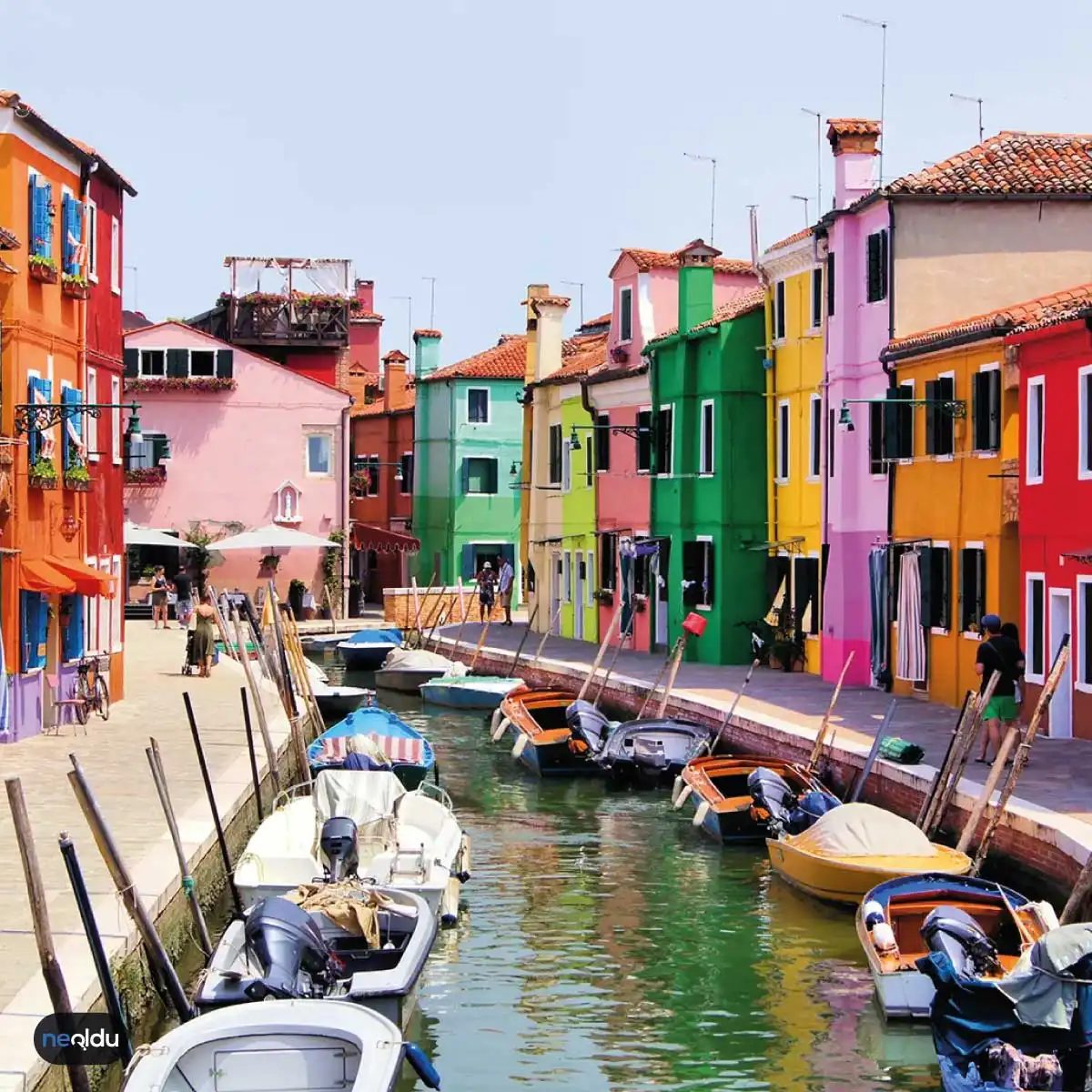
Postcards from Venice: Burano’s chaotic charm
Burano is located about 7 kilometers northeast of the main island, and if you’ve ever seen a Wes Anderson movie, you’ve definitely seen this place. The houses are painted in bright colors like saffron, cobalt, and magenta, and the color of the door and window frames seems to change from curb to curb. It’s not just aesthetics. Historically, bright colors helped fishermen get home in the fog. Now all you have to do is help the photographer take the photo.
The island is quieter than mainland Venice, but don’t mistake tranquility for emptiness. By the window, you can see how the lacemaker moves his fingers with professional skill. If you want to see how centuries-old techniques still work here, the Burano Lace Museum (Museo del Merletto) is worth a visit. Take cash with you for small purchases. Some artisans sell directly from their homes.
Then there is the leaning bell tower. Yes, like Pisa’s. It’s smaller, less well-known, but just as quirky. The nearby Basilica of San Martino offers a peaceful atmosphere that stands out from the city’s neon facades.
“Burano is a place of colors.”
Getting there is part of the experience. Take water bus line 12 from Fondamente Nuove. The journey takes about 45 minutes. The water can be choppy. If you’re prone to seasickness, look for a forward-facing seat. The view of the lagoon is worth seeing.
Arrive early. By mid-morning, the tour groups arrive. They flooded the narrow streets and turned the picturesque alleys into crowded corridors. You’ll want the photos without the sea of selfie sticks. Or come back later in the afternoon. The light becomes softer. The color becomes deeper. The crowds thin out.
When it comes to food, stick to the seafood. Burano is an island located in a lagoon. The fish is very fresh. The prices are reasonable compared to the tourist traps in Venice. Avoid restaurants with picture menus. They usually cater to tourists. Look for signs handwritten in Italian. Locals eat there.
The lace? It’s expensive. Intricate. Beautiful. However, if you’re on a budget, entry to the museum is free. Focus on crafting, not buying.
Burano feels like a different world. It’s still Venice. But it’s Venice stripped of its grandeur. Just color. Water. Life.
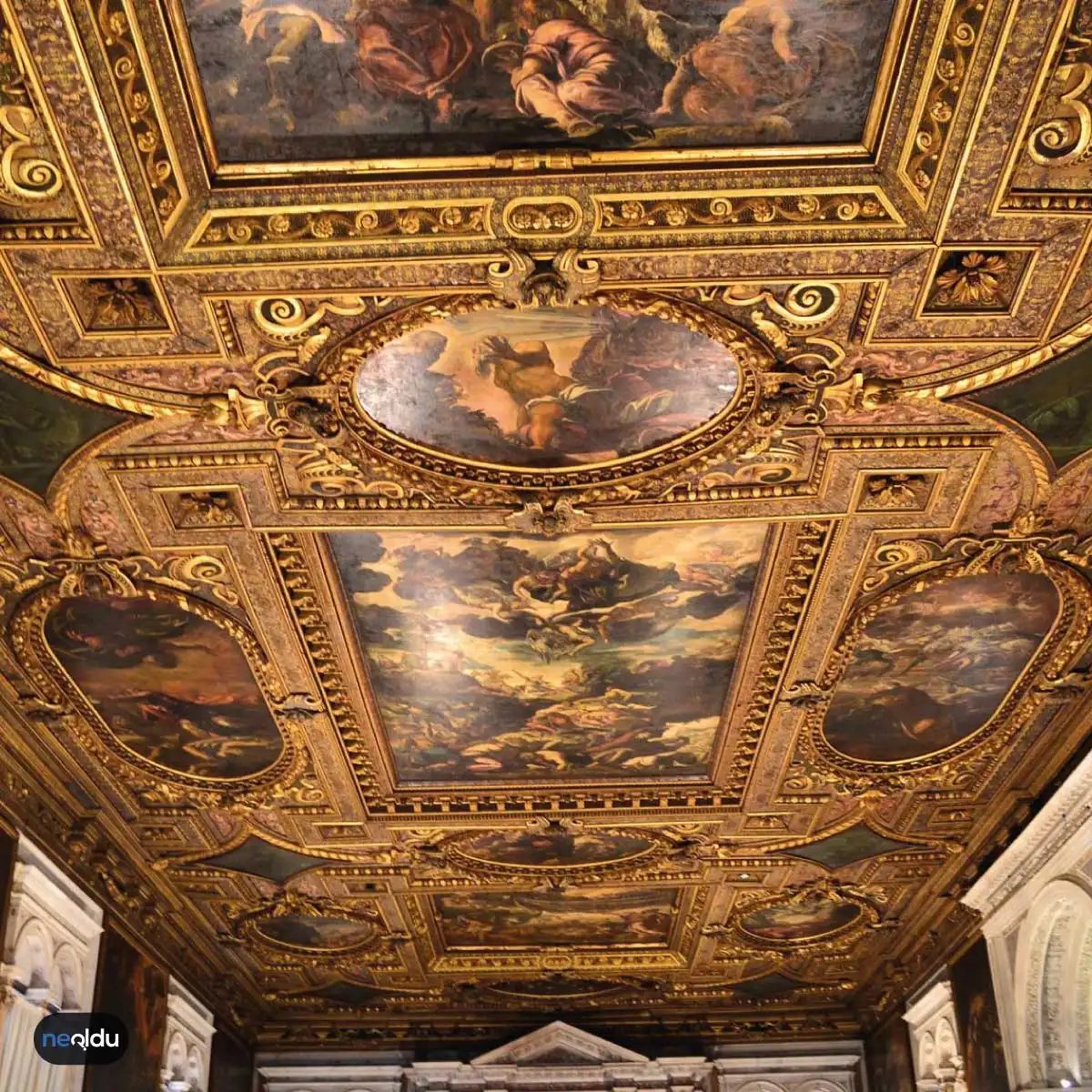
Heavy religious art: Scuola Grande di San Rocco
Scuola Grande di San Rocco Built as a charity in the 16th century, this building now looks like a church from the outside, but inside it is a temple of art. If you’re looking for a place to appreciate Venice’s strongest dedication to art, this is the place. The architecture grabs you first. The wonderful staircase feels like climbing a mountain of paint and gold leaf.
Tintoretto owned this place. He painted the Great Hall ceiling and walls with an enthusiasm that still feels electric. He was given a deadline and he met it. The result is a series of paintings depicting the life of Saint Roch, covering almost every square inch of the surface.
What is worth your time? The scale is huge. You walk in and look up. Flight to Egypt is more than just a painting. This is the environment. The Annunciation, the Crucifixion, the Circumcision – Tintoretto not only illuminates his works with light and shadow, but also expresses them dramatically. This is baroque energy before baroque existed. Visitors come here for the fame, but they stay for the ultimate sensory experience. Yes, it’s very crowded. But stand still. It looks like the faces in the paintings follows you.
Peggy Guggenheim Collection
ルネッサンスの信心から現代の混沌まで。 運河沿いには、ヴェニエ デイ レオーニ宮殿にペギー グッゲンハイム コレクションがあります。 ここは政府や公爵によって建てられた博物館ではありません。それは家です。 女性の家。
ペギー・グッゲンハイムはアメリカの相続人で、with an eye for trouble and talent. 彼女は、モダニズムがまだスキャンダルとみなされていた 1930 年代と 1940 年代にアートを収集しました。 戦争中、彼女はナチスとファシストから逃れるためにコレクションをヴェネツィアにbrought her collection to Venice。 宮殿は空っぽで未完成で、息抜きのスペースと芸術的表現を求める女性に最適でした。
**なぜ訪問するのですか? ** これは、ニューヨーク以外のヨーロッパとアメリカの現代美術の最も重要なコレクションの 1 つです。
何が入っているの? **
– シュルレアリスム: マックス・エルンスト、レオノーラ・キャリントン、ドロテア・タニング。 部屋は小さくてプライベートです。 smell the turpentineと時代の不安を感じることができます。
– 抽象表現主義: ジャクソン・ポロック、ウィレム・デ・クーニング、マーク・ロスコ。 ロスコ ルーム は、深紅と黒の巨大なキャンバスです。 とても静かです。 とても重いです。 ここで人々は泣きます。 それは起こります。
– キュビズムと未来派:** ピカソ、Braque、Balla。 フォームから動きへの移行が明らかです。
Logistics:
場所はアカデミア橋の近くのカンナレージョです。 主要な観光中心地からwhich is its greatest asset. ここでは、クルーズ船の混雑から逃れることができます。 ロッジアからの眺めは直接水面です。 No bridges in the way. 運河と空だけ。
Timing:
チケットをオンラインで予約します。 いつも。 特に 7 月と 8 月には長蛇の列ができることがあります。 コレクションは
16. Ca’ d’Oro
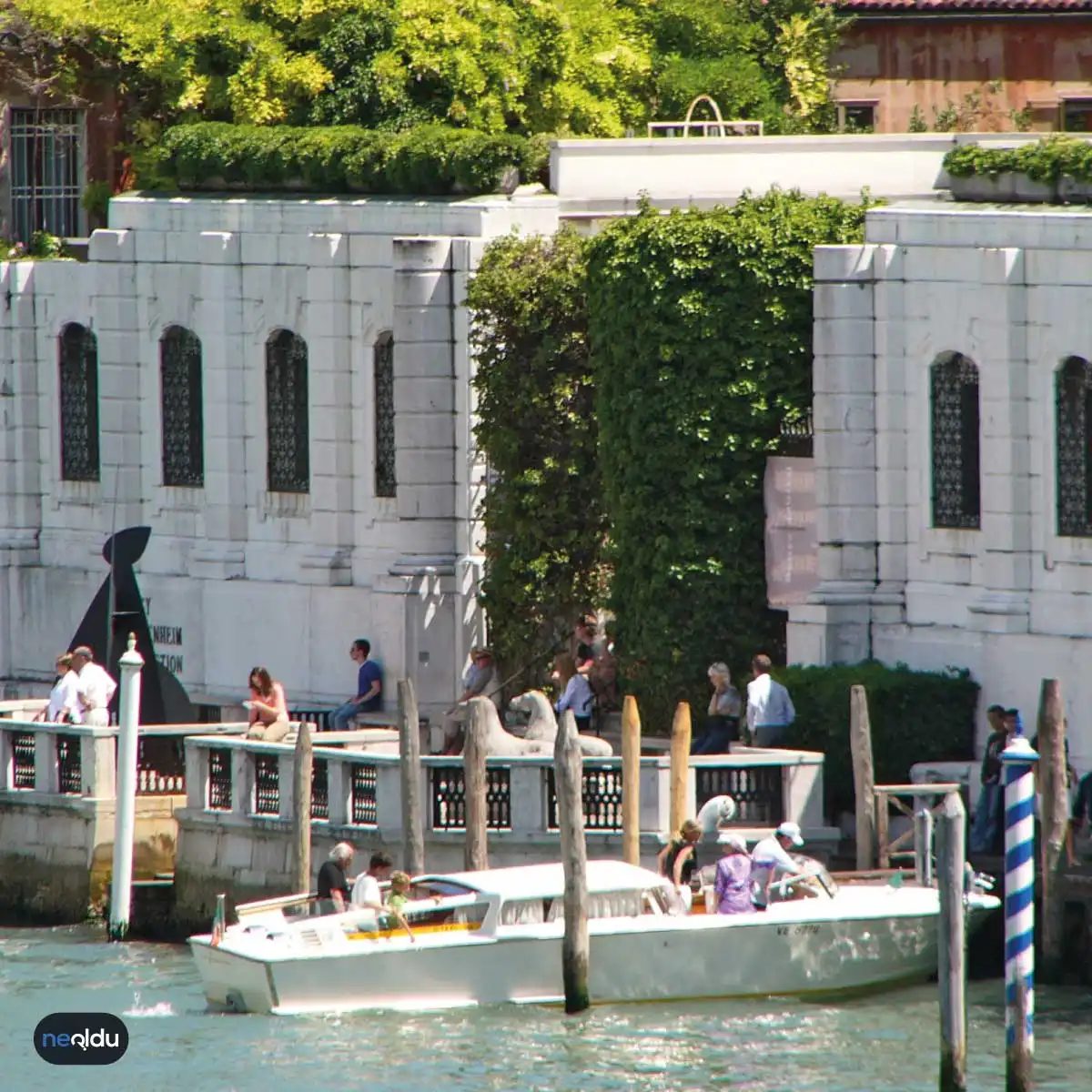
The Peggy Guggenheim Collection is not just art. It’s about the setting. She bought the palazzo in 1949. She lived there until his death. Now it’s a museum.
Entrance fee? High. Some travelers balk at the price. They wonder if it’s worth it. The answer is yes. But not just for the canvas.
Think light. Venetian light falls differently on the courtyard. It bounces off the water. The garden is a peaceful sanctuary. You move away from the crowd. You are stepping into the past.
The collection itself is a timeline of modernity. Picasso. Pollock. Dalí. These names hit hard. You can see the development. You see chaos. You see the order.
It is not a big palace like the Doge’s Palace. It’s intimate. Personal. You can almost hear her voice echoing through the corridors.
If you go, go in the morning. Then the light is the best. The crowds are thinner. You get the space. You get silence.
The price is high. But you pay for access. Access to a specific time. A vision of a certain woman. It stays.
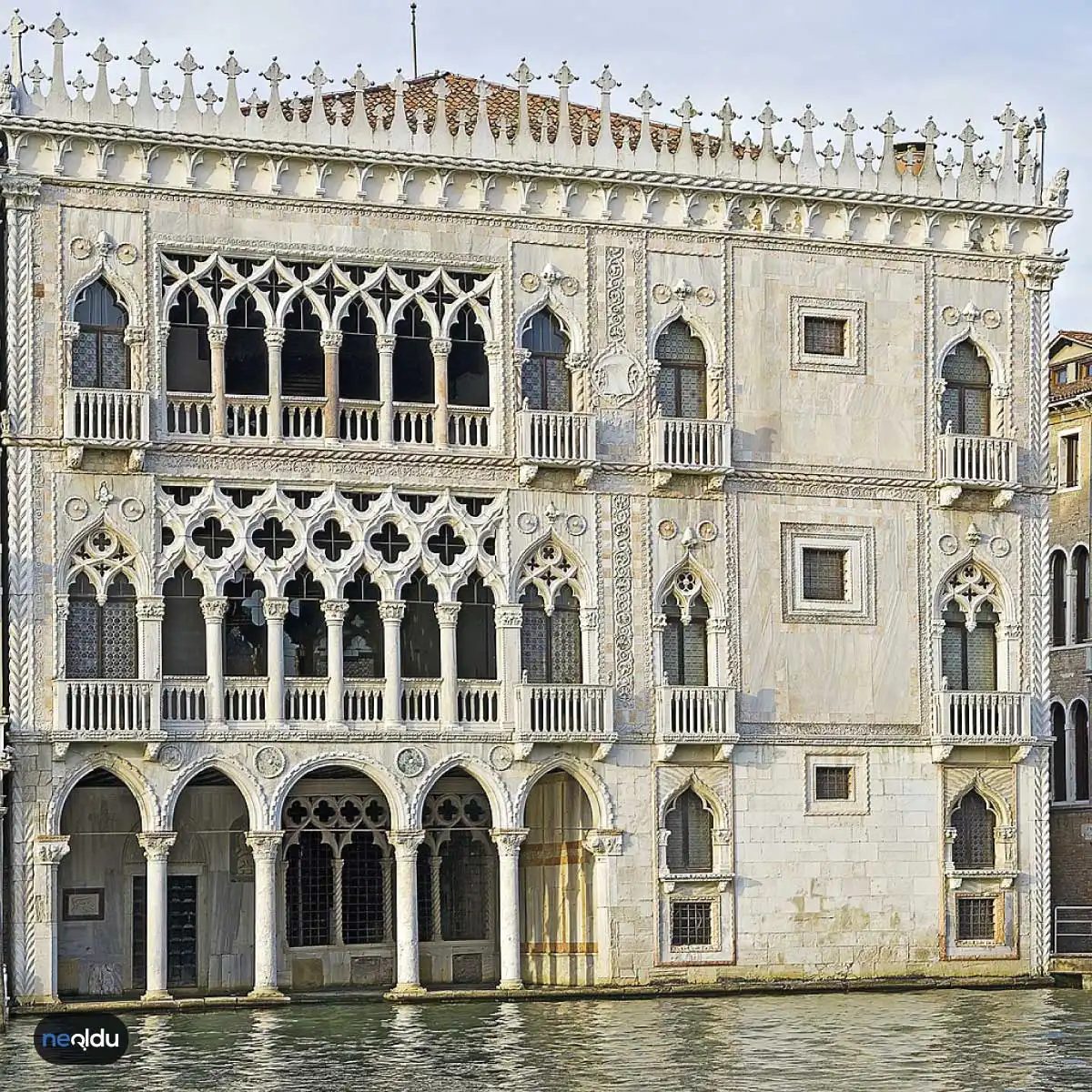
Ca’ d’Oro or “Golden House” isn’t just a pretty facade for your gondola selfie. Built between 1428 and 1430 for the Contarini family, it is a testament to Venice’s obsession with wealth and style. The architecture is a special, refined blend of Gothic and Byzantine styles. You can see it from the water. It’s bright, decorative and impossible to miss.
Inside the building is the Franchetti Gallery. Count Giorgio Franchetti opened it to the public and filled the rooms with the art he collected. It is not a museum of ancient Venetian history. It is a collection of Renaissance works. You will find paintings by Bellini, Antonello da Messina and Titian. The lighting is often dim. The rooms look intimate. It’s a quiet contrast to the noise of the canal outside.
17. Fenice Theatre
Just a short walk from the Grand Canal, Teatro La Fenice rises above the noise of San Marco. The name means “Phoenix” in Italian. It was chosen for a reason. The theater burned down and was rebuilt twice. Once in 1792, after an angry mob set it on fire. Again in 1996, when an arsonist lit a match in the auditorium.
Visitors come here not only for the opera, but also to look at the interior. The red and gold interior is stunning. It is luxurious to the point of exhaustion. The chandeliers are huge. The seats are plush. It feels like entering a new century.
Plan your visit
Tickets to the Ca’ d’Oro gallery can be bought online. They sell out. Don’t wait until you’re at the door. Fenice offers guided tours when rehearsals or performances are not scheduled. These tours are often cheaper than opera tickets. They help you get to the stage and the boxes.
If you want to see an opera, make a reservation months in advance. Prices vary widely. A seat in the upper gallery costs only 20 euros. A box seat can cost thousands. Most travelers stick to standard seats. The acoustics are good everywhere.
The environment of the theater is very lively. There are tourists in the square. It’s noisy. But as soon as you walk in, the world stops. Music fills the air. History is palpable.
Why it matters
Venice is often criticized for focusing too much on image. Ca’ d’Oro and La Fenice prove that the soul of the city is still in art. These are not hollow monuments. They are active spaces. People live here. They perform here. They collect here.
You could skip the opera. It’s expensive. But you should still walk past the theater. Look at the facade. Note the statues. Feel the weight of the city’s ambition. Then see the Golden House. It is smaller than expected. It’s more honest.
The gondolas continue to row. Tourists continue to take photos. But inside, the music continues to play. And the paintings watch. They have seen it all before. They will see it again.
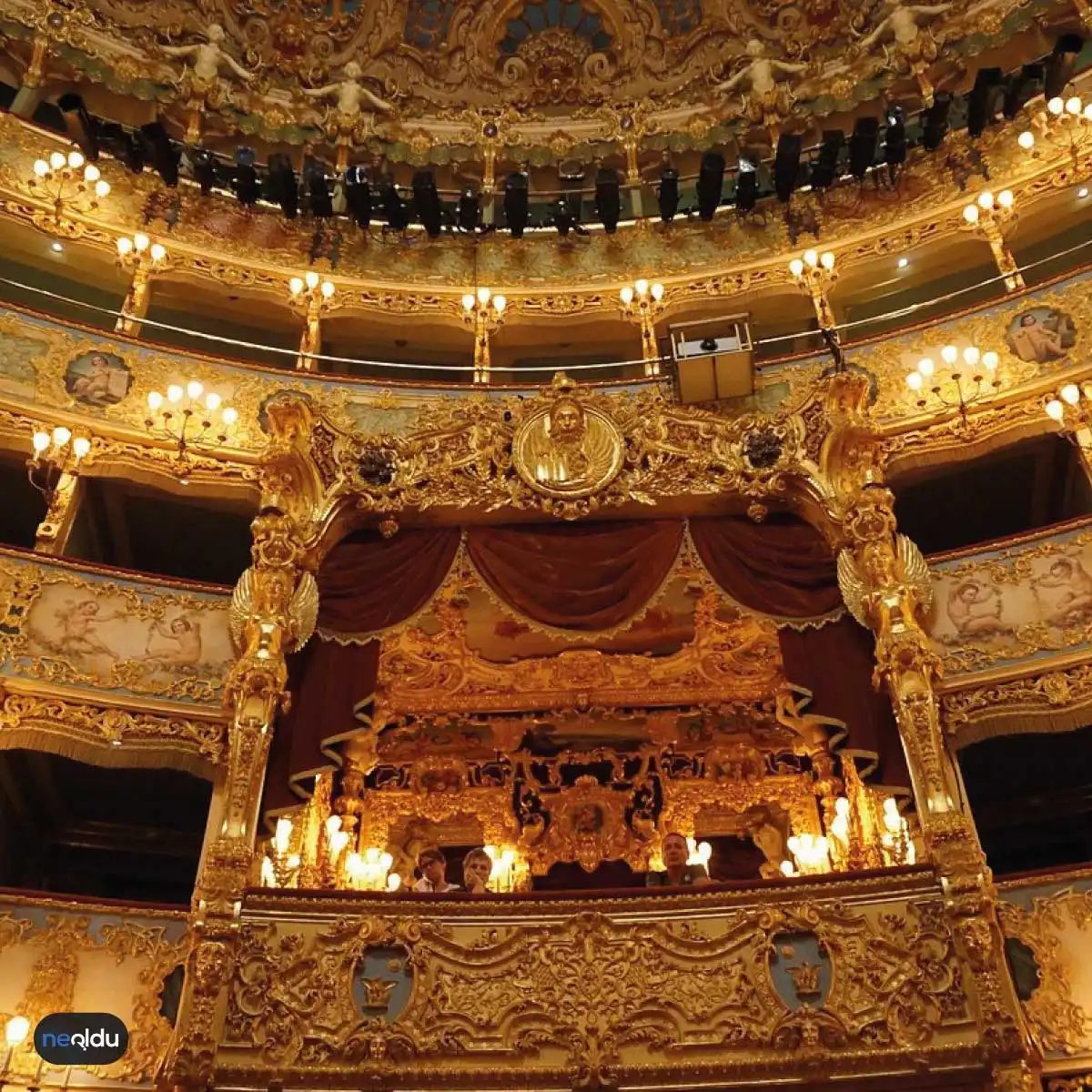
Skip the crowded Rialto Bridge for a moment. You are in Venice, a city that oozes art into every crevice of the stone. If you leave without visiting one of Europe’s most historic opera houses, you are missing the heartbeat of the city.
Go to Teatro La Fenice.
The name comes from the Phoenix, a mythical bird that rises from its own ashes. And that’s exactly what this building is. It was destroyed by fire twice – in 1836 and again in 1996 – and was rebuilt both times, not only to restore its function, but also to honor a heritage that refuses to burn.
The architecture alone demands attention. When you enter the main hall, you are hit with gold leaf. It’s everywhere. Ceiling frescoes, velvet seats, crystal chandeliers. It is baroque excess at its best. But it’s more than just a pretty face. This is a working theater.
Why La Fenice is important
You might wonder if the ticket price is worth it. The answer depends on what you want.
If you’re just looking for a photo, you can take a peek through the door or attend a rehearsal. But to truly get it? Buy a ticket to the show. The acoustics here are legendary. A whisper from the stage reaches the back row without amplification. You will hear La Traviata, Carmen or contemporary ballets performed by world-class talent.
“The theater is not just a venue, it is a monument to resilience.”
Logistics: When and where
- Location: Campo Santa Margherita, 1965. It is a short walk from Campo San Polo.
- Best time to visit: You can find the seasonal calendar on the official website. The main season of the opera lasts from October to July.
- Prices: Prices vary greatly. A ticket for the orchestra’s standing room can cost less than €20. Boxes or premium seats can be in the hundreds. For price-conscious travelers, standing room is the right choice. You are right in front of the stage and the energy is electric.
- Excursions: When there are no shows, take a guided tour. You can see the rehearsal rooms and backstage areas. It gives you the context of how the magic happens.
### 18. Church of San Zaccaria
Just a few blocks away from the theater, in the Cannaregio area, there is a quieter magic.
Chiesa di San Zaccaria is often overlooked by tourists rushing to St. Mark’s Square. It’s their mistake. This church is a masterpiece of Venetian Renaissance architecture.
The facade is simple compared to the luxury of other churches, but the interior tells a different story. It was built at the end of the 15th century and combines Gothic and Renaissance styles. The result is a space that feels both solemn and alive.
Look at the ceiling. Paintings are not just decorations; they are stories. Artists such as Palma il Vecchio and Tintoretto have left their mark here. Light pours in through the tall windows and casts long shadows on the marble floor. It’s quiet. Quiet. A stark contrast to the chaos outside.
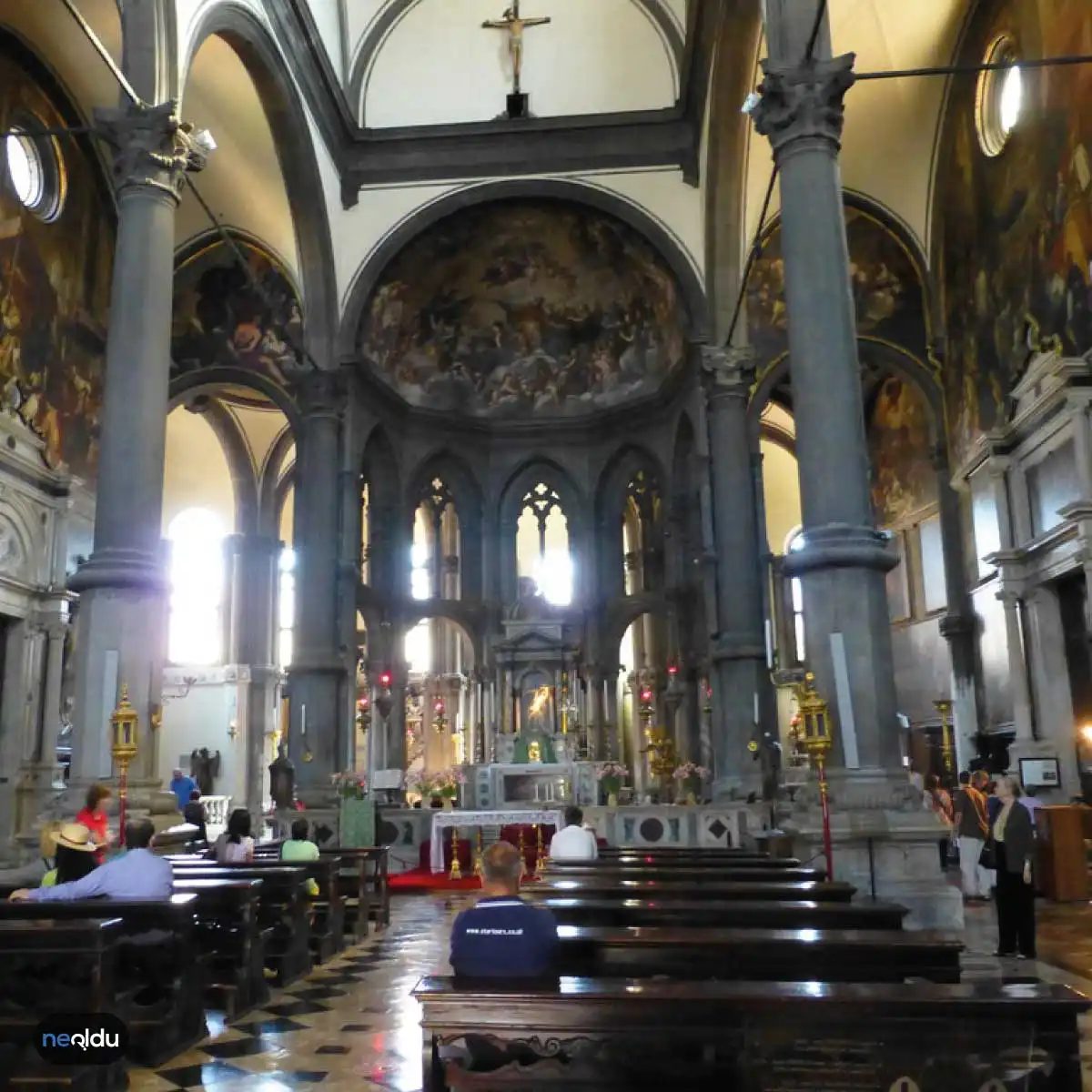
Built in the 9th century, the Chiesa di San Zaccaria occupies a quiet location in the Cannaregio district, often overlooked by the crowds that gather in St. Mark’s Square. Time and earthquakes took their toll, so it was rebuilt in the 15th century in the spectacular Gothic style that still dominates the skyline. It served as a monastery for centuries, giving the place a heavy, understated feel not found in the busiest tourist centers. It is dedicated to Saint Zacharias, the father of John the Baptist. The exterior is deceptively simple, but when you step inside, the gold leaf ceiling hits you like a physical force. It is a stark contrast to the marble splendor of the nearby basilica, offering something more intimate, more human.
19. Basilica of Saints John and Paul (San Zanipolo)
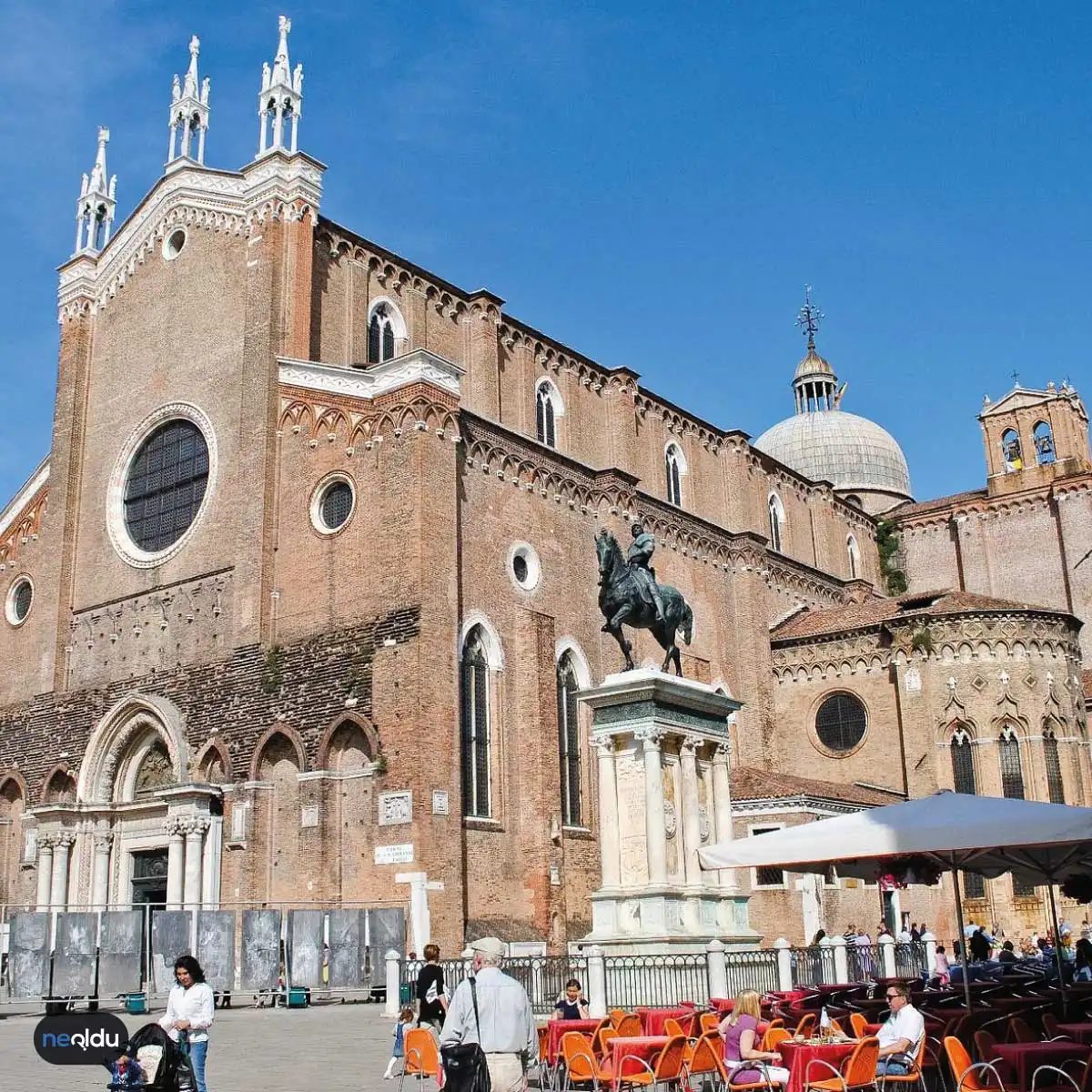
If San Zaccaria is a whisper, Basilica dei Santi Giovanni e Paolo is a shout. Locals call it San Zanipolo, and for good reason. It is the largest church in Venice, rising above the Campo like a stone leviathan. This is not just a place of worship; it is a necropolis.
Why is this important to your travel plan? Because twelve doges and a handful of powerful generals are buried under its soil. You can walk in the graves of the men who once ruled the Mediterranean. The scale alone is confusing. The nave is huge, the air is cool and humid. It feels less like a tourist attraction and more like a mausoleum of the city’s ego.
Important details for visitors
- Location: Campo dei Santi Giovanni e Paolo, Cannaregio. It’s only a short walk from the Rialto, but feels a world away.
- Prices: Admission is free. Yes, really. In a city where you pay to breathe, that’s a rare gift.
- Time: Go in the late afternoon. The light hits the tall windows just in time to illuminate the dust particles dancing over the graves.
- Logistics: It is often empty. Although tour groups flood St. Mark’s Square, it’s quiet here. Use the silence to your advantage.
What you should pay attention to
Don’t just look at the ground. Look up. The ceilings are dark and shadowy, but the walls tell the real story. There are frescoes and altarpieces to rival anything in the Uffizi, but they are relatively obscure here. Titian’s tomb is also located here. The artist’s final resting place is modest compared to the Doges, but the irony is palpable: the man who defined Venetian color for eternity stands in the shadow of the men commanding the armies.
“Venice was not built on wood and stone, but on the bones of those who tried to keep it up.”
The church also houses the Museo dell’Orologio, although access is sometimes restricted. If it’s open, go. It’s a small collection that highlights the mechanical heart of the city. But honestly, the church itself is the most important event. The contrast between the Gothic towers outside and the Renaissance interior is jarring in the best way. It reminds us that Venice was never just one thing.
If the grand Palaces of the Grand Canal seem too fancy for you, step off the main drag and immerse yourself in the 20th century. The Mocenigo Palace Museum is one of those rare places in Venice where history doesn’t just hang on the walls, it fills the rooms. Built in the 18th century, this palace was home to the Mocenigo family, a powerful line that produced four Doges. Today it is a museum dedicated to a man who died in 1831: General Angelo Mocenigo.
The collection is surprisingly versatile. You will find military uniforms, medals and personal items that paint a picture of life lived in the shadows of Napoleonic wars. But it’s not just about war. The interiors themselves are the real draw. High ceilings, decorative plasterwork and frescoes that have withstood centuries of humidity and neglect give the space an ghostly, majestic atmosphere. It’s quiet here too. No crowds shuffling past. Only you, dust motes dancing in the light and the weight of history.
“Venice is not just a city of water, it’s a city of layers. You have to dig for the ones that matter.”
Basilica dei Santi Giovanni e Paolo
Speaking of layers, let’s talk about the heavy hitters. Basilica dei Santi Giovanni e Paolo or San Zanipolo is not a typical tourist stop. It’s massive. Built in 1246, this Franciscan church is Venice’s largest and an prime example of Italian Gothic architecture. The facade is stark, almost severe compared to the nearby ornate baroque churches. But take a closer look. The brickwork is intricate, the proportions are perfect and the scale is overwhelming.
Why go? Because it is the final resting place of the 16 Venetian Doges. That’s nearly half the rulers of the Republic of Venice. You’re walking among the dead who ruled the sea. Tombs, effigies and monumental sculptures line the nave. Look up at the high vaults. The acoustics are sharp, echoing footsteps like a heartbeat.
The art is serious stuff. You will find works by Bellini, Tintoretto and Veronese. But the real magic is in the silence. Visitors enter, look around and leave. It’s not as Instagram-friendly as St. Mark’s Basilica. It’s contemplative. It’s heavy. It demands respect.
Admission is required, which keeps the crowd manageable. The cost is modest and the time spent inside feels like a pilgrimage. Don’t rush. Sit on one of the stone benches. Listen to the echo of your own breath. This is not just a church. It is a mausoleum for a republic that once ruled the Mediterranean.
The Canal’s Quiet Corners
Most travelers stick to the Rialto and the Grand Canal’s main stretch. They miss the side canals, the Rio where Venice really lives. Mocenigo Palace is on the quieter branch, away from the vaporetto noise. The basilica is tucked into the Dorsoduro district, which feels more like a university town than a tourist trap.
It is
21. Mercato di Rialto
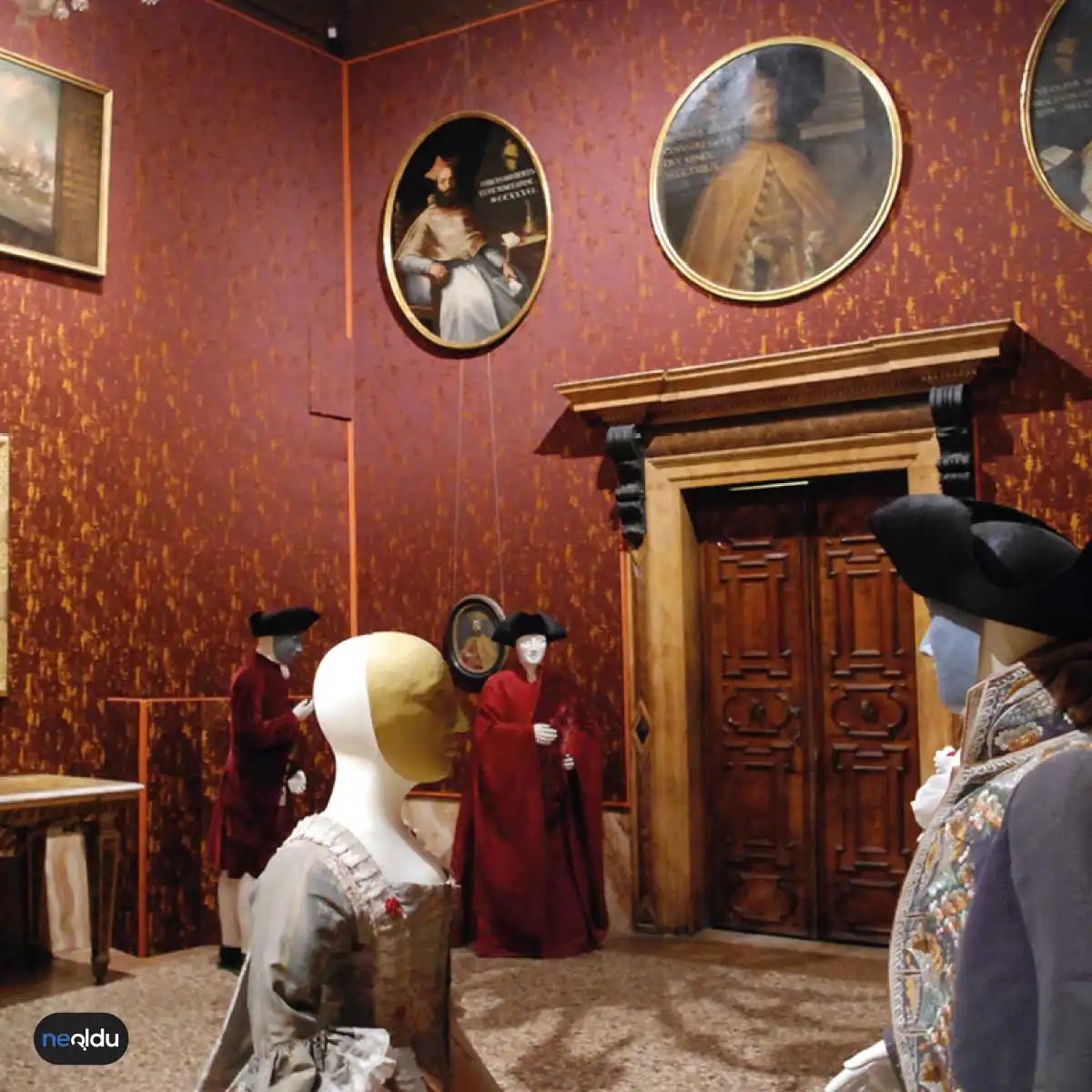
Fashion isn’t just about the clothes. It’s about the context. The Mocenigo Palace Museum offers a stark, elegant look at 18th-century Venetian dress. Silk, lace, velvet. The museum preserves the history of how locals wore their status on their sleeves. But you don’t have to go inside a palace to see Venetian style. You just need to walk into the Mercato di Rialto.
This is the oldest market in Venice. It has been here since the 11th century. Today, it is a chaotic, vibrant mix of commerce and culture. The atmosphere is thick with the smell of fresh fish and shouting vendors. It is the heart of the city.
Where to find the best produce
The market is split into two sections. The fish market (Pescheria ) operates under the Rialto Bridge. The rest is the general food market. You will find vegetables, meats, cheeses, and spices everywhere else.
Go early. Between 7 AM and 9 AM, the action is at its peak. Vendors are unloading trucks. The energy is high. By midday, it becomes a tourist trap of sorts. The stalls close. The crowd thins.
What to buy?
– Fresh seafood for a quick lunch
– Seasonal vegetables like zucchini flowers
– Local cheeses such as Castelmagno
– Spices for seasoning
How much does it cost?
The market itself is free. Walking through the aisles costs nothing. You only pay for what you buy. A plate of baccalà mantecato (creamed cod) on bread might set you back around €5 to €8. Fresh fruit is cheap if you buy in bulk. Avoid the pre-packaged souvenirs. They are overpriced. Stick to the food. It is authentic.
Why go here?
The Mercato di Rialto shows you the daily life of Venetians. Tourists see the canals. Locals see the market. Here, you can watch a grandmother haggle with a fishmonger. You can see the hands of the vendors working. It is raw. It is real.
If you want to understand Venetian culture, look at what they eat. The market reflects the city’s history as a trade hub. Spices from the East. Olive oil from the south. Seafood from the lagoon. Everything passes through here.
Practical tips
- Wear comfortable shoes. The streets are uneven.
- Bring cash. Some small vendors do not take cards.
- Don’t expect English menus. Learn a few Italian phrases or point.
- Visit the nearby Rialto Bridge afterward. The view is iconic.
The market is not a museum. It is alive. It changes with the seasons. In summer, the fruit is bright. In winter, the root vegetables dominate. Go when the city is waking up. See the style of the people. Not in silk, but in practical, worn clothes. That is the real Venice.
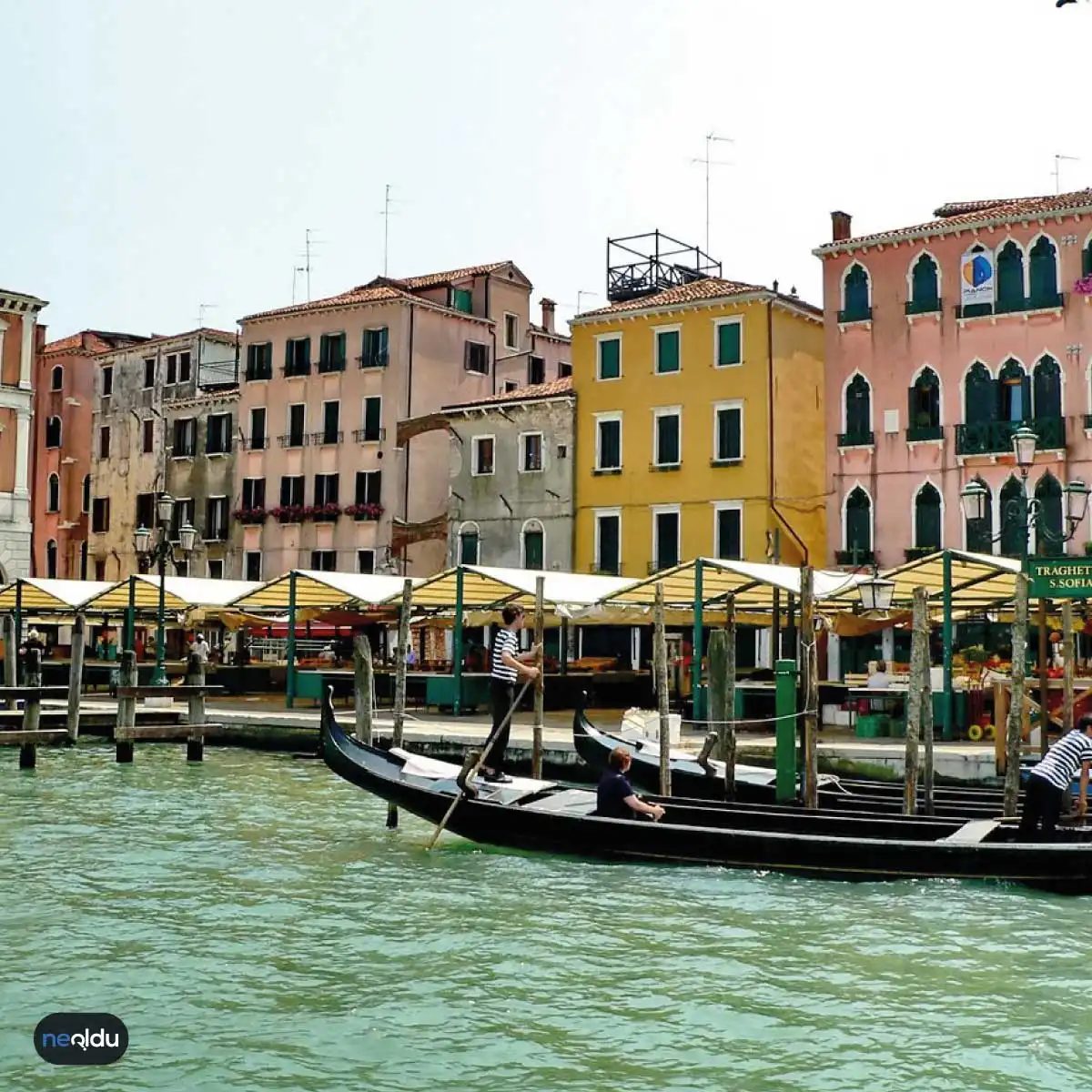
Museo Correr
You can’t really understand Venice without seeing what happened to it, and the Museo Correr is the place to do just that. It sits right in the shadow of St. Mark’s Basilica, tucked into the corner of Piazza San Marco. The museum has been around since the 19th century, when the Correr family donated their collection to the city. They wanted to preserve the history of the Republic of Venice.
The building itself is part of the historic library and arcade complex. You walk through the Procuratie Nuove to get there. The architecture is grand, with high ceilings and long corridors. It feels like stepping back into the world of Doges and merchants.
What to See
The permanent collection is heavy on art and history. You will find paintings by Giovanni Bellini and Antonello da Messina. These are old masters, and their work is stunning. The frescoes in the Sala dello Scudo are particularly impressive. They depict scenes from Venetian life and history.
There is also a section dedicated to Giacomo Casanova. He lived in Venice for a long time, and the museum has artifacts from his life. It’s not just about his romantic exploits. It’s about his role in the city’s culture.
The Archaeological Museum section is another highlight. You can see Roman statues and artifacts found in the lagoon. The exhibits are well-labeled, but you might want to take a guide or use the audio app. The history is dense.
Practical Details
- Location : Piazza San Marco, 61/c, inside the Procuratie Nuove.
- Cost : Around €10 for general admission.
- Best Time to Visit : Early morning or late afternoon. Midday is crowded.
- Duration : Plan for about 1.5 to 2 hours.
- Access : Free entry on the first Sunday of the month (check for updates).
The museum is closed on Tuesdays. It is open from 9:00 AM to 7:00 PM in the high season. Hours may vary, so check the official website before you go.
Why It Matters
Many tourists rush past the Museo Correr to buy souvenirs or eat gelato. That’s a mistake. This museum tells the story of how Venice became a maritime power. It shows the wealth, the art, and the politics. You get a sense of the city’s identity beyond the canals.
The Correr Museum is part of the Venice Museums Network. If you plan to visit multiple sites, consider buying a combined ticket. It saves money and time.
The museum is not just a collection of objects. It is a window into the soul of the Serenissima.
You might notice that the exhibits are arranged chronologically. This helps you follow the development of Venetian art and culture. From the Byzantine influences to the Renaissance, it’s a clear progression.
The gift shop is worth a look, too. You can find books, postcards, and local crafts. It’s a good place to buy something meaningful, not just a keychain.
If you are tired after wandering the streets, you can rest in the museum’s courtyard. It’s
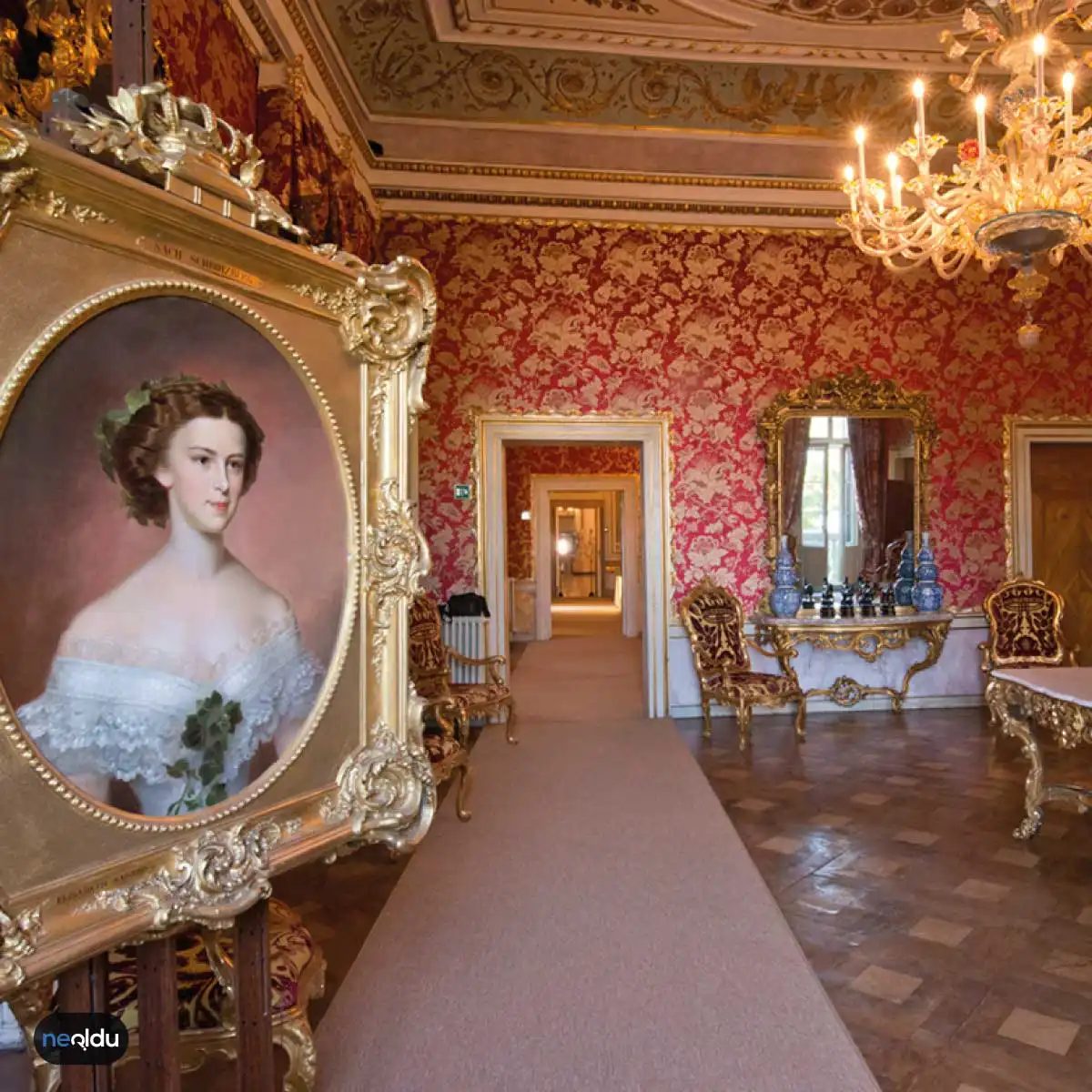
23. Turkish Foundation
If you’ve ever walked along the Grand Canal, you’ve probably found it. The white Marble Palace stands out from the surrounding dark masonry. Located at the confluence of the Rialto Bridge and the water, it is a prime location that has attracted attention for centuries.
The building’s name tells a story that most visitors miss. Fondaco dei Turchi means “stock of the Turks”. In the 15th-18th centuries, it was more than just a place to live. It was a fortress-like storage center for Ottoman merchants. These traders brought silk, spices and goods from the east. Thick walls and narrow windows are not aesthetically pleasing. They are there for safety. And privacy. Venice maintained close relations with its trading partners, but was under constant surveillance.
This building is now a museum. The Fondaco dei Turchi is home to the Natural History Museum. Natural history might seem out of place in a Venetian palace, but it makes sense. This museum focuses on the nature of the Veneto region. We don’t want to be the Louvre. For art lovers, nothing compares to the Doge’s Palace. Instead, it offers a peaceful and charming local environment.
You’ll find exhibits of fossils, minerals, and taxidermy that trace the geologic history of the area. For families, this is a treasure trove. Children can see the bones of ancient creatures that once swam and roamed this land. It’s educational without being boring.
But the real attraction is often the building itself. The facade is in pure Gothic style. The white “Istrian stone” stands out from the red brick typical of Venetian architecture. Time almost seemed to stand still. Walking through the courtyard is like stepping into another century. The silence here is heavy. The Grand Canal rushes by, but time passes slowly inside.
Cheap to visit. It’s usually free or just a few euros. It’s the pause button in this endless city. I might be there for about an hour. Or about 30 minutes. Or see what vaporetto looks like.
How does it compare to the Accademia Gallery? No, the Academy has a master’s degree. The earth is in this place. Both are valid reasons to quit. Don’t expect velvet ropes or a quiet homage to a Renaissance painting. The smell of dust, stones and old paper.
The museum is open every day except 月曜日. Please check the opening hours before going out. 冬の光はににめをドにてななをドしたます.
It’s not available on all journeys. That’s the point. It’s not because you’re following the list that you’ll find it, it’s because you’re looking for it.
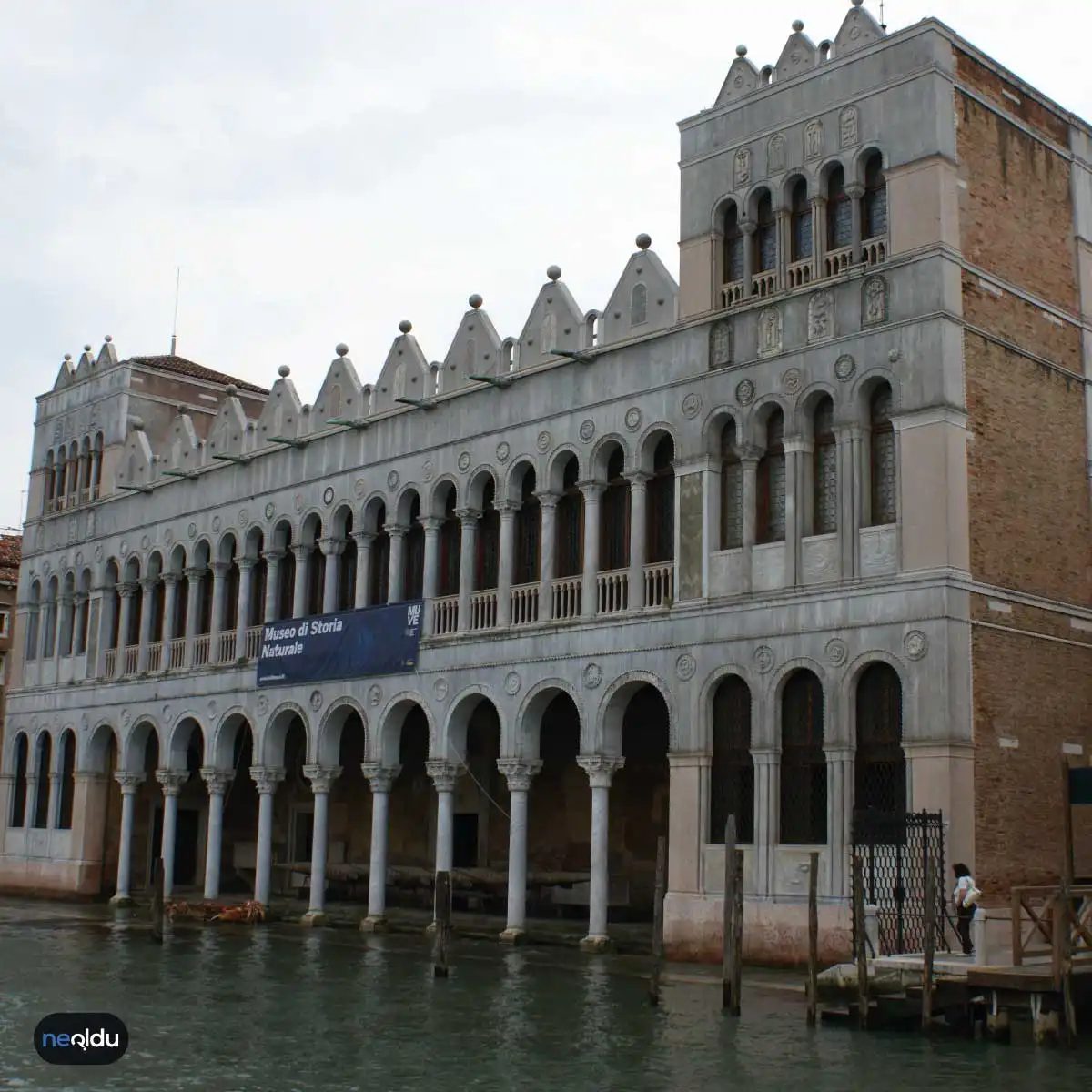
Fondaco dei Turchi is one of the grand palaces of the Grand Canal, and its history is not so much a simple transaction as a story of cultural collisions. Built in the 13th century, the building originally served one purpose: as a warehouse and accommodation for merchants arriving in Venice. But as Ottoman trade routes expanded, the building’s role changed. It became the residence of Turkish merchants, which was so significant that it survived and the name of the building was changed to Fondaco dei Turchi.
The architecture itself is an excellent example of Venetian Gothic. You can see the effect in the delicate tracery of the windows and the interaction of the facade with the water. It is elegant, airy and quite different from the heavier, fortress-like structures found elsewhere in the city.
Inside, the building hides another layer of history. The Ottomans commissioned the construction of a bathhouse within its walls, a rare concession to space and privacy in a city where public life extended to every street and canal. This addition is an indication of the respect Venice showed its powerful trading partners, even as political tensions raged elsewhere.
Today, the building serves a different audience. It is no longer a warehouse for spices and silk, nor a hotel for diplomats. Instead, it houses the Venice Natural History Museum. The transition from commercial empire to scientific exploration is ironic but fitting. Visitors today are more likely to look at fossils, minerals and biodiversity exhibits than to look for goods to sell. It’s a quiet ending to a loud story.
24. Santa Maria dei Miracoli
Just down the canal, the perspective on Venetian luxury changes again. Santa Maria dei Miracoli is small, which in Venice usually means that it is full of details. Completed in the 1480s by architects Bregno and Pietro Lombardo, this church is often regarded by art historians as a masterpiece of early Renaissance architecture, although it remains firmly within the city’s Gothic tradition.
The exterior is clad in white Istrian stone and decorated with colorful marble geometric patterns. The decor is not too religious. There are no screaming saints or fiery demons. Instead, the facade is a tribute to geometry and light. The marble work creates a shimmering effect that changes with the position of the sun, a trick of the eye that makes the building appear almost weightless against the sky.
Inside, the space is compact but incredibly rich. The main focus is on the altarpiece, a polyptych by Antonio Vivarini and Giovanni d’Alemagna. It is intricate with gold leaf and detailed figures that draw the eye upwards. The church was originally built by a guild of sailors and fishermen who vowed to build it if their patron saint, the Virgin Mary, would protect them from the storm. The “miracle” in the name refers to the survival of their fleet.
The location is strategic. It is close to the Rialto, the commercial center of Venice. In this area, goods were weighed, taxed and traded for centuries. The proximity of the church to the market meant that it was attended not only by the faithful but also by the busy, wealthy and working class. It was a place where faith and commerce met daily.
Visitors often rush through here, expecting a grand nave
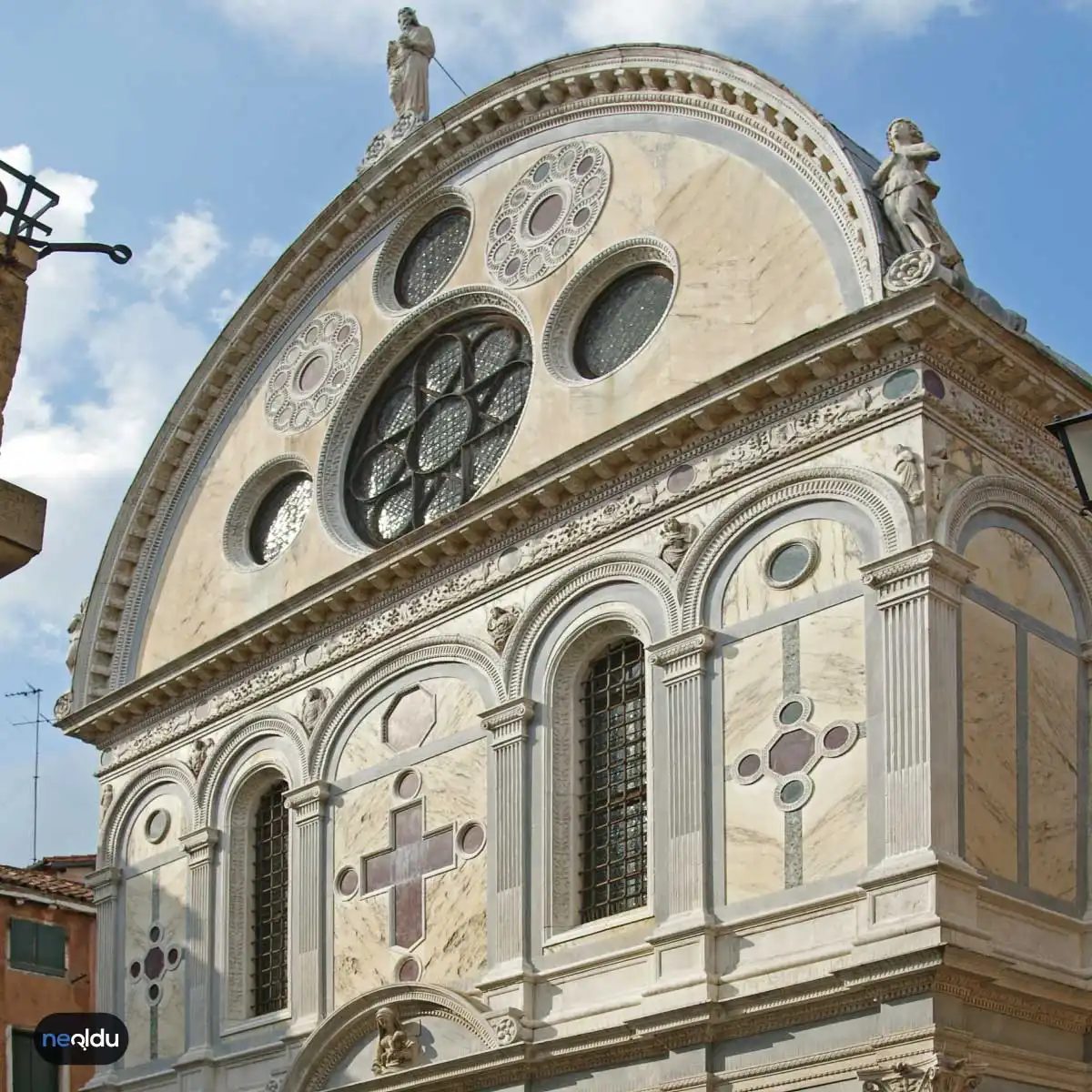
Santa Maria dei Miracoli: Venice’s marble masterpiece
North of the Rialto Bridge, Santa Maria dei Miracoli doesn’t just sit there; it glows. A church built entirely of marble is a visual shock to the system. When you enter, the Renaissance influence hits you immediately. It’s not just a stone. It’s art.
The structure dates from the 15th century, but looks timeless. Every surface is covered with intricate details. Bronze statues stand guard. The frescoes tell stories in faded colors. Chandeliers hang like frozen fire. Visitors are amazed. Locals love it.
Venetian couples get married here. Why? Because standing under this marble ceiling feels like falling into a dream. The light penetrates in a way that makes the stone look like flesh. It’s intimate. It’s grand. That’s exactly what you want for a vow.
If you’re planning a trip to Venice, don’t just skip the Rialto. Go north. Find the marble. Stand inside. Let a quiet awe wash over you.
It is a small church. But it has a massive amount of history. And romance.