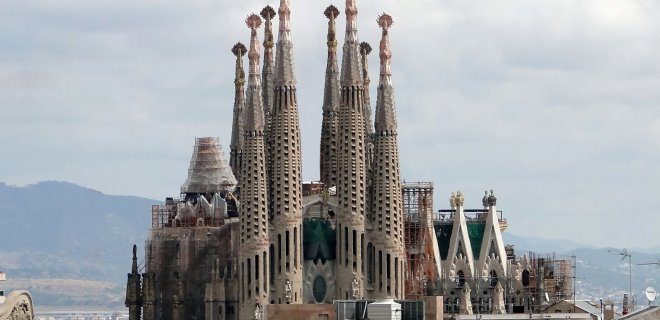
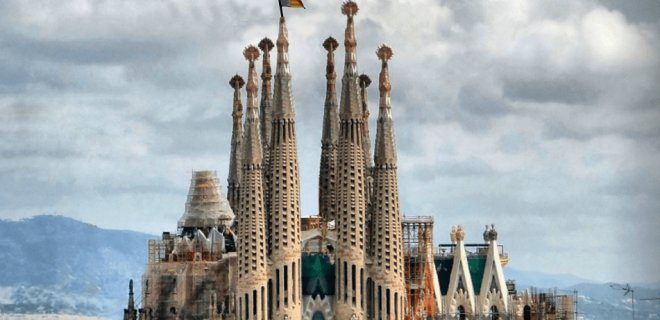
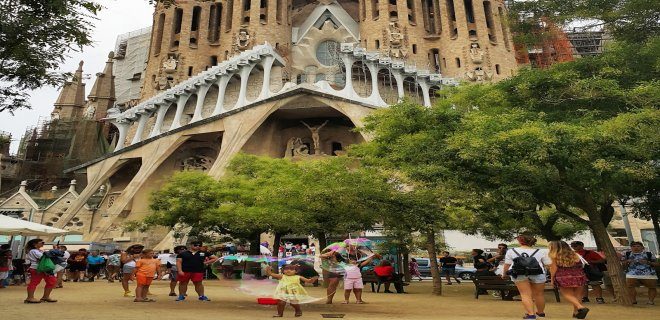
It is a church. It is a construction site. It is a museum. Trying to categorize Barcelona’s Sagrada Familia feels like trying to define a living thing that refuses to stay still. Antoni Gaudi didn’t just design a building; he started a project in 1883 that would consume his entire life until his death in 1926. Today, the basilica remains a bizarre hybrid of active worship space, tourist magnet, and sheer industrial chaos.
The Endless Construction Timeline
You are not visiting a finished monument. You are visiting a project with a predicted completion date of 2030. That is nearly a century after Gaudi’s death. The structure began as Neo-Gothic but evolved into something far stranger: a pinnacle of modernism and Art Nouveau style. The scaffolding isn’t hiding flaws; it’s holding up the future. This duality creates a singular experience in global tourism. There is nothing else quite like it.
Inside the Forest of Stone
Why do people go? To stand under columns that mimic trees. Gaudi rejected the straight lines of traditional Gothic architecture. Instead, he studied nature. He designed columns that branch out at the top like oak or pine trees. The light filters through stained glass in ways that shift the color of the interior throughout the day. It is not just a place for prayer. It is an optical and architectural experiment.
What You Need to Know Before You Go
Planning a visit requires logistics, not just inspiration. Here is the reality of visiting this UNESCO World Heritage site.
- Tickets are non-negotiable. You cannot just show up. The basilica has a strict hourly entry limit. Booking online weeks in advance is mandatory during peak season.
- Dress code is enforced. Shoulders and knees must be covered. This is an active church. Tourists in shorts and tank tops are turned away at the door.
- Security checks are mandatory. Expect bags to be scanned. Large backpacks are not allowed inside.
- The facade matters. The Nativity Façade is the oldest and most ornate. The Passion Façade is stark and angular, designed to evoke suffering. They tell different stories.
“The original idea was to have 18 towers… but the budget and time are the real constraints.”
Is It Worth the Hype?
Yes. But not for the reasons you think. It isn’t just a pretty church. It is a testament to stubborn vision. Gaudi’s models are still in the basement, guiding builders who use computer-aided design to interpret his wooden sketches. The tension between the ancient and the modern is palpable. You can hear the drills. You can see the cranes against the sky.
The basilica is a paradox. It is holy ground. It is a massive revenue generator for the city. It is a workshop. Embrace the noise. Embrace the unfinished state. That is where the magic lies. The light hitting the stone doesn’t care about your travel itinerary. It just shines.
The Construction Saga That Never Ends
It wasn’t supposed to be a construction site that outlives its architect. Yet, here we are, watching the spires of the Sagrada Familia pierce the Barcelona sky—a structure so famously unfinished it has become a character in its own right.
The full name, Templo Expiatorio de la Sagrada Familia (Expiatory Temple of the Holy Family), hints at the spiritual weight behind the steel and stone. But the history is messy. The project kicked off in 1882 with a rather standard neo-Gothic design by architect Francesc del Villar. Simple. Predictable.
Then came the squabble. Management clashed with the architect. It was a petty administrative breakup that changed everything. In 1883, Antoni Gaudi stepped in. He didn’t just continue the work. He tore up the blueprints.
What Gaudi brought to the table was a chaotic, organic modernism that defied the rigid geometry of the past. He didn’t just design a church; he designed a forest made of stone. The result is a skyline-defying masterpiece that balances on the edge of completion, a paradox of holy serenity and industrial hustle.
Why Gaudi’s Twist Matters for Your Visit
You aren’t just visiting a church. You are walking inside a sculptor’s mind. When you finally book your tickets for this low-competition, high-demand entry, look up.
Gaudi’s design isn’t about straight lines. It’s about trees. The columns branch out like trunks, supporting a canopy of light.
“Gaudi didn’t just build a church. He built a stone forest.”
This shift from Villar’s gothic revival to Gaudi’s unique vernacular is why the site remains so compelling. It’s not just historical. It’s visually disruptive. The light doesn’t just enter; it dances.
When to Book and What to Expect
The incompletion isn’t a bug. It’s a feature. The scaffolding is part of the aesthetic now. But here is the practical reality: getting in requires strategy.
Tickets sell out weeks in advance. You cannot just show up. The cost varies by season and whether you add an audio guide or a tower climb, but expect to pay a premium for the privilege of entry.
Timing matters. Early morning light hits the Nativity Façade differently than the evening sun on the Passion Façade. The western side is stark, aggressive, and unfinished. The eastern side is lush, detailed, and complete.
Where It Stands Today
The basilica sits in the Eixample district, Barselona’s grid-like neighborhood that Gaudi himself helped shape. The contrast is jarring. You have rigid, perfect squares surrounding a swirling, impossible structure.
Construction has paused and restarted more times than anyone cares to count. Recent delays due to funding and structural studies have pushed completion dates further into the future. Some say it will be done in 2026, marking 100 years since Gaudi’s death. Others doubt it.
Does it matter? No. The magic is in the tension. In the half-finished arches. In the crane shadows dancing across the nave.
You come for the history. You stay for the light. And you leave wondering how a building can feel more alive when it’s
The construction dragged on. Not because of laziness, but because the scale was almost impossible to manage.
Funding issues hit regularly. The sheer size of the basilica created planning nightmares that architects barely understood at the time. Every new challenge pushed the deadline further out.
Gaudi understood this reality better than anyone.
He spent the final 14 years of his life literally living inside the site. He didn’t just design it; he breathed it. He worked in the shadows of the rising stone, tweaking details until his last breath.
When he died in 1926, the project was far from finished. In fact, it was barely a fraction of the vision he had mapped out decades earlier.
Here is what remained in his hands:
- The Nativity Facade: The eastern face depicting the birth of Jesus. It was the only facade fully completed under his direct supervision.
- One Tower: Just a single spire from that central facade stood tall.
- The Apse: The inner semicircular recess at the end of the chancel.
- The Crypt: The underground burial chamber.
Note that the crypt wasn’t fully Gaudi’s work. It had been completed earlier by the previous architect, Francisco de Paula del Villar. Gaudi took over the project in 1883, inheriting a foundation that was already laid but far from his original, more Gothic-inspired initial plans.
That’s it. Four major elements. That was all Gaudi managed to bring to completion before his tragic death in a street accident.
The rest of the towers? The Passion Facade? The Glory Facade? Those would take over a century to finish. The delays weren’t just about money. They were about the sheer weight of ambition.
Sagrada Familia’nın Gölgeleri: İnşaatın Uzun Hikayesi
1936’ya gelindiğinde İspanya İç Savaşı patlak vermiş. Gelişim doğal olarak durmuş. Kilisenin yapımı yarım kalmış. On yıl sonra, 1950’lerin başında bir grup mimar devreye girdi. İşler yeniden başladı. Ama bu sadece bir inşaat değil. Bu, bir inanç projesinin yarım kalan sayfasının devamı niteliğinde.
Bugün bile inşaat devam ediyor. Her yıl milyonlarca insan buraya akıyor. Neden? Çünkü Gaudi’nin vizyonu eksiksiz olarak henüz tamamlanmadı. Orijinal projeye sadık kalınarak ilerleniyor. Mimari detaylar dikkatle inceleniyor. Her sütun, her kemer, her vitray pencere bir sonraki nesile miras bırakılıyor.
Ziyaret Taktikleri ve Giriş Ücretleri
Sagrada Familia’ya gitmeden önce belli başlı şeyleri bilmek faydalı. Şehirde gezmek için erken saatlerde yola çıkın. Kalabalık öğleden sonra artıyor. Kapılar sabah erken açılıyor. Giriş biletleri önceden alınmalı.
Neden önceden? Çünkü yerinde kuyruklarda saatler harcamak istemiyorsunuz. Online rezervasyonlar genelde daha uygun. Fiyatlar sezonluk değişim gösterebilir. Yaz aylarında yoğunluk daha fazla. Kışın ise ışık oyunları farklı bir etki yaratıyor. Güneşin konumu vitrayların renklerini değiştirir. Bu değişimi kaçırmamak gerekir.
Yeme-İçme Önerileri
Kilisenin dışına çıktığınızda açlık kapınıza dayanır. Bölge çevresinde birçok restoran var. Ama hangisi seçilmeli?
- Ciutat Vella bölgesi : Tarihi dokuya yakın, otantik mekânlar.
- Eixample civarı : Daha modern, işlek caddelerdeki kafe seçenekleri.
- La Boqueria yakını : Pazarın tazelikini yansıtan sokak lezzetleri.
Ortalama bir yemekte ne kadar harcarsınız? Turist bölgelerinde fiyatlar daha yüksek. Ama arka sokaklarda daha uygun seçenekler bulunabilir. Tapas kültürü yaygın. Birkaç küçük tabak paylaşmak hem ekonomik hem de lezzetli.
Neden Burası Farklı?
Gaudi’nin tasarımı sadece bir kilise değil. Bir sanat eseri. Doğa ile mimarinin birleşimi. Her detayda bitkisel motifler var. Bu detayları kaçırmamak için yavaş hareket edin. Fotoğraf makinenizi hazırlayın. Işık değişimlerini takip edin.
Ziyaret sırasında dikkat edilmesi gereken bir husus var. Sessizlik. Burası ibadethane. Gürültü yapmamak gerekiyor. Telefonları sessize alın. Sesleri bastırmak istemeyin. İçerideki huzur hissi
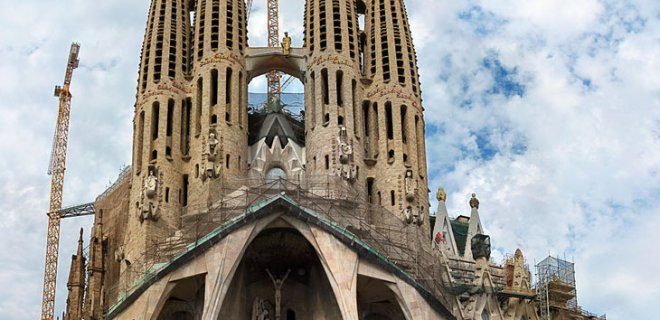
2010’da Papa XVI. Benedikt’in kutsamasıyla ibadete açılan o devasa yapı, aslında bitmemiş bir eser olarak kalacak gibi görünüyor. 1987’de Josep Maria Subirach’ın tamamladığı batı cephesi (Çile Cephesi), sürecin son büyük halkasıydı. Peki, neden 140 yılı aşkın bir süredir inşaat devam ediyor? Cevap hem Gaudí’nin hayal gücünün sınırlarını zorlayan karmaşıklığında hem de modern teknolojilerin bu organik formları kopyalamadaki zorluğunda yatıyor. Ayrıca, binanın “bitmeyen kilise” olarak kazanılan üne rağmen, inşaatın büyük ölçüde ziyaretçilerin bağışlarıyla finanse edilmesi mali akışı yavaşlatan bir faktör. Hızlı tamamlama baskısı yok.
Doğu Cephesi’nde Hayatın ve Umudun Simgeleri
Sagrada Familia’da gezilecek yerler arasında en dikkat çekici detaylardan biri şüphesiz doğu cephesi. Burası Gaudí’nin ruhunu en net hissettiğiniz nokta. Renk cehennemi gibi bir atmosfer var. Çiçekler, hayvanlar, meyveler ve insan figürleri bir arada, sanki doğanın kendisi taşın içinden süzülmüş gibi.
Cephenin sağ tarafında inanç, solunda umut, ortasında ise merhamet kapıları öne çıkıyor. Bu üçlü, yapının teolojik dilini oluşturuyor. Ama asıl büyü, sütunlardaki detaylarda saklı.
- Doğal Formlar: Kaplumbağalar ve bukalemunlar gibi canlıların kabuk ve deri dokuları, taşın yüzeyinde neredeyse hissediliyor.
- Kutsal Hikayeler: Mısır’a Kaçış, Masumların Katli, Yusuf ile Çocuk İsa ve Vaftizci Yahya’nın hayatından kesitler işlenmiş.
- Soy Ağacı Sütunu: İsa’nın soy ağacının yazılı olduğu bu sütun, tarihsel ve dini bir bağlantı kuruyor.
Bu detaylar, sadece süs değil. Gaudí, inancı doğanın ritmiyle harmanlamış. Ziyaretçiler için bu, sıradan bir kilise ziyareti değil, bir sanat müzesinde gezinti hissi yaratıyor.
Neden Hala İnşaat Devam Ediyor?
Birçok insan, “2030’da bitmesi planlanan bu yapının gecikmesinin sebebi ne?” diye soruyor. Yanıtlar basit değil.
- Gaudí’nin Karmaşık Planları: Mimarın çizimleri tam net değildi. Modern mimarlık yazılımları (CAD) bile bu organik formları tam olarak simüle etmekte zorlanıyor.
- **
The West Facade: Gaudí’s Final Chapter and Practical Entry Tips
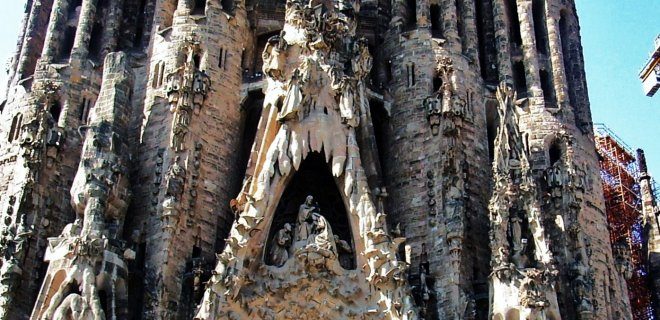
The West Facade, known as the Sagrada Familia West Facade, stands as the only completed section of Gaudí’s original 1883 plan. Unlike the other towers, this side wasn’t built by Gaudí himself. Instead, Josep Maria Subirachs took over in the 1980s to finish the sculptural details. The result is jarring. It’s jagged. It feels like a fracture in the stone. But it’s also the main entrance now.
If you are planning your visit, this is where you go. All current public entrances route you through here. You aren’t walking into the mystical space of the Nativity Facade. You’re stepping through a portal of modern interpretation.
Subirachs didn’t shy away from the dark. He called it the Passion Facade, but technically, that label usually applies to the south side. The west side is the Sagrada Familia Entrance for most tourists. He focused on biblical narratives that emphasize suffering and judgment. It’s heavy. It’s brutalist in its emotional weight.
The sculptures tell specific stories. You’ll see:
– The Flight into Egypt
– The Massacre of the Innocents
– The story of Joseph and the Child Jesus
– The Tree of Jesse (Jesus’s genealogy carved into a column)
– John the Baptist
Gaudí’s original vision included organic forms. Think lizards, turtles, geckos. He wanted nature to frame the sacred. Subirachs kept some of that biological language. You can see reptilian shapes twisting around the figures. But the faces are elongated. The muscles are tense. It feels less like a gentle prayer and more like a scream frozen in stone.
This contrast matters for your experience. The Nativity Facade (east) is life, birth, joy. The Passion Facade (south) is death, suffering, stark lines. The West Facade is the threshold. It’s where you transition from the street to the sacred. It’s where the modern world meets Gaudí’s 19th-century dream.
Planning your visit to the West Facade:
Since this is the main entry, logistics are critical. Book tickets weeks in advance. Walk-up spots are rare. The lines move fast here, but not because the experience is quick. The security check is thorough. They scan bags. They check tickets against your passport or ID.
Timing affects the light. The sun hits the west facade in the late afternoon. Shadows stretch long across Subirachs’ carvings. If you want photos that capture the texture of the stone, aim for 5 PM in summer. In winter, it’s darker earlier. The interior will feel colder too. The stone doesn’t hold heat well.
What’s worth seeing up close? The Tree of Jesse column. It’s a vertical scroll of faces. Each one is an ancestor of Christ. Look for the detail in the eyes. They’re hollow. Dark. It’s unsettling. Then look up at the Flight into Egypt group. Mary holds the baby. Joseph leads the donkey. The faces are worried. You can see the fear in their furrows.
Don’t rush this part. It’s easy
The South Façade: A Visual Fight Between Flesh and Spirit
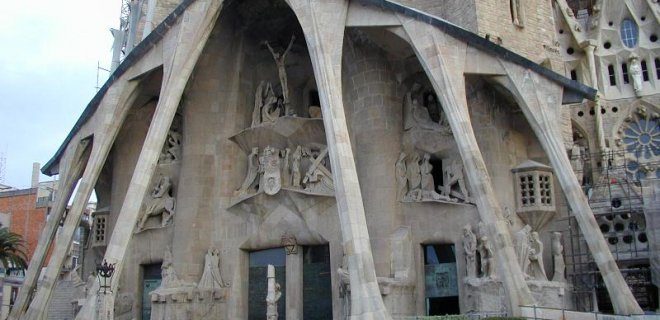
The Sagrada Família South Façade is where Gaudí gets messy. It is not polite. It is not orderly. It is a chaotic, stone-carved argument between sin and salvation that has been under construction since the early 20th century and will likely remain unfinished for decades to come.
If you are looking for clean lines, look elsewhere. Here, the sculptural program is explicit. It tells the story of the Last Judgment. You will see figures representing vices. You will see demons. You will see the physical weight of earthly sins dragging everything downward.
But the trick of the design is verticality.
Above the grotesque, the stone opens up. The heavy, twisted forms give way to lighter, upward-sweeping columns. The figures here shift from torment to transcendence. They climb. They rise. The upper zones symbolize heaven, using flora and geometric lightness to suggest a place beyond the gravity of the earth below.
Why the South Façade Matters for Your Itinerary
Most tourists rush past the South Façade because the Gaudí’s unfinished architectural details on the Nativity Façade (the East side) are more polished and famous. But the South Façade offers a different kind of intensity. It is the theological battleground.
When you stand in Plaça de la Sagrada Família, facing this side, you are looking at the entrance to the “Hell” of the Last Judgment, which leads upward toward Paradise. It is a narrative journey carved in limestone and granite.
What to Look For Specifically
The sculptures were largely completed by Josep Maria Subirachs in the late 20th century, long after Gaudí’s death. His style is rawer. Harsher. If you want to understand how the South Façade differs from the Nativity Façade, note the emotion. The Nativity side is joyous, full of life and birth. The South side is anxious, tormented, and desperate.
Key details to spot:
– The Demons: They are not just decorative monsters. They are twisting around the columns, trying to pull the faithful down.
– The Vices: Each sin is personified. You will see greed, wrath, and lust rendered in stone.
– The Ascent: Look at how the stone becomes less dense as you look up. The “heavenly” zone uses abstract floral motifs rather than human figures, suggesting a realm beyond human form.
Logistics and Timing
The South Façade faces Plaça de la Sagrada Família. It is the main square. This makes it the easiest side to access, but also the most crowded.
- Best Time to Visit: Late afternoon. The light hits the stone at an angle that emphasizes the shadows of the demons and vices. Midday sun flattens the relief work, making the intricate carvings harder to read.
- Cost: You cannot “buy” a ticket just for the façade. It is part of the basilica entry. Expect to pay around 26-30 euros for standard entry, more if you add the towers. The Sagrada Familia ticket prices vary by season, so book online weeks in advance.
- Access: There is no
Climbing the Spires: The View from Sagrada Familia’s Towers
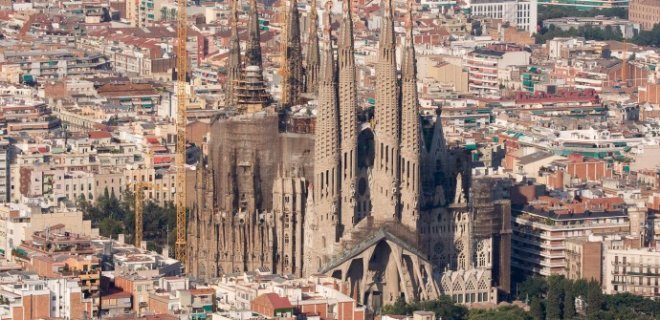
Let’s get one thing straight. Looking up at the Sagrada Familia from the pavement is impressive. It’s the classic postcard shot. But staying there? That’s where you miss the point. The towers are not just decoration. They are vertical invitations to see Barcelona from a perspective most tourists never get.
There are eighteen towers in total. Eight represent the apostles. Four the evangelists. One for the Virgin Mary. And the big one in the center? Jesus Christ. It is the tallest of them all. But you cannot just walk up to any of them. Access is restricted.
This is the key detail most guides gloss over. If you want to climb, you must book tickets that specifically include the towers. Regular admission only gets you inside the nave. It keeps you on the ground. And while the interior is stunning, the exterior view from above is a different beast entirely.
Which Tower Should You Choose?
Not all climbs are created equal. The choice depends entirely on what you want to see and how much you hate narrow spaces. There are currently two options available for visitors. The Nativity Facade towers and the Passion Facade towers.
The Nativity Facade is the older side. It faces east. It is decorated with intricate carvings. The trees, the animals, the biblical scenes—they are all still visible here. If you climb these towers, you exit near this façade.
The Passion Facade is on the west. It is stark. Angular. Gaudy in its own way. It looks like it was carved by a different, more brutal artist. If you choose these towers, you exit on the west side.
Why does this matter? Because the light is different.
If you are visiting in the morning, the light hits the Nativity Facade. The stone glows. The details pop. The view over the old city is warm. If you go in the late afternoon or evening, the Passion Facade catches the sunset. The shadows are deep. The contrast is harsh. It is dramatic.
The Physical Reality of the Climb
Do not expect an elevator. Not for the full experience. The towers are accessed via spiral staircases. They are tight. They are steep. And they are long.
You are climbing roughly 500 to 600 steps. It depends on which tower you pick. The steps are uneven. Some are wider than others. The walls are close. If you are claustrophobic, this will be a problem. If you are anxious about heights, look away from the edges.
There are no handrails in the narrowest sections. You have to trust the stone. The air gets thick. It gets warm. You will likely see other people sweating. You will hear the clack of your own shoes on stone. It is a physical workout. A deliberate one.
Gaudi designed this. He wanted the climb to be a penance. A preparation for the view. It is not just fitness. It is ritual.
The Payoff
When you finally push open the heavy door at the top, the noise of the street vanishes. The wind hits you. And then you see it.
Barcelona spreads out below you. It is not a flat map. It is a texture. You see the grid of
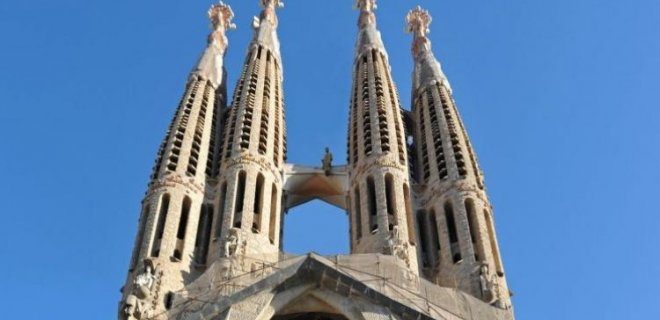
The Climb to the Top of Sarmada
Most people miss the real point of Sarmada.
They look at the stained glass. They whisper about the history. They ignore the view.
The basilica’s defining feature isn’t the architecture below. It’s the panorama waiting above. You have to climb. You have to earn the sight.
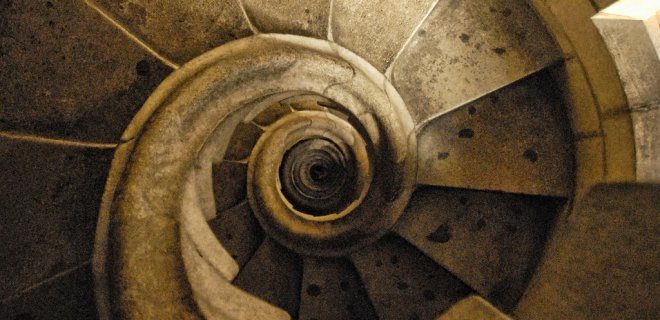
The route is a spiral staircase. It winds upward like a snail shell. It feels tight. It feels intentional.
Why build stairs like that? It forces a slow ascent. You don’t rush the view. You rotate through the city of Barcelona.
What You See from the Summit
Start at the bottom. Take the first few steps. The light changes.
Reach the top. The city opens up.
You see the grid of Eixample. You see the curve of the Mediterranean. You see the contrast between old stone and modern glass.
This isn’t a quick glance. It’s a full rotation.
The spiral design ensures you don’t get dizzy. It guides your eye across the skyline. Every angle reveals something new.
Practical Tips for the Ascent
Timing matters. Go late afternoon.
The light hits the buildings differently. Shadows lengthen. The city glows.
Expect a short wait. The staircase is narrow. Only one person fits comfortably.
Move steadily. Don’t linger on the steps. They aren’t a viewing platform.
Take your photos. Capture the horizon. Then descend.
Why This View Changes the Experience
Many tours skip the tower. They assume it’s optional.
It’s not. It’s the payoff.
Without the climb, the basilica is just a building. With it, Sarmada becomes part of the city’s fabric. You feel connected to Barcelona’s scale.
The spiral staircase is unique. It’s not just functional. It’s an experience.
Think of it as a transition. From the sacred interior to the secular sprawl.
Final Considerations for Travelers
Check opening hours. Towers often close earlier than the main hall.
Wear comfortable shoes. The stairs are stone. They can be slippery if wet.
Bring a small camera. Tripods aren’t allowed. Wide lenses help capture the breadth.
The view is free with entry. Don’t pay extra for guided tours if you want to climb. Do it yourself.
Feel the turn of the stairs. Watch the city unfold.
It’s not just a sightseeing stop. It’s a moment of perspective.
And then you’re back on the street. The noise returns. The traffic resumes.
But you’ve seen the city from above. That stays with you.
For a while.
Eixample’da takılıp kalmak istemiyorsanız, konaklama seçimi hayat kurtarır. Gaudí’nin başyapıtı Sagrada Familia, şehrin kalbinde değil. Casa Batlló veya La Pedrera’dan yürüyerek gitmek 35-40 dakika sürer. Ayaklarınız yorulur muhtemelen.
Toplu taşıma daha akıllıca.
Sagrada Familia’ya Ulaşım: Metro ve Otobüs Seçenekleri
Bazilikaya nasıl gidersiniz? İki ana yol var. Ya metroya binersiniz ya da otobüse.
Metroyu tercih ediyorsanız 2 ve 5 numaralı hatlara yönelin. İneceğiniz durağın adı açık: Sagrada Familia. Çıkışa ulaştığınızda yapının kuleleri sizi karşılıyor.
Otobüs mü daha iyi? Şehir içi trafiğinde sıkışmak istemiyorsanız da doğru tercih olabilir. Aşağıdaki hatlar doğrudan bazilikanın önünde durur:
– 9
– 33
– 34
– 43
– 44
– 50
– 51
– B20
– B24
“Modern Barselona merkezi Eixample’de yer alan Sagrada Familia Bazilikası diğer turistik noktalara çok yakın sayılmaz.”
Bu mesafe, yürüyüş için serin saatlerde tolere edilebilir. Ama öğle vakti, güneş tepede olduğunda, metro kapısı sizin için en iyi arkadaşınız olacak.
Biletlerinizi önceden alın. İstasyonlar kalabalık. Özellikle turist sezonu.
Hangi güzergahı seçerseniz seçin, sonunda Gaudí’nin taştan müziğine tanıklık etmiş olacaksınız. Bekleyişin bedeli buna değer mi? Kesinlikle.
Barcelona Sagrada Familia Ticket Prices
Walking up to Gaudi’s unfinished masterpiece, you’re hit by the sheer scale of it. The spires claw at the sky. It’s intimidating. It’s beautiful. It’s expensive if you don’t check the prices first.
Most people just show up. Big mistake. You’ll stand in a line that wraps around the block. You’ll pay the premium. You’ll miss the context.
Here is what you actually need to pay to get inside. No fluff. Just the numbers that matter for your budget.
What You’re Paying For
If you are on a tight budget, you can get the basic entry. It’s straightforward. You walk in. You look up. You leave.
- Standard Individual Ticket : €15. This gets you past the turnstile. It’s a one-way ticket. You can’t double back.
But looking isn’t enough. The light changes. The shadows shift. You need to understand the geometry.
The Audio Guide Upgrade
For €22, you get the self-guided audio tour. It’s not a live person breathing down your neck. It’s a recording. It’s clean. It’s efficient.
You get a headset. You listen while you walk. You learn about the Nativity Façade. You learn about the Passion Façade. You learn why Gaudi was obsessed with hyperboloids.
It’s worth the extra seven euros. The silence of the basilica is heavy. The audio doesn’t break the mood. It enhances it.
The Guided Tour Option
Some people hate headphones. They want a human voice. They want questions.
- Guided Tour (Basic) : €24. This is a group tour. You follow a guide. They point things out. It’s informative. It’s social.
If you are traveling with kids, this is probably your best bet. They stay engaged. You don’t have to explain the symbolism of the four evangelists to a restless ten-year-old.
The Kule Experience
This is the big upsell. The towers.
You can climb the spires. The view of Barcelona is panoramic. You see the Mediterranean. You see the grid of Eixample.
- Audio Guide + Tower Access : €29.
Is it worth it? The stairs are narrow. The air is thin. The climb is steep. But the perspective changes everything. You see the city as a machine. You see how the basilica fits into the urban fabric.
If you have mobility issues, skip the towers. Stick to the ground floor. The interior is stunning enough. You don’t need altitude to feel awe.
Which Option Wins?
It depends on your time.
If you are rushing? Grab the €15 ticket. Get in. Get out. Take photos.
If you want depth? The €22 audio guide is the sweet spot. You move at your own pace. You stop where you want. You linger at the stained glass.
If you want the full Gaudi experience? The €29 package with tower access. Just book it weeks in advance. The slots fill up. They fill up fast.
The basilica doesn’t care about your budget. It only cares about your ticket.
When to Book Your Ticket to the Sagrada Familia
Timing isn’t just a suggestion. It is the single biggest factor between a smooth entry and a wasted trip. Gaudi’s masterpiece in Barcelona doesn’t run on a fixed clock year-round. The hours shift with the seasons. If you guess wrong, you miss out.
The daylight hours dictate the rhythm. During the darker winter months, the basilica closes earlier. From November through February, you have a tight window. 09:00 to 18:00 is all you get.
Summer demands more time. April through September pushes the closing time to 20:00. That’s two extra hours. Use them for the light show inside. The stained glass changes color as the sun moves. Morning light is cool blue. Afternoon turns to deep red and gold.
March and October sit in the middle. 09:00 to 19:00 applies then.
Holidays break the pattern. If you visit on December 25th, 26th, January 1st, or January 6th, the doors shut early. 14:00 is the hard stop. After that? Closed. Do not show up at noon expecting a full tour.
Why Hours Matter for Your Itinerary
You can’t just walk in. Tickets sell out weeks in advance. Especially in summer.
The time slot is locked. You can’t move it.
If your flight lands late, you might miss your slot. Miss the slot, miss the basilica.
Plan backward from your desired entry time. Work out transport. Factor in security lines. Even with a ticket, queues form.
Winter mornings are quieter. Summer afternoons are chaotic.
Which is better? Quiet awe or vibrant chaos? Depends on your tolerance. But both require precise timing.
Special Dates and Early Closures
Major religious holidays disrupt the schedule.
December 25 and 26. Boxing Day and Christmas. Half days only.
January 1 and 6. New Year and Epiphany. Also half days.
If you are chasing the winter solstice light, you have a narrow window. Get there early. The light hits the east facade first. Before the crowd.
Logistics: Getting There on Time
The basilica sits near the L2 and L5 metro lines. Verdaguer station is closest. Or Passeig de Gràcia. Both are walkable.
But walking from the city center in summer heat? Add 20 minutes.
If you are near Plaça de Catalunya? Take the metro. It’s faster.
Avoid rush hour. Trains are packed. You’ll be sweating before you even see Gaudi’s towers.
The Reality of Peak Season
April to September. 09:00 to 20:00.
This is peak. Thousands of visitors daily.
Book online. Choose the earliest slot. 09:00 gets you in before the buses unload.
Skip the midday sun. It’s harsh. The interiors are cool. But the crowds are thick.
Night visits? No. The basilica does not stay open late for tourists. Only special events. But those are rare.
The Real Cost of Going Off-Grid in Svalbard
Most people think Svalbard is just ice. It’s not. It’s a logistical puzzle wrapped in permafrost, where the price of a coffee can buy you a decent dinner in Oslo, and where the sun might not rise for months. If you are planning a trip here, you aren’t booking a vacation. You are signing a waiver for adventure.
The primary draw isn’t just seeing polar bears. It’s the sheer audacity of being there when the world is asleep. You need to know the economics of this place before you pack your bags.
Budgeting for the Arctic Wild
You cannot backpack through Svalbard like you would in Thailand or Peru. Prices here reflect the difficulty of shipping everything from mainland Norway. A simple breakfast can run you 200-300 NOK (roughly $20-$30 USD). A dinner at a mid-range restaurant? Expect to pay 600-900 NOK ($60-$90 USD). Alcohol is heavily taxed, so a bottle of wine might cost you double what you’d pay in a city.
| Item | Estimated Cost (NOK) | Estimated Cost (USD) |
|---|---|---|
| Hostel Dorm Bed | 400 – 600 | $40 – $60 |
| Hotel Room (Standard) | 1,500 – 2,500 | $150 – $250 |
| One-way Bus Ticket | 30 – 40 | $3 – $4 |
| Museum Entry | 100 – 150 | $10 – $15 |
| Meal at Restaurant | 200 – 600 | $20 – $60 |
“Svalbard is expensive because it’s remote. But that expense buys you solitude.”
Navigating the Dark Months
If you visit between late November and mid-January, you’ll experience the Polar Night. This isn’t just “dark.” It’s a psychological weight. The sun doesn’t rise. The sky stays a deep, bruised purple or black.
Why go then? The aurora borealis. The northern lights are frequent and vibrant. But you need to balance this. You can’t hike in total darkness without gear. You need headlamps. You need to know your way around Longyearbyen, the only real town, or you’ll get lost in the snowbanks.
Timing is everything. If you come in winter, you must book tours in advance. Snowmobile safaris and dog sledding sell out weeks ahead. Prices for these activities range from 2,000 NOK ($200) for a short tour to 5,000 NOK ($500) for a full-day expedition. Don’t wing it.
Light and Life
From late February to early March, the sun returns. It’s called the Polar Sunrise. The light changes slowly. First, it’s a faint glow on the horizon. Then, the days get longer. This is the sweet spot for photography. The light is soft. The bears are still out, though less active. The crowds thin out.
Which is better?