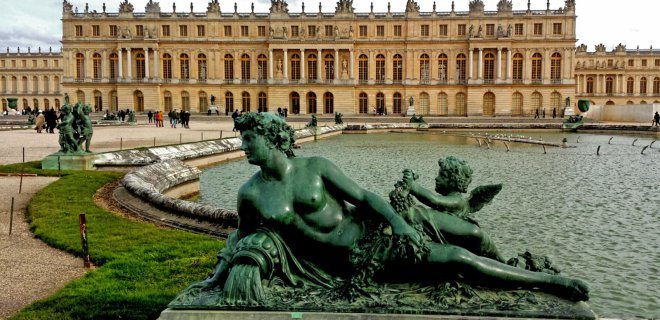
The Palace of Versailles is not just a stop on a European itinerary. It is the heavyweight champion of French heritage. If you are planning a trip to France, you likely already know its name. You have seen the Hall of Mirrors in history books. But standing in front of the actual gates changes everything. The scale is almost aggressive.
Construction started in 1661 under Louis XIV. What began as a modest hunting lodge exploded into a monument of absolute power. The architecture blends Baroque drama with Classicist order. It was, at the time, one of the largest palaces ever built in the world. Walking through its courtyards feels like stepping into a different era of politics and pride.
“The palace is so large that you could get lost in its history alone.”
Why Versailles Matters Beyond the Gilded Mirrors
Most tourists come for the gold leaf and the fountains. But the real weight of Versailles lies in its political shadow. It was a stage for monarchy. It was also a courtroom for peace and war.
After World War I, the Treaty of Versailles was signed here. This agreement was negotiated with the Allied powers. It officially ended the state of war between Germany and the Allied Powers. The hall where it happened is still intact. You can stand in that same room. The irony is palpable. This place of royal excess became the site of a harsh peace that would reshape the 20th century.
How to Navigate the Palace and Gardens
Visiting requires strategy. The site is massive. Trying to see everything in one day is a recipe for exhaustion.
- Timing is everything. Book tickets online weeks in advance. Walk-up lines are long and often sold out.
- Focus on zones. You cannot rush the Hall of Mirrors. You cannot rush the King’s Grand Apartments.
- Garden access. The gardens are free on non-fountain days. On fountain days, a ticket is required. The musical gardens show on weekends in spring and summer is a highlight.
- Transport. Take the RER C train from central Paris. It takes about 45 minutes. Avoid driving if you can. Parking is expensive and the traffic is brutal.
What Is Actually Worth Seeing
The palace has thousands of rooms. Most are closed to the public. Do not feel pressured to see them all. Focus on the core experiences that define the visit.
- The Hall of Mirrors (Galerie des Glaces). This is the centerpiece. 357 mirrors face 17 arched windows. Light floods in. It is stunning. Go early or late to avoid the worst of the crowds.
- The Royal Opera. A smaller, intimate theater above the entrance. The acoustics are perfect. The architecture is refined. It offers a quieter contrast to the main halls.
- The Queen’s Hamlet. Located outside the main palace, this rustic village was built for Marie Antoinette. She wanted to escape court life. It feels like a storybook farm. It is peaceful. It is worth the short walk or shuttle ride.
- The Gardens. André Le Nôtre designed them. They are a masterpiece of landscaping. The symmetry is mathematical. The water features are elaborate. Rent
The Gardens of Versailles: Mastering the Formal Landscape
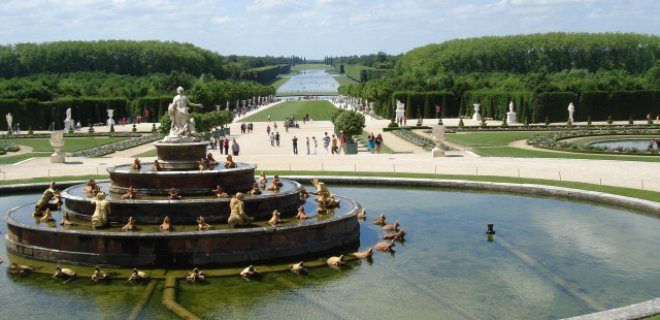
The scale is the first thing that hits you. Not the palace itself, but the sheer, calculated emptiness. Eight hundred hectares of meticulously ordered nature, designed by Andre Le Nôtre to project absolute royal power through symmetry. It is a classic French formal garden, a landscape where nature has been forced into submission.
Five to six million people walk these paths every year. They come for the Versailles Gardens, seeking that specific blend of awe and exhaustion.
Under the Ministry of Culture, the grounds are maintained in a state of perpetual perfection. The flowers, statues, and artificial canals are not just decorations. They are part of a visual hierarchy. If you look closely, you will see how the water channels lead the eye toward distant vanishing points, forcing your gaze to travel miles of imaginary space.
It has been a UNESCO World Heritage Site since 1979. The designation helped cement the region’s tourism status, but it didn’t create the draw. The draw is the engineering.
Practical Logistics for the Modern Visitor
You need a plan. Walking the entire perimeter is a marathon. Most visitors make the mistake of treating it like a casual stroll. It is not.
Timing is everything.
* Best time to visit: Late spring (May-June) for peak bloom, or autumn (September-October) for fewer crowds and dramatic light.
* Avoid: Midday in July and August. The crowds will crush the experience. The fountains stop running if the wind is too strong or if you arrive during maintenance windows. Check the schedule. The Grandes Eaux Musicales shows require separate tickets or timed entry.
Getting around.
The gardens are vast. Do not underestimate the distance between the Palace and the Queen’s Hamlet.
* Rent a bike: Essential. You can rent them at multiple entrances.
* Electric carts: Available for a fee, but they follow fixed routes.
* Boat rentals: On the Grand Canal, you can rent small boats. It is a different perspective entirely. The water reflects the sky, not just the architecture.
What to see (The Essentials).
1. The Latona Fountain: The starting point. Marble figures depicting the myth of Latona and her sons.
2. The Apollo Fountain: The centerpiece. Gold sun chariot, towering statue. It is the heart of the garden’s solar theme.
3. The Royal Canal: A square, reflecting the sky. You can row here. It is the only place in the garden where the geometry breaks into open water.
4. The Queen’s Hamlet (Hameau de la Reine): A pastoral fantasy built for Marie Antoinette. Fake farmhouses, a working dairy, a mill. It is romantic, staged, and worth the detour.
5. The Bosquets: The wooded areas. These are the most immersive. They feel like separate gardens within the garden. The Tapis Vert (Green Carpet) is a long, straight lawn stretching into the distance.
Beyond the Palace Walls
The gardens are not just an extension of the palace. They are a separate entity. Many visitors stick to the central axis. They miss the edges.
The eastern side
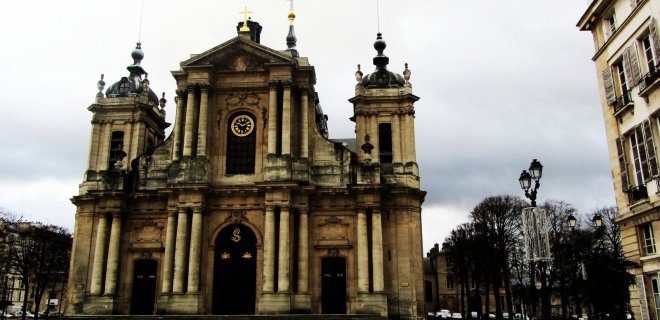
The Royal Chapel of Versailles
If you’ve spent days wandering the gilded halls of the Palace of Versailles, you’ve likely noticed the sheer scale of it all. But there is a quieter, more solemn counterpoint to the marble and mirrors. It’s the Royal Chapel, a structure that defines the spiritual heart of the estate and stands as one of France’s most significant national monuments.
The chapel isn’t just a place of worship. It’s a masterclass in royal ambition. Construction began in 1743, during the reign of Louis XV. Wait, that timeline feels off if you know your history. The palace itself is 17th century. Louis XIV built the main estate. So why did Louis XV pick up the trowel in 1743?
Because the old chapel didn’t cut it.
The original structure was too small for the growing royal court. Enter Jacques Hardouin-Mansart de Sagonne. He wasn’t just an architect; he was a grandnephew of Jules Hardouin-Mansart, the man who originally designed much of Versailles. This was family business on a monumental scale. The goal? To create a space that could accommodate the King, his family, and the entire court for Mass without anyone feeling cramped.
Construction was relatively swift for something this complex. It was completed in 1754. Eleven years. That’s fast when you’re dealing with stone, gold leaf, and theological debates.
Today, the Royal Chapel is the city’s most important sacred building. It’s inseparable from Versailles itself. You walk in, and the verticality hits you. The lower chapel is for the public and the servants. Look up, and you’ll see the upper level, reserved for the royal family. The separation is stark. The King’s box is front and center, flanked by the royal family. Everyone else is below. It’s a reminder that even in prayer, hierarchy was everything.
The architecture blends Gothic verticality with classical French elegance. The soaring arches draw your eye upward, but the details are restrained compared to the palace’s rococo excess. It’s solemn. It’s grand. It’s exactly what you’d expect from a king who wanted to be seen as both pious and powerful.
The Grand Trianon
Now, leave the solemnity at the door. Step outside. Breathe. The air here smells of clipped boxwood and lavender. This is where the Grand Trianon sits, nestled in the gardens.
Think of the main palace. Now imagine that energy, that pressure, those endless ceremonies. Now multiply it by ten. That was daily life in the Marble Court.
The Grand Trianon was built by Louis XIV as an escape. He called it his “petit château.” It was his retreat from the formalities of Versailles. The palace itself was too grand, too loud, too full of people who wanted something from the Sun King. The Trianon was different. It was pink marble. It was light. It was intimate.
You can walk through the rooms and feel the difference in air pressure. The walls are warm. The floors are marble, but not the cold, imposing kind. This marble is marbre rose, a soft, salmon-colored stone quarried specifically for this project. It changes with the light. Morning
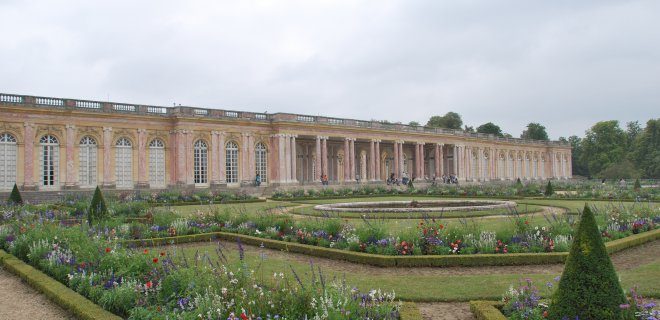
The Grand Trianon: A Summer Refuge Built for Pleasure
The Grand Trianon isn’t just another palace wing. It’s a distinct structure, built between 1670 and 1672 under Louis XIV. While the King’s main palace at Versailles demanded courtly rigidity, this smaller château offered escape. Architect Louis Le Vau designed it. He aimed for elegance over grandeur. At the time of its completion, it was widely considered the most beautiful building in the area.
The style is unmistakably Italianate. Think of the palazzos of Rome, scaled down for French tastes. But the architecture is only half the story. The gardens surrounding the Trianon were planted with an extravagant variety of flowers. They weren’t just ornamental; they were a statement of control over nature itself.
Who actually used this place? It wasn’t just for the King’s private moments. The Trianon hosted many important figures over the years. It served as a diplomatic venue, a place where politics could be conducted away from the prying eyes of the main court. If you’re visiting, look for the subtle signs of this dual life—the formal reception rooms next to the intimate private chambers. It’s a rare architectural example of work and leisure occupying the same footprint.
The marble used in its construction came from Saint-Béat. You can still see its pinkish hue in the courtyard. It contrasts with the white marble of the main palace. This choice wasn’t just aesthetic; it signaled a difference in purpose. The Trianon was for the body. The main palace was for the state.
Walking through the current gardens, you might miss this history. But the layout remains. The symmetry is precise. The flowers are replanted each season, just as they were in the 17th century. It’s a living museum of horticulture and power. Don’t just look at the facade. Look at how the light hits the columns in the late afternoon. That’s when the building feels most alive.

The final leg of the French journey isn’t about checking off a list. It’s about the rhythm of the cities. You’ve seen the coast. You’ve tasted the wine. Now you hit the north, the historic centers, and the bustling hubs that make France the most visited country on Earth.
This isn’t a summary. It’s the rest of the map.
Strasbourg: Where Germany Meets France
Cross into Alsace. The architecture shifts. Half-timbered houses lean over the Ill River. The Cathedral of Notre-Dame dominates the skyline, its single spire piercing the clouds.
Why come here? The atmosphere. It feels like stepping into a storybook that hasn’t finished writing itself.
“Strasbourg is less a city and more a collection of perfectly preserved moments.”
What to do:
– Walk the Petite France district. Cobblestones. Canals. Flower boxes. It’s cliché because it works.
– Eat tarte flambée. Thin crust. Crème fraîche. Onions. Bacon. Simple. Effective.
– Visit the European Parliament. Glass and steel. A stark contrast to the medieval old town nearby.
Logistics:
– Best time: December for the Christmas markets. Book six months out.
– Getting there: High-speed TGV from Paris takes about two hours.
Nice: The Promenade is the Point
You’ve seen Cannes. You’ve seen Monaco. Nice is the big sister. Less pretentious. More alive.
The Promenade des Anglais isn’t just a walkway. It’s a lifestyle. Palm trees. Blue sea. Yellow sand. People watch. People jog. People do nothing.
Must-see:
– Colline du Château. Hike up. Or take the elevator. The view of Baie des Anges is worth the effort. Sunset is non-negotiable.
– Vieux Nice. Narrow streets. Market stalls. socca (chickpea pancake) is the street food king here. Buy it hot. Eat it standing up.
– Matisse Museum. Housed in a 17th-century villa. The garden is as important as the art.
Cost tip:
Hotels near the coast are pricey. Look a few blocks inland. You save 30%. You still walk to the beach in ten minutes.
Bordeaux: The Port City’s Renaissance
Bordeaux isn’t just wine. It’s stone. Golden stone. The Place de la Bourse reflects in the Miroir d’eau. A giant mirror of water on the ground. It’s disorienting. Beautiful.
Key stops:
– La Cité du Vin. Interactive. Educational. You drink wine. You learn about wine. You leave knowing more than you entered.
– Grand Théâtre. Opera house. Baroque. Inside is as impressive as the façade.
– Rue Sainte-Catherine. Longest pedestrian shopping street in Europe. Flagship stores. Local boutiques. Everything is within walking distance.
When to go:
Spring. April to June. The weather is mild. The crowds are thin. The vines are green.
Metz: The Glass City
Often skipped by tourists.