


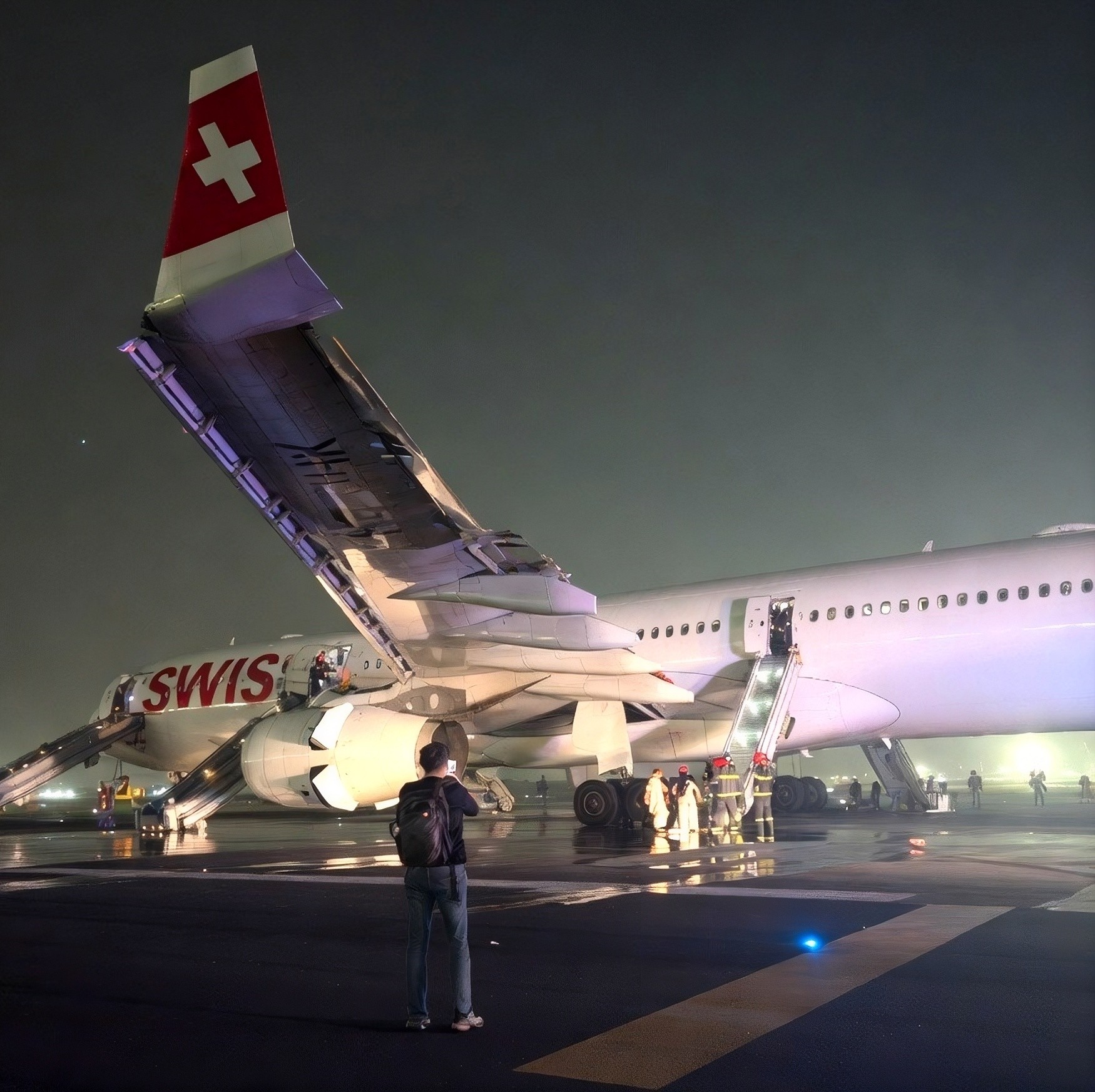
A routine long-haul flight from Delhi to Zurich turned into a high-stakes emergency in the early hours of the morning when a Swiss Airbus A330 experienced a critical engine failure during takeoff. While the crew successfully managed the mechanical crisis, the subsequent evacuation revealed a troubling trend in passenger behavior that poses a significant threat to aviation safety.
The Incident: From Takeoff to Emergency Stop
Shortly after 1:00 a.m., Swiss flight 147, an Airbus A330 carrying 228 passengers and four infants, began its takeoff roll on runway 28/10. As the aircraft reached speeds of approximately 105 knots, the left Rolls-Royce Trent 772 engine suffered a sudden, loud failure.
The flight crew acted decisively, rejecting the takeoff and bringing the heavy aircraft to a halt on the runway. Following the sudden deceleration, smoke was reported around the left side of the plane, likely caused by overheated brakes. Emergency services responded immediately, with fire crews spraying the left main gear to mitigate fire risks. To facilitate a rapid exit, the aircraft’s emergency slides were deployed.
The Human Element: A Dangerous Distraction
While the pilots and crew successfully evacuated the majority of the passengers, the process was marred by unexpected behavioral hurdles. Reports from the scene indicated that many passengers prioritized personal belongings and social media over rapid egress.
Key issues observed during the evacuation included:
– Retrieving Luggage: Passengers attempted to grab bags from overhead bins, significantly slowing the flow of people toward the exits.
– Social Media Distractions: Instead of moving quickly away from the aircraft, many passengers were seen filming the incident or pausing for selfies both on the slides and after reaching the ground.
The physical toll of the evacuation was evident, with six passengers requiring medical attention, including two who suffered serious leg fractures during the descent.
The Safety Paradox: Why Traditional Solutions May Fail
The incident raises a critical question for aviation safety experts: How do you manage human behavior during a high-adrenaline crisis?
Current discussions around preventing these delays often focus on two ineffective methods:
1. Mechanical Restrictions: Some suggest locking overhead bins to prevent passengers from grabbing bags. However, this may backfire, causing passengers to struggle with the bins and create even more congestion.
2. Punitive Measures: Implementing fines or punishments after the fact is unlikely to change behavior in the heat of the moment, as adrenaline often overrides logical reasoning during an emergency.
“The most important thing about safety planning is to model passengers as they actually are, rather than how you want them to be.”
This highlights a fundamental challenge in aviation: safety protocols must account for the reality of human instinct—the urge to protect possessions and the modern impulse to document experiences—rather than assuming passengers will act with perfect discipline.
Conclusion
The successful rejection of the takeoff by the flight crew prevented a much larger catastrophe, yet the evacuation highlighted a growing gap between safety protocols and passenger psychology. Moving forward, the industry must find ways to design emergency procedures that account for the distracted, instinct-driven behavior of modern travelers.


