You won’t find the Rozwi Empire on most standard safari itineraries. It’s not a tourist draw in the way Victoria Falls or the Great Zimbabwe ruins are. But if you dig into the history of southern Africa, specifically the region that is now Zimbabwe, you uncover a powerful, mineral-rich state that once dominated the landscape.
The story really kicks off with a figure named Changamire Dombo I. He ruled between 1684 and 1695. In the 1690s, he drove the Portuguese out of their marketplaces along the Zambezi River valley. Why does this matter to a modern traveler? Because it marks a shift in power. Dombo conquered the most fertile lands and the richest mineral deposits in the area. He established what became known as the Rozwi confederacy.
The changamire title belonged to one of the most potent rulers in 18th-century south-central Africa. Yet, the political map of the time was messy. Historians still debate the exact relationship between the Rozwi and neighboring powers like the Matapa empire. We know Dombo was strong. We don’t fully know how he connected to the wider web of kingdoms in the region.
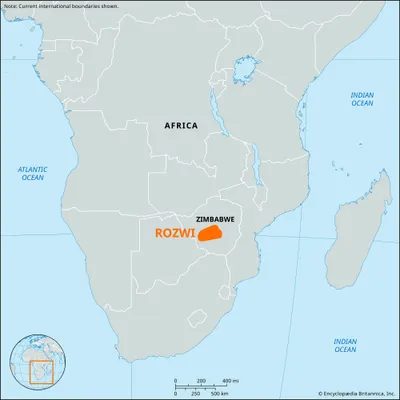
Where Was the Rozwi Territory?
The boundaries of the Rozwi confederacy didn’t stay fixed. They shifted. At its peak, the influence stretched over much of present-day Zimbabwe. It likely pushed westward into what is now Botswana. To the south, it extended into northeastern South Africa.
If you are planning a trip to southwestern Zimbabwe, look for the nuclear sites of the kingdom. These aren’t flashy monuments with gift shops. They are archaeological remains characterized by distinctive band and panel polychrome pottery. You will also see stone buildings. These structures speak to a sophisticated society that valued both agriculture and trade.
Why Did It Collapse?
The kingdom didn’t last. It disintegrated in the early 19th century. The reasons are tied to internal dynamics and external pressures, though the precise triggers remain less documented than Dombo’s rise. What remains clear is that the Rozwi left a distinct cultural imprint. Their pottery styles and architectural techniques are unique markers of their presence in the region.
For the traveler interested in deep history, this era offers a different lens. It’s not just about ruins. It’s about a period of resistance against European expansion. Dombo’s actions in the 1690s halted Portuguese influence in the Zambezi valley for a time. That’s a significant historical pivot point.
The Rozwi confederacy was a complex political entity. It controlled resources. It commanded respect. And then, like many states in the region, it faded. Today, its legacy survives in the archaeological record and in the oral histories of the people who live there.
You might not see a statue of Changamire Dombo in Harare. But you can trace the paths he took. You can look at the pottery shards in local museums. You can stand in the ruins and imagine the markets that once thrived there before the Portuguese were pushed back. The history is there. You just have to know where to look.