


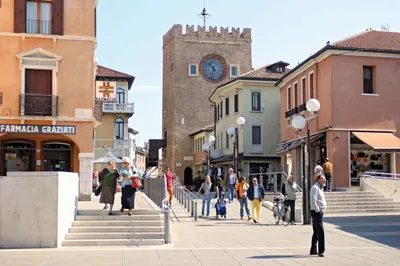
You might not look twice at Mestre. It sits on the mainland edge of the Venice Lagoon in the Veneto region of northern Italy. To the casual observer, it’s just concrete and rail yards. But that is a mistake. Mestre is the engine room for the city next door. It is administratively part of Venice today. This wasn’t always the case. For centuries it was a separate entity. A fortress stood here in the 12th century. Romans used this land long before that.
The shift to Venetian domination happened in 1337. Then came the final merger in 1926. Today, Mestre includes the heavy industrial districts of Marghera and Porto Marghera. The port area dates back to 1919–1928. It is one of Italy’s most important commercial hubs. You will find chemical plants, metallurgical factories, and iron works here. There are glass industries too. Coal processing and oil refining happen on these shores. Naval dockyards build ships that travel the world. The port exports regional products. It imports coal, oil, ores, and cereals.
So why visit?
Because Mestre is the practical gateway to the fantasy of Venice. You can stay here. You can eat here. You can explore the real, working Italy that powers the tourist traps across the water.
The Industrial Reality of Porto Marghera
Porto Marghera isn’t pretty. It’s powerful. This is where the magic of Venice gets its fuel. The area was constructed between 1919 and 1928. It grew rapidly. Today it handles massive volumes of trade. If you look closely, you see the scale of Italian industry. Chemical plants hum. Iron works glow. Glass factories produce the iconic materials of the region.
This isn’t just about cargo. It’s about history. The port has been a critical node for over a century. It exports what Veneto grows and manufactures. It imports the raw materials needed to keep Italy running. Coal. Oil. Ores. Cereals. All of it moves through these docks.
For a traveler, this is a different side of Italy. It’s not canals and gondolas. It’s smokestacks and cranes. It’s the skeleton of the economy. Seeing this helps you understand how Venice survives as a museum city. It needs Mestre. It needs this industrial powerhouse.
Mestre as a Strategic Base
Most tourists skip Mestre. They head straight for St. Mark’s Square. They pay for overpriced hotels in Venice. They struggle with luggage on bridges. Don’t do that. Stay in Mestre. It’s cheaper. It’s easier. The train to Venice takes minutes. You get the best of both worlds.
The mainland suburb offers modern amenities. Restaurants are affordable. Hotels are comfortable. You aren’t trapped in a historic building with no elevator. You can explore the industrial heritage. You can walk around Porto Marghera. You can see the scale of the dockyards.
It’s not a typical tourist destination. But it’s authentic. It’s real. It’s the foundation of the lagoon’s existence. Without Mestre, Venice would be a ghost town. The port keeps it alive. The industries keep it funded.
What to See and Do
You won


