If you are planning a trip through North Rhine-Westphalia, you likely have a list of heavy hitters. Berlin. Cologne. Munich. But what if you skip those crowds and head south to Arnsberg, then follow the Sieg River down to Siegen? It is not just a dot on the map. It is a city that quietly holds one of the most significant artistic legacies in Northern Europe.
Siegen was first mentioned in the late 11th century, but it truly got its start when it was incorporated in 1224. The city’s DNA is split by history. Two castles dominate the skyline, each serving as a seat for a different branch of the House of Nassau-Siegen. The rivalry is long gone, but the buildings remain.
Where to Find Rubens in Central Germany
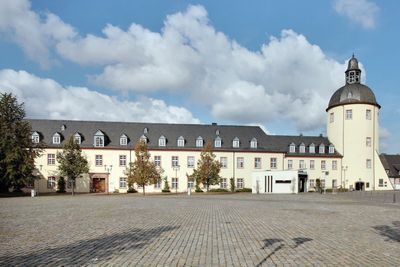
The Upper Castle is for the Roman Catholic branch. Inside, you will find the Siegerland Museum. Most people fly past this. They should not. The museum houses a gallery dedicated to Peter Paul Rubens.
Yes, that Rubens.
The Flemish master was born in Siegen in 1577. If you have spent any time in European museums, you know his name carries weight. To see his work in his actual birthplace is a specific kind of thrill. It grounds the baroque grandeur in local reality.
“Siegen offers a concentrated dose of high-art history without the crushing tourist traffic of major hubs.”
Ancient Stones and Industrial Roots
The Lower Castle belongs to the Protestant branch. It holds an interesting royal crypt. It is a somber, quiet place compared to the museum, but the architecture speaks of a time when power was inherited and defended by stone walls.
Walk further into the city and look up. St. Nicholas Church dates to the 13th century. It is late Romanesque. What makes it weirdly special? It is hexagonal. Very few hexagonal Romanesque churches exist north of the Alps. This is one of them. It is a geometric oddity that survived centuries of war and reform.
Even older stones lie beneath St. Martin’s Church. Mosaic floors found there date back over 1,000 years. These foundations prove that people have been digging and building in this spot since before the Holy Roman Empire was a unified concept.
The Shift from Ore to Education
You might wonder what drives this city today. It used to be iron ore. The Siegerland district was once rich in mining. That industry is now idle. The silence of the mines has been replaced by the hum of machine-building and metalworking.
Then there is the University of Siegen. Founded in 1972, it put the city on the modern academic map. It attracts students. It brings a certain energy to the streets that you do not get in purely historical towns.
The population sits around 107,000 people. It is big enough to have restaurants and transit, small enough to walk between the castles and the churches in an afternoon.
How to Visit Siegen Effectively
If you are mapping out a route through North Rhine-Westphalia, here is the practical reality.
- Timing: Allocate one full day if you want to see both cast