


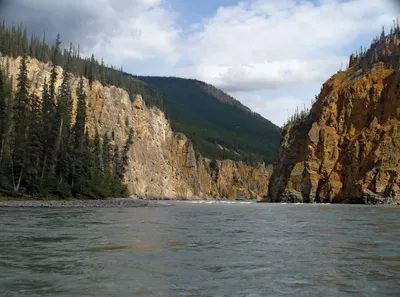
Nahanni National Park Reserve sits deep in the southwestern Northwest Territories, far from the nearest town and closer to the edge of the map. Established in 1972, it covers a staggering 1,177,700 acres. That is nearly 477,000 hectares of untouched terrain. If you are looking for a quick weekend getaway, look elsewhere. This place demands time. It demands respect. It demands you leave the grid behind.
The entire park is defined by one feature. The South Nahanni River.
This river is not just a body of water. It is a 350-mile artery that cuts through the Mackenzie Mountains before joining the Liard River. It flows southeast, carving through rock that has stood for millions of years. For travelers, this river is the only realistic way to see the park’s heart. You cannot drive here. You cannot hike in from a parking lot. You fly in. You raft down. You survive the journey.
“Nahanni is not a park you visit. It is a place you endure, then understand.”
The landscape is brutal and beautiful. The river drops thousands of feet over its length, creating some of the most dramatic whitewater in North America. Most of the park is inaccessible by road. This isolation is what makes it special. It is one of the least visited national parks in Canada. That number is dropping even lower as access becomes more specialized.
Three large canyons define the river’s course. They are deep, narrow, and terrifyingly steep. The walls rise hundreds of meters straight up. Light hits the bottom of these canyons for only a few hours a day. The silence here is heavy. It has weight.
Wildlife thrives in this harsh environment. Dall sheep cling to cliffs that seem impossible to climb. Caribou migrate across the high plateaus. Grizzly bears forage along the riverbanks in early summer. The air is filled with birds—eagles, osprey, and a variety of raptors that hunt the river’s fish. Even the flora is unique. Alpine flowers bloom in short, intense bursts during the brief summer, painting the tundra in violet and yellow before the frost returns.
Why go to Nahanni?
Because it is one of the last truly wild places on Earth. The logistics are difficult. You need a floatplane or a high-clearance 4×4 for the final approach, depending on the season. You need permits. You need to be prepared for weather that can turn from sun to snow in an hour. The cost of entry is high, not just in dollars, but in effort.
But the view from the top of one of those canyons? The sound of the river below? The sheer scale of the mountains? Nothing else compares. This is not a place for relaxation. It is a place for awe. And awe is rarely easy. It is usually uncomfortable. That is the point.


