


Ghent is located in the heart of Belgium’s Flanders region and is the capital of East Flanders. It wasn’t built by accident. The city developed at the confluence of the Scheldt and Leie rivers, which was a strategically important crossroads since the 7th century. Today, it is famous for being Europe’s largest producer of textiles and for its abundant rainfall. You need an umbrella. Pack one.
Planning a trip here means getting to know the rhythm of the city. There is no rush in Ghent. This is a place where you can get lost in medieval streets and modern cafes. But first you need to know when to leave.
Ghent’s climate and the best time to visit Gent for festivals
If you want the warmest weather, aim for August. This is when the city reaches its highest temperature. If you don’t like cold weather, avoid January. This month is the coldest month. You’ll be shivering.
This is the hard part. Rainfall is significant throughout the year in Ghent. No matter when you book your trip, expect wet pavement. That’s really part of the charm. The cobblestones glisten. The air smells of damp stone and coffee.
Logistics: time, money, transport
Belgium is part of the European Union and therefore uses the euro. Unless you are from outside the EU, you don’t need to bother changing your currency. There are many ATMs.
Regarding the time, notice that Gent is an hour behind Turkey. If you leave from Istanbul or any Turkish hub, you will lose an hour. Set your watches back before you get on the plane.
Traveling is very convenient. It is easy to walk in the city. Trams and buses are also available. Public transport is integrated and efficient. Just tap the card. Don’t drive downtown. It’s a mess with narrow streets and people mixed up.
Must see: Castle of the Counts of Flanders
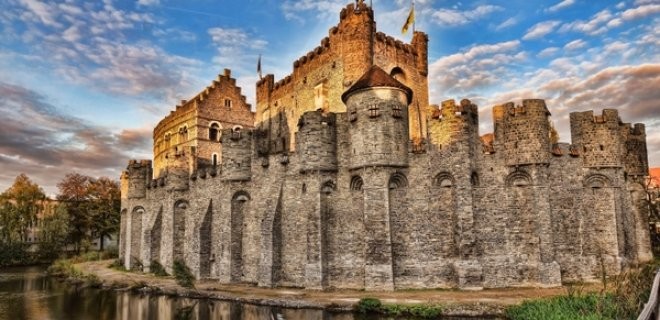
You can’t talk about things to see in Gent without mentioning the Castle of the Counts of Flanders. This is more than just a castle. This is a statement. Built in 1180, shortly after the Crusades, it is a medieval relic. It has protected the city for centuries.
In 1885, the castle was restored to its original glory. It remains a symbol of the city’s turbulent history. If you’re wondering where to start sightseeing, start here. It’s iconic. Very impressive. It’s a must-visit.
What you can expect in this city
Ghent is versatile. About 58% of the population is Catholic. But it is also very secular. About 35% are atheists. There are also smaller communities such as Muslims (3.6%), Protestants (1.1%), Orthodox (0.6%), Buddhists (0.3%) and Jews (0.2%). This diversity is also reflected in the food. The market has everything from local stroopwafels to exotic spices.
Festivals are held here throughout the year. This city never sleeps. It just changes venues.
Useful tips for travelers
- Hotel: Book in advance. Gent fills up during the festival.
- Food: Look for local beer and seafood. The riverside restaurants
Walk in the historic center
Most travelers think of Belgium only as a backdrop to Brussels and Bruges. they are wrong. Ghent is perhaps the most historically concentrated center on the European continent, and arriving here is like stepping into a living postcard.
Density affects first timers. This is not just one or two monuments. It’s a complete assault on the senses. Around the corner on the cobblestone street stands a Gothic church. Take a step further and you’ll find a belfry that pierces the horizon. Architecture is not random. The building feels symmetrical, intentional and almost dramatic. The squares are not empty. They are curated stages for daily life.
“Ghent is more than just a city. It’s a museum that you can enter on foot without a ticket.”
The center is dense. Very dark. You can walk most of the way in the afternoon if you don’t stop for coffee. It’s worth stopping for a coffee. The streets narrow quickly. The stones make walking incredibly athletic. Wear good shoes.
Symmetry is important here. Look at the buildings in the main square. They are mirrored to each other on the axis. It creates a rhythm. A visual beat. The eyes move left, then right, then up. It keeps you engaged. It’s not just passing by. You notice.
There is no single “best” square. Vrijdagmarkt was hit harder than Gravensteenplein. The light is different. Crowds are different. But both serve the same purpose. They shape history. They force you to look up.
Most people ignore the details. They focus on large structures. The churches. The castles. They forgot the facade. The brickwork. The way the shadows fall in the afternoon. That’s where the real Gent live.
So walk. slowly. Don’t rush to the next photo spot just yet. Look at the symmetry. Feel the stones. Listen to the bells. Everything is there. Waiting for you to stop and actually see it.
Why St. Bavo’s Cathedral dominates the skyline of Ghent
A bishop’s seat is more than just a building. This is a heavy stone anchor in the center of Ghent. Founded in 942, it witnessed the city’s transformation from a medieval market place to the heart of modern Europe. The tower rises to a height of 89 meters. It can be seen almost everywhere in the old city. This is the spiritual center of this place.
Most visitors consider it purely Gothic. This is a common mistake. And so the structure began. But about a century later the builders added the Romanesque part. The mix of styles creates an eerie and beautiful tension. It looks sloppy. Because of this architectural hierarchy, it should be the top priority of your trip to Ghent.
The fusion of Gothic origins and Romanesque expansion creates a visual history that cannot be recreated in books.
If you’re planning your route, consider this a must-stop. This is not just a matter of faith. It’s about the art within. The Adoration of the Mystic Lamb is here. This is a painting by the Van Eyck brothers. This is probably the most famous piece of religious art in Belgium. As you get closer to it, your perspective on the Middle Ages changes.
In a logical location in the historic center. You can walk from Graslei or the belfry. Entrance fees are low compared to other European cathedrals. Spend at least an hour. Don’t rush the interior. At noon, the light hits the Stained Glass and it’s worth waiting for. If you miss it, you will miss the true soul of this city.
The Ghent Museum: a fusion of the Middle Ages and modern times
The Ghent Fine Arts Museum is more than just a box full of old objects. This is a huge collection that started in the 20th century but goes back much further. You might go and wait for the local paintings. Medieval sculpture available. You get a tapestry. You get prints that feel like they’re watching you.
This museum presents a good balance of national treasures and foreign works. It doesn’t just show you what was made here. It shows what the world has created “near” here. The collection grows every day. New pieces arrive. Old works are rediscovered.
There is a separate department for antiques. It’s not an afterthought. This is a space dedicated to showcasing the rich history of antiquity. If you like something very old, you should look for it. Don’t think you’re mistaking it for a 19th century oil painting. it is not.
Art is intense. History is layered. I might be here for about an hour. It can last all day. The museum doesn’t care about your opinion. It just keeps adding to the pile.
The collection grows every day. You walk through a living archive.
Logistically, it’s central. You can walk there. You can ride a bicycle there. It is located in the heart of the city’s cultural district. Timing is not as important as you think. Open most days. The lighting inside is quite good. The flow is logical.
Don’t just look at the frame. Look at the texture of the tapestries. Look at the cracks in the medieval stone. The details are the heart of the story. The rest is just background noise.
Several tourists passed by quickly. They see the highlights. they left. Most of the museum is hidden. A quiet corner. The small prints in the back. The antique area feels like a separate building.
Is it worth it? Yes. But not because it’s famous. Because it’s thorough. Don’t skip the hard parts. It doesn’t ignore the old stuff. It just presents it.
The city revolves around it. There is heavy traffic outside. Inside, it’s silent. The contrast is impressive. You’re leaving. The atmosphere is different. Heavier. Or lighter. It depends on what you’ve seen.
There is much more to see in Ghent. A nearby castle. The canals. Food hall. But the star of the day is the museum. It gives you context. Without it, all that remains is beautiful architecture. With it, the rest is history.
Check the time. They change. Sometimes they close on Mondays. Sometimes Tuesdays. Don’t show up cold. Call ahead. Or check online. The last thing you want to do is stand outside a closed door.
The staff is very friendly. They don’t talk down to you. they answer the questions. They point you to the sections you missed. They know the collection. Use them.
The gift shop is small. Not sprawling. Not everything can be found there. Just the highlights. Maybe a postcard. Maybe a small print. it doesn’t matter. You don’t need to buy anything. Experience is a purchase.
The floor is very hard. Wear comfortable shoes. You’ll be standing. You’ll be turning corners. You look up. Your neck will thank you later. or not. this is life.
Navigating the Scheldt: water, work and the city it sustains
The Scheldt is more than just a line on a map. It is a 435 km long artery that passes through France, Belgium and the Netherlands. If you plan a route along these waters, you will do more than just enjoy the scenery. You’re looking at infrastructure.
The river is Ghent’s lifeblood. Without it, the city’s historic charm and modern economy would be very different. The Scheldt River and its tributaries offer visitors more than just scenery. They increased agricultural production in the areas they passed through. Farmers use this water for irrigation. This is very practical. This is essential.
Nearby industrial areas also depend on it. The river provides water access to factories and processing plants. This isn’t just about aesthetics. It’s a matter of logistics. Trade moves here. Goods are loaded and unloaded. Water can carry heavy loads that cannot be efficiently handled by roads.
Traveling along the Scheldt River, you will find the intersection of leisure and work. The water using the barge also reflects the medieval city skyline. This reminds us that travel routes are often work routes.
Saint Nicholas watchtower
This tower rises from the dust of the Middle Ages, the silent guardian of the ancient grain market. It wasn’t built overnight. In fact, this work continued throughout the 13th century. If you stand still, you can almost hear the sound of the chisel.
This is more than just a church. The tower is a real feature. Its main purpose was surveillance and a stern warning to everyone approaching the port. It stands next to the tower of St. Bavo’s Cathedral. Both buildings serve the same dual function: watching the waters and city vigilance. One is for faith. One is for survival.
They stood together for a long time. A pair of eyes in stone. If you’re walking down that square, look up. The view from above is not just architecture. It’s about how the city used to watch its own back.
Bell tower and fabric exchange
The construction of Ghent’s belfry was not completed overnight. The structure spans almost 70 years, 1313-1380, according to the precise architectural plans of the stonemason Jan van Haelst. His drawings are preserved and displayed in the Ghent City Museum and can still be seen today. It has a tangible link to the stonemasons who built the towers stone by stone.
Next to the tower is a rectangular hall that changed everything in the city’s economy. This is a Historic Fabric Exchange. Medieval Ghent was more than just a beautiful city. It was a powerhouse of wealth based on the textile trade. This building was the engine of wealth.
Go inside and find the add-on that describes the Mammelokker Legend. It’s not just decoration. This is a visual reminder of the civic pride and local heritage surrounding these spaces. This structure still carries weight, both literally and figuratively.
Visiting these places requires some planning. You should start by getting to know the historical background of the museum, and then walk to the exchange. The contrast between the vertical aim of the bell tower and the horizontal commercial expansion of the Exchange tells the whole story of medieval Ghent.
Why is this important today? Because the layout of city centers is still determined by those medieval trade routes. Walking between these two landmarks is like traveling through the economic history of Flanders.
Although Fabric Exchange now includes several features, the original build is still stark and imposing. This stone tells a story of guilds, contracts and the ruthless efficiency of medieval business.
Jan van Haelst’s vision was more than just raise walls. It defined a skyline. For anyone interested in how cities were organized around trade, these two buildings are textbook examples.
The legend of the entrance adds a layer of myth to the solid stone reality. It’s easy to mix up dates and names. But the sheer size of the scale of the Exchange hall that this is serious business.
All the money went here. Ideas moved here. And the tower saw everything.
Visits to these sites have a certain rhythm. Arrive early to avoid tour groups. In the morning, the way the light hits the stones is different. It makes history feel less like a lecture and more like a place where you can actually live it.
The connection between these two structures is both physical and symbolic. They sit side by side, one representing spiritual and civic power, the other economic power. Together they define the center of Ghent.
You should familiarize yourself with the current exhibition schedule of the City Museum. In some cases, they dive deep into specific guilds that used the Exchange. It can also focus on the architecture of the tower itself. Either angle is valid.
If you’re not from the area, Mamerocker’s story might seem confusing. However, it is a local color that sticks with you after you leave. detail that separates a tourist from a traveler who actually looks around.
The medieval center of Ghent is dense. These landmarks can be seen almost everywhere in the old city. But standing in their shadow is different. You feel the weight of the centuries.
Fabric exchange is more than just a building. It is a monument to the power of commerce. The bell tower is
Why Korenmarkt is the gastronomic capital of Ghent
You may pass this square by without a second thought, but Korenmarkt’s history goes back a long way. This is not just a random square. It was the center of the grain trade in the 10th and 11th centuries. The name itself speaks for itself. “Koren” means grain. “Markt” means the market. It was actually a wheat market or Tarwe Markt in Flemish before it evolved into something else.
Geographically, it is located between the Leie River and St. Nicholas Church. This location is important. It connects two of Ghent’s most famous shopping streets, Veldstraat and Kortemunt. If you’re looking for high-end boutiques or small souvenirs, it’s literally like walking through the middle of them. However, the pace of the square itself is slow.
“Korenmarkt is a great place to rest, eat and watch the city come alive.”
This is really important practical content. This is the place to go to eat. Especially go for the frites. Belgian fries are like a religion here, and Korenmarkt has one of the best places in the church of carb-heavy delights. You want crispy, double-fried potatoes. Pair it with Leffe beer, brewed locally in the Walloon region but with deep ties to Belgian monastic traditions.
There are dozens of cafes, bars and restaurants around this square. Some are tourist traps. Some are gems. How do you know the difference? Look who’s eating there. If most locals sit outside in the winter, stay there. If it’s a tour group being herded in by a flag-waver, just keep walking.
Prices vary greatly depending on where you sit. a quick takeaway box of fries and a drink can be bought to go for less than 10 euros. A nice dinner and wine will cost you 30-50 euros per person. Timing is everything. Go in the late afternoon. The light hits the medieval buildings just right. It’s golden hour before the crowds of the evening rush.
Logistically, it is easy to find. It’s central. Walk from the Belfry. Walk towards the river. You’ll see the church. The plaza is there. It’s not hidden. It’s waiting for you.
But here’s the thing about Korenmarkt. It’s not just about what you eat. It’s about the atmosphere. The cobblestone streets have been polished smooth by centuries of walking. The buildings lean in slightly, as if listening to the conversation of the city. It’s okay to sit there for an hour doing nothing. Just look. In a city that is moves so fast, this is a rare gift.
So eat your potatoes. Drink the Leffe. But there’s no need to rush.
Bourgoyen-Ossemeersen nature reserve
If you’re looking for an escape from Brussels, head north to the Bourgoyen-Ossemeersen nature reserve. This is one of the rare wetlands in Belgium where the wildlife actually thrives. Thousands of waterfowl use this area as a breeding ground. Amphibians and mammals also live here.
The landscape is defined by waterways and reeds. It creates a peaceful atmosphere that is hard to find elsewhere in Flanders. You can watch the birds for hours without disturbing them. This conservation area is located near the town of Veurne in West Flanders.
Where to go and what to see
The highlight of the reserve is the old falcon house. This structure has a history. It was once used by the Counts of Flanders. Now it sits in the middle of the wild habitat. This is a great photo opportunity. Viewing it from the trail does not require a special permit. Follow the marked path.
Which route is best?
Stay on the boardwalk. Protect sensitive ecosystems and take a closer look at the water level. Bring binoculars. The bird watching here is some of the best in Belgium.
Practical Tips for Your Visit
- Cost: Admission is usually free or requires a small donation. Check local signs for current rules.
- Timing: Early morning is best. This is the time when the birds are most active.
- Logistics: Wear sturdy boots. The ground can be muddy.
- What to bring: A camera with a zoom lens. Water and snacks.
This conservation area is more than just a park. This is a living ecosystem. Silence is heavy. The sounds of nature are loud. You will feel it.
Do you want to extend your trip? Combine it with a visit to a nearby coastal town. The contrast between the wild wetlands and the sandy beaches is sharp. Add variety to your itinerary.
“This is a place where time slows down. The birds don’t care about your schedule.”
Some people say that Belgian nature is flat and boring. They are wrong. Bourgoyen-Ossemeersen proves otherwise. It is rugged in its own way. The wind cuts through the reeds. Water reflects the sky.
You may not see all the animals. It’s part of the experience. Nature does not perform for tourists. It exists. You are a visitor. Remember this.
The falcon house stands empty now. It watches over the wetlands. It waits for raptors to return. Or maybe it just watches you take photos. Anyway, it’s worth a stop.
Pack your gear. Leave early. See what you can find.
Vooruit: Daha Fazla Bir Kulüp
Bruges’in kalbinde, 1911 ile 1914 arasında yükselen Vooruit binası, sadece bir yapı değil, bir duruştu. Mimar Ferdinand Dierkens’ın çizgileri, o dönemin gergin sosyal atmosferini taşeron bir şekilde yansıttı. İç savaşın gölgesinde, bu bina sosyalist hareketin sığınağına, sembolüne dönüştü. Edward Anseele’in desteğiyle, işçi sınıfına yönelik bir saldırıydı kapitalizme karşı. Ama tersine.
Buraya para için gelme. Buraya bir şeyler için gel.
Zamanında cüzi fiyatlarla yemek yenirdi. Bir şeyler içerdı. Kültürel etkinliklere katılırdı. Bugün, bu mekân hala aynı ruhla nefes alıyor. Festival alanları. Sinema. Tiyatro. Balolar. Her şey açık. Her şey erişilebilir.
Neden Gitmelisin?
Çünkü Vooruit bir müze değil. Bir yaşam alanı. İşçi sınıfının direniş merkezi olan bu yapı, bugün Bruges’in en canlı kültür haritalarından biri. Tarihi dokusu, modern programlarıyla birleşince, sadece geçmişe değil, bugüne de dokunuyor.
- Mimari: Edward Anseele’in vizyonunu taşıyan Dierkens tasarımı, o dönemin endüstriyel ruhunu modern bir dille anlatıyor.
- Tarih: 1911-1914 arası inşaat. İç savaş dönemi. Sosyalist sembol.
- Etkinlikler: Sinema, tiyatro, balo salonları. Festival alanları.
- Erişilebilirlik: Cüzi fiyatlar. Herkes için açık.
Pratik Bilgiler
Bruges’de bir gün geçirirken, Vooruit ’i listeden çıkarmak bir hata olur. Tarih meraklıları için bir durak. Kültür avcıları için bir adres. Ve sadece bakmak isteyenler için bile, binanın kendisi bir deneyim.
- Konum: Brugge, Belçika. Merkezde. Yürüyerek ulaşılabilir.
- Zaman: Yıl boyunca açık. Programlar mevsime göre değişir. Yaz aylarında festival havası daha yoğun.
- Maliyet: Giriş genellikle ücretsiz veya sembolik. Etkinliklere göre değişir. Yemek içecek fiyatları makul.
Ne Göreceksin?
Balo salonu. Sinema. Tiyatro. Her köşede bir hikâye var. Duvarlar, o günlerin gürültüsünü, o günlerin umudunu hâlâ taşıyor. Edward Anseele’in hayali, Ferdinand Dierkens’ın kalemiyle hayata geçti. Ve şimdi senin önünde duruyor.
” kapitalizme karşı direnen işçi sınıfının cüzi fiyatlar ödeyerek yemek yiyebilecekleri, bir şeyler içebilecekleri, kültürel
Luxury or downtown? Ghent’s accommodation strategy
To avoid the pitfalls of accommodation in Ghent, you should not only focus on location, but also stick to your budget. It’s a small town, but if you make the wrong choice, your vacation could be wasted. Here are the details:
Ghent Marriott Hotel
If you understand “high quality” to mean expensive, this is not the place for you. But if you don’t want to sacrifice comfort, the Ghent Marriott Hotel is one of the most prestigious options in the city. This is more than just a place to stay, it’s an experience center.
What are the main advantages of the hotel?
– Free WiFi: Whether you’re at work or just uploading Instagram photos, your network won’t go down.
– Parking: If you come by car, this hotel solves your parking problem in the city center.
– Breakfast: No need to wake up tired in the morning. A rich breakfast table awaits you.
– Bar: No need to go out at night. Head downstairs and enjoy a drink in the small but stylish bar.
Why is the location in the historic center of Ghent important?
Finding a place to stay in Ghent is more than just a roof. It’s all about where you wake up. Cour St Georges The hotel is located in the busiest area. Korenlei 10 is not a suburb. You are in the heart of the old town. This is important. When you take a step, you are already in the action. No need to take a long tram ride. Taxi fares burning a hole in your pocket. You can walk there for your morning coffee. You can also go back to taking a nap. The main selling point here is convenience.
Breakdown of costs and services
Let’s talk numbers. Prices vary from 170 euros to 240 euros per night. For a mid-range Belgian hotel, it’s not cheap at all. But is it expensive? It depends on what you value. If you pay for location, this is a steal. If you want luxurious marble floors and concierge service, look elsewhere. This hotel is very functional. cuts the fat and keeps the function.
What do you get for this price?
- Free WiFi : This is non-negotiable in modern travel.
- Includes breakfast : A great start to your day. Save yourself the hassle of looking for a cafe on a rainy day.
- Pet Friendly : Bring your dog? They welcome you. No extra effort required.
“This hotel offers urban living in the relaxed atmosphere of a local backyard.”
Visit Ghent like a resident
Staying at Cour St Georges will change the way you see the city. You are not a tourist rushing from landmark to landmark. You are a participant. The Korenlei area is quiet at night, but lively during the day. You can see the canal from the window. You can hear the church bells. It’s immersive.
If boutique hotels work so well, why pay more for a boutique hotel? You don’t need a five-star lobby to enjoy what Ghent has to offer. Must be near Grasley. Graslei and St. Bavo’s Cathedral are a 10-minute walk away. You can go there from here.
Is it worth the price?
Some tourists are hesitant about the 170 euro entrance fee. They scroll to find cheaper options. However, be aware of the hidden costs. Taxis in Ghent add up. Public transport is good, but walking is free. As you walk, you find yourself wandering into hidden courtyards. You might even find a small bookstore. Or a bench along a quiet canal. You wouldn’t find anything like this if you were stuck in a hotel 2 miles away.
Breakfast included in the price is a small bonus. But in a city where breakfast tables fill up quickly, certainty is convenienceing. you eat you leave you explore
The reality of city hotels
It’s not perfect. Rooms can be small. The noise of the city is real. But isn’t that an trade-off? You give up space for access. For many people, this is a real deal. You don’t need to pay a huge empty room for a room if you plan to spend a few days exploring the cobblestone streets and beer halls.
Cour St Georges does its job. It is clean. connected. Reduce costs while maintaining a central position
Address : Hoogpoort 75, 9000 Ghent, Belgium
Phone : +32 9 224 24 24
Price : €130 – €140
B&B Snooz Inn
There are places where you wake up in the morning and don’t even think about what you’re going to eat. B&B Snooz Inn offers a truly luxurious experience. This is an ideal place for anyone looking for a breakfast option in Ghent. Breakfast at the hotel gives you an energetic start to your day and you can take advantage of your time exploring the city.
The other services offered by the hotel are also very convenient. With Free Wi-Fi you can instantly share on social media and update maps at any time. If you arrive by car, Parking is also available. This is a great advantage for those who don’t want to worry about parking on the narrow roads of Belgium. In addition, private room service allows you to relax and enjoy coffee or lunch in your room at any time.
Why Campanile Hotel & Restaurant Gent is suitable for budget travelers
Finding a room in Ghent without breaking the bank means avoiding the boutiques of the historic center. If you are looking for cheap accommodation in Belgium, Campanile Hotel & Restaurant Gent is the right place for you. It’s not about luxury. It’s all about functionality.
Prices vary from 100-110 euros per night. In a city where dinner alone can cost up to 30 euros, it is important to keep the housing budget under control. This hotel is aimed at travelers who do not need a spa. They need a bed, a shower and a way to stay connected.
The actual prices are as follows:
– Free WiFi enables remote working and browsing maps.
– Parking on site. This is very important because the center of Ghent is a pedestrian area.
– Breakfast allows you to start your day without having to look for a cafe.
If you want to book directly, contact us and tell us your information:
Address: Ham 89, 9000 Ghent, Belgium
Phone number: +32 496 24 14 26
It is located away from the tourist crowds, but still convenient. In exchange for view of the Graslei, you get quiet streets and easy logistics. This is a practical option. It’s not poetic. But it is reliable.
Akkerhage 1 adresindeki bu mekanın kapısını araladığınızda, Gent’deki yemek turunuzun belki de en akılda kalıcı anlarından birine hazırlanmanız gerekiyor. +32 9 220 02 22 numarasını not alın, çünkü yer bulmak zor olabilir. Fiyatlar 72€ ile 85€ arasında değişiyor. Pahalı mı? Evet. Değerli mi? Kesinlikle.
Belçika denince aklınıza sadece çikolata gelmemeli. Midye, bira, waffle… Liste uzun. Ama şunu unutmayın: Pierre Marcolini, Leonidas, Elizabeth gibi ikonik markaların tadına bakmadan çıkmayın. The Old Chocolate House, Neuhaus, Guylian ve Godiva da listede. Sadece birini denemek bile hata olur.
Oak Restoran: Vegan ve Glutensiz Cenneti
Gent’te vejetaryenler için en iyi restoran hangisi diye sorulduğunda, çoğu kişi Oak Restoran ‘ı ilk sırada sayar. Glütensiz seçenekleri sevenler için de sığınak burası.
“Fiyatlar biraz tuzlu. Ancak, gerek lezzet açısından gerekse servis açısından oldukça hakkıdır.”
Burada her şey mükemmel. Servis titiz. Lezzetler derin. Fiyatlar da… tuzlu. Ama hak ediyor.
Gent’te yemek deneyimi sadece lezzet değil. Atmosfer de önemli. Oak, bu dengeyi kuruyor. Belçika’nın en sevilen mekanlarından biri olması tesadüf değil.
Hangi çikolatayı alacağınıza karar veremediğinizde, Oak ‘ta bir atıştırmalık yapın. Sonra belki Godiva ‘ya geçersiniz. Belki Neuhaus ‘a. Belki de sadece yürümeye.
Gent, yavaşça keşfedilmeli. Yemek de öyle.
Karel de Stout: The most desirable gentleman’s table
Do you want to enjoy dinner in Ghent? Book now at Karel de Stout. This is the place everyone is talking about. Some say this is the best restaurant in Ghent. This reputation is more than just noise. That’s a good thing.
You can go to lunch. Or dinner. Late at night? certainly. However, do not come to the hospital without an appointment. The city loves this place. Very popular. Very popular. No empty tables were found. It’s not easy.
“Make sure in advance, otherwise you’ll be standing on the sidewalk.”
No need to wait. Call ahead. Or book online. Do your best. This is no place for improvisation. There’s a reason this is our top pick in Ghent.
The Case for Allegro Moderato
The places to eat in Ghent are very full. You must select a location. Allegro Moderato is one of the winners. There’s an atmosphere where they don’t try too hard. The vibe is fun without being pretentious.
Then there’s the food. The menu is surprisingly extensive. Most restaurants in Belgium specialize in fries and stews. This is where you get variety. The flavors are solid. You will never leave hungry.
The location is definitely a highlight. Located next to the canal. Look at the water when you eat. This is an unforgettable view. Even if the meal is just good, the setting makes it great.
Service is important. The waiters are friendly. Not robotic. It’s just warm. They know the menu. They delivered the food right. This basic work is well done.
If you are planning a trip to Ghent, this should be on your list. It’s not famous. The price is not too high. It just works.
Try it. You’ll be glad you did
De Warempel: From vegan classics to flexible meals in Ghent
Five years ago this place was strictly vegetarian. Then in 2014 the menu changed. Meat and fish joined the lineup. It is no longer a niche restaurant, it is a flexible restaurant.
Located in the center of Ghent. It is far from the tourist areas. If you want both closeness and peace, this is the right place for you.
They handle events too. a private party. Corporate gatherings. You don’t have to stress, because the kitchen takes care of the logistics for you.
“Variety, health, taste” – here’s the trio. You can find all three in one place.
Why go? Because finding a place that balances dietary needs with general appeal can be difficult. De Warempel does this without compromising taste. Menus are not static. It adapts. However, its core is still based on quality ingredients.
Go here when you want a meal that doesn’t scream “tourist trap”. Do it when you need space to talk. Try it when you want to eat something good for your body.
This change goes beyond just adding steak and salmon. This is about widening the net. Keeping the soul while changing the scope.
Some days you crave the greens. Other days you need the protein. This place covers both. No guilt. No confusion. Just solid food in a central location that isn’t packed.
It’s not flashy. This is very practical. In a city like Ghent, this is more important than you think.
Is it still worth deviating from the main square? Absolutely. Especially if you hate the feeling of being herded through a dining experience.
The balance is not perfect. Nothing is. But variety and health without compromising taste make this a squarely in the “must visit” column for travelers planning a Ghent itinerary.
What’s the next stop? A quieter place.
Zandberg 8 Konumuna Ulaşım Rehberi
Zandberg 8 adresi, 9000 Gent’te yer alıyor. Belçika’nın bu şehrine Türkiye’den direkt uçak seferleri yok. Planlama yaparken bu detayı aklınızda bulundurmalısınız. Genellikle Brüksel veya Brugge havalimanlarından giriş yapıp, oradan trenle devam etmek en mantıklı seçenek.
Brüksel’den Gent’e olan yolculuk yaklaşık bir saat sürüyor. Trenler saatte birkaç kez kalkıyor. Bu sıklık, beklemek zorunda kalmamanızı sağlıyor. Belki de bu yüzden çoğu gezgin toplu taşımayı tercih ediyor.
Bilet fiyatları konusunda bir ipucu var. Hafta sonu bilet alırsanız, fiyatlarda ciddi bir indirim yakalayabilirsiniz. Uzun vadeli seyahat planı yapıyorsanız, bu detay cüzdanınız için önemli.
Adres : Zandberg 8, 9000 Gent, Belçika
Telefon : +32 9 224 30 62
Gent’e ulaşım planınızı yaparken, Brüksel üzerinden alternatif rota seçimi yapmak zaman ve maliyet açısından size avantaj sağlar. Tren istasyonlarından otelinize veya konaklamanıza yürümeniz gerekebilir. Şehir merkezi oldukça kompakt. Ancak eşyalarınızla birlikteyseniz, bu mesafeyi göz önünde bulundurmak lazım.
Brugge’dan geliyorsanız durum biraz daha uzun sürer. Ama manzara güzeldir. Yol üzerinde eski yapılar, kanallar ve tarihi binalar görebilirsiniz. Bu, sadece bir transit noktası olmaktan çıkarıp, seyahatinin bir parçası haline getirir.
Tren biletlerinizi online ön alırsanız, istasyonda kuyrukta bekleme süresini kısaltabilirsiniz. Özellikle yoğun sezonlarda bu detay hayati önem taşıyor. Hafta sonu indirimi ise yerel halkın sık kullandığı bir strateji. Siz de bu taktiği kullanarak seyahat bütçenizi optimize edebilirsiniz.
Belçika demiryolu sistemi oldukça güvenilir. Saatler genelde tutar. Ama yine de varış saatinizin biraz öncesi istasyonda olmanızı öneririm. Kaybolmamak için konaklamanıza yakın bir istasyonda inmek akıllıca olur.
Gent, kendi içinde keşfedilmeyi bekiren sokaklara sahip. Zandberg 8 gibi konumlar, şehrin ruhunu daha iyi hissetmek için stratejik noktalar. Ulaşımın ardından, bu noktalara odaklanmak kaliteyi artırır.
Türkiye’den çıkış yaparken, vize veya pasaport kontrolünü erkenden halledin. Belçika Schengen bölgesinde. Kurallar değişebilir. Güncel bilgilere her seferinde resmi kaynaklardan bakın.
Trenle hareket ederken, valizlerinizi yanınızda tutun. Dolaplar her istasyonda olmayabiliyor. Ağırlıkla mücadele etmek yerine,
Getting from Brussels Airport to the city center
The distance between Brussels airport and the city center seems short. 11 km. Ei kuulosta paljolta. But in city traffic it feels like life. This distance creates a great need for travel. Sinulla on valinnanvaraa. Choose wisely.
Juna: nopein reitti
If you want to save money and time, don’t take a taxi. Junat ovat järkevä valinta. It runs every 20 minutes. Matka kestää noin 20 minuuttia. Before I could pack my bag completely, I’m already in the center.
Avainkohdat:
- Hinta: Noin 10,50 euroa yhteen suuntaan
- Frequency: Every 20 minutes
- Duration: 20 minutes
- Destination: Brussels Central Station, Gare du Nord or Gare du South
Trains leave directly from the airport terminal. Bussilla ei tarvitse mennä. Walk out the exit and scan your ticket. Helppoa ja tehokasta. Keskustelu kuljettajan kanssa on kielletty.
#### Bus: a cheap option
Buses are also available. Costs are even lower. Mutta se vie aikaa. You might also get stuck in traffic. De Lijn buses connect the airport to other parts of the city. Lines 12 and 21 are often used. Tickets cost around 2.10 euros. Travel time can take up to 1 hour. Miksi valita? Only if you are on a tight budget. Or for a flight that arrives at 2:00. Trains do not run at night.
Taxi and ride services
You can also take a taxi. It is convenient but expensive. A trip to the center costs 45-60 euros. Must add chips. Uber and Bolt also operate here. Prices vary according to demand. Prices may double during peak times. Use this service only if you have a lot of luggage. Or if you’re traveling in a group, cost sharing can be competitive.
What to choose when
- Train: Always the first choice in terms of speed, cost and reliability
- Bus: Suitable for late night arrivals or on a small budget
- Taxi: If the trains are canceled late at night or if you have heavy luggage.
- Rideshare: If you have a group to share the costs or need a door-to-door service
Transportation from the airport is convenient. The infrastructure is well established. Just choose the right mode of transport. Don’t think too much, act now.
The best way to get to know the city is on foot
No need to fight for seats on the subway or wait for a late bus. The most important attractions are nearby. It’s really close. You can walk to them in under forty minutes. Most of them.
This will change the mood of your trip. You are not enclosed in a metal box, you are actually “outside”. You smell the coffee shops. You can hear the sounds of street musicians. You can see the building up close instead of through a smudged window.
This is also very effective. There are no transfers. You won’t get lost in the metro station. Wear comfortable shoes and head outside.
But what happens if your legs get tired? Or are you from a far away area? There is a public transport network. It’s not complicated. It’s just a choice.
If you decide you need it, here’s an overview of how to use it.
Best time to travel to Brussels and Bruges to avoid crowds
Timing is everything. In fact, it’s all about avoiding bad timing.
Brussels and Bruges require careful planning if you can’t stand side by side with other travelers. Very popular. Very popular. But the problem is that Bruges is small. It’s ridiculously small. Turn the corner in high season and you’ll be trapped in a sea of selfie sticks and tour buses. You can’t escape it.
The city becomes a bottleneck. You move at the speed of the crowd. It ruins the mood.
So when are you going?
Look at November. Or maybe the end of October. Autumn in Belgium is quiet. The light is even, gray and beautiful. The tourists disappeared. The shops are less frantic. The cafes have space.
“Autumn in Brussels and Bruges is full of peace. You can really see the architecture without the crowds.”
It’s not summer. It’s not very hot. But it’s honest. You get the cobblestones. Fog hovers over the canals of Bruges. You get the Grand Place in Brussels without the noise.
If you hate crowds, this is your window. Don’t wait until July. Wait for November.
If you hate cold weather, skip January. The average temperature of the coldest month in Iceland is about 3 degrees Celsius. It was deserted. It’s gray. As winter approaches this country, that’s exactly what happens.
When is the best time for serious summer weather?
You’ll have to wait until July. This month is the hottest month. The average temperature rises to 18 degrees. This is not “hot” by most standards. But it feels like summer.
The country generally remains cold. Even in midsummer, the air is cool. We still need layers. After all, waterproof boots are essential. However, you can afford to adapt to changes in the weather.
The best place for heat waves
Most travel guides ignore this. In some areas, temperatures can rise to 25 or 30 degrees in a short time.
This only takes about a week at a time.
It happened in the middle of summer. If you time your trip in this narrow window, you have a chance to win. The days are still long. Moss looks green. The ice cave is closed, but the plateau road is open to traffic. In fact, you can sit outside without shaking.
These few vacation days are very effective. See more. Keep moving forward. You won’t spend half your journey in the wind and rain.
Timing is essential. Check the weather forecast carefully. It’s cold when you run away from intense heat. There is no middle ground.


