Madrid is not just a stopover. It is the beating heart of Spain. The country’s largest city and capital is home to around 3.5 million people. This makes it the third largest city in the European Union, right after London and Berlin. But the numbers only tell half the story. Madrid is a place where history, art and modernity meet unapologetically. It’s charming. It’s modern. And it is undeniably alive.
What comes to mind when you think of Madrid? It’s rarely just the weather. It is cultural heritage. Art. Lively nightlife that doesn’t want to sleep until morning. What makes this city unique is that it combines all these elements into one, walkable urban fabric. You can be standing in a centuries-old square one minute and in a sleek, modern square the next.
The language here is Spanish. However, English is widely spoken in the main tourist areas. This lowers the barrier for international travelers. You don’t need to need to be fluent to navigate the subway or order a tapas plate.
Why Madrid is the best European City Break
Many travelers wonder which European capital offers the best value for money and the best cultural density. The answer often refers to this. Madrid is a city that rewards curiosity. It’s not as elegant as Paris and not as rigid as Berlin. It’s warmer. Literally and figuratively.
The nightlife is legendary. It is not an afterthought; it is the core identity. But the day also offers equally compelling reasons to visit. The museums are world class. Historic sites are preserved with pride. And the food? That’s a story for another chapter. Now understand that Madrid is a destination in itself, not a gateway to somewhere else.
Departure point: Plaza Puerta del Sol
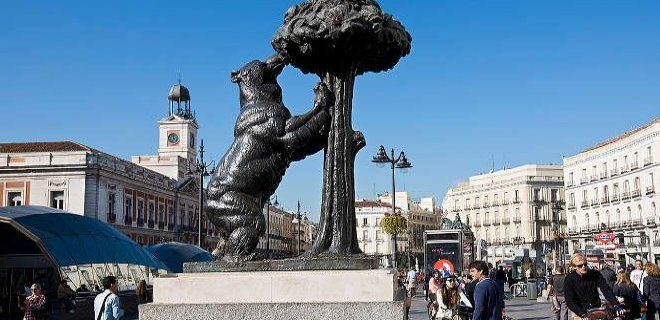
When planning a trip, you need a base. Or rather the starting point. This is Plaza Puerta del Sol.
This is Madrid’s most famous square. It is also the busiest. The floor plan is in the shape of a semicircle, the shape was introduced in the middle of the 19th century. Today, it is the city’s most popular attraction. Tourists flood its streets. Locals pass it by every day. It is Spain’s geographical and cultural ground zero.
Why start here? Because of logistics. From this square you can easily get to any part of the city. Metro connections are extensive. Buses run here. It is the center.
Watch out for the Casa de Correos Clock Tower. This is a landmark. It marks the place where New Year’s Eve grapes are traditionally eaten. During the day, however, it serves as a reminder of Madrid’s administrative history. It’s a handy anchor for your itinerary.
You can branch out here. Museums? A short walk. Shopping areas? Nearby. Historic palaces? within reach. The city opens up around you.
Madrid is not only a city worth seeing. It’s a city to live in. Start in the middle and then let the streets draw you outwards.
The list of attractions in Madrid is long. The museums alone could eat up a week. Historic buildings demand respect. Shopping varies from luxury boutiques to street markets. But you don’t have to plan every minute.
Madrid invites you to wander. To get

Santiago Bernabéu Stadium
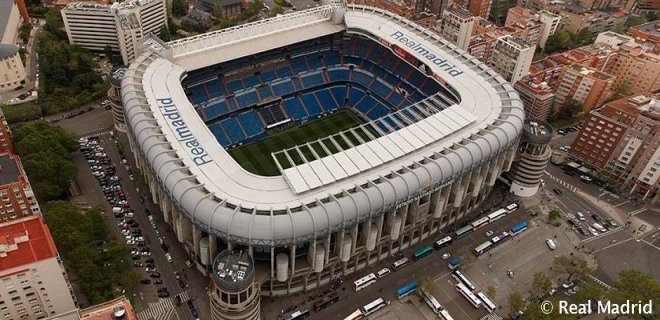
Head straight to the Puerta del Sol and discover the beating heart of Madrid’s soccer culture. It is home to the Santiago Bernabeu Stadium, an architectural giant that has defined the city since its opening in 1947. The impressive capacity of 85,000 spectators is not only massive, but also one of the largest stadiums on the planet.
Names carry weight. It is named after the club’s former president, Santiago Bernabeu Yeste, who had the vision to transform a simple stadium into a global icon.
Madrid football tours If you’re planning a trip around the region, this should be your main stop. The logistics are simple: its location near Sol Square makes it the easiest way to get to the stadium without having to navigate a complex transit maps. The city center is only a few minutes’ walk away.
Why go in? In addition to the chaos of the match day, the stadium also offers an opportunity to dive deeper into the history of Real Madrid. The tour includes the dressing rooms, the tunnel where players emerge and the press room where the headlines are written. For fans, standing on the touchline feels like entering a museum of victory.
Prices vary depending on the season, and tours must be booked in advance. Tickets for the weekend matches sell out immediately, so check the Real Madrid Official Schedule for a kick-off time that does not conflict with your visit. If you miss it, the Architecture Tour is a great alternative.
The stadium has recently been renovated, adding a retractable roof and 360-degree video curtains, modernizing the traditional venue. It’s old glory and new technology.
“The Bernabéu is more than just a stadium. It’s a temple.”
Daytime visits are relatively quiet. You can avoid the crowds and take photos of the facade. Visit in the evening for an exciting match atmosphere, but tickets are required.
Which is better for beginners? Is it a game day experience or a guided tour? This tour is open all year round. The match requires planning and luck. Both offer a front row seat to the spirit of Spanish football.
The address is Plaza de la Puerta del Sol, s/n, 28013, Madrid, Spain. Mark it on the map. This is not just a stopover. This is the number one reason why many people fly to Madrid.
The voices of 85,000 people still echo in the stands. If you stand around long enough, you can hear them.
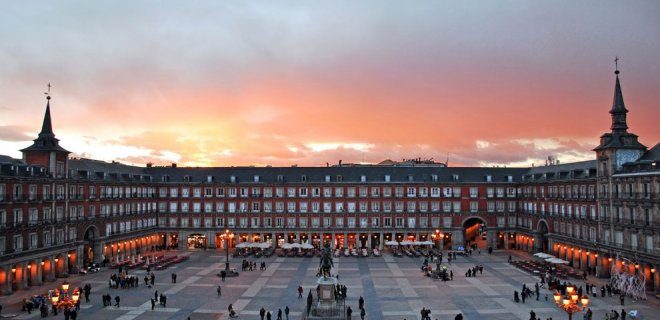
The iconic Plaza Mayor
Go to Av. de Concha Espina, 1 Located in Madrid and looking for the city center. It’s not just a square. It’s a stage.
The layout is initially triangular. The fire changed everything. The current rectangular shape was rebuilt after the fire. Then the Spanish Civil War strengthened its identity. Its name is Plaza Mayor.
look up The buildings rise three stories high. They wrap around the entire perimeter. What is the most impressive feature? 237 balconies. They overlook the square like silent watchers. Standing in the middle, you can feel the weight of history overhead.
Why is this important? Because it is the oldest square in Madrid still in its current form. It’s where markets once traded. Where bulls were paraded. A place where public executions took place. Of course it is still full of tourists. However, the architecture still commands respect.
The balconies are located in the Casa de la Panadería and the surrounding historic mansions. On sunny days, the light hits the stones and makes the whole space sparkle. Visit at dusk. The shadows lengthen. The noise fades slightly. You can see why this place has survived fire, war and centuries of changing tastes.
シベレス広場: マドリッドの高級地区の中心
シベレス広場は単なる広場ではありません。 それはマドリードの都市構造の引力です。 3 つの異なる地区 (センター、レティーロ、サラマンカ) が正確に交差する場所に位置し、市の中心拠点です。 あなたは、首都で最も有名な 2 つの大通り、パセオ デル プラドとパセオ デ レコレトスの間に立っています。
ここはマドリードで最も交通量の多い交差点の 1 つです。 ここのエネルギーは明白で、訪問者の好奇心が地元のリズムと融合しています。 でも、見上げてください。 その建物は尊敬に値する。
シベレス広場が見どころである理由
This location is non-negotiable if you are planning your route. It’s not just a passing point. It’s a destination in itself. This square is dominated by the *Fuente de Cibeles, the Baroque masterpiece of this estate. But the surrounding architecture is just as impressive.
To the north is the Palacio de Cibeles, which was once the seat of the Madrid City Council. The neoclassical appearance is impressive. To the east is the Edificio de la Telefonica ( Edificio de la Telefonica*). It is an early 20th century landmark and once held the title of tallest building in the world. These structures create historical boundaries.
“The Plaza is the boundary between the historic center of Madrid and the exclusive residential areas.”
旅行者のための情報
Where exactly?
The square is located in the city center. If you are staying in the Centro area, it is only a short walk away. If you’re in Retiro, 公園の西端にあります. For residents of Salamanca, this is the southern gateway to 高級ショッピング.
How to get there:
The Banco de España metro station (line 2) is the closest and offers almost direct access to the square. Alternatively, you can go to the Paseo de Recoletos side from the Principe de Vergara station (line 4), which is a 2-minute walk away.
いつ行くべきか:
Sunlight provides the perfect vantage point to appreciate the architectural details. The fountain statue is best seen in natural light. At night, however, the square changes completely. The lights of Cybele Palace create a dramatic silhouette against the Madrid sky.
它有何独特之处?
与封闭的、戏剧性的马约尔广场不同,西贝莱斯广场是开放的、充满活力的。 它具有主要交通圈的功能。 汽车绕着中央喷泉旋转。 行人过马路要小心。 它是混乱的,但却是有序的。
该广场还以其体育文化而闻名。 在皇马获胜期间,球迷们涌入这里庆祝。 这是一种仪式。 即使您错过了庆祝活动,这里的气氛也暗示着人们对这座城市身份的根深蒂固的热情。
实用技巧
- 摄影: 最佳角度是从十字路口的角落开始。 您可以拍摄以西布莉宫为背景的喷泉。
- 安全: 扒手可能在人流量大的区域很活跃。 让你的包正面朝前。 这里的人群密度比更安静的钱贝里街道更高。
- 附近: 参观后步行

The real Basilica of San Francisco el Grande in Madrid
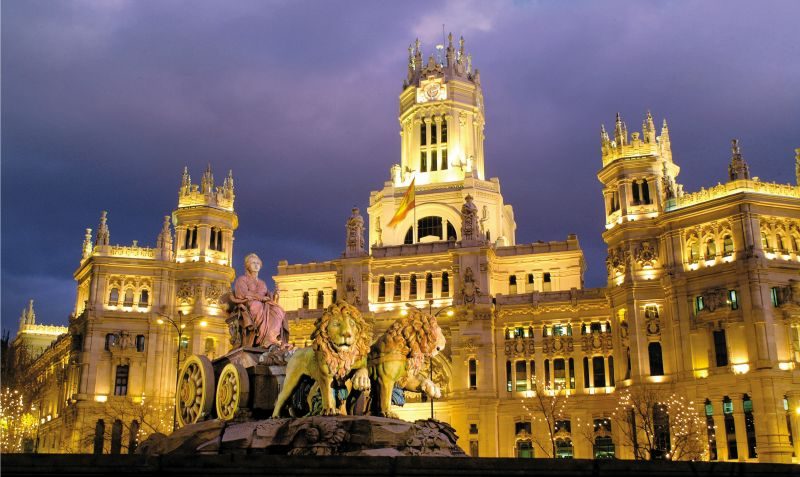
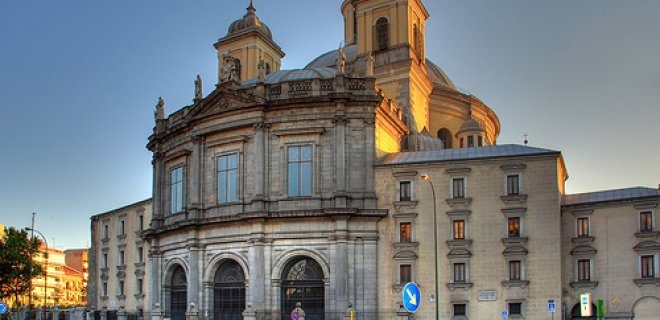
You won’t find it hidden in a quiet, hidden place. Located right in the heart of Madrid, the Real Basilica de San Francisco el Grande is a huge stone landmark that demands attention. It’s not just a pretty face. The history here is complex and goes back to the 16th century Franciscan monastery that once stood on this very site.
When Madrid became the capital of Spain, this place was not just a local shrine. It was elevated. It was recognized as one of the city’s holy places, and its importance came alongside the palace and the surrounding administrative buildings. However, the architecture you see today is largely the result of a major renovation that began in 1878. This renovation didn’t just fix the cracks; The interior was completely renovated, which gave the basilica its current glory.
Step inside, and the scale hits you first. Look at the facade from the front. 19 bells hang there, a striking visual reminder of the importance of the church and its role in gathering believers throughout the centuries. But the real attraction lies behind the heavy doors.
Interior design is a study of religious art and devotion. You see the figure of Jesus on the cross, depicted in a strong, emotional way. It’s not just decoration. It’s a focal point. The walls are lined with biblical scenes painted in such detail that you could spend an hour tracing the story. Then there are portraits of Saint Francis of Assisi. They depict key moments in his life and provide a visual biography of the man who founded the order that built this place.
Why go? If you’re planning a trip to Madrid, this isn’t just a stop on a checklist. It is a place where you can feel the weight of history. The contrast between the solemn exterior and the detailed, narrative interior makes the tour worthwhile. You walk in expecting a church. You walk out after seeing the gallery of faith.
The interior lighting changes throughout the day. The morning light descends on the altar. In the afternoon, the shadows on the benches get longer. It completely changes the mood. Some travelers skip it for Prado or Reina Sofia. No problem. However, if you want to understand Madrid’s spiritual backbone, start here. The bells are ringing. You will remember the stories on the walls. And the city moves on loud and busy, just outside the heavy doors.

Navigating the Prado Museum
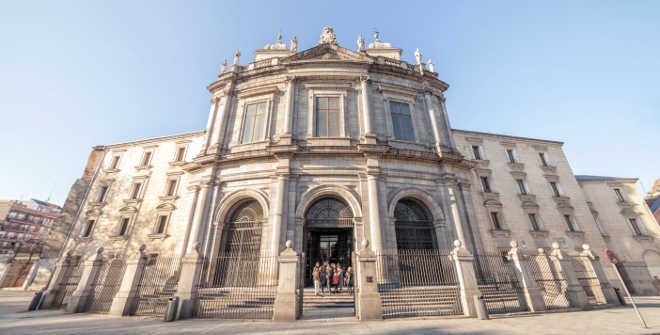
The building itself is a statement. For nearly two centuries, the Prado, located on Calle San Buenaventura in Madrid, has housed a collection that began with sculptures and drawings and then expanded to more than 10,000 pieces of historical jewelry, coins, and prints. It’s not just a museum; It functions as an extensive gallery, where the weight of art history is palpable.
Here, of course, you will find the Spanish masters. But take a closer look. Dutch and German painters also have a permanent home on these walls. Because of this diversity, the museum is consistently one of Spain’s top travel destinations. Thousands flock here every year. Is the entrance fee worth it? Every coin.
Practical tip: Get there early. Mobs are merciless. If you want to see the details without the hassle of tour groups, timing is everything.
Sorollalla Museum: Where art lives
Address: Paseo del Prado, s/n, 28014 Madrid, Spain
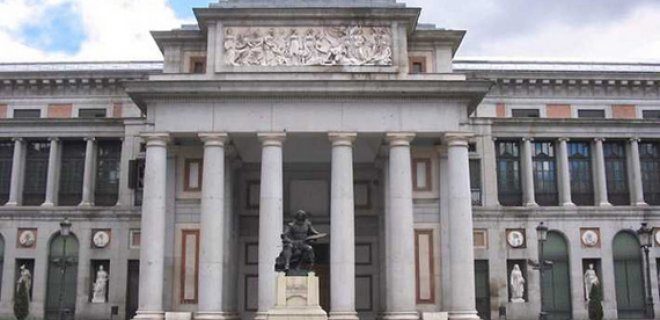
This is not a sterile gallery box. This is the home of Spanish lighting master Joaquín Sorollalla. He died here in 1923, and by 1932 his family opened its doors. It makes this collection feel intimate. Most of the paintings on the walls are his own sketches and studies. You are inside his head.
Why is this important to your travel plan? Because the light in these rooms is real. Sorolla is obsessed with capturing the sun’s rays in water and skin. When you look at the original painting in the space where he mixed the paints, your perspective on the painting changes. This is not just a technique. It’s about the atmosphere.
The museum is located on Paseo del Prado, one of Madrid’s most elegant boulevards. You can spend an hour here. Maybe two if you linger on the lighter canvases. The garden courtyard, visible through the windows and is part of his daily life. This is part of the visit.
Is it worth skipping other museums for this one? Not so much. But if you want to know how to make art, this is the place. Casual clothes hang on hangers. The half-finished studies. It is no longer history. It becomes a workshop.
You get a different idea of what “done” means in art. You might understand more about capturing light in your photos.
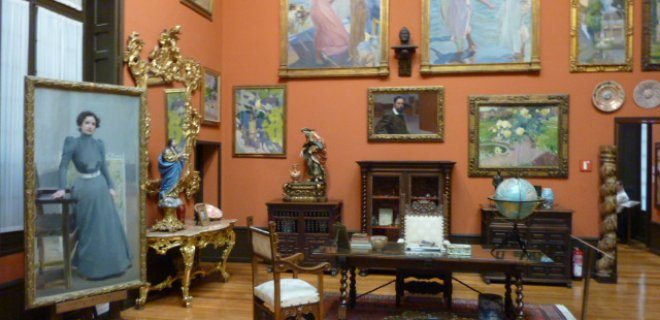
The National Museum’s collection doesn’t stop at paintings. You will find drawings and sculptures from various artists, ceramic works, and archaeological finds that date back as far as the Roman era and the Umayyad Caliphate of Al-Andalus. If you have any interest in art or history, these are the exact pieces you need to see.
Address: Paseo del General Martínez Campos, 37, 28010 Madrid, Spain
Parque del Retiro
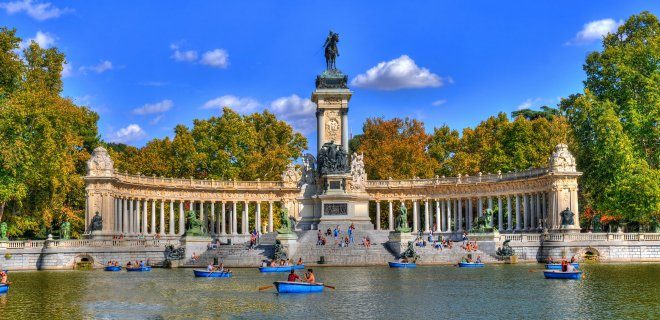
The Real Sitio del Buen Retiro, widely known as Parque del Retiro, is Madrid’s green lung. Spanning 140 hectares, it is the largest park in the city center. For a long time, this massive 350-acre estate belonged exclusively to the Spanish Royal Family until the late 19th century. Today, it is a shared sanctuary for locals and travelers alike.
The park is meticulously maintained, offering a quiet escape from the urban noise. You won’t just find greenery; there are flowers, statues, and a central artificial lake. Renting a small rowboat on the lake is a classic experience here. It remains a favorite spot for families looking to rest or play.
“If your path takes you to Madrid, you must see this paradise within the city.”
The atmosphere is calm. It feels like a different world compared to the busy streets outside. Whether you are looking for a place to read, walk, or just breathe, the Retiro delivers. It is not just a park; it is a historical landscape that has survived centuries of political change.
Getting there is straightforward. The park is located near the city center, making it easy to combine with other sightseeing. You can enter from several points, but the main entrance near the Plaza de la Independencia offers the most iconic views. Bring comfortable shoes. The paths are paved, but the scale is huge. You could easily spend half a day here without seeing everything.
The architecture within the park is worth noting too. The Crystal Palace, a glass structure from the 19th century, often hosts contemporary art exhibitions. It is a stark contrast to the natural surroundings. Nearby, the Monument to Alfonso XII stands at the end of the Great Pond. It is a popular meeting point.
Why do locals love it so much? Because it is accessible. It is not an exclusive club anymore. It belongs to everyone now. Children run across the grass. Old couples sit on benches. Tourists take photos of the statues. It is a living space, not just a monument.
If you visit in the spring, the flower displays are intense. The colors are vibrant against the green trees. In winter, it is quieter. The light is softer. Both times have their appeal. Just avoid rushing. The point of being here is to slow down.
The Retiro is more than a park. It is a reminder of how Madrid balances history with daily life. The royal past is still visible in the layout. But the present day defines the mood.
The Royal Palace of Madrid
If the Basilica of St. Francis the Great offers spiritual silence, the Royal Palace of Madrid offers orchestrated grandeur. It isn’t just a building; it’s a statement of power, sitting right next to the Almudena Cathedral, waiting to swallow you whole with its scale.
This is the official residence of the Spanish Royal Family, though King Felipe VI and Queen Letizia don’t actually live here. They use it for state ceremonies, but for everyone else, it’s a museum of staggering opulence. You’re walking through the footsteps of Bourbon kings who wanted to make sure Europe knew Spain wasn’t to be ignored.
What Makes It Worth the Ticket Price?
The interiors are where the money was spent. We’re talking about 3,000 rooms, 13 courtyards, and 8,000 square meters of floor space. But don’t expect to see them all. The standard tour covers about 25 rooms, and that’s enough to make your eyes water.
The highlight? The Armory. It houses one of the finest collections of arms and armor in the world, with pieces dating back to the 13th century. It’s not just swords and helmets; it’s intricate craftsmanship that reflects the martial history of the empire. Then there’s the Throne Room, with its massive chandeliers and gilded details that feel almost aggressive in their richness. The tapestries by Goya and Rubens are also major draws, adding a layer of artistic weight to the political might on display.
Logistics: When and How to Visit
Timing is everything here. If you hate crowds, avoid the summer months if possible. July and August see the highest foot traffic, and the air conditioning in these historic halls can’t quite compete with the body heat of thousands of tourists. Early morning slots right when they open (usually 10:00 AM) or late afternoon before closing are your best bets.
You will need a ticket. Unlike the basilica, this isn’t free. Prices fluctuate slightly by season, but expect to pay around €11-€14 for general admission. Buying online in advance is non-negotiable if you’re on a tight schedule. It saves you from standing in line, and frankly, the line can get long.
Getting There and Around
The palace is located at Calle de Bailén, s/n, 28071 Madrid. It’s centrally located, which means you can walk from most major sites. If you’re coming from Plaza Mayor, it’s a short, pleasant stroll across the Puente de Segovia.
Public transport is efficient. The nearest Metro station is Ópera (Lines 2 and 5), which drops you practically at the doorstep. Buses 39, 50, 51, and 148 also stop nearby. Parking is difficult and expensive if you’re driving, so leave the car in a garage and walk. The area is pedestrian-friendly, and you’ll likely pass through the Sabatini Gardens on your way out, which are free and offer a peaceful contrast to the opulent interiors.
Practical Tips for the Traveler
- Photography: Flash is prohibited inside. Use a high ISO setting if your camera struggles in low light. The lighting is dim to preserve the artworks
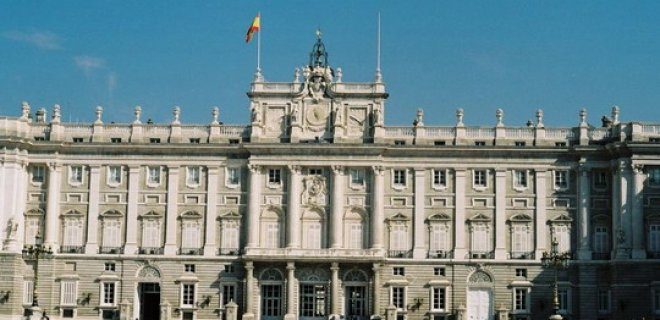
Built in the mid-18th century, the Royal Palace of Madrid is covered in stone and stands in stark contrast to the orderly atmosphere of the city. Baroque and classical styles collided during the construction of this massive building, creating a palace that has dominated the skyline since 1755. For about 200 years, it served as the official residence of the Spanish rulers. Although the throne room is now empty, the implications for the royal family cannot be ignored.
Appearances can be deceptive. The place has a deep sense of history and the garden design is truly impressive, providing a haven of greenery in the dense urban grid. But the real charm lies within. The interior is breathtakingly beautiful. Gold leaf, huge frescoes and tapestries cover every surface. The complex also has a functioning church, which reminds us that faith and strength are woven into the building’s DNA.
However, there is a problem. You can relax in the lobby. You can touch the velvet rope. Don’t take out your cell phone though. Photography inside is strictly prohibited. The staff watched. It was quiet, except for the sound of shoes on the marble. Why? Cultural assets are fragile. Because the Flash dies. Because preserving 200 years of gold leaf surplus requires extreme care. This makes the experience more like a museum visit than a sightseeing tour. You are a stranger in the house, and it is still definitely home. That means you have to act accordingly.
Is the price worth paying? Yes. It is without a doubt the most magnificent building in Madrid. It strengthens the historical character of the city. Without it, Madrid is just a modern city with delicious tapas. This puts you at the center of the European empire.
Address: Calle de Bailén, s/n, 28071 Madrid, Spain
雷纳索菲亚博物馆:当代对位法
距离宫殿的石墙仅几步之遥,就有一座完全拒绝过去的建筑。 索非亚王后艺术中心与黄金或国王无关。 它涉及冲突、记忆和 20 世纪历史的原始神经。 该博物馆以索菲亚王后的名字命名,收藏了西班牙国家现代艺术收藏品,但每个人都是为了一幅画而来。
毕加索的《格尔尼卡》就收藏在这里。 它占据了房间的主导地位。 规模巨大,单色调色板与白色墙壁形成鲜明对比。 它不仅仅是一幅画;它是一幅画。 这是画布上捕捉到的尖叫声。 亲眼目睹会改变您对西班牙内战的理解方式。 技术细节——破碎的人物、痛苦地拉长的脖子——近距离的打击更加强烈。
博物馆本身就是一个建筑难题。 原来的 19 世纪建筑经过改造,加装了引人注目的玻璃和钢结构延伸部分。 它看起来就像一台插入经典外壳的机器。 这种二元性反映了该系列:传统的西班牙大师与国际现代主义的融合。 您可以在这里花几个小时沉浸在达利、米罗和塔皮埃斯的作品中。 音频指南非常棒,提供了仅靠墙壁无法提供的背景信息。
从逻辑上讲,很容易与宫殿参观结合起来。 在线购买格尔尼卡 门票以免排队。 人潮拥挤,但他们在移动
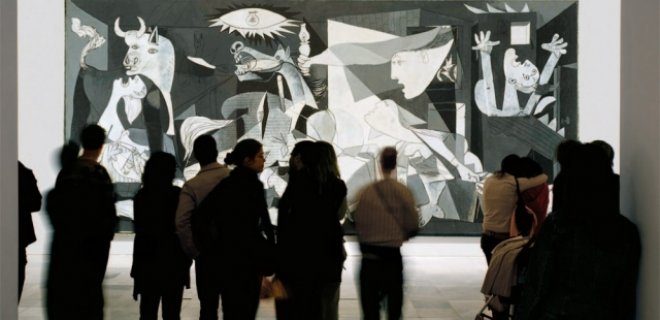
Reina Sofia National Art Center is not a place for leisurely strolls. Two of Spain’s most explosive modern artists, Pablo Picasso and Salvador Dali, are housed in this solemn home. If you really want to absorb the work here, rather than just taking photos in the crowd, you’ll need to take quite a bit of time out of your day. If you want to look closely, it will take at least 3-4 hours.
The highlight is Picasso’s Guernica, an undeniable magnet. Painted in 1937, this large black and white mural raw depiction of the bombing of a Basque city during the Spanish Civil War. It is brutal. It is chaotic. It stops tourists in their tracks. Standing in front of the 3.5-meter-high walls, it is easy to understand why this painting is the spiritual center of the museum. The scale is suffocating in the best way possible.
Getting there requires a strategy. Millions of people gather at the Reina Sofia Art Center, so if you arrive late, the lines can be brutal. Go early. Be there right when the doors open. Skip the line and head straight to the gallery to have the space to yourself before the tour groups descend.
Address: Calle de Santa Isabel, 52, 28012 Madrid, Spain
El Escorial
エル エスコリアルは、市の北に電車ですぐの距離にあります。 それは単なる宮殿ではありません。 修道院、霊廟、図書館、大学がすべて 1 つの巨大な花崗岩の要塞の中に収まっています。 16 世紀にフェリペ 2 世によって建設され、国家と教会権力の中心地となることを目的としていました。 果てしなく続く回廊を歩いてみないと、その巨大な規模を理解するのは困難です。
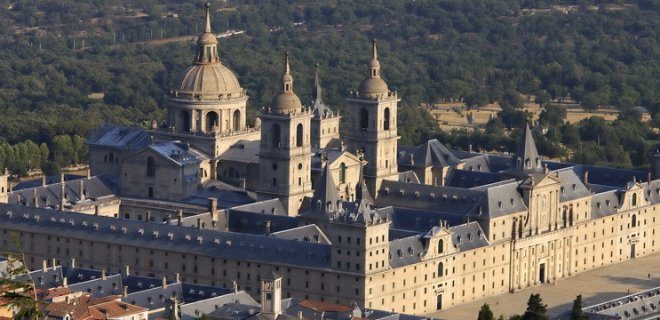
Built in 1584, the complex known as El Escorial is a massive, multi-purpose structure that stands as one of Spain’s most iconic landmarks. It wasn’t just a palace. It also houses a vast library and other significant sections, all unified by a distinct spiritual character. UNESCO designated it a World Heritage site roughly twenty years ago, cementing its status as a must-see for travelers interested in history and architecture.
Why Was El Escorial Built?
The motivation behind its creation was deeply tied to military pride. Construction began in the mid-16th century to commemorate the Spanish victory over the French army. King Philip II used the site as his residence, transforming it into a royal retreat that served multiple functions simultaneously.
If you are planning to visit, you will find it located at Av Juan de Borbón y Battemberg, s/n, 28200 San Lorenzo de El Escorial, Madrid, Spain. It is a significant trek from the city center, so factor in travel time. The architecture is imposing, reflecting the power of the monarchy at the time. You can still see the influence of the royal family in the layout of the rooms and the grandeur of the library.
Atocha Train Station: Madrid’s Main Gateway
Back in the city, Atocha Train Station serves as the primary rail hub for Madrid. It sits within walking distance of Puerta del Sol, making it a convenient landmark for tourists. The station is divided into two distinct parts: the old terminal and the new terminal building.
The newer section handles high-speed train services to major Spanish destinations like Barcelona, Seville, and Malaga. If you are planning a multi-city itinerary, this is where you will likely board your train. The older terminal continues to serve suburban lines, connecting the city to surrounding areas.
How to Use Atocha for City Travel
For most visitors, the new terminal is the point of entry if you are arriving from outside Madrid. Navigating the station is straightforward if you know which side you need. High-speed trains depart from the modern wing, while local commuter trains use the historic structure.
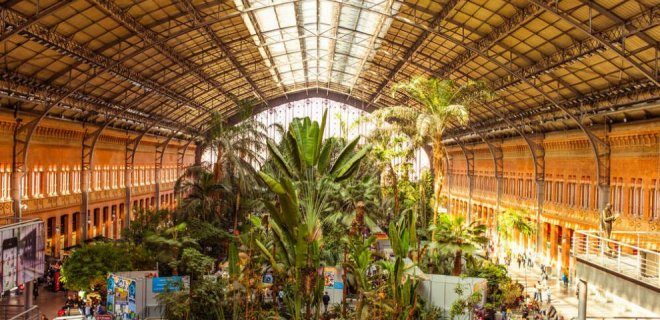
The station itself has become a destination. The old terminal features a large, lush indoor garden that mimics a tropical environment. It provides a striking contrast to the steel and glass of the modern extension. Travelers often pause here to rest or grab a coffee before heading into the city.
Where to Eat Near Atocha
The area surrounding the station offers various dining options. You can find everything from quick sandwiches to sit-down restaurants. Prices vary, but generally, meal costs align with Madrid’s average tourist areas.
If you are using the station as a starting point for your day, Puerta del Sol is close enough to walk. This central square is the hub of Madrid’s public transport network. You can easily switch to the metro or buses from there to reach other attractions.
Is Atocha Worth a Detour?
Even if you are not catching a train, the station is worth a brief visit. The juxtaposition of the historic architecture and the modern high-speed rail infrastructure tells the story of Madrid’s evolution. The indoor garden is a unique feature you won’t find in many other transport hubs.
Planning your route through Atocha requires knowing your destination. High-speed
Finding a suitable place to stay in a densely populated city like Madrid requires more strategy than luck. The accommodation market has changed, especially with the increase in Turkish tourists. I’m not just looking for a bed. You are looking for closeness, atmosphere and value.
We have narrowed it down. Here is the first of five top tips for travelers who want to stay in the heart of the Spanish capital without overpaying for comfort.
Sleep’n Atocha: Efficiency over elegance
Let’s talk about Sleep’n Atocha.
This is not a luxury palace. There is no gold leaf in the lobby and no concierge service that knows your middle name. It has 6 floors and 80 rooms. It is compact. It’s practical. For many travelers, this is exactly what they want.
The location is the main selling point. It is located near the Atocha train station, one of Madrid’s main transport hubs. This place is perfect if you are planning a day trip to Toledo or Segovia or if you are going to arrive late by train and want to leave your luggage. You can easily walk to the Prado Museum and the Reina Sofia at your own pace.
The atmosphere inside is very modern. The design is very clean. The facilities are usually in very good condition for this price range. You get what you pay for. a comfortable night’s sleep in a central location.
But here’s the problem. breakfast.
“If you decide to stay here, don’t expect a gourmet experience. Breakfast is often overlooked by guests.”
The breakfast was said to be average. This is basic. It may not satisfy your appetite or may vary in quality. If you’re a breakfast snob, this is a red flag. If you can buy a “tostada” and coffee from a nearby coffee shop, you can save money and avoid disappointment.
Why this is matters for your plan:
- ** For budget-conscious travelers:** You save money on the room price, but you have to budget 5-10 euros extra for breakfast elsewhere.
- For transit-heavy traveler: If you use the train often, being close to Atocha is invaluable.
- For foodies: Skip the hotel breakfast. The local churrería or cafe is 2 blocks away on foot. The experience is better.
Is it the most romantic hotel in Madrid? No. Would it be a smart base for exploring the city’s museums and metro? Yes. Manage your expectations around the morning meal and you’ll likely be satisfied with the convenience.
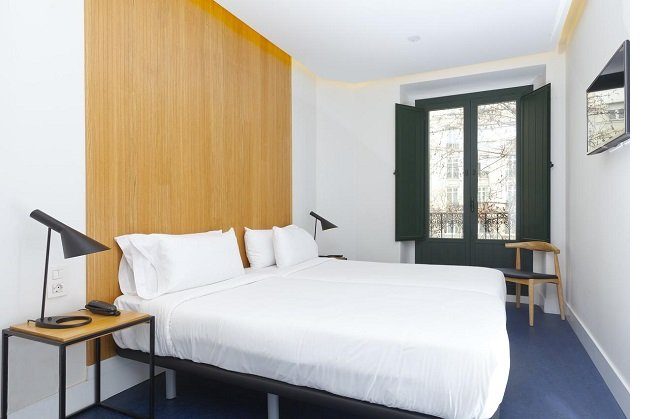

Eurostars Casa de la Lírica
Address: Calle Dr. Drumen, 4, 28012 Madrid, Spain
Phone number: +34 915 39 98 07
If you’re looking for the best value for money in Madrid, choose Eurostars Casa de la Lírica. The location is not only great. It’s absolute gold. Located in the heart of the action, within walking distance of the main attractions, but away from the tourist trap fees charged by most city center hotels.
The street itself is noisy. It is alive. At one point you hear the clinking of espresso cups. Then I hear the clinking of coffee cups. Then I heard the sounds of late-night conversation from dozens of surrounding cafes and gift shops. This is not a quiet, secluded retreat. This is Madrid at full volume. For many travelers, that energy is the point. I want to feel the heartbeat of the city instead of watching it from afar.
Then comes breakfast. Don’t skip it. This was definitely one of the highlights of our visit. The buffet had a good selection, the coffee was strong and the pastries freshly baked. This morning routine will make you forget you’re paying for a room.
Is it worth the noise? Yes. The convenience of the best restaurants and bars outweighs the early morning traffic. Wake up in the morning, eat well and go straight to the center of Madrid without a map or metro ticket. Get ready. for the city to never really sleep.
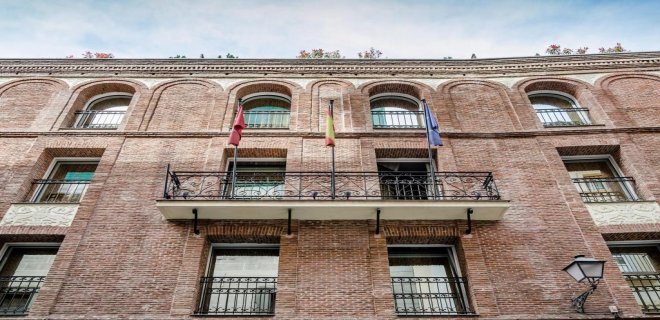
Hostal Met Madrid: An affordable base in the city center
If you are looking for the best balance between price and comfort in Madrid, Hostal Met Madrid is your first choice. Calle Aduana, 19, 28013 Located in the busiest area of the area. If you want to negotiate a room or just need instructions, call them at +34 913 60 49 30.
The basics have been taken care of well. Each room has Free Wi-Fi and Air Conditioning non-negotiables when the Spanish summer heat is in full swing. Each room has a wardrobe so you can hang your shirts instead of bunching them in your suitcase.
Here is what makes it a traveler favorite for value:
- Fridge in every room: Save money on breakfast by keeping water cold or getting food at the nearby Mercadillo.
- Private options available: Some rooms have private bathroom and balcony, which are rare in this price range.
- ** Consistent quality:** We are not trying to be a luxury hotel. We strive to be reliable, clean and affordable.
When budget travelers ask, “which hostal in Madrid offers the best price-performance ratio” this is often the answer. It’s not about the view; The most important thing is to wake up clean, stay cool and keep your wallet intact while exploring the city.
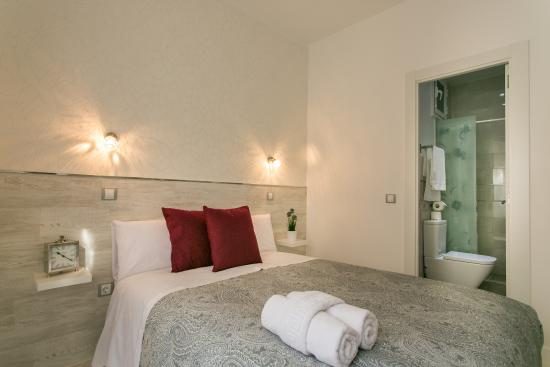

B&B Puerta del Sol
If you want to be in the center of the action before your feet hit the pavement, this is the place for you. B&B Hotel Puerta del Sol is located just 100 meters from the center of Madrid. This is not a typo. Step outside and you’re in the middle of it all.
The address is Costanilla de Santiago, 2, 2°, 28013 Madrid, Spain. If you need a reservation or have any questions, call us at +34 918 61 69 09.
The rooms are basic, but functional. Each room has a TV. Wi-Fi is standard. Nothing special, but it gets the job done. There is no need to pay for luxury here. You’re paying for location. And this location is great.
The reception is open 24/7. Are you arriving late? No problem. Are you leaving early in the morning? They’re there.
Bathroom essentials are included. Free toiletries. hair dryer. It’s standard equipment, but useful when traveling light.
Why stay here?
- Distance: 100 meters from Puerta del Sol.
- 24/7 reception: Flexible check-in and check-out.
- Services: TV, Wi-Fi, free toiletries, hairdryer.
This hotel is not the fanciest hotel in Madrid. But for travelers who want to leave their luggage and experience the city’s energy firsthand, it is possible. You can walk to Gran Via, grab a bite to eat and mingle with the crowd. All in a few minutes.
Is it perfect? Maybe not. But in such a big city, being close to the center is perfect in itself.
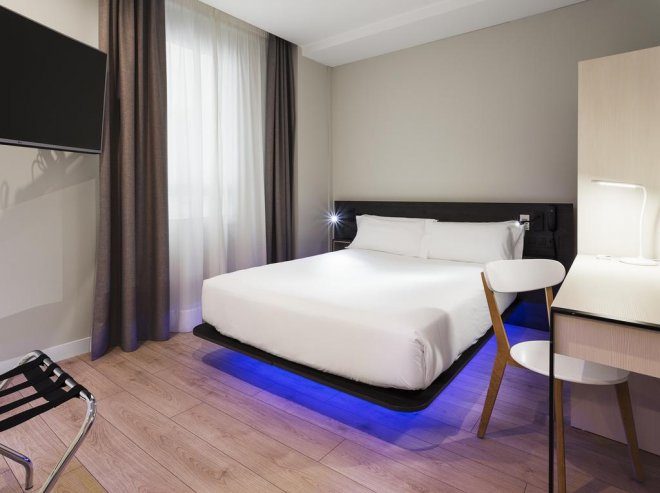

Salamanca’s Quiet Luxury Retreat
Address: Calle de la Montera, 10-12, 28013 Madrid, Spain
Phone: +34 914 89 05 91
If you’re looking for a breath of fresh air in the heart of Madrid, the Clarion Collection Hotel Wellington will meet your needs without breaking a royal budget. Located in the exclusive area of Salamanca, this hotel has a unique elegance: sophisticated and functional, yet surprisingly close to nature.
The location is the headline here. Retiro Park is less than 100 meters away. This is not marketing hyperbole. Within walking distance, you can escape the heat of the city in two minutes. For travelers, the proximity of Madrid’s most emblematic green areas is a refreshing change from everyday travel. If you leave early to watch the sunrise over the lake, you can still arrive at the museum by 10am.
The hotel itself positions itself as a “trendy” option, and is generally successful. The outdoor pool is a striking feature for many guests. In a city where summer temperatures often exceed 30 °C (86 °F), using an on-site swimming pool is a significant logistical win. You can avoid the hassle of booking a crowded public pool or traveling to a distant beach.
Wellness seekers should be aware of the spa’s special conditions. The Wellington has sensory showers and spa bathtub, which are not included in the basic room price. You have to pay extra for access. This is a common pattern in mid-range and high-end city hotels, but it’s a small detail that affects the overall budget. If you plan on using these amenities daily, the cost can add up. If you’re only going to relax once or twice, it’s still a sensible add-on option.
“Wellington Hotel offers quiet luxury in the Salamanca district, just a short walk from Retiro Park. However, access to the spa is at an additional cost.”
住宿的实用细节
在计划您的住宿时,请考虑萨拉曼卡附近的地区。 它以高端购物和精品餐饮而闻名。 虽然酒店提供了一个庇护所,但该区域本身是为消费而设计的。 从豪华时装店到一流的小吃店,您都可以在短短的步行路程内找到一切。
列出的用于预订或查询的电话号码是+34 914 89 05 91。与通过第三方网站预订相比,直接致电可能会获得更好的价格或特定的房间请求,这是一种标准的旅行技巧,在马德里等城市通常会带来回报。
对于那些优先考虑空间和光线的人来说,开放泳池区域建议采用重视通风的设计。 感官淋浴意味着注重多感官放松,迎合那些将酒店住宿视为度假体验的一部分而不仅仅是一个睡觉的地方的旅行者。
水疗中心的额外费用值得吗? 这取决于您的旅行风格。 如果您来这里工作并需要一个安静的地方来恢复活力,游泳池和附近的公园可以为您提供充足的放松。 如果您正在寻求完全的度假村式沉浸,您可能会发现点菜水疗模式有点限制。 然而,对于全天外出探索的城市度假来说,惠灵顿酒店可为您提供可靠、优质的服务。
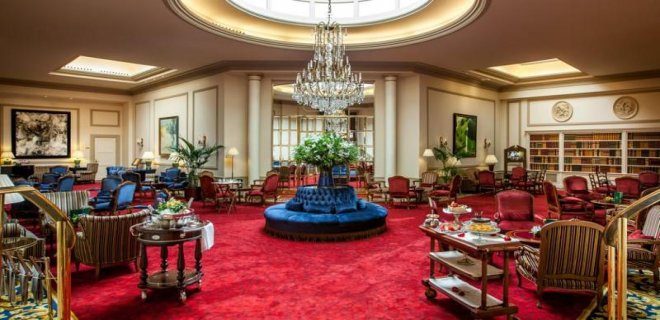
Address: Storgatan 6, 114 51 Stockholm, Sweden
Phone: +46 8 667 09 10
Where to Eat in Madrid
Madrid is famous for its restaurants. It serves rich Spanish cuisine to locals and tourists. The spots are stylish. They are pleasant.
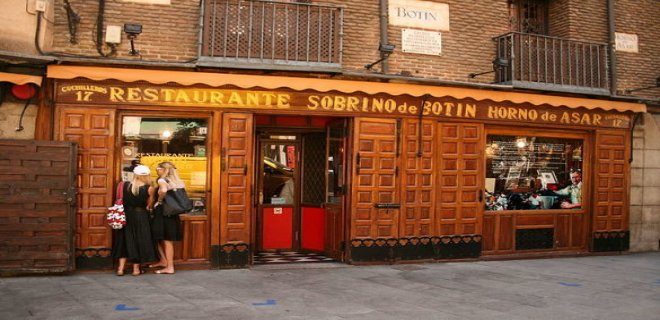
Sobrino de Botín: Roast Lamb in the Oven
Restaurante Botín, also known as Sobrino de Botin, holds a Guinness World Record. It is the oldest restaurant in the world. Its oven has burned since 1725.
Ernest Hemingway liked this place. He wrote about it in The Sun Also Rises. The name appears in the book.

Where to find legendary oxtail pastries in Madrid
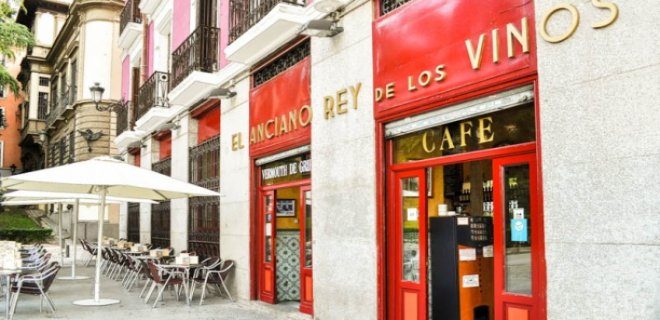
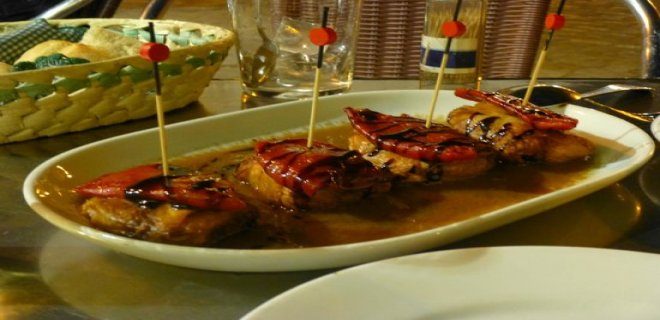
If you’re looking for something representative of Madrid’s bold cuisine, El Anciano Rey on Calle Cuchilleros is an option you can’t miss. The shop, located at number 17 in the 28005 district, is known for its bold concept of wrapping oxtail in pastries.
The logic is simple, but the execution is a problem in most places. Here, the oxtail is cooked incredibly tender. It’s not just soft, it’s falls apart at the touch. It will fall apart if you touch it. But texture alone doesn’t make a meal worth the detour. Something magical happens when you combine hearty game meat with grilled “piquillo” peppers.
Why does this combination work? Oxtail fat easily overwhelm the palate. It is very heavy. rich. It can have a cloying if eaten on its own. But the “piquillo” chili peppers acts as a counterweight. Bright, slightly sweet, with smoky acidity breaking up the richness. It lightens the load. Suddenly this dish wasn’t just a heavy indulgence. Balanced.
The pastry itself is a vehicle. It should be crispy enough to hold the juices, but soft enough to not compete with the filling. When you take your first bite, you notice the taste of melt-in-your-mouth meat and tangy pepper. This is a textural puzzle that can be completely solved in one mouthful.
Practical Details for Your Visit
– Location: Calle Cuchilleros, 17, 28005 Madrid. Located in the heart of the old town, close to other great tapas bars.
– Contact: +34 913 66 42 17. Call in advance if you are visiting during peak tourist times. The kitchen can be full and seating is limited.
– What to Order: Oxtail Bocadillo or Pastry. If they have variations, stick to the piquillo pepper version for a classic balance.
– Timing: Go early. These items often sell out by early afternoon. Madrid’s lunch rush (1:30 PM – 3:30 PM) can be quite busy.
Is it worth it? For people who like to eat 肉 without distance, but want a little sourness, yes. It is an unforgettable taste. You may forget a certain dish in a downtown luxury restaurant, but you will always remember it.
住所は簡単に見つかります。 飛び込み予約が一般的ですが、予約用の電話番号が記載されています。 行列に並ぶ準備をしてください。 これは座ってゆっくり食べる食事ではありません。 それは燃料です。 それは味です。 ここはマドリードです。
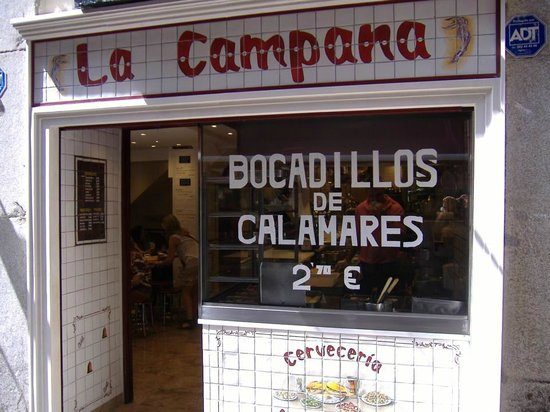
Bar La Campana’s famous calamari sandwich
If you don’t try La Campana Bar’s calamari sandwich, you’re missing out on the essence of Madrid street food. The locals know it. The tourists eventually find it. This line is usually there for a reason.
Located on Calle Bailén in the center of Madrid, this restaurant offers more than just food. It serves a ritual. The address is Calle de Bailén, 19, 28013 Madrid. If you want to call in advance (they won’t answer while they’re frying), call +34 915 59 53 32.
Why squid? Why here?
Madrid is hundreds of kilometers from the sea. Logically, you should stick to lamb or beef. But the locals don’t care about logic. They appreciate the Bocadillo culture. calamar bocadillo is their answer to kebabs and meatballs at home. It’s portable. Very greasy. It’s perfect.
The sandwich itself is simple in concept, but complex in execution. Crispy fried squid rings packed into crusty bread. Contrast is key. The bread must be able to withstand the oil. The squid has to stay tender inside the crunch.
Here you can experience the same buzz as in the lunch spots of Istanbul or Berlin. Everyone eats on the street. Everyone holds the sandwich with both hands, being careful not to drop it.
It’s not just a matter of taste. It’s all about the texture. The crispness of the dough. the softness of the meat. Lightly heat the frying oil.
Who makes it best?
Many places hold this title. But Bar La Campana is always full. Not because it’s fancy. Because it’s reliable. Sandwiches don’t change much from day to day. This is a feature, not a bug.
How much does it cost?
It costs a few euros. It is very cheap. It’s filling. If the stick is made of bread and fried seafood, it’s a meal on a stick.
Where should you go?
Calle de Bailén is central. Walking distance to most major attractions. Retiro Park is a short walk away. The Royal Palace is nearby. Make sandwiches part of your walking route. Eat standing up. Or find a corner. Either way, you don’t have to wait for a table. Not one.
Is it worth the hype?
はい。 Because 誇大広けはmeans being highly rated. This is not 過大公式. It’s just to become famous. マドリードの美食界旅行評判は, usually, means quality management.
The squids are fresh. The batter isn’t too thick. The bread isn’t stale. These are small details that add up.
Why do tourists love it?
スペインの味ですが、スペイン版はパエリアやタパスのプレートではありません。 イベリア半島のファストフードです。 それは本当です。 気取らないですね。
Try it with a cold beer. Or a soda. The acidity cuts through the oil. The bread soaks up the rest.
What if you don’t like squid?
Then maybe this isn’t for you. But even skeptics often go


Rosi La Loca: Paella and tapas near Puerta del Sol
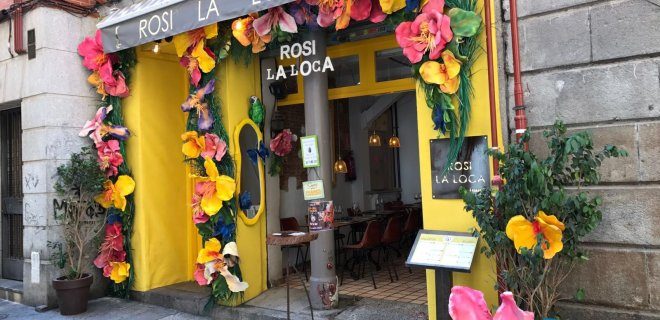
Walking through the busy streets of Madrid’s Puerta del Sol, you’re likely to come across Rosi La Loca Taberna. Located at Calle Botoneras, 6 (Madrid 28012), this place is popular with locals, especially young residents looking for a lively atmosphere without the tourist traps.
The atmosphere here is very happy. This is more than just a place to eat. It is a social hub. The service is energetic, considerate, friendly and fast. But let’s talk about the food. Because that’s why you’re here.
The tapas were solid and worth ordering, but the paella really stood out. This is no ordinary water version. This dish is carefully prepared in a traditional style and requires patience and quality ingredients. If you can’t decide between fast food and a sit-down meal, choose the latter.
Practical details:
– Address: Calle Botoneras, 6, 28012 Madrid, Spain
– Phone number: +34 913 64 29 84
– Perfect: Enjoy lunch or an early dinner while the crowds are still few
– ** Atmosphere:** Relaxed, youthful, energetic atmosphere
You don’t have to wait long to enjoy authentic Spanish home cooking just a few steps away from the city center. It can be crowded, but the quality of the paella justifies the fuss. You come for the location, but you stay for the rice. Honestly, that’s usually enough.
The Seville Connection: A Madrid Stopover That Makes Sense
You’re standing on Calle de Cádiz in the heart of Madrid. The address is specific: number 4, postal code 28012. If you’re looking for the agency that connects the capital to the rest of the peninsula’s biggest draws, this is likely the hub. The phone number, +34 915 32 66 81, isn’t just a digital placeholder; it’s a direct line to logistics.
Why does a Madrid address matter for a trip covering Zaragoza, Valencia, Seville, and Barcelona? Because most long-distance travelers treat Madrid as the gateway. You land there. You navigate the metro. And then you need to figure out how to get to the coast or the south without renting a car and fighting narrow, historic streets.
This location sits at the intersection of convenience and coverage. It’s not just about booking a ticket; it’s about understanding the flow of Spanish tourism.
Why Zaragoza? The Underrated Layover
Most people fly into Madrid or Barcelona and miss Zaragoza. It’s a mistake. Zaragoza is where Roman history, Moorish architecture, and Renaissance grandeur collide without the crushing crowds of the larger cities.
If you’re planning a multi-city route, don’t treat Zaragoza as a blank spot on the map. It’s a strategic stop. The AVE high-speed train from Madrid takes under two hours. That’s less time than you’d spend sitting in traffic in London or New York.
The Basilica of Our Lady of the Pillar dominates the skyline. It’s not just a church; it’s a statement of faith and art that stretches back centuries. The frescoes inside? They’re Baroque overload in the best way possible. You walk in expecting marble and gold. You get dynamism.
For the traveler asking “which city should I visit next after Madrid?”, Zaragoza offers a slower pace. You can see the Aljafería Palace, a medieval fortress that looks like it belongs in a fairy tale, in half a day. Then you’re back on the train.
Valencia: The Sweet Spot Between North and South
Go south from Madrid, and you hit Valencia. It’s often overshadowed by Barcelona’s Gaudí chaos and Seville’s flamenco heat. But Valencia is where Spain feels most livable.
The City of Arts and Sciences is the obvious draw. Santiago Calatrava’s white, futuristic structures look like they landed from another planet. They’re photogenic. They’re impressive. But the real value of Valencia isn’t just the architecture. It’s the lifestyle.
The Turia Gardens, a riverbed turned park, cut right through the city. You can bike for miles without hitting a single car. It’s green, it’s shaded, and it’s free.
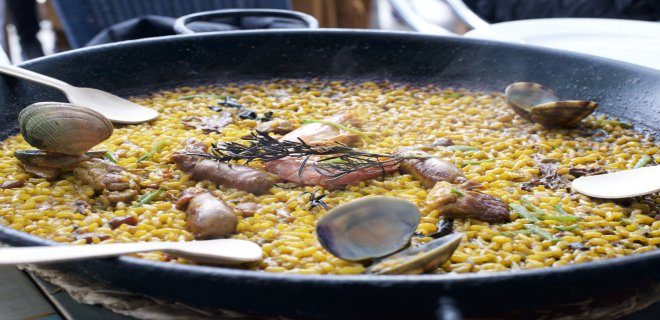
Food-wise, this is the birthplace of paella. Not the saffron-heavy tourist version, but the original. Look for restaurants near the Ciutat Vella (Old Town) that serve arroz al horno or seafood paella. The rice is cooked with lobster stock. The texture is different. It’s worth the detour from the main tourist traps.
Seville: The Heart of Andalusia
Head further south, and the climate changes