It was a hot Friday afternoon in Beijing.
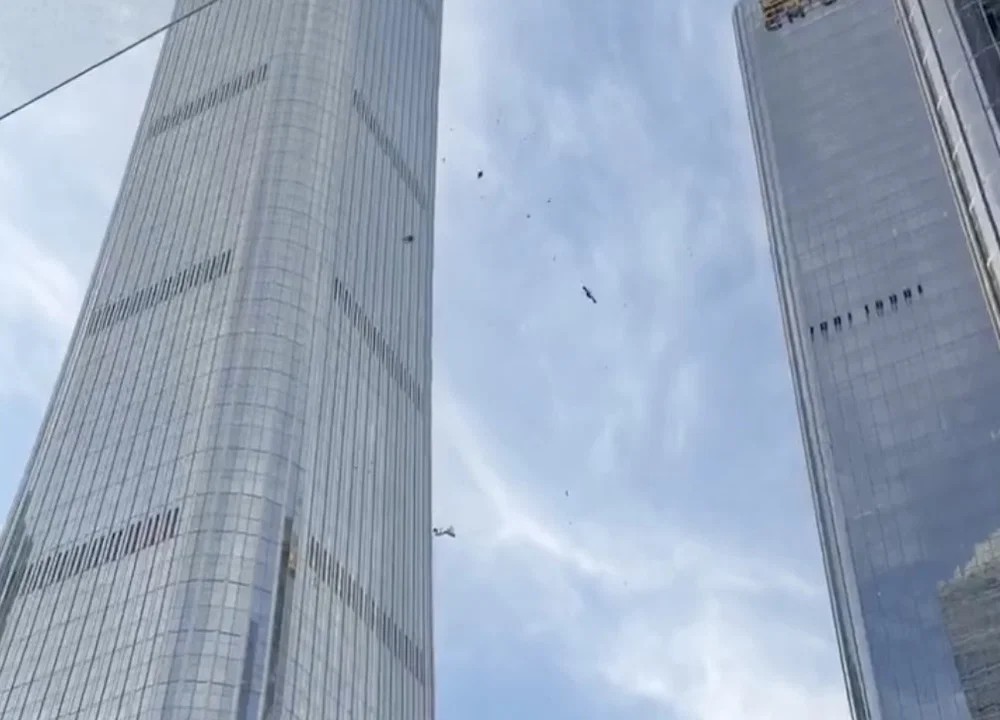
The sun hadn’t quite dipped below the skyline on June 26th before chaos broke the glass curtain of the CITIC Tower. China’s tallest skyscraper. 528 meters of steel and ambition. It took less than a minute to scar it.
A Sunward SA 60L. Two seats. Registration B-12PP.
It didn’t come out of the clouds like a missile. It came out of a local airfield. Beijing Shifosi. Owned by Shuangyue General Aviation. You know, for sightseeing and photography tours. Not for targeting central business districts. But that is exactly what happened. The pilot, alone at 6PM, turned his small aircraft into a kinetic projectile.
The Impact
Video footage captures the horror in stark detail.
The plane hit high up. Toward the top. Thirteen floors were damaged. Not structurally, thank God. Just glass. Sheets of it blowing out like confetti. The tail section detached completely, raining down on the streets below. A fire started on the pavement where the debris landed. It burned briefly. It was put out quickly.
Thirteen people injured. Some inside the tower. Some on the sidewalk below. The building was evacuated. Panic was real. Fear was heavier.
The plane shattered into pieces upon impact, yet the structure held firm against the blow.
For a moment, the entire city felt exposed. Beijing had already tightened its surveillance protocols in the days leading up to this. General aviation across China was grounded within hours. The authorities were right to panic. Air traffic controllers tried to reach the pilot. Nobody answered. The radio was dead silence until it was too late.
We all thought of New York.
2001 echoed in every newsroom. The visual similarity was jarring. A tower struck by an airplane. The trauma is generational here. The instinct to link these events is human. Necessary. But there was a critical difference this time. The weapon was tiny. A commuter prop-plane cannot replicate the destruction of a jumbo jet. The fatality count remained low. Only the pilot died. He achieved his objective, tragically enough.
The Official Narrative
Beijing moves fast.
Usually. This time they were impossibly swift. The investigation wrapped up in days. A statement was released. The pilot was identified. A 66-year-old man living in Beijing.
The reason for the crash? “Personal reasons.”
Bureaucratese for suicide.
The authorities dug into his diary. They found what they called “multiple expressions of ending his life.” That sealed the case for them. They categorized it as a threat to public safety driven by private despair. Case closed.
I blinked at the wording.
Think back to March 2022. The China Eastern Boeing 735. Engines shut off intentionally. The plane dived. Two hundred souls vanished in a instant. The international aviation community suspected pilot suicide. The evidence was there. The black boxes didn’t lie.
China stayed silent.
They argued that revealing the motive would “endanger national security and social stability.” A blanket of silence. A protective curtain over the truth. So why the transparency here?
Why admit to suicide now when they refused to before?
Maybe it is about the scale. The Eastern Airlines crash was a catastrophe of mass proportions. Acknowledging intent there could have sparked unrest. Doubt. Anger toward the regulator. But a two-seater? A lone act of misery with thirteen casualties instead of hundreds?
Perhaps the government decided the truth wasn’t explosive enough to risk censorship.
Or maybe they want us to believe the danger has been identified. Named. Neutralized. A madman. Just a madman. Not a system failure.
The sky looks the same over Beijing today. Planes are flying again. General aviation is slowly returning. The CITIC Tower still stands, glass scars picked like scabs on its upper floors. We were spared the worst.
But we saw what could happen. We saw the fragility. And now we wonder if “personal reasons” is a label they stick on problems they prefer not to solve.
Or is it just a sad end for a man who wanted out?