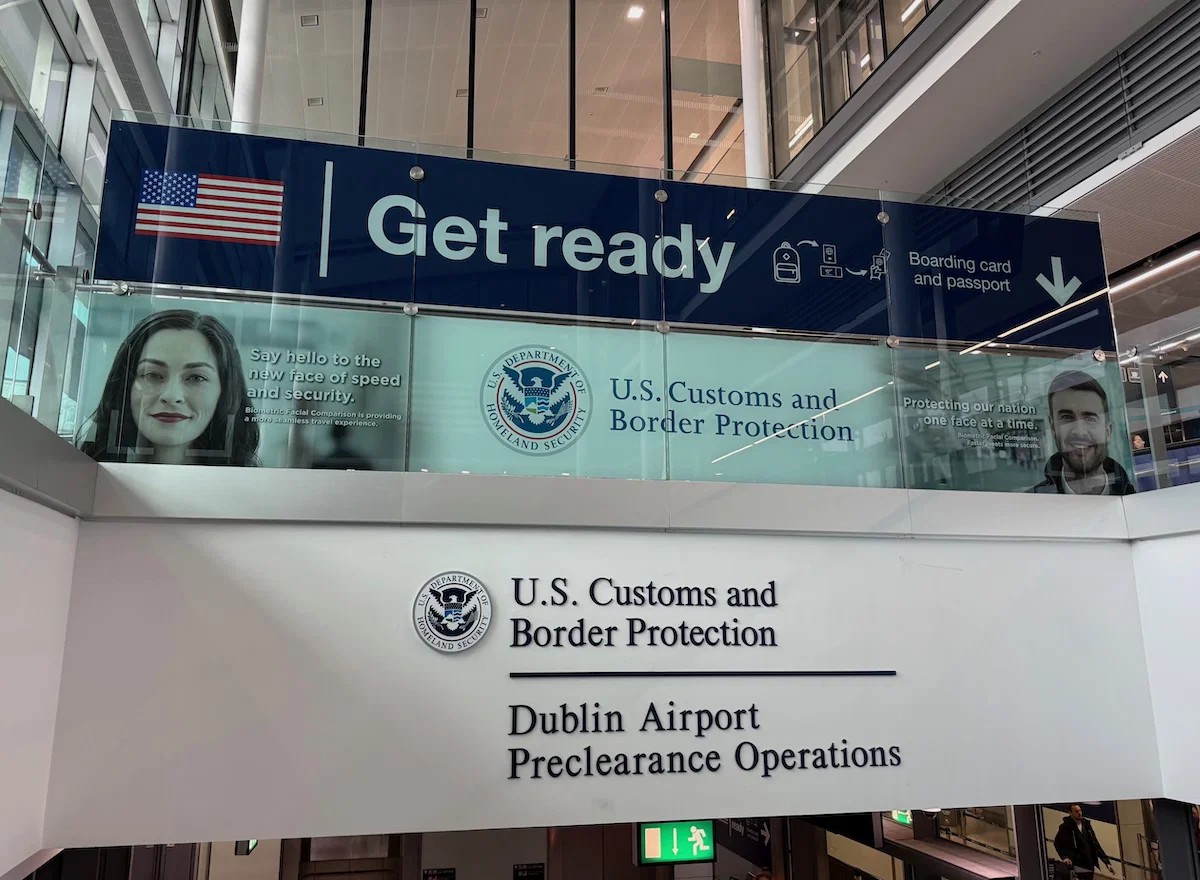
For most international travelers, the arrival process in the United States involves a predictable routine: land, navigate through customs, and wait in long immigration lines. However, a unique program managed by U.S. Customs and Border Protection (CBP) allows a select group of travelers to bypass this entirely by clearing immigration before they even board their flight.
This is known as the US Preclearance program, and it fundamentally changes the arrival experience by turning an international flight into a domestic one.
How US Preclearance Works
The Preclearance process takes place at select international airports. Instead of dealing with U.S. officials upon arrival, passengers undergo screening at their departure point. The logistics generally follow this flow:
- Enhanced Security: Passengers must pass through a specialized security checkpoint approved by the U.S., which may differ from the standard local airport security.
- Immigration Screening: Travelers are interviewed by U.S. CBP officers. For those eligible, expedited options like Global Entry kiosks or Mobile Passport Control are often available to speed up the process.
- “Domestic” Arrival: Once cleared, you are effectively treated as a domestic passenger. When your plane lands in the U.S., you do not need to clear immigration or security again.
- Seamless Connections: If you have a connecting flight within the U.S., you can head straight to your next gate. If you are ending your trip, you simply collect your luggage from the domestic baggage carousel.
Where Can You Find Preclearance Facilities?
The program is not globally ubiquitous; it is currently limited to 16 facilities across six countries. The distribution is heavily weighted toward Canada, reflecting the deep integration of North American travel.
- Canada: Calgary (YYC), Edmonton (YEG), Halifax (YHZ), Montreal (YUL), Ottawa (YOW), Toronto (YYZ & YTZ), Vancouver (YVR), Victoria (YYJ), and Winnipeg (YWG).
- Ireland: Dublin (DUB) and Shannon (SNN).
- United Arab Emirates: Abu Dhabi (AUH).
- The Caribbean: Aruba (AUA), Bermuda (BDA), and Nassau (NAS).
While there has been historical interest from major hubs like Dubai, Brussels, and Bogotá, no new facilities have been officially established recently.
The Economics of Border Control: Who Pays?
Establishing a Preclearance facility is a significant diplomatic and financial undertaking. It is not a service the U.S. provides for free; rather, it is a cost-sharing partnership.
- The United States typically covers the costs of the CBP personnel and staffing.
- The Host Country is responsible for providing the physical space and the capital investment required to build and maintain the facility.
Why would a foreign government invest so heavily?
From a strategic standpoint, Preclearance makes an airport significantly more attractive to airlines and passengers traveling to the U.S. It acts as a competitive differentiator. Furthermore, these facilities often serve as symbols of strong diplomatic ties between the host nation and the United States.
Is Preclearance Right for You?
The value of Preclearance depends heavily on your status as a traveler and your specific itinerary.
The Benefits
- Reduced Stress: Clearing immigration before a long-haul flight allows you to relax during the journey rather than bracing for a long queue upon arrival.
- Efficiency for Non-Expedited Travelers: If you do not have Global Entry or other expedited programs, Preclearance is a massive time-saver compared to standard arrival lines.
- Simplified Connections: It is an ideal setup for travelers with connecting flights, as it eliminates the need to re-clear security and customs at their U.S. destination.
The Drawbacks
- Risk of Misconnection: Because the Preclearance process requires extra time (often requiring you to be at the facility well before departure), travelers with tight connections from other international flights may find it harder to make their gates.
- Diminished Value for “Trusted Travelers”: If you already possess Global Entry, the advantage of Preclearance is much lower, as your arrival process in the U.S. is already highly optimized.
Summary: US Preclearance is a powerful tool for streamlining international travel, offering seamless “domestic-style” arrivals. While it provides immense convenience for connecting passengers and those without expedited status, its utility varies depending on your existing travel credentials and connection times.