Delta Air Lines has officially detailed the next generation of its premium travel experience. While the headline news focuses on high-end suites for its upcoming Airbus A350-1000 fleet, the airline is also rolling out subtle but impactful improvements across its economy and premium economy cabins.
The New Business Class Standard: A350-1000 and A330 Refreshes
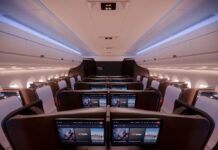
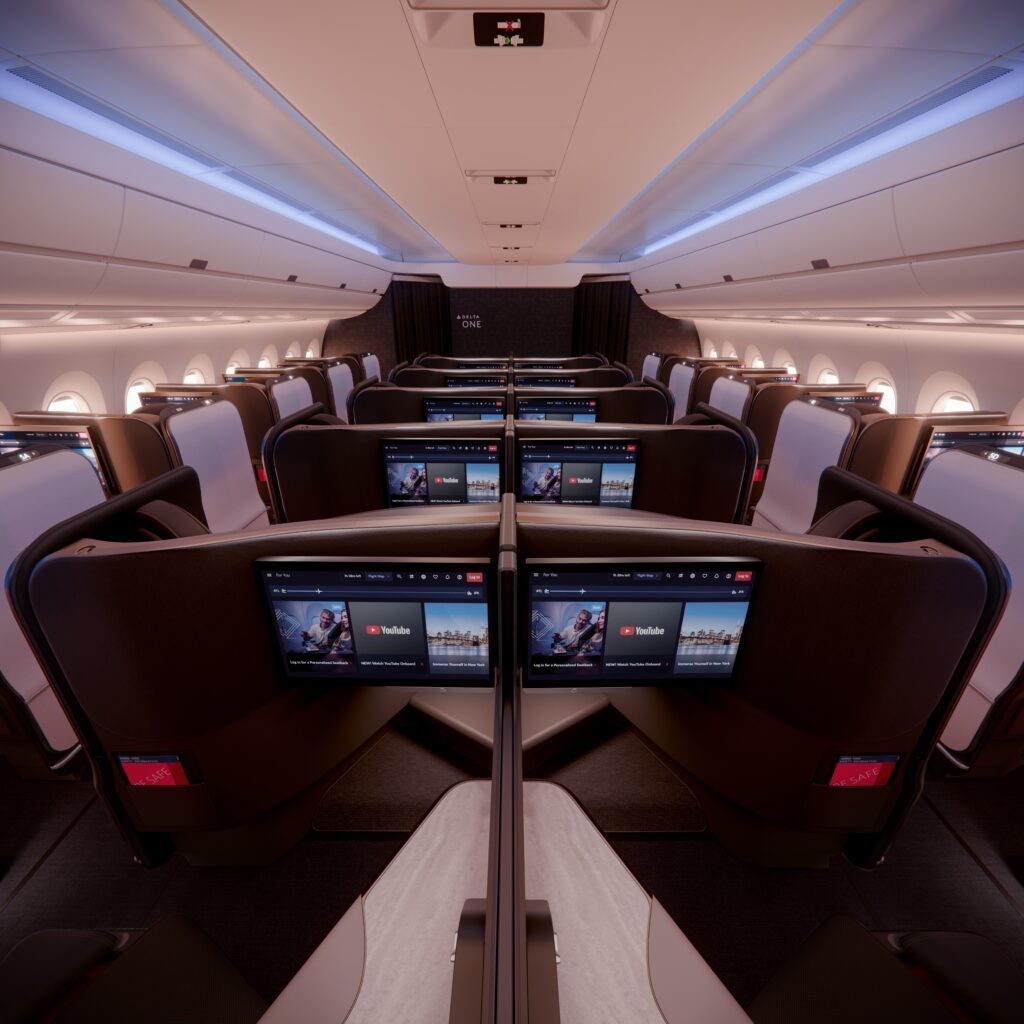
The centerpiece of Delta’s announcement is the new business class suite arriving on the Airbus A350-1000 next year. Building on the Thompson seat platform, these suites are designed specifically for long-haul comfort:
- Enhanced Sleeping Comfort: The new beds will be three inches longer than current models, offering over 6.5 feet of sleeping space. To improve rest, Delta is adding a pillow-top layer over memory foam, complemented by Missoni bedding.
- Thoughtful Details: The design includes dedicated shoe storage, a phone holder for use while in bed, and specialized hooks for eyeglasses.
- Cabin Layout: The A350-1000 will utilize a reverse-herringbone configuration. Window seats will face the side of the aircraft, while center pairs will feature movable dividers to allow for either companion travel or total privacy.
Delta also plans to bring similar upgrades to its Airbus A330 fleet. While these aircraft will use the existing VantageXL seat platform, they will receive “mini-upgrades” including wireless charging, USB-C power, and the new pillow-top cushioning.
Beyond Premium: Upgrades for Economy Passengers
While luxury suites grab the headlines, Delta is making a strategic push to improve the experience for the majority of its passengers in Premium Economy and Coach.
The airline is implementing a standardized interior refresh across its fleet—aiming to touch over 800 aircraft within five years—which includes:
– Larger seatback entertainment screens in every cabin.
– Enhanced connectivity, including Bluetooth audio, USB-C, and AC power.
– Improved ergonomics, specifically through the addition of memory foam cushioning.
Notably, Delta is addressing a common pain point in economy travel: seat comfort. By adding memory foam cushioning and an extra one inch of legroom, the airline is tackling the physical discomfort often associated with budget-conscious seating. Additionally, a new small seatback shelf will be added to coach seats for personal items.
Strategic Context: The Battle for the Skies
Delta’s moves reflect broader trends in the aviation industry regarding how airlines segment their customers and manage capacity.
1. The Rise of “Basic” Business Class
Delta is expected to follow United Airlines in introducing a “basic” tier of business class. This is a tactical move to manage demand: by imposing restrictions on lower-priced business seats, Delta can protect the premium experience (and higher price points) for travelers willing to pay more, while still filling seats that might otherwise go empty.
2. The “All-Suite” Marketing Nuance
Delta has marketed its cabin as the first “all-suite” business class among U.S. carriers. While technically accurate within the domestic market, it is important to note that international carriers like Qatar Airways pioneered this concept much earlier, and JetBlue offered a hybrid suite model prior to Delta’s rollout.
3. The Long Road to Modernization
Despite these announcements, Delta faces a significant transition period. The airline has set a goal for 90% of its business class seats to feature doors by 2030. This highlights the reality that much of Delta’s current long-haul fleet—particularly the Boeing 767s and older A330s—still utilizes older, less private seat designs that are currently lagging behind global competitors.
Delta’s strategy appears to be a two-pronged approach: investing heavily in high-margin luxury suites to compete with global elites, while simultaneously “leveling up” the economy experience to drive customer satisfaction through incremental, high-impact comforts.
Conclusion
Delta is attempting to bridge the gap between luxury and utility by modernizing its entire cabin ecosystem. While the new A350 suites represent the future of their premium brand, the incremental improvements in economy may prove more vital for maintaining broad passenger loyalty.