


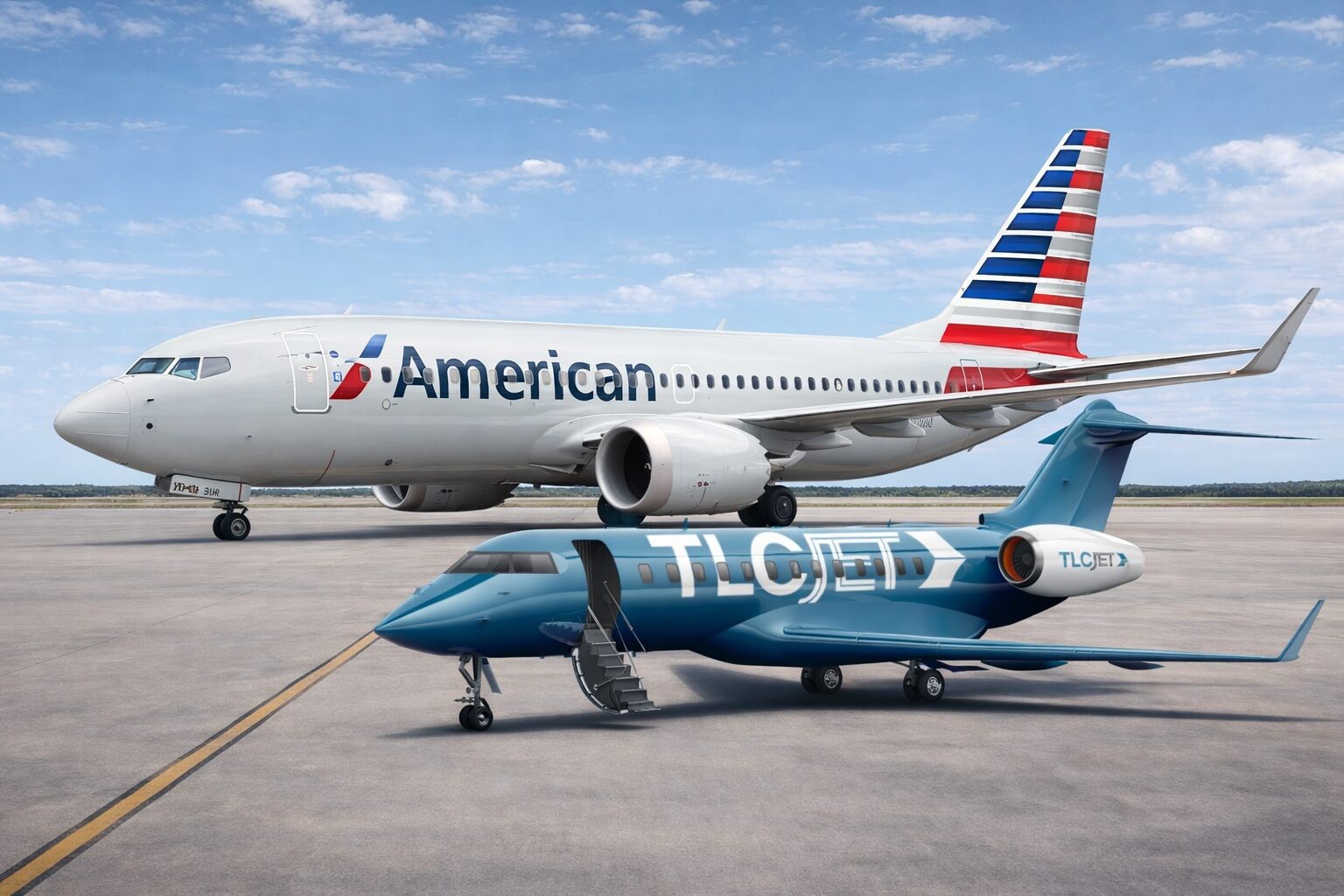
American Airlines has expanded its AAdvantage loyalty program to include private jet travel, allowing high-net-worth flyers to accelerate their journey toward elite status through luxury charters. Through a new partnership with TLC Jet, customers can now earn miles and loyalty points by spending on private flights.
How the Partnership Works
The agreement allows travelers to earn one redeemable mile and one Loyalty Point for every dollar spent on base flight charges with TLC Jet. This creates a direct “spend-to-status” pipeline for ultra-premium travelers.
For context, achieving top-tier status in the AAdvantage program requires significant spending:
– Gold Status: 40,000 Loyalty Points
– Executive Platinum Status: 200,000 Loyalty Points
Under this model, a customer spending $100,000 on private charters could theoretically secure Executive Platinum status—the airline’s highest tier—solely through these flights. If that spending is channeled through an AAdvantage credit card, the accumulation of points becomes even more rapid.
Key technical details of the deal include:
– No Elite Bonuses: Flying private does not trigger the mileage bonuses typically awarded to elite members on commercial flights.
– Million Miler Exclusion: These flights do not count toward the prestigious “Million Miler” status.
– Processing Time: Miles and points are expected to post to accounts between 48 hours and 30 days after travel.
– TLC Jet Model: The provider offers a “pay-as-you-go” charter service with no minimums or prepaid deposits.
Strategic Motivations: Loyalty vs. Competition
This move represents a shift in how American Airlines views the private aviation sector. Rather than competing directly with private operators, American is positioning itself as a brand and distribution partner.
For American, the financial upside from the sale of miles may be modest, but the strategic value is high. By integrating private travel into its loyalty ecosystem, the airline captures a segment of the market that would otherwise remain disconnected from the AAdvantage brand.
For TLC Jet, the benefits are more profound. The partnership provides:
1. Distribution: Access to American’s massive customer base.
2. Credibility: Validation from a major global carrier.
3. Differentiation: A unique selling point in a crowded charter market.
The deal also highlights deep industry connections; TLC founder Justin Firestone previously co-founded Wheels Up (a company with ties to Delta) and served as a strategic advisor to American Airlines.
The Regulatory Contradiction
The partnership raises significant questions regarding American Airlines’ previous stance on private terminal operations.
In recent years, American Airlines took aggressive steps to lobby the government against JSX, a service that operates all-first-class flights out of private terminals. American’s objections were centered on two main arguments:
– Safety: They claimed “Part 135” operations (private charters) were less safe due to different pilot certification requirements.
– Security: They argued that private terminals bypassed the rigorous TSA screening processes required at commercial hubs.
However, American CEO Robert Isom previously acknowledged in a closed-door meeting that these objections were largely a commercial dispute, aimed at protecting market share from a competitor that offered a more convenient product.
By partnering with TLC Jet, American is now actively monetizing the exact same “Part 135” operational model it once condemned. While the airline continues to partner with other non-traditional carriers like Contour Airlines, this new deal suggests that American’s primary concern regarding private terminals is not safety or security, but rather who controls the loyalty and the revenue.
The move signals a pivot from fighting private terminal competitors to embracing them as tools for customer retention and high-value loyalty accumulation.
Conclusion: American Airlines is prioritizing loyalty integration over regulatory opposition, offering a lucrative shortcut to elite status for those willing to pay for private travel. This strategy effectively turns a former competitive threat into a high-margin revenue stream for the AAdvantage program.


