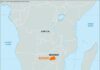
San Felipe sits right in the middle of Chile’s central valley, perched at 2,087 feet above sea level. The Aconcagua River runs through it, cooling the air and feeding the land. This isn’t just a dot on a map. It is a working city with deep roots and a heavy duty.
Why San Felipe Matters for Travelers
Founded in 1740 as Villa de San Felipe el Real, this town was established by José Antonio Manso de Velasco y Samaniego. Back then, it was a new foothold. Today, it remains the agricultural heart of the region. You will find fields of alfalfa, vineyards heavy with grapes, orchards bursting with fruit, and patches of vegetables and cereals. The soil here works hard. So does the ground beneath it. Mining for copper and gold adds another layer to the local economy. It is not a sleepy backwater. It is a place where trade, farming, and industry overlap.
How to Get There and Where to Go Next
Location is everything in San Felipe. It is a logistical hinge point.
- Rail and Road to Valparaíso : The city connects by rail and road to Valparaíso, about 80 miles to the southwest. That port city is the gateway to the Pacific.
- Connection to Santiago : It also links directly to Santiago via rail and road. Getting into the capital is straightforward.
- Crossing the Andes : The real kicker is the highway across the Andes Mountains to Mendoza, Argentina. This route turns San Felipe into a major center of trade between Chile and Argentina. If you are driving, this is a key stop. The mountains loom large. The border crossing is close by.
When to Visit and Who Is There
The population tells you something about the scale. In 2002, the city had roughly 53,000 people. By 2017, the municipality had grown to 76,844. It is expanding. It is growing into its role as a regional hub.
For a traveler, this means infrastructure exists. Services are available. But it is not yet saturated with mass tourism. You will find authentic Chilean life here. Not the staged version. The real version.
What to See and Do
Focus on the valley. The Aconcagua Valley is known for its wine and produce. Stop at local markets. Taste the grapes. Eat the fruits. The agriculture is not just background scenery. It is the main event.
If you are into history, the town’s founding date of 1740 is worth noting. The colonial architecture may be subtle, but the layout reflects its origins. The mining history adds grit. Look for signs of the copper and gold extraction. It is part of the landscape’s DNA.
Logistics for Your Trip
- Base Yourself Here : Use San Felipe as a staging ground. It is central. You can reach the coast or the capital with ease.
- Cross the Border : Plan for the Argentina trip. The highway makes it viable for day trips or longer tours.
- Eat Locally : The food comes from the fields. It is fresh. It is regional.
The Bottom Line
San Felipe