马拉喀什正好坐落在摩洛哥的中心,背靠阿特拉斯山脉的山麓。 它是这个国家最古老的首都,这一事实赋予了它的街道一种在更新、更光鲜的目的地中找不到的重量。 当地人称其为“红城”,因为砂岩建筑在日落时发出橙粉色的光芒。 这个名字本身来自柏柏尔语马拉喀什 ,大致翻译为“上帝的土地”。
该市有超过一百万居民。
这不仅仅是一个旅游陷阱;
它是北非的主要政治和经济中心。 但对于旅行者来说,价值在于它的历史。
它是马格里布地区最有价值的城市之一。 你会发现宫殿。 古老的清真寺。 保存了几个世纪的花园。
这是您开始的地方。
Jamaa El Fna: The Pulse of the City
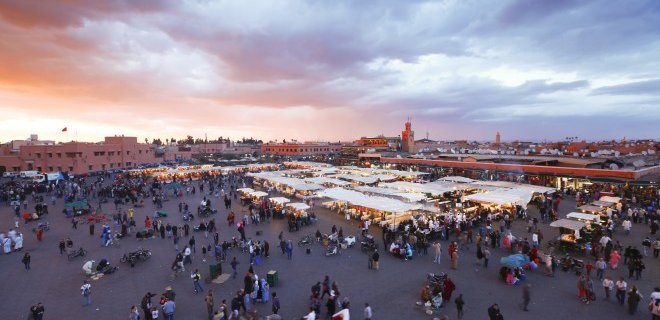
You cannot understand Marrakech without standing at Jemaa El Fna. This is the main square and the heart of the Medina. It is chaotic. It’s noisy. This is exactly what you need.
During the day, this is a market. Snake charmer performance. Orange juice vendors shout their prices. Herbalists offer treatments for everything from headaches to heartaches. By night, it transforms. Thousands of tables have been set in the food stalls. The air is filled with the smell of cumin, barbecue and burning coals.
**Why go? **
Because no other square in Morocco captures the energy of this place. It has been the center of public life for more than a thousand years.
Logistics:
– Price: Street food is cheap. A plate of harira soup can cost a few dirhams. A tagine meal costs about 50-100 MAD.
– Time: Go in the late afternoon. You can watch the sunset from the rooftop cafe. Stay until the night market fully wakes up.
– Security: Keep your wallet safe. Pickpockets are rampant in the crowd. Be firm with the guides who approach you. They are waiting for tips.
“Jemaa el Fna is more than just a place. It’s a never-ending show.”
The Koutoubia mosque surrounds the square. Non-Muslims cannot enter the mosque, but can see the minaret. This is a landmark. You can find it almost everywhere in the old city.
You can walk to the souk from here. But that’s for another time. Come on, sit down. Watch. Listen.
Jemaa el-Fnaa goes by many names—Djema el-Fina, Cema el-Fnaa—but in Marrakech, it is simply the pulse. Located in the heart of the historic medina, this sprawling square and market is the undisputed center of gravity for both locals and visitors. It isn’t just a transit point. It is a destination.
Surrounded by the Bahia Palace, ancient mosques, ceremonial grounds, and hidden gardens, the square functions as the city’s primary marketplace. But calling it a market feels inadequate. It is a living theater.
UNESCO monitors this area closely, recognizing it as a site of intangible cultural heritage that needs active protection. The energy here is specific and overwhelming. You have itinerant sellers hawking goods, snake charmers with cobras, and dancers who seem to materialize from the crowd. It is a cultural mosaic that shifts with the hours. If you are planning a trip to Morocco, skipping this medieval market is not an option. It is the entry point.
The Bahia Palace
Just steps from the chaos of Jemaa el-Fnaa lies the Bahia Palace. Built in the late 19th century, it was designed to be the greatest palace in Marrakech. The name itself hints at the intent: Bahia means “brilliance” or “radiance.”
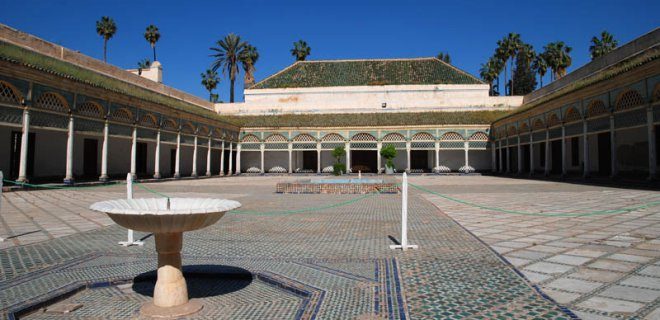
The architecture is a study in opulence. You will see intricate zellij tile work, carved cedar wood, and plaster detailing that covers almost every surface. It is not just big. It is dense with detail.
The palace was the residence of Grand Vizier Ba Ahmed. He wanted a home that reflected his power and taste. He imported the best craftsmen from across the empire to execute the vision. The result is a labyrinth of rooms, courtyards, and gardens.
Visiting the Bahia Palace offers a stark contrast to the square outside. The noise drops away. The light changes. You move through shaded arcades and into sun-drenched patios. The scale is impressive, but the craftsmanship is what lingers.
Why do travelers prioritize this site? Because it shows the domestic side of Marrakech’s history. Jemaa el-Fnaa is public life. The palace is private ambition. Both are essential to understanding the city.
Planning Your Visit
Timing matters here. The square transforms from day to night. Morning is quiet, mostly locals buying supplies. Late afternoon brings the food stalls. By night, it is a carnival of smoke, music, and hundreds of tables.
For the palace, early morning or late afternoon avoids the worst of the heat and the largest tour groups. Tickets are reasonably priced, but expect long lines during peak season.
Logistics are simple. You are already there if you are staying in the medina. Wear comfortable shoes. The tile work in the palace is beautiful; the streets outside are not always even.
The juxtaposition is the point. You exit the palace’s serene courtyards and walk back into the roar of Jemaa el-Fnaa. The transition is abrupt. That is the experience.

Bahia Palace: A masterpiece of Moroccan light
The name Bahia roughly translates to “brightness”, and you can feel this ambition as soon as you enter the premises. Built by Si Moussa in the late 19th century and later expanded by his son, the palace was intended to capture the essence of Islamic and Moroccan architecture without competing with the larger, more austere styles of other Muslim countries.
The complex covers almost two acres, a sprawling space that grew richer and more complex as Marrakech’s wealth grew towards the end of the 20th century. New wings have been added. The decorations became more sophisticated. It wasn’t just a home; it was an expression of power and taste.
Today it is considered one of the most important examples of Islamic architecture in Morocco. If you are planning a trip to Marrakech, it would be a mistake to skip this site. Carved cedar, zellige tiles, bright courtyards – everything is worth seeing.
Koutoubia Mosque
The minaret of the Koutoubia Mosque dominates the horizon just behind the palace walls.
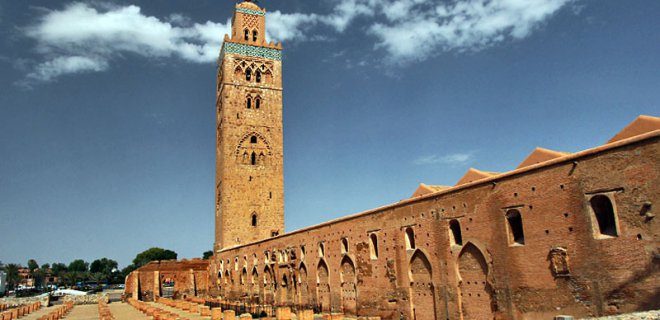
Designed by the architect Abu Yusuf Yaqub al-Mansur, this structure is not just a place of worship; it is the defining vertical landmark of Marrakech. If you are looking for the Koutoubia Mosque Marrakech, you don’t really need a map. You follow the shadows. The minaret is so tall and so prominent that it casts a cool, predictable shade over the medina, acting as a natural compass for anyone getting lost in the souks. It is the largest mosque in Morocco, a title it holds with quiet authority amidst the chaos of the surrounding district.
A Masterpiece of Almohad Architecture
Construction didn’t happen overnight. The mosque was built between 1184 and 1199, during the height of the Almohad Caliphate. The materials tell you everything about its durability and aesthetic. You see it in the red brick, the sandstone, and the intricate ceramic details that still hold up against centuries of sun and wind. It is robust. It is elegant. It is heavy with history.
The minaret alone stands at 77 meters. That is not a small detail. When you are standing in the Jardin de l’Esplanade looking up, the scale hits you. The geometry is precise, the mosaics are faded but visible, and the light filtering through the arched windows creates a play of shadow that has inspired photographers for a century.
A Ripple Effect Across North Africa and Spain
Why does this specific tower matter beyond Morocco? It became the prototype. The design of the Koutoubia minaret directly influenced the Giralda in Seville and the Hassan Tower in Rabat. If you travel to Seville, look up. The similarities are undeniable. The Almohad style is consistent, severe, and beautiful. This mosque didn’t just serve the locals; it set a standard for Islamic architecture across the Maghreb and into Al-Andalus.
Visiting the Site: What You Need to Know
Here is the practical part. The mosque itself is open to Muslims for prayer. Non-Muslims cannot enter the prayer halls. This is a strict rule, and it is respected. Do not try to sneak in. It doesn’t work, and it is disrespectful.
However, you don’t need to enter to appreciate it. The best view is from the gardens across the street. The Jardin de l’Esplanade offers a clear, unobstructed line of sight to the minaret. It is the best spot for photos, especially in the late afternoon when the light turns the sandstone a deep, warm orange.
Timing matters. The medina gets crowded. If you want to see the minaret without being jostled by tour groups, go early in the morning or late in the evening. The light is softer, the air is cooler, and the vibe is calmer.
Beyond the Minaret
The mosque is also known as the Kutubiyyin Mosque or the Bookellers’ Mosque. The latter name comes from the booksellers who used to gather there. You can still find book stalls in the nearby souk. It is worth wandering into the alleys just to see the atmosphere, even if you don’t buy anything.
The area around the mosque
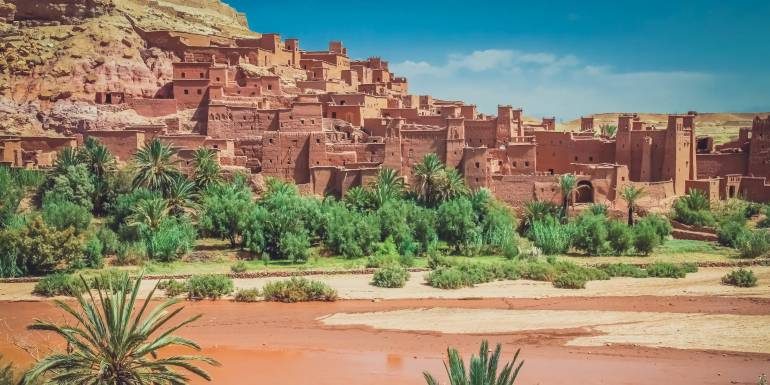

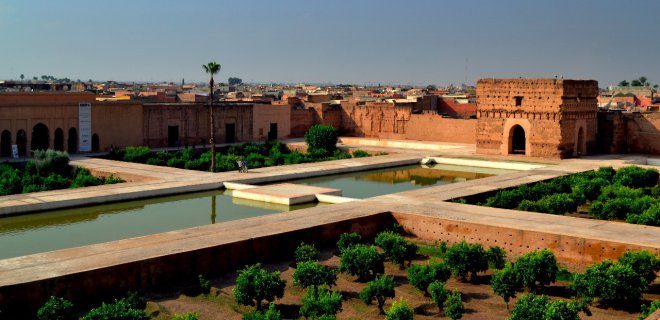
毁掉一个王国的宫殿
巴迪宫 这个名字在阿拉伯语中直译为“无与伦比的宫殿”,甚至在您踏入其摇摇欲坠的墙壁之前,就感觉这是一个大胆的主张。 这不仅是建造出来的,而且是买来的。 它是用鲜血和黄金买来的。 苏丹艾哈迈德·曼苏尔使用葡萄牙人在三王之战后为被俘贵族支付的巨额赎金资助了这座建筑。 1578 年至 1593 年间,苏丹的建筑师建造了一座超越帝国任何建筑的建筑。
如今,这里已成为一片美丽得令人难以忘怀的废墟。 虽然原来的堡垒在 17 世纪被拆除(石头可能被回收用于其他项目),但巴迪宫仍然是马拉喀什最引人注目的历史遗址之一。 它被设计为避暑胜地,拥有 360 间客房。 想象一下它的规模。 您仍然可以穿过残垣断壁,看到大理石喷泉曾经向中央庭院喷水的地方,现在充满了沙漠灰尘和柏树。
为何参观? 因为这里的寂静很沉重。 这是一个鲜明的提醒,提醒我们权力消失得有多快。 该建筑群位于古堡附近,如果您打算在这座城市度过最初的日子,那么这里将是您的第一站。 是的,这里挤满了游客,但如果你早上或傍晚去,你可以感受到历史的厚重,而不会被噪音淹没。
Majorelle Garden: A Splash of Indigo
Not far away is a completely different visual shock: Majorelle Garden. If El Badi deals with stone and history, Majorelle deals with colors and nature. Yves Saint Laurent bought and restored this private botanical garden, originally created by French painter Jacques Majorelle in the 1920s. He ensured that it remains a refuge for plants from five continents.
The main draw? This particular electric blue is called “Majorelle Blue”. It covers walls, doors and even fountain basins. It contrasts sharply with lush bamboo, palm trees and exotic cacti. It’s more than just a park. It’s an installation. The garden has more than 300 species of plants, including towering cacti that looks like it belongs on Mars.
Tourists often flock here to visit the Yves Saint Laurent Museum, which opened next to the garden in 2017. If you are interested in the history of fashion, you should buy the entrance fee separately, but the garden itself is independent. The layout is precise, almost geometric, and is designed to draw your eyes towards the iconic blue villa.
Helpful Hint: It can get hectic. Very busy. If you want to take the iconic photo of the blue gate without being blocked by a bunch of influencers, go right when the gate opens. If you plan to go to the museum, bring cash, as card-swiping facilities can be unreliable in some areas of the building. In a city that rarely slows down, the gardens offer rare quiet moments.
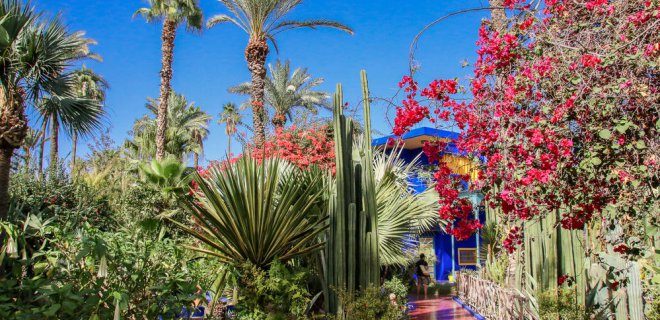
Majorelle Garden: Beyond Blue
To the west of the Medina walls is a 12-hectare botanical reserve away from the usual dust of Marrakech. It is more than just a garden. It is a combination of color and form designed by the French expatriate painter Jacques Majorelle in the 1920s and 1930s. He doesn’t just plant flowers. He built the world.
This garden is famous for its specific shade. Majorelle Blue. It covers gates, waterways and villa walls. It’s a rich cobalt color that gives it an artificial feel, but it was inspired by the blue jars of Fez. Why is this important? Because walking changes the way you see the city. A sharp contrast to the dry beige environment. In a good way.
The plants are the real stars. You can find cacti on all continents. South American varieties are next to African succulents. If you like botany, this is a pilgrimage. The variety is amazing. Bamboo forests and towering palm trees cover the sky. This is one of the few places in Marrakech where the air is cool and damp.
On site, architecture serves nature. Two large museums share this space. Marrakech Museum of Islamic Art is located in a peaceful villa. Exhibits include ceramics, textiles and metalwork that demonstrate the craftsmanship of the region. It is modest. elegant.
Then there is the Archaeological Museum. This building is relatively small. It focuses on prehistoric and Berber artefacts. On display are tools, jewelry and coins from thousands of years ago. It’s not just about gardening, it’s grounds the garden in history.
** Visiting logistics **
It takes planning. The park has become crowded. Quickly.
- When to go: Get there as soon as they open. The best time is 8:30. The light is soft. The crowds are thin. By noon, the heat increases and tourists arrive in droves.
- Tickets: An admission fee is required. In recent years, the price has increased due to its popularity. Check the official website before you go.
- Duration: Plan on 2 hours. If you stop by the museum, Maybe three. Don’t rush. The road is very narrow. You want to look at the autumn leaves.
Is it worth the hype? Yes. However, this does not apply to Instagram photos. Stay for the silence. Stay and watch the blue reflected in the pool. A hiding place away from the hustle and bustle of the souks. Jacques Majorelle found peace here. You can feel it when you walk slowly.
This garden park is the proof that a man loves plants more than human beings. It shows. Every path is carefully considered. Each view is framed. It’s a walking picture.
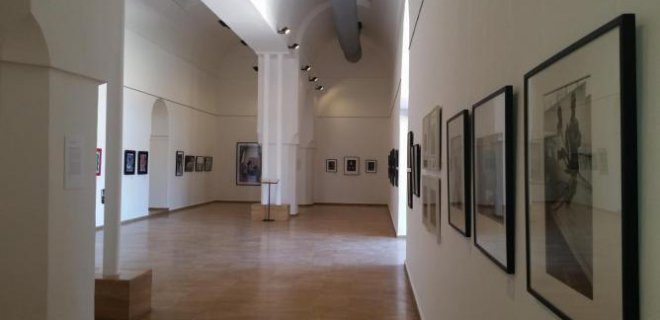
The old town center hosts the Marrakech Museum, but don’t expect a sterile gallery. It’s housed inside Dar Menebhi, a palace built back in the late 19th century by Mehdi Menebhi. The Omer Benjelloun Foundation stepped in later to restore it, transforming the space into a stunning example of classic Andalusian architecture. You’ll find traditional seating areas, fountains, a hammam, and intricate carvings everywhere you look.
They turned it into a museum in 1997.
The collection is eclectic. You’ll see historical books, ancient coins, and pottery from Berber, Arabic, and Moroccan Jewish cultures. There are exhibitions of modern and traditional Moroccan art too. If you’re into Islamic art, this place is basically a must-see stop on your Marrakech itinerary. Seriously. Don’t leave the city without visiting the Marrakech Museum. It grounds you in the history before you dive into the chaos of the souks.
Menara Gardens
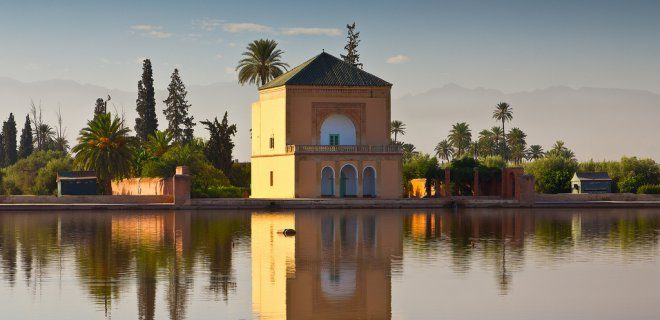
Menara Gardens: water, history and olive groves
Located on the western edge of Marrakech, Menara Gardens is not just a park; it is a historical statement carved out of earth and water. This sprawling mansion was founded by Abd al-Mu’min in 1130 and has survived for nearly a millennium. It is supported by thousands of ancient olive trees that cast long, variegated shadows across the grounds. It is one of the most notable attractions in Menara Gardens in Marrakech and offers a rare glimpse into the city’s pre-colonial glory.
The current layout is largely due to the Saadian dynasty. In the 16th century, they added a pavilion—a retreat for sultans and elites—that still stands today. But the real heart of the matter is not the architecture. It’s water.
In 1869, Sultan Abderrahmane renovated the pavilion and expanded the water areas, creating a huge rectangular tank that dominates the view. The pool is full of koi and other colorful fish, whose movements are reflected in the reflection of the tile roof of the pavilion. The air here is cooler and smells like damp earth and olive leaves. It creates an atmosphere that gives the impression of standing still in time.
Hundreds of thousands of visitors walk these trails every year. Some come for the story. Others just want to sit by the water and watch the Atlas Mountains rise into the distance. The contrast between the lively life of the pool and the quiet, centuries-old trees makes the place unforgettable. It’s not just a garden. It is a monument to leisure and power that has endured through dynasties.
Saadian Tombs
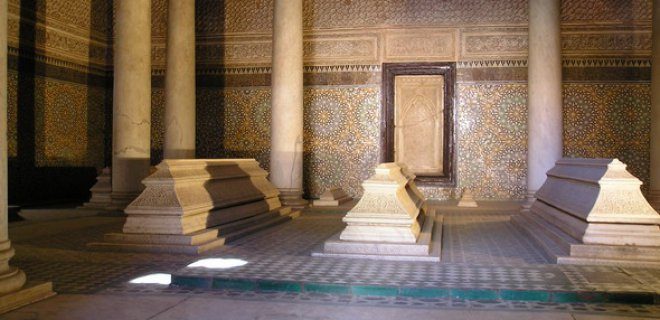
Tombs of the Saadi: A time capsule from the 16th century
These tombs date back to the reign of Sultan Ahmed el-Mansur. Its roots go back to the 16th century. They were buried in history for centuries.
Then, around 1917, they were discovered.
Saadian Tombs restored by the Beaux-Arts Institution. It wasn’t just a cleanup operation. It was a change. Now the site is decorated, a fascinating attraction for visitors.
Location is crucial. You can find them in the Draaa River Valley. This was the heart of the Saadian dynasty.
Inside you can see items from around 60 members of the royal family. The graves are decorated with fine motifs. Marble and zellige tiles create intricate patterns. It’s visual storytelling from the 16th century.
Why is this important for your trip? Because it is one of the few places where you can stand on the exact resting place of the sultan who controlled the trade routes through the Sahara.
The restoration made it accessible. But it kept its soul.
The weight of the dynasty’s power is still felt. The architecture is both grand and intimate.
How to visit the Saadian Tombs
The journey is part of the experience. The tombs are located just outside the Kasbah in Marrakesh. This means you can combine it with other historical sites in the Medina.
- Location : Near Kasbah Mosque.
- Price : Entrance fee. It is affordable for most travelers.
- Time : Allow about 30-45 minutes. It’s not a huge complex.
Best time to travel? Early morning or late afternoon. The light is softer. The crowds are thinner.
What should you pay attention to? Cedar roof. Carved marble. Writings. Every detail speaks of the richness and piety of the story.
Items include personal items. Jewelry. Arms. everyday objects. They humanize the royal family.
It is easy to skip this site. It is harder in the souks of Marrakech. Things are more chaotic at Jemaa el-Fnaa.
But the graves offer something else. Quiet. Reflection.
You are standing in a place where history is literal. The walls are thin. The past is near.
This is not just a museum. It’s a mausoleum. It demands respect.
The patterns on the walls are not random. They are geometric. They are symbolic. They reflect Islamic art’s emphasis on infinity and unity.
Why build such beauty for death? Because to the Saadians it was a statement. The final declaration of power.
Today, it is a survival notice. The site experienced colonialism. It was ignored. It was found. It was saved.
As you walk through the yard, look up. The sky is part of the architecture. Open space connects you to the elements.
It’s a stark contrast to the crowded streets outside.
You can touch the walls. (Well, maybe not literally. But the closeness is real.) Stone is cool. Solid.
This is the kind of place that sticks in your mind. Not for shock value. But because of the depth.
Draa