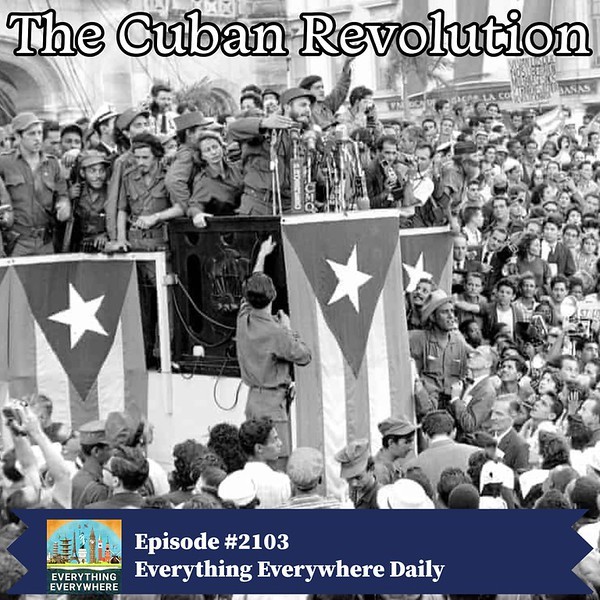
In 1959, a small group of guerrilla fighters emerged from the mountains of Cuba to topple a government backed by one of the world’s most powerful nations. What began as a movement rooted in anti-corruption and nationalism quickly transformed into a global flashpoint, reshaping the landscape of the Cold War and leaving a legacy that continues to influence international politics today.
The Roots of Unrest: Nationalism vs. Foreign Influence
To understand the revolution, one must look at the century of tension preceding it. Although Cuba gained formal independence from Spain in 1902, it remained under the heavy shadow of the United States. American interests dominated the Cuban economy—particularly the sugar industry—and the U.S. frequently intervened in domestic politics to ensure “friendly” regimes remained in power.
This era fueled a deep sense of Cuban nationalism. This movement drew heavily from the writings of José Martí, a 19th-century martyr for independence. While Martí was not a communist, his calls for sovereignty and dignity provided the ideological bedrock for future revolutionaries who sought to reclaim Cuba from foreign economic and political control.
The Rise of Fidel Castro
Fidel Castro did not begin his career as a radical insurgent. In the early 1950s, he was a young, nationalist lawyer running for the House of Representatives under the Orthodox Party. His platform was built on a crusade against government corruption and a demand for land reform to break the monopoly of American-owned sugar plantations.
The political landscape shifted violently in 1952 when Fulgencio Batista, with U.S. support, launched a military coup to prevent elections. This act of aggression transformed Castro from a legal reformer into a revolutionary.
The Moncada Failure and the “Resurrection”
In July 1953, Castro led a disastrous attack on the Moncada Barracks. The attempt failed, resulting in many deaths and Castro’s imprisonment. However, his subsequent trial became a platform; his “History Will Absolve Me” speech articulated a vision of social justice—demanding healthcare, education, and land reform—that resonated deeply with the working class.
Batista made a critical strategic error by releasing Castro from prison after 22 months, hoping to project an image of legitimacy. Instead, Castro used his freedom to flee to Mexico, where he met Che Guevara, an Argentine doctor and Pan-Latin American ideologue. Together, they organized the July 26th Movement, training a small band of rebels for a return to the island.
Guerrilla Warfare and the Turning Point
The revolution’s path was far from certain. In 1956, the rebels’ landing on Cuba via the yacht Granma was a near-catastrophe. They were ambushed in the Sierra Maestra mountains, and rumors even circulated that Castro had been killed.
However, these “deaths” proved to be a political gift:
* The Myth of Death: The false reports of Castro’s demise allowed his movement to organize in the mountains without intense government scrutiny.
* The Legend of Survival: When Castro successfully attacked the La Plata base in 1957, his “resurrection” turned him into a living legend.
* Media Warfare: Che Guevara established Radio Rebelde, a mobile radio station that bypassed government censorship to broadcast the rebels’ message directly to the Cuban people.
The tide turned decisively during the Battle of Santa Clara, where Guevara’s tactical brilliance—including the use of a borrowed bulldozer to derail a military train—crippled the regime’s momentum. On January 1, 1959, Batista fled the country, leaving Castro in control.
The Shift to Communism and the Cold War
Perhaps the most surprising aspect of the revolution was its ideological evolution. For the first several years, Castro was not a self-proclaimed communist. He maintained that his movement was nationalist rather than Marxist, even telling visitors to the U.S. that he was not a communist.
However, his policies—specifically the nationalization of American-owned assets —placed him in direct conflict with the United States. Seeking a powerful ally to counter American pressure, Cuba turned toward the Soviet Union. By 1961, following the Bay of Pigs invasion, Castro formally embraced Marxism-Leninism, firmly aligning Cuba with the communist bloc.
The revolution promised to be a “David” defeating a “Goliath,” but the victory brought a complex reality: while it ended foreign economic dominance, it replaced one form of centralized authority with another.
Conclusion
The Cuban Revolution succeeded in its goal of reclaiming national sovereignty and dismantling old economic hierarchies, but it also fundamentally altered the island’s political identity. The transition from a nationalist uprising to a Marxist-Leninist state ensured that Cuba would remain a central, contested player in the global struggle between East and West for decades to come.