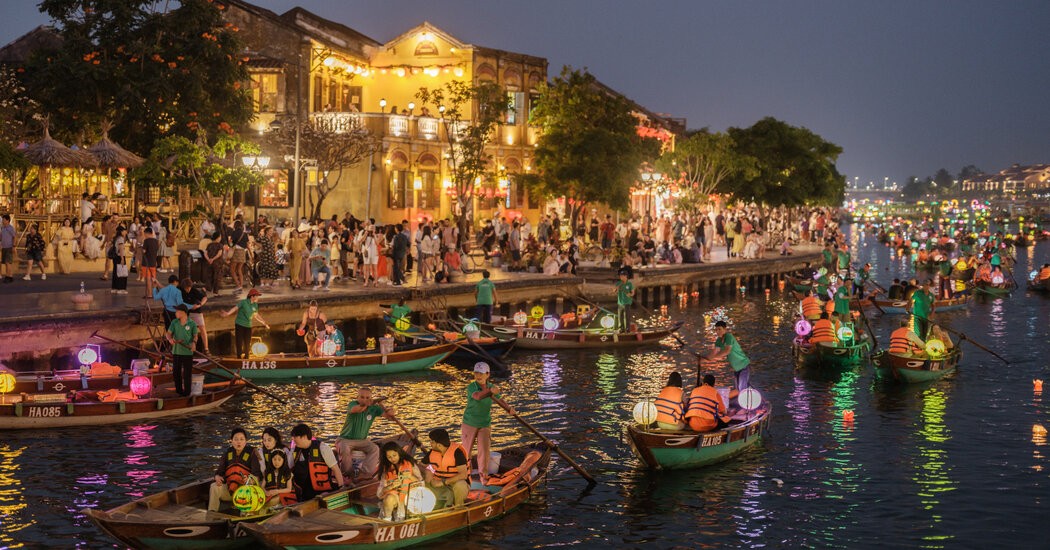
Hoi An is a rare architectural jewel where history feels lived-in rather than merely preserved. Once a bustling 16th-century port where Chinese, Japanese, and Southeast Asian merchants traded silk and spices, the town transitioned from a global commercial hub to a quiet colonial relic, and finally to a UNESCO World Heritage site.
Today, the “saffron-hued” shophouses and ancient assembly halls offer a glimpse into a multicultural past. While the Old Town can feel crowded with tourists, the real magic of Hoi An lies in its balance: the ability to move from a bustling market to a quiet rice paddy in a single afternoon.
🗓️ The Itinerary
Friday: Sunsets and Seasonal Flavors
- 5:00 PM | Coastal Calm: Avoid the midday heat and head to the coast as the sun begins to dip. While An Bang Beach is the popular choice, seek out the quieter shores near Hit Ha Cafe. As the light fades, look for the subtle glow of bioluminescence in the waves—a natural spectacle that marks the end of the day.
- 7:00 PM | A Culinary Journey: Head to Mua in Tra Que Vegetable Village. This isn’t just a meal; it is a curated experience. Their 15-course tasting menu focuses on seasonal ingredients, such as veal tartare with lime leaf and dark chocolate sourced from the Dak Lak province. Note: Booking in advance is essential.
- 9:30 PM | Riverside Cocktails: End your night at Market Bar. Perched on a rooftop overlooking the Thu Bon River and a massive banyan tree, it is the perfect spot to sample Vietnamese-made spirits, like the lemongrass-infused Lady Trieu gin.
Saturday: Heritage, Craft, and Spectacle
- 8:00 AM | Exploring the Old Town: Start your morning on foot. The Old Town is a dense collection of history. Key stops include:
- Hoi An Market: A vibrant food hall where you can see local life in motion.
- Museum of Trade Ceramics: To understand the maritime links that built the town.
- Fujian Assembly Hall: A stunning example of Chinese architectural influence.
- The Japanese Covered Bridge: The iconic symbol of Hoi An’s multicultural identity.
- 12:00 PM | Lunch in an Ancestral Home: Visit Quan Thang Ancient House. Here, you can eat white rose dumplings (translucent rice parcels filled with shrimp and pork) in a home that has been passed down through seven generations.
- 2:00 PM | The Art of Tailoring: Hoi An is world-renowned for its craftsmanship. Whether you are looking for high-end organic silk at Metiseko, custom leather footwear at Lucia Thoi’s stall, or upcycled home decor at Hart Upcycled, the town offers a sophisticated alternative to fast fashion.
- 5:30 PM | The Bamboo Circus: Experience Teh Dar at the Hoi An Lune Center. Performed in a unique bamboo dome, this show blends contemporary circus with the folklore of Vietnam’s Central Highlands. It is a high-energy, rhythmic exploration of the cycle of life.
- 8:00 PM | The Signature Dish: No trip is complete without Cao Lau. This dish is a culinary map of Hoi An’s history: the noodles resemble Japanese udon, the pork reflects Chinese char siu, but the soul of the dish is uniquely Vietnamese. Quan Cao Lau Ba Le is a local favorite for an authentic bowl.
- 10:00 PM | Modern Sake Culture: Visit Hem Hoi An to discover how Vietnam is redefining its rice wine heritage. Moving away from harsh traditional spirits, this venue offers refined, smooth sakes and rice-wine cocktails in a beautifully restored heritage building.
Sunday: Rural Tranquility
- 9:00 AM | Countryside Serenity: Spend your final morning in the herb-scented alleys of Tra Que Vegetable Village. Sip coffee at Café Slow, where the veranda overlooks lush vegetable plots, offering a peaceful moment of reflection before your departure.
🏨 Where to Stay
| Style | Accommodation | Vibe | Est. Price |
|---|---|---|---|
| Luxury | Anantara Hoi An Resort | Refined, riverfront elegance with private boats and spas. | ~$267+ |
| Boutique | Dechiu Hotel | Minimalist, wabi-sabi inspired calm near Tan Thanh Beach. | ~$45+ |
| Heritage | Hoianese Tranquil Heritage | Lantern-lit, old-world charm right next to the Old Town. | ~$10+ |
💡 Travel Essentials
- Getting Around:
- Bicycles: The most charming and eco-friendly way to navigate the rice paddies.
- Ride-Hailing: Use Grab for cars/motorbikes, or Xanh SM for air-conditioned electric vehicles.
- Taxis: Mai Linh is widely considered the most reliable metered option.
- When to Visit: April is the “sweet spot”—the weather is pleasant, the sea is warm, and the heavy monsoon rains have not yet arrived.
Summary: Hoi An is a destination that rewards those who look beyond the crowded tourist center, offering a profound connection to Vietnam’s mercantile history through its food, crafts, and landscapes.