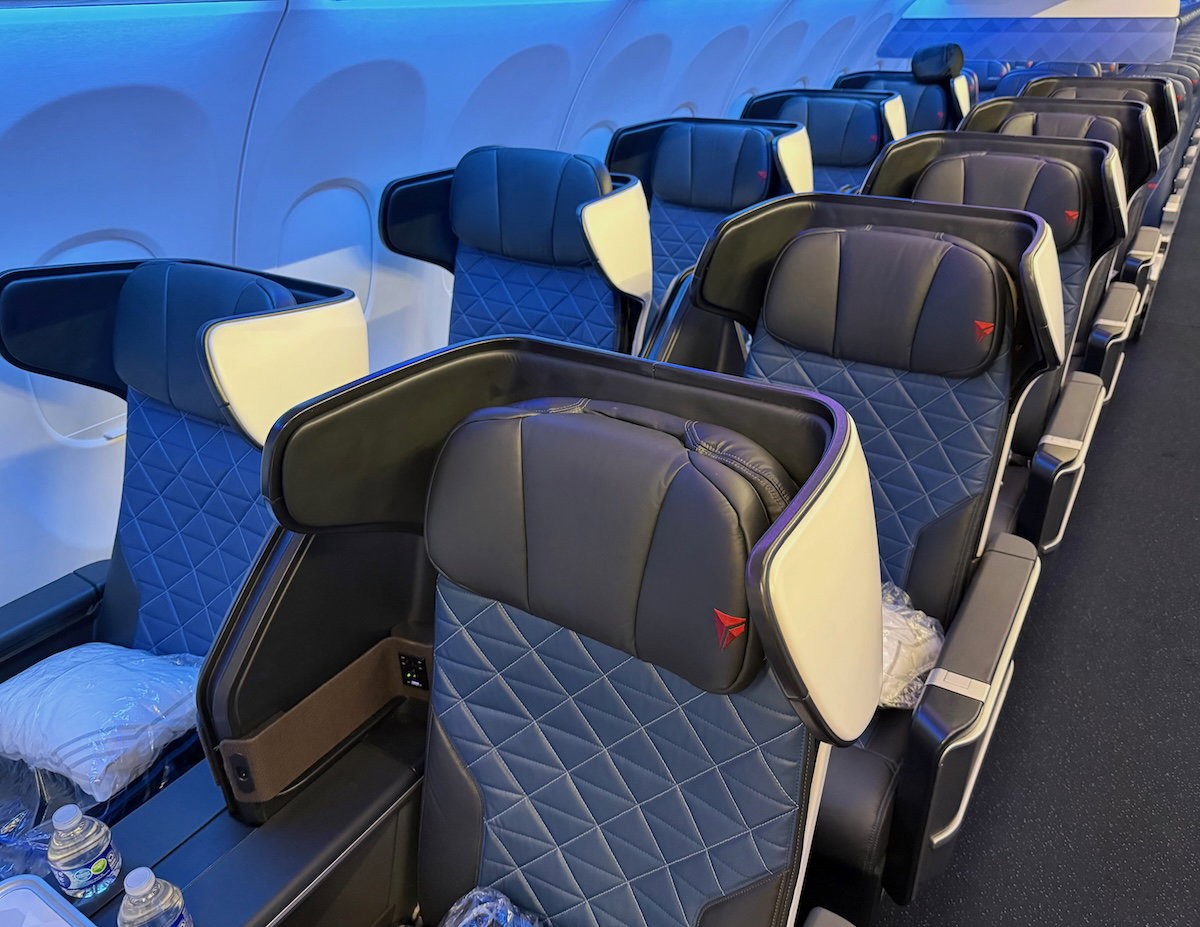
Delta Air Lines is about to deploy a peculiar aircraft configuration that defies standard industry logic: an Airbus A321neo featuring 44 First Class seats. While this sounds like a massive upgrade for premium travelers, the reality is less about customer luxury and more about operational necessity.
This unusual layout is a stopgap measure. Delta has been unable to certify the flat-bed Business Class seats intended for a new subfleet of A321neos. Rather than letting these expensive aircraft sit idle for years, the airline has reconfigured them with standard domestic First Class seats to get them flying sooner rather than later.
The Anatomy of a Stopgap Cabin
The new configuration is strikingly different from Delta’s standard narrow-body offerings. Here is how the cabin breaks down:
- First Class: 44 seats (compared to the standard 20).
- Delta Comfort+: 54 seats (same as standard).
- Main Cabin: 66 seats (significantly fewer than the standard 114).
- Total Capacity: 164 seats, down from the typical 194.
While the sheer volume of premium seating is notable, the experience comes with trade-offs. The First Class seats offer 38 inches of pitch, which is slightly more spacious than the airline’s typical domestic First Class product. However, the cabin is equipped with only one lavatory for the front section. With 44 passengers competing for a single restroom, travelers may find themselves queuing or using the mid-cabin facilities, which detracts from the premium experience.
To mitigate service issues, Delta has added an extra oven to the galley, ensuring that hot meal service in First Class remains viable despite the higher passenger count.
Why This Is Happening: The Certification Bottleneck
The root cause of this configuration is a supply chain and regulatory hurdle. Delta plans to introduce a dedicated subfleet of 21 A321neos specifically for premium transcontinental routes. The intended design was a three-cabin layout featuring:
- 16 Business Class flat-bed seats.
- 12 Premium Economy seats.
- Standard Economy sections.
However, the airline has faced prolonged delays in getting the new Business Class seats certified. This issue mirrors challenges faced by other carriers, such as Lufthansa, where complex seat certifications can stall fleet integration. With no clear end date in sight for the certification process, Delta faced a difficult choice: keep the planes in storage, incurring significant holding costs, or modify them to fly.
Delta chose the latter. By replacing the uncertified Business Class section with standard First Class seats, the airline can utilize the aircraft immediately. These seats are temporary; once the flat-bed seats are certified, Delta plans to retrofit the cabins or transfer the temporary seats to other newly delivered aircraft.
Operational Impact and Timeline
The first of these reconfigured aircraft is expected to enter service by May 2026. Flights are already on sale, with the planes scheduled to operate on select routes from Atlanta (ATL) to major West Coast hubs, including Los Angeles (LAX), San Diego (SAN), San Francisco (SFO), and Seattle (SEA).
Mauricio Parise, Delta’s VP of Customer Experience Design, framed the move as a creative response to supply chain challenges. He emphasized that the goal is to provide customers with access to newer aircraft and more premium options during the busy summer travel season.
“Sometimes the supply chain throws us a curve. Rather than wait, we chose to implement a creative solution to ensure our customers had access to some of our newest aircraft in time for the summer travel season.”
However, the timeline raises eyebrows. The first aircraft in this batch was delivered in October 2024. This means the plane sat in storage for over 18 months before being fitted with a temporary interior. This prolonged delay suggests that the certification issues are significant and unlikely to be resolved in the short term. If the flat-bed seats are not certified by late 2026 or early 2027, the temporary configuration may remain in place for years, potentially pushing a full rollout of the intended premium product into 2028 or beyond.
What This Means for Travelers and the Industry
For passengers, this configuration offers a rare opportunity to book a high-density First Class product on a narrow-body aircraft. For those willing to deal with the lavatory constraints, it provides more space and service than a standard economy ticket. However, travelers seeking the ultimate lie-flat experience should note that these planes will not feature Delta One suites. Delta continues to operate its traditional wide-body aircraft with Delta One on peak transcontinental routes.
For the industry, this situation highlights the risks of complex supply chain dependencies. As airlines push for more premium products on narrow-body routes to capture higher-yield traffic, they become vulnerable to certification delays that can ground expensive assets. Delta’s decision to adapt rather than wait is a pragmatic move, but it underscores the fragility of modern aircraft integration.
Conclusion
Delta’s 44-seat First Class A321neo is not a permanent innovation, but a tactical workaround for a persistent certification delay. While it allows the airline to deploy new hardware and offer more premium seats, it also signals that the rollout of its next-generation transcontinental product will be slower than anticipated. For now, travelers can enjoy the extra space, but the dream of widespread flat-bed travel on Delta’s narrow-body fleet remains on hold.