


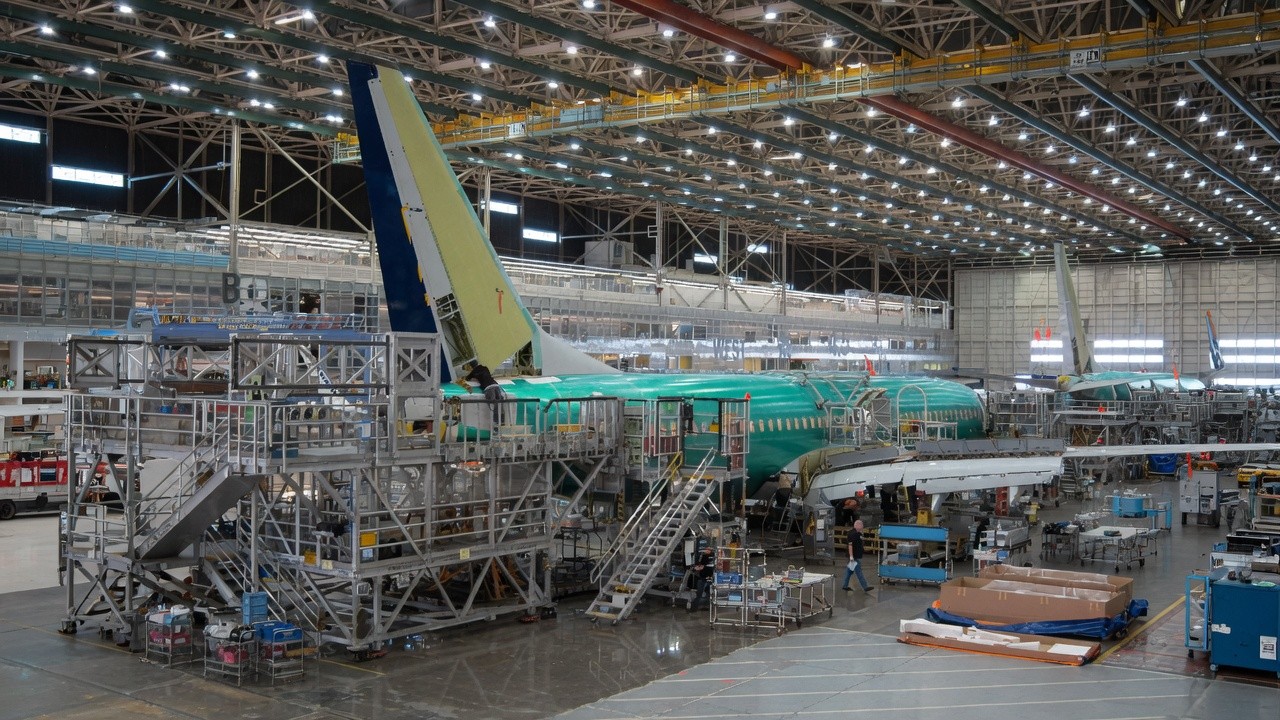
Starting July 20 the rules changed again. Boeing got its power back. Specifically, the authority to issue its own final airworthity certificates for newly produced 737 Max jets and 787 Dreamliners.
This ends a messy chapter that started when two Max crashes in 2018 and2019 killed passengers. The groundings weren’t just about hardware; they were about trust. Or lack of it.
Since September29 2025 the system worked like a tag-team relay. Boeing inspectors would sign off for one week then the Federal Aviation Administration would take over for the next. It was an alternating schedule meant to keep both parties sharp and honest.
Eight months passed. The FAA reviewed the data. The results showed comparable production quality findings regardless of who was holding the pen. So now Boeing handles the routine final certs. The FAA stays involved but shifts its focus to broader oversight. They still do production line audits assembly surveillance quality monitoring and check Boeing’s safety culture.
But why did this happen in the first place?
When and why the FAA pulled the plug
The FAA never stripped Boeing of all delegated-certification authority. They only took back the final airworthiness and export certificates for those two specific programs. The rest stayed put.
Take the Boeing737Max. Back in November2019 the plane was grounded. Lion Air had crashed. Then Ethiopian Airlines followed suit. The MCAS software was under intense review pilot training was questioned. The FAA decided it would keep the final certification keys until Boeing had “fully functional quality control and verification processes.” The Max flew again in November2020 but FAA inspectors signed every single new airframe. No shortcuts.
Then came the Boeing787. By February2022 things went south there too. Delivery stoppages piled up. Inspectors found fuselage gaps improper shimming. There were serious questions about how Boeing inspected and reworked its own defects.
The FAA actually tried to give the power back in August2023. It didn’t work. The Department of Transportation inspector general slammed the decision. The report said it wasn’t based on objective criteria. In fact 737 inspection problems were trending up. And the 787 restoration rested on the thinnest possible evidence just three inspections. Then came the January2024 Alaska Airlines incident where a door-plug blew out at25000feet. That put a permanent brake on the idea of full restoration at that time.
So they compromised. Partial authority returned on September292025 with that alternating weekly schedule. Now that trial is over.
How delegated certification actually works
It sounds counterintuitive. The government letting the company grade its own homework. But this isn’t new.
Delegated certification dates back to1956. The FAA authorizes qualified private organizations to perform work on its behalf. This is the Organization Designation Authority (ODA). Boeing employs the ODA inspectors. The FAA does not. But legally they act as representatives of the agency.
There is a strict separation inside Boeing. Regular engineering and production groups build the planes and gather data. That data goes to the ODA group. The ODA decides if it complies with the rules. The FAA watches the ODA. They audit them. They spot-check. They can revoke authority at any moment. As we’ve seen they can.
We need to distinguish the types of certification though. People often confuse “self-certification” with every single approval Boeing makes.
- Type certificate: Does the design meet regulations?
- Production certificate: Can you build it repeatedly to that standard?
- Supplemental type certificate: Did you change something and does that change still comply?
- Airworthiness certificate: Does this specific finished aircraft match the approved design? Is it safe to fly right now?
Boeing just got its hands back on that last one for completed Max and 787 units. They do not get to independently approve the Max7 or Max10 designs. The type certificate scrutiny remains heavy and separate.
Why letting Boeing certify makes sense to regulators
You might think keeping the FAA in the driver’s seat is safer. On paper sure. In practice? Maybe not.
Think about the math. The FAA has roughly400certification engineers. Boeing has40000to45000engineers. Historically fewer than100FAA engineers are assigned directly to watch Boeing. The expertise simply lives inside the manufacturer.
Boeing engineers know the design quirks the production line failures the software glitches in minute detail. No outside agency can independently recreate that institutional knowledge from scratch. To have the FAA do it themselves at that scale would require building a second Boeing just to double-check the first one. It is logistically absurd.
So what should the FAA actually be doing? Inspectors should focus on the high-stakes items. Scrutinize critical design judgments. Question safety assumptions. Monitor quality systems for bad trends. Catch systemic cultural rot. If they spend all their time repeating routine end-of-the-line inspections they miss the big picture.
Delegation is supposed to be supervised. It’s supposed to be revocable. The system works by checking the checks. Boeing has a massive financial incentive to get it right too. Failures cost billions. Production halts destroy shareholder value. Products get discounted. Long-term survival depends on a clean bill of health.
And here is the data point that swayed the agency: The comparison period. For eight months both Boeing and FAA were inspecting. The findings were comparable. If the FAA inspectors had done every single one would it have changed the outcome? Probably not. The findings were similar.
Duplication doesn’t necessarily mean safety. It often means delay and cost with minimal benefit. There’s little evidence that FAA engineers would have flagged different issues in those routine final checks than the ODA staff did. The essential failures with the Max were about disclosure and redundancy. Not who stamped the form at the end of the assembly line.
In fact the Alaska Airlines flight where the door blew out in January2024? The FAA did that certification. They delivered the plane on October312023 while they held the power. The defect wasn’t caught. The paperwork didn’t save the passenger. The manufacturing flaw did.
So we return to the status quo. With better data backing the method. Boeing certifies the final unit. The FAA watches them watch the factory. It’s not a perfect world. Nothing is. But it is how the sky has been kept clear for decades.


