


For many, Route 66 is synonymous with retro Americana: neon signs, vintage motels, and kitschy roadside attractions. However, as the legendary highway celebrates its 100th anniversary, travelers are discovering that the “Mother Road” offers much more than nostalgia.
By stepping away from the asphalt, you can trade bustling parking lots for breathtaking cliffs and desert vistas. These nine state and national park detours offer a profound connection to the American landscape, ranging from ancient indigenous history to dramatic volcanic terrains.
🏜️ Arizona: Ancient History and Volcanic Landscapes
Arizona serves as a central hub for some of the most diverse geological and historical sites along the route.
Walnut Canyon National Monument
Located just 5 miles from Route 66 near Flagstaff, this monument protects the ancestral homes of the Sinagua people (circa 1100–1250 CE).
– The Experience: The Island Trail is a 1-mile loop that descends 185 feet into the canyon via steep steps. You’ll encounter roughly 25 cliff dwellings carved directly into limestone alcoves.
– Pro Tip: The hike is strenuous due to the elevation gain on the return. Bring plenty of water, as there are no refill stations once you leave the visitor center.
Lava River Cave
For a subterranean adventure, head 14 miles off the highway to the Coconino National Forest. This is the longest known lava tube in Arizona, formed roughly 700,000 years ago.
– The Experience: Unlike many developed caves, this is a “wild” experience—no lights or railings. Expect uneven terrain and a constant temperature between 35–45°F.
– Safety First: You must bring at least two independent light sources and consider a helmet for low-clearance areas.
Sunset Crater National Volcanic Monument
This area preserves the aftermath of an eruption from approximately 1085 CE.
– The Experience: You can walk through jagged basalt flows and cinder fields. The Lava Flow Trail (1 mile) is an easy loop, while the Lava’s Edge Trail (3.4 miles) offers a more immersive trek through the volcanic landscape.
– Note: There is very little shade here; plan for high sun exposure.
Lake Havasu State Park
If you need a break from the desert heat, this park offers a rare “beach day” on the Colorado River.
– The Experience: It features sandy shorelines and clear water, making it ideal for swimming.
– Advice: Some areas have rocky bottoms, so water shoes are highly recommended.
🌵 New Mexico & California: Deserts and Coastal Ranges
As the route moves through the Southwest and into the West, the scenery shifts from ancient carvings to vast, silent deserts and rugged mountains.
Petroglyph National Monument (New Mexico)
Just 8 miles from the highway in Albuquerque, this site is a massive open-air gallery of human history.
– The Experience: Explore over 20,000 images carved into volcanic rock by Indigenous peoples and early Spanish settlers.
– Top Picks: Boca Negra Canyon offers the easiest access (a 15-minute walk), while Piedras Marcadas Canyon provides a more rugged, less-developed experience with the highest density of petroglyphs.
Mojave National Preserve (California)
This massive, 1.6-million-acre preserve is a stark contrast to the roadside kitsch of the highway.
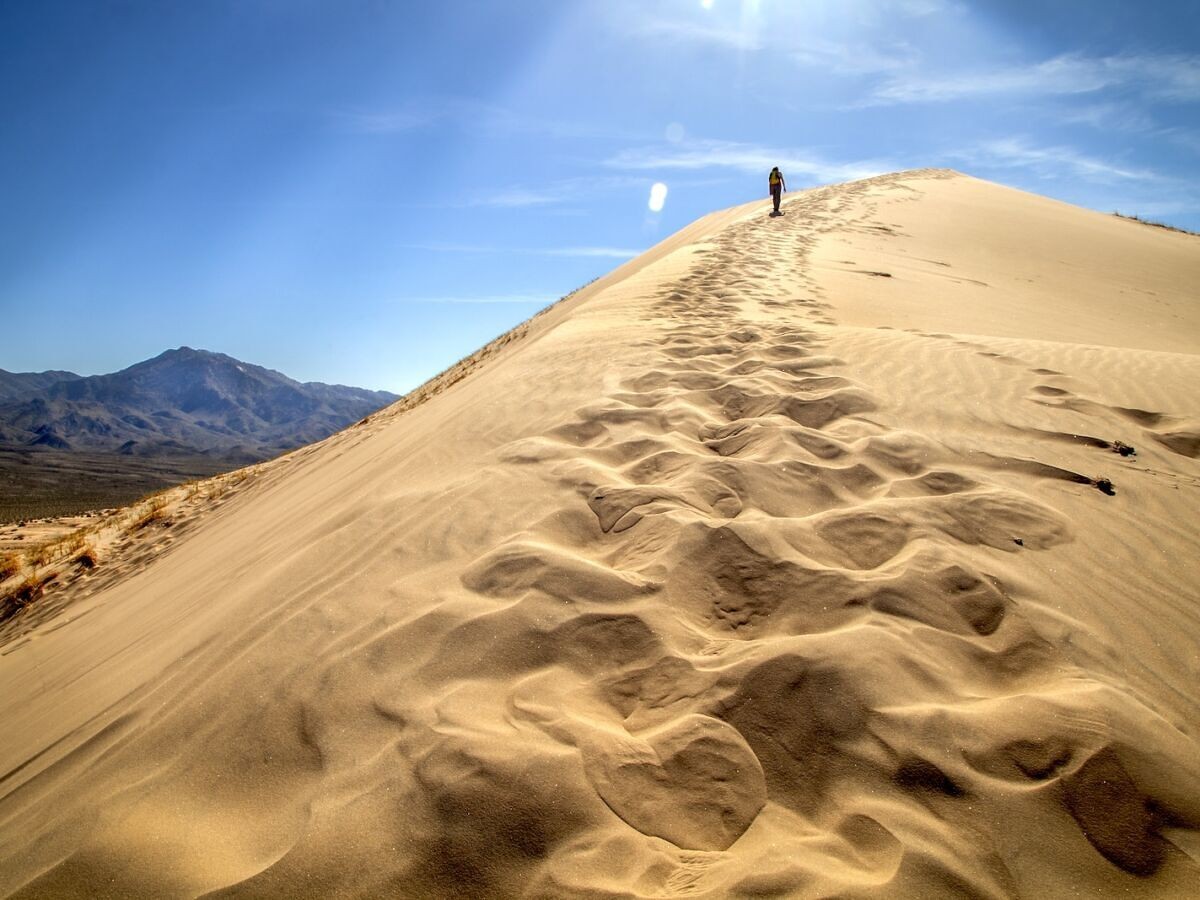
– The Experience: It is a land of silence, Joshua tree forests, and massive dunes. The Kelso Dunes Trail is a must; if the sand is dry enough, you may hear the “singing” phenomenon—a low, rumbling sound caused by shifting sand grains.
– Why it matters: It offers a rare opportunity for world-class stargazing far from urban light pollution.
Santa Monica Mountains National Recreation Area (California)
Located near the official end of Route 66, this is one of the largest urban national parks in the world.
– The Experience: With over 500 miles of trails, you can explore everything from the ruins at Solstice Canyon to the massive Backbone Trail.
– Cultural Note: The area is a frequent filming location for Hollywood; you can still find remnants of famous movie sets at Paramount Ranch.
🌊 The Midwest: Dunes and Deep Caves
The eastern and central stretches of the route offer unique aquatic and subterranean wonders.
Indiana Dunes National & State Parks (Indiana)
Located about 30 miles from the route near Chicago, this park protects the southern shore of Lake Michigan.
– The Experience: You can hike through wetlands, forests, and massive sand dunes. The Dune Succession Trail at West Beach offers steep climbs with rewarding views of the lake.
– Summer Perk: It is one of the few stops on Route 66 where you can enjoy swimming in large bodies of water.
Onondaga Cave State Park (Missouri)
Just 7 miles south of the route, this park provides an accessible way to explore Missouri’s limestone wonders.
– The Experience: Unlike the wild Lava River Cave, Onondaga features paved, lit walkways. Guided tours of the Onondaga Cave (approx. 75 minutes) allow you to see an underground river in a controlled environment.
– Planning: Tours are seasonal and popular; booking in advance is highly recommended.
Summary: While the neon lights of Route 66 define its culture, these natural detours define its scale, offering travelers a chance to connect with deep geological time and ancient human history.


