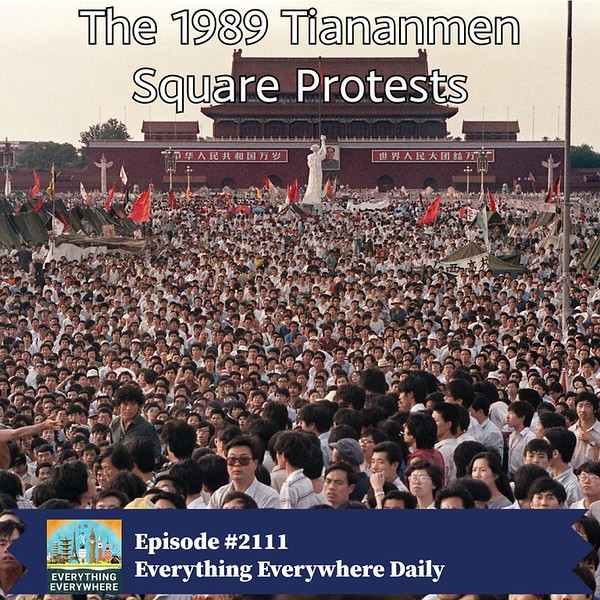
In the spring of 1989, the heart of Beijing became the epicenter of a movement that briefly shook the foundations of the Chinese Communist Party. What began as a period of mourning and calls for reform transformed into a massive pro-democracy movement, eventually culminating in a violent military crackdown that would fundamentally reshape China’s political trajectory.
The Seeds of Unrest: Economic Reform vs. Political Stagnation
To understand why the protests erupted, one must look at the paradox of China in the 1980s. Under the leadership of Deng Xiaoping, China was undergoing a radical economic transformation. While market liberalization and foreign investment were raising living standards, they also introduced new societal frictions:
- Inflation and Inequality: Rapid growth led to rising prices and a widening gap between the wealthy and the working class.
- Corruption: Many citizens grew resentful of “princelings”—the families of high-ranking officials—who used their political connections to amass vast wealth.
- Intellectual Awakening: As universities expanded, students were exposed to global ideas regarding democracy, constitutionalism, and government accountability.
The spark that ignited these tensions was the death of Hu Yaobang on April 15, 1989. A respected reformer known for his compassion, Hu was seen by many as a symbol of the political openness they craved. His death turned a period of mourning into a massive political demonstration.
A Movement Divided
What started as student-led memorial services quickly expanded into a broad coalition. Workers, journalists, and civil servants joined the ranks, bringing the number of protesters in Tiananmen Square to over one million.
However, the movement lacked a unified core. The protesters were a diverse group with competing visions:
1. Some sought Western-style democracy.
2. Others advocated for reforms within the socialist framework.
3. Many simply demanded transparency, an end to corruption, and freedom of the press.
This lack of a single leadership or a cohesive negotiating position made the movement vulnerable. Simultaneously, the Chinese leadership was paralyzed by internal conflict. General Secretary Zhao Ziyang advocated for dialogue with the students, while hardliners, led by Premier Li Peng, viewed the protests as a direct threat to the survival of the Communist Party.
The Escalation and Martial Law
As the protests grew, students utilized hunger strikes to draw international attention, timed strategically around the visit of Soviet leader Mikhail Gorbachev. This tactic worked; because China had recently opened its borders, Western media captured the scale of the movement, broadcasting the students’ plight to a global audience.
The government’s response was decisive and hardline. On May 20, martial law was declared. Despite attempts by protesters to block the military’s advance, the government mobilized dozens of military divisions. The political rift within the party was finalized when Zhao Ziyang was purged and placed under house arrest, signaling the total victory of the hardline faction.
The Night of June 3–4: The Crackdown
The violent suppression began on the night of June 3 and continued into the early hours of June 4. Contrary to popular belief, the most intense violence did not occur in the center of Tiananmen Square itself, but on the major boulevards leading to it.
As the military moved toward the center of Beijing with tanks and live ammunition, they encountered fierce resistance from citizens. In neighborhoods like Muxidi, soldiers fired directly into crowds of civilians who were attempting to block their path. The scene was one of chaos:
– Civilian casualties: Bystanders, cyclists, and residents were killed by gunfire or crushed by armored vehicles.
– Urban warfare: Burning buses and barricades lined the streets as the military pushed eastward.
– The Square’s end: Within the square, a fragmented group of students negotiated a withdrawal, though accounts of the exact final moments remain contested due to heavy censorship.
One of the most enduring symbols of this era emerged shortly after the violence: “The Tank Man.” An unidentified individual stood alone against a column of tanks, an image that became a global icon of individual resistance against state power.
The Aftermath: Silence and Censorship
The human cost of the crackdown remains a subject of intense debate. While official government figures cited approximately 300 deaths, international organizations and diplomats estimated the toll to be anywhere from 2,600 to as high as 10,000.
The political consequences were profound. Instead of the liberalization the students hoped for, the event resulted in:
– Increased Authoritarianism: The government tightened control, increased surveillance, and purged liberal elements from the party.
– The Great Silence: Domestically, the events of 1989 have been scrubbed from the Chinese historical record. The massacre is omitted from textbooks, and internet censorship strictly monitors any mention of the date or the event.
The legacy of Tiananmen is defined by a fundamental choice made by the Chinese state: to pursue rapid economic modernization while strictly rejecting political liberalization.
Conclusion
The 1989 crackdown marked the definitive end of any immediate hope for democratic reform in China. It established a precedent for the modern Chinese state—prioritizing economic growth and social stability through centralized, absolute political control.