It took less than an hour.
The Battle of the Plains of Abraham changed a continent. Just a handful of minutes of firing, chaos, and then silence. Before this moment, New France was a growing empire. After? It was a memory.
Everyone knows Quebec is the French heart of Canada. It feels eternal there. The language, the culture, the vibe. But if you look at the map and think about global powers, it should be a puzzle. How does a huge, French-speaking bloc end up inside the British Empire?
It didn’t happen through slow drift. It snapped into place.
The Long War Before The Shot
The 18th century was a mess. Britain and France were fighting over trade routes, land, and pride. This wasn’t just local bickering. It spilled over oceans. It became the Seven Years’ War. Some call it World War Zero because, frankly, it involved every major power on Earth.
It started stupidly. A young Lieutenant George Washington disputed territory in the Ohio River Valley. Oddly enough, one guy’s stubbornness started a global conflagration.
France had the upper hand at first. They won at Monongahela. They took Oswego. They captured Fort William Henry. The British army looked like a circus. Disorganized. Weak. France held the whip.
Then France got distracted by Europe.
Britain realized their opportunity the moment French eyes turned west.
With their enemy’s gaze elsewhere, the British fixed their own house. They reinforced. They recaptured land in Nova Scotia. They pushed out of New York and the Great Lakes. In 1758 they took Louisburg. This was huge. Louisburg opened the sea route to the St. Lawrence. Suddenly, Quebec was reachable.
They also cut off the lifeline. A naval blockade in Europe stopped resources reaching Canada. The French were hungry. Their Native allies were wavering. The noose was tightening.
Wolfe vs. Montcalm
Quebec was the key. If the British took the city, the fur trade collapses. The military hub vanishes. New France falls.
James Wolfe was sent to break the door down. He was 32. Young. Ambitious. Reported to be difficult, sure, but effective. He spent April 1759 drilling in Halifax. His army was mostly British regulars. He had colonial troops too. He thought they were undisciplined trash, but he had them in his ranks anyway.
In June they arrived. They landed on an island near Pointe-Levis.
Facing them was the Marquis de Montcaln. He’d led the early French victories. Now he held all the cards. He knew the terrain. He dug in.
The defenses were monstrous. Ten miles of trenches along the river. Real fortifications. Montcalm wanted a siege. He wanted time on his side.
Wolfe didn’t like sieges. He wanted blood. He wanted open field combat where his professional soldiers would shred the Canadian militia and Native forces who hated set-piece battles.
The Failure at Beauport
So Wolfe tried to force a fight.
July 31st. He marched to the Montmorency River. He wanted to land at Beauport, upstream of the river, and crush the French. It sounded clever on paper. In practice, it was a disaster.
Wolfe misjudged the distance to the French lines. The warships couldn’t support the infantry properly. The British troops landed. Their gunpowder got soaked by river spray. They were exposed. Montcalm watched from his high ground. He waited.
The British fired. The French waited. The French fired. The British broke.
It was a humiliating retreat. Wolfe lost men. He lost prestige. And he learned nothing except that direct attacks don’t work against trenches.
He switched tactics. Send James Murray upstream to burn supply ships. Work. Sort of. It starved the French a little. But Montcalm wouldn’t bite.
Wolfe grew desperate. He began destroying buildings on the outskirts of town. He torched farms. He terrorized the civilian population. He wanted Montcalm to rage. To come out and fight.
Montcalm stayed put.
The Gamble
Late August brought a new chance.
The British fleet had maneuvered up the river. Past the defenses. They landed quietly about three miles north of Quebec. It was a blind spot. Lightly defended.
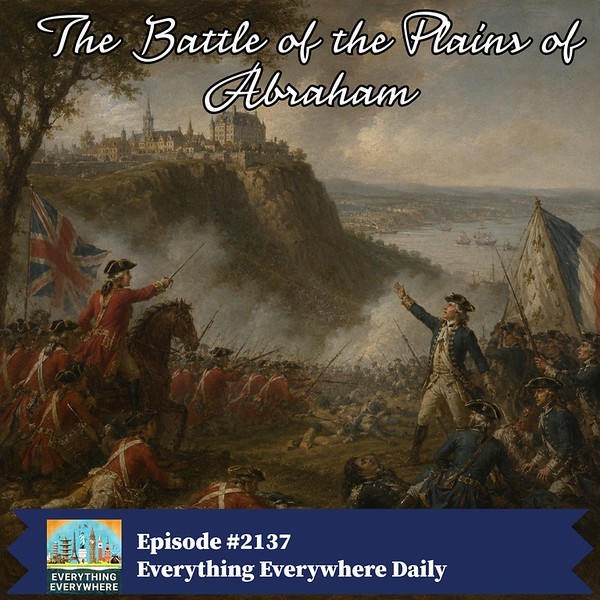
September 13th. The British force assembled on the Plains of Abraham. Four thousand five hundred men.
Montcalm got word.
History judges him harshly for what he did next. He didn’t wait for reinforcements from Montreal. He didn’t hide. He decided to attack immediately. To strike before they could fortify.
It was a terrible move.
His army was a patchwork. Militia. Native allies. Brave men, yes. But not drilled for linear warfare against British muskets. The British were ready.
The Native scouts opened fire. The British lines didn’t move. They held. The French charged. And charged. Getting closer. Twenty yards. Ten.
Wolfe waited. He watched the line wobble.
Now.
The volley hit. It must have been loud. The smoke swallowed them. The French formation shattered. It wasn’t a fight anymore. It was a rout.
It took fifteen minutes. Maybe thirty. That was it.
The Two Dead Kings
Wolfe was hit. He fell. He watched the French retreat. He said the words often attributed to him, then died.
Montcalm fled. He retreated into Quebec City. But the army was gone. The morale was gone. He was wounded. He died a day later. Legend says his last wish was that he would never see the British take Quebec. He got that. He died believing the city might still hold.
He was wrong.
The French garrison lasted five days after the battle. Five days.
On September 18, the city surrendered.
Well, sort of. The British controlled Quebec for the winter. In April 1760, a French counter-attack briefly took the city back. But by May, the British were back in charge. The rest was just paperwork.
The Treaty of Paris in 1783 sealed it. New France was dead.
The Aftermath
The land stayed the same. The rulers changed.
Initially, the British tried to erase the French culture. No Catholic officials. Forced loyalty oaths. Replace French laws with British ones. They wanted assimilation.
The Quebecois hated it.
Fierce resistance. Riots. Tension.
So Britain changed its mind. The Quebec Act of 1874? No. 1774. They kept it.
The act reversed the earlier brutality. They let the church collect tithes. They allowed Catholic officials. They restored French civil law. Criminal law stayed British. It was a deal. A pragmatic tolerance.
This deal kept Quebec out of the American Revolution. When the colonies declared independence in 1776, Quebec stayed British.
Legacy
A one-hour battle shaped a nation.
Without it, North America might speak French on both sides of the Great Lakes. The British Empire might not have dominated the continent. Canada might not exist in its current form.
But the language remained. The laws remained.
You walk through Old Quebec today. You hear the French. You eat the food. It’s still there, stubbornly alive under layers of history. The Battle of the Plains of Abraham wasn’t just a tactical victory for Wolfe. It was a fracture in time.
The world split differently because two armies met on that plateau.
It makes you wonder if things could have gone another way.