You might think of Abidjan as the capital of Ivory Coast. It’s not.
The real administrative center of this West African country is Yamoussoukro. It is located inland far from the Atlantic coast, from which the country gets its name. Ivory Coast shares a common border with five neighboring countries: Burkina Faso, Guinea, Ghana, Liberia and Mali. The area is 322,463 square kilometers. About 24 million people call this home.
The name itself originates from the 16th century. Europeans did not choose this place for the landscape. They came in search of ivory. They killed elephants for their ivory. This coast is known as the “Ivory Coast”. The country became independent in 1960. Since then, its reputation as a national park, historical site and tourist destination has grown, attracting visitors from all over the continent.
But before you pack your bags, you need to know where the government really works. Yamoussoukro is more than just a political footnote. It’s a destination in itself. This is the starting point for understanding the geography of this country.
Yamoussoukro: The Political Heart vs. The Economic Engine
Let’s quickly clear up some common misconceptions. Abidjan is the center of the economy. This is the city that never sleeps. This is where the money flows. However, Yamoussoukro is a political center. This difference is important if you are planning a trip. You won’t see any busy port activity here. Instead, you feel a quiet splendor.
The city was declared the capital in 1983. It is the hometown of the country’s first president, Félix Houphouët-Boigny. He wanted a neutral capital away from the pressures of the Abidjan coast. The result is a city that is designed for dignity, not density.
Basilica of Our Lady of Peace
If you ask the locals what to see in Yamoussoukro, they won’t say museums. They point to the cathedral.
The Basilica of Our Lady of Peace is huge. It is one of the largest churches in the world. It looks down to the minute. St. Peter’s Basilica in the Vatican. This is no accident. Boigny funded it in honor of the Virgin Mary. It is a demonstration of faith and strength.
The interior is breathtaking. The nave stretches several hundred meters. Stained glass windows filter the light. The altar is polished marble. It’s quiet here. Respectful. The architecture combines Renaissance and local styles. It was a stark contrast to the tropical heat outside.
Cathedrals are more than just religious places. It is a symbol of national identity and political aspirations.
Visiting is free. Appropriate clothing must be worn. No shorts. No sleeveless tops. Women may need a scarf. Security is tight. Expect bag checks. It’s worth the effort. You won’t believe how huge this building is until you see it for yourself.
Beyond the Cathedral: Exploring Yamoussoukro
This city is more than just a church. The Presidential Palace is nearby. It’s often closed to the public, but the grounds
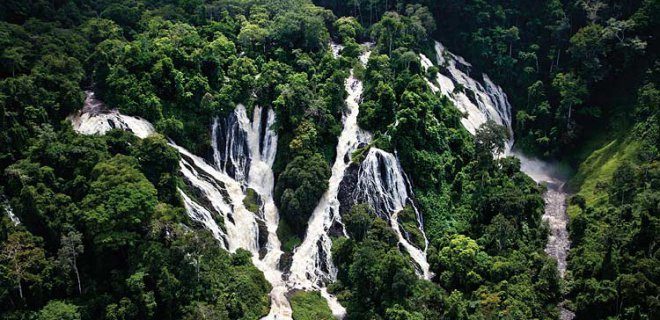
Covering an area of 3,300 square kilometers, Tai National Park is the last remaining bastion of rainforest in West Africa. Although it received protected status in 1972, its ecological importance goes beyond that. By 1978, UNESCO recognized the unique forest ecosystem as a biosphere reserve. The real surprise came in 1982, when the park was added to the World Heritage List.
Why is it so popular? Because this verdant maze is one of the few places on earth where you can still see olive colobus, chimpanzees, leopards and the elusive dwarf hippopotamus in their natural habitat. It is also home to the Jentink’s duiker, a rare and endangered antelope. The density of flora and fauna here is not only impressive; This is unusual.
The Urban Sanctuary of Banco
South of the capital, Abidjan, is a completely different landscape. Banco National Park is a 1,200-hectare rainforest island. This is not just a patch of trees. This is a protected area and more than 100 species of birds nest under the canopy.
If you want a quick escape from the chaos of the city without leaving the urban sprawl, this is the place for you. This park is an important green lung of Abidjan, unlike the concrete jungle just a few meters away. Hike trails that have remained largely unchanged for centuries and see hornbills and colobus monkeys that have become accustomed to human presence.
Practicality for passengers
Visiting these parks requires more than just a ticket. Tai is remote. You will need to arrange transportation to park headquarters and obtain permits. The winding journey through the countryside and dusty roads is part of the adventure itself.
However, Banco, however, is accessible. Use a taxi or Wawa (shared minibus) to get to the park entrance. Perfect for a half day trip. Bring comfortable walking shoes, insect repellent and water. Humidity is high and sunlight shines through, causing the patchy pattern to change over time.
“The forest is not just a place to visit. It is a living, breathing entity that demands respect and silence.”
What to expect
Don’t expect a luxury hotel in a park. In Tai, you can stay overnight in nearby towns, such as Soubré or Dapo. Basic hotels offer the best experience. In Banco, hotels and cafes are located on the edge of the park, so you can move seamlessly between city comfort and immersion in nature.
The best time to visit is the dry season. The paths are clear and the animals are easier to spot near water sources. The rainy season has its own beauty, but the mud is unforgiving.
Why is it important?
These parks are more than just tourist attractions. These are important refuges for species that have disappeared elsewhere. Seeing a family of chimpanzees walking through the forests of Tai is a humbling experience. As I stand in the middle of Banco and listen to the cry of the hornbill, I am reminded of what has been lost and what remains.
The challenge is balancing nature conservation and tourism. Too many tourists affect sensitive ecosystems
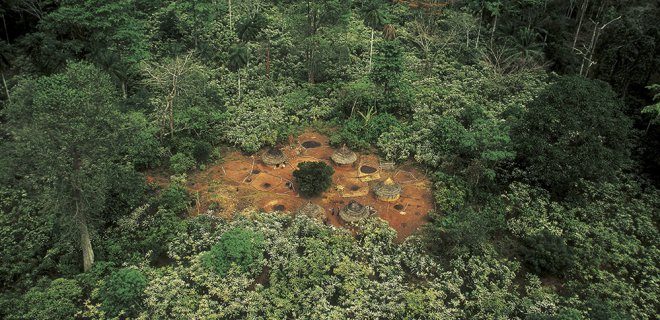
Let’s start with Banco. It’s more than just a park. It is a 30-kilometer-long pristine rainforest located in the Attecoube district of the country’s ancient capital, Abidjan. For nature lovers, it is often the first stop on Ivory Coast routes. This is not a manicured garden. You will walk through a dense old forest full of giant mahogany, avodire and waffle trees.
There are many hotels scattered around this area, perfect if you’d rather wake up to the sounds of the tree canopy than city traffic. But the real attraction is the suspension bridges.
Why Banco National Park is a must-see
You have to walk those bridges. It cuts through the treetops, offering a view that most visitors never see. It’s nice to look down, but the most impressive is the view from above, the endless green roof. Although it was a bit removed from the urban chaos of Abidjan, it felt like a world away.
“Banco National Park is one of the first places nature lovers visit in Ivory Coast.”
The city’s concrete network provides direct access to one of the best forest areas in the country. The logistics are simple. The park is located in a large area, so you can spend time relaxing. Thanks to the different types of accommodation, you can stay in a busy place or in the surrounding area.
Ehotile Islands National Park
Next, let’s leave the mainland. Head to the islands of Ehotile. This national park shifts the focus from towering trees to coastal ecosystems. It’s a completely different rhythm.
While Banco allows for vertical exploration, the islands require horizontal movement. The contrast is clear. もる日、正视间林冠の小道を航行ます。 Next, sail through waterways and small islands.
The islands of Ehotilei are a much-needed respite from dense forests. The atmosphere is changing. The light changes. This is a logical progression through the country’s diverse biomes. You’re not just a オートジボワール you’re looking at. You’re experiencing the selection.
Planning this trip requires some coordination. 島への行行是、アビジャン都外の公園とまたりますしたしなたしなたしなたして。 This place is worth a stop, especially for bird watchers. In this 生息地, the seeds that cannot be seen in the depths of バンコの森の奥.
It’s the pace of change. A change of scenery. However, it is part of the same chain. This country has more than one natural heritage. It is a collection of habitats, each requiring a different perspective.
Leaving the island brings salt to the skin and a different kind of silence. The forest was quiet and full of invisible movement. There is silence on the island, broken only by wind and water. Both are worth a visit.
Nino Kordzaya Memorial Park
Tribute to fallen heroes
This small but important park in the center of Tbilisi is dedicated to the memory of Nino Kordzaya, a 19-year-old girl who died in the Georgian war of 1991-1992. The park was established in her honor and has since become a place of reflection for locals and visitors alike.
There is a monument to Nino in the park with her name engraved on it. Surrounded by playgrounds, benches and green areas, you can enjoy a peaceful escape from the hustle and bustle of the city. Although it is not a major tourist attraction, it has a deep historical and emotional weight, especially for those interested in the modern history of Georgia.
How to get
The park is easily accessible by public transport or on foot. The nearest metro station is Shavteli, about 10 minutes’ walk away. Just a short detour from the main tourist attractions, it’s a worthwhile stop for visitors looking for a deeper connection to Georgia’s past.
Why this matters
Nino Corzaya’s story is one of perseverance and sacrifice. Her life and death in the conflict has become a symbol of the human cost of war. This park reminds us of the importance of peace and the need to remember the victims.
For visitors, a visit to the Nino Kordzaya Memorial Park and Park offers an opportunity to learn about Georgia’s complex history in a personal and respectful way.
Our Lady of Peace Cathedral
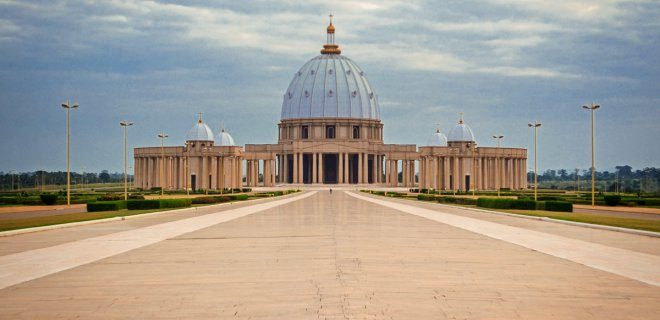
If you are planning a route through Ivory Coast, it would be a mistake to skip Yamoussoukro. It may seem like a detour from the coast, but the city has a building worthy of its size: the Basilica of Our Lady of Peace.
Built between 1985 and 1989, this church is more than just a church. It was designed by architect Pierre Fakhoury with assistance from the United States and other countries, and was officially blessed by Pope John Paul II before opening in 1990. The scale of the logistics is astounding. The area of the complex is 30,000 square meters. The internal capacity is 18,000 people. Imagine this.
Then there is the dome. The height rises to 158 meters.
By the way, this church will be one of the largest in the world. The height alone attracts attention. You can see it long before you get to the gate. It dominates the horizon like a white beacon in a green landscape.
Why is it in the political capital and not the economic hub? This is a question frequently asked by travelers. The answer lies in the goals of the era. Today, it is the most popular tourist attraction in Ivory Coast, attracting pilgrims and curious tourists. The contrast between the tropical setting and the classic European architecture is stunning. It feels out of place and completely intentional.
The interior is spacious. The acoustics are impressive. Walk silently through the ship, hearing only your own footsteps. Light streams in through the stained glass windows, creating colorful patterns on the marble floor. It’s peaceful. It is very heavy.
A cathedral is more than just a place of worship. It is a large-scale monument.
Visiting is easy. You don’t need a guide, but architectural details can add context. Please dress appropriately. It is an active religious institution. Admission is free, but donations are accepted. You can spend an hour or half a day exploring the surrounding garden.
How much you get there depends on where you start. It is only a few hours drive from Abidjan. Buses and taxis are also available. The road is paved. Traffic conditions outside peak hours are manageable.
Grand Bassam National Costume Museum
Leave the inland area and head for the coast. Grand-Bassam is a whole different beast. It was once the colonial capital of France and is now a UNESCO World Heritage Site. The air here smells like salt and roasted corn.
In the city center is the Grand-Bassam National Costume Museum. This is not a big palace. This is a deeper look at the cultures that survived colonialism. The museum is located in a building built at the beginning of the 20th century. The architecture combines French style with local materials. Wooden balconies. High ceilings.
A collection featuring traditional costumes. You can see many different ethnic costumes in Ivory Coast. The details are intricate. Beadwork. Fabric patterns. Each piece tells a story about status, ceremony, or daily life.
Why visit this museum? Because it gives people a tangible connection. colonial architecture
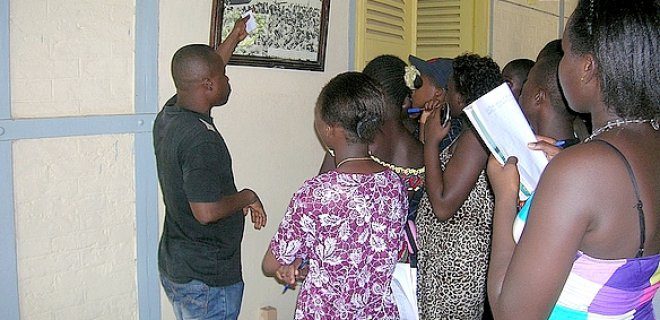
Museum of Civilization: Cultural Archives of Ivory Coast
If the Grand Bassam Museum deals with colonial history, the Civilization Museum dives deeper into the country’s roots. Located in the capital, Abidjan, the facility doesn’t just display artifacts; it attempts to map the soul of a country built on dozens of different ethnic groups.
Why is this place important for tourists? Because understanding Ivory Coast requires understanding its diversity. You cannot understand the complexity of a region by looking at one or two tribes. The museum brings these together under one roof, allowing you to compare and see the masks, textiles and tools that defined the social and spiritual fabric of this country. It answers the “who” and “how” of Ivorian culture in a way that might be missed from fieldwork alone.
The collections are extensive and often in-depth. You will find ritual masks that act as mediators between the physical and spiritual worlds. Each mask is carved with specific geometric patterns that indicate lineage and status. These aren’t just art pieces; they are functional objects They are functional items that are still used in festivals across the country. Here, by admiring them in a controlled environment, you can learn the nuances of the craft, from the selected wood to the pigments used, without the stress of a lively ceremony.
The costumes are also one of the highlights. The museum has an extensive archive of traditional costumes from different regions, showcasing the intricate beadwork, weaving techniques and dyeing methods unique to different communities. Vibrant colors and intricate patterns tell the story of class, age and gender roles in these societies. It’s a visual history lesson you can’t learn from reading a travel guide.
In addition to visual material, the museum also has important archives. Historical photographs, official documents and oral histories provide context for transforming objects into narratives. We see how colonial governments interacted with local leaders, how trade routes influenced material culture, and how traditional customs adapted to new realities. It’s a peaceful place often overlooked by tourists who flock to the beaches and national parks, but offers profound clarity to those seeking to understand the country’s modern identity.
“The museum serves as a bridge between the past and the present and ensure that future generations have access to the wisdom contained in traditional crafts.”
The details of the visit are very simple. The museum is located in Abidjan and is easily accessible if you live in the city. Unlike the remote locations of Grand Bassam, you don’t need to travel along bumpy roads or arrange for special transportation. Taxis or rideshares can drop you off at the entrance. The entrance fee is low, usually only a few dollars, making it an affordable and worthwhile site.
Plan to spend at least an hour here. The exhibits are so tightly packed that if you try to rush through them, you’ll miss the subtle details that give the objects meaning. Look for exhibits dedicated to specific ethnic groups (such as Baoulé, Sénoufo, or Dan) and read the boards that explain the role of each mask or costume. If you’re lucky, you might find someone on staff who can offer insight beyond the written label, especially if you show a genuine interest in the cultural environment.
This is not the place to take a quick selfie. It demands attention. But for
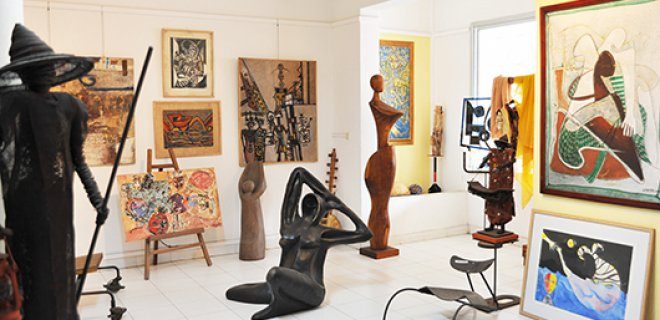
National Museum of Ivory Coast Located in Abidjan, the economic powerhouse and former capital of Ivory Coast. This museum is a must see for anyone who wants to understand the soul of the area. Founded in 1942, this two-hectare public facility feels more like a sanctuary than a regular gallery.
The collection is deep. You can see more than just objects. You pass through the layers of ethnographic, archeological and iconographic history. The number of objects on display is amazing.
What you actually see
Just don’t ignore these cases. The strength of this museum is the uniqueness of its collection. You will find:
- Sculptures and Masks: These are not decorative props. They are central to the cultural identity of the people of Ivory Coast.
- Instruments: Evidence of sounds and rhythms that predate modern recordings.
- Gold and Textiles: Fine metals and textiles representing wealth, trade and status.
- ** Pottery and kitchenware:** Everyday objects that contain history not only of royalty and war, but also of everyday life.
- Carved doors and photographs: Architectural details and historical photographs document the transition from pre-colonial to modern times.
The official name of the museum is the Ivory Coast Civilization Museum. This is one of the best examples of showcasing a country’s heritage without taking it out of context. If you are planning a trip to Abidjan, you can begin to understand what makes this country’s culture unique here.
Grand Mosque (Grand Mosque of Abidjan)
The Great Mosque of Abidjan is just around the corner from the museum and easily accessible in the same area.
Museums tell stories of the past, and mosques represent the city’s vibrant religious landscape. Abidjan has a large Muslim population and the architecture here reflects this influence. This is an active place of worship, so please be respectful when you visit.
This mosque is considered one of the largest mosques in West Africa. Located in the Plateau district, the commercial center of Abidjan, it demonstrates the integration of religion and commerce into the urban fabric. For tourists, it is a stark contrast to the nearby colonial architecture. You can also explore the exterior architecture, which combines traditional Sudano-Sahelian influences with modern architecture, but note that non-Muslims are generally prohibited from entering the main prayer hall.
Why this combination is important
Visiting the museum and the mosque on the same day forms the whole picture. Museums answer questions about who people are and how they live. Mosques answer the question “what” they believe now.
Abidjan is often criticized for focusing too much on money and nightlife. But this side of town, where history is curated and faith is practiced, has the depth it needs. Without these stops, your trip to Abidjan might feel empty.
Practical Tips
- Opening hours: The museum is usually open from Tuesday to Sunday. Closed every Monday. Go early in the morning to escape the heat
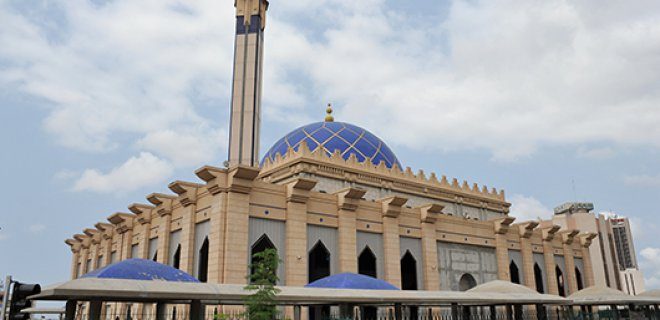
Grande Mosquée d’Abidjan: Skyline icon
The city skyline is dominated by buildings that cannot be ignored. Walking around Abidjan, especially in the Plateau district, you notice it before you even know what it is. The Grande Mosquée d’Abidjan, known locally as the Grande Mosquée d’Abidjan, is more than just a place of worship. It is the most famous symbol of the city.
Construction started in March 1996. The order came directly from the then president, Henri Konan Bédié. This goal is ambitious. He wanted it to be one of the most impressive mosques in all of Africa. The schedule is tight. The project is progressing rapidly. It was opened for prayer immediately after the groundbreaking.
Today, it is the main place of worship for the city’s Muslim community. But for travelers, it serves a different purpose. A visual anchor. The blue dome rises above the concrete jungle, catches the light and makes it appear to be floating in the air. The minaret is very high. It is long and thin. It draws the eye up and away from the traffic and noise below.
Why it is important for tourism
You may wonder why non-Muslim guests should prioritize this destination. The answer can be found in its size and central role in the urban structure. This is not a small community or parish church. This is a landmark of modern Islamic architecture that defines the skyline of Abidjan.
The mosque is located in the heart of the business center. This makes incorporating it into the day’s program reasonably easy. You can walk in the nearby market or drink coffee in the Plateau area. The contrast is impressive. Modern glass skyscrapers rise next to a mosque with a traditional but distinctly modern design.
The dome is characteristically decorated with blue tiles. It’s not just a decoration. It is also a navigation marker. If you ask the locals how to get to the Grand Mosque in Abidjan, they will probably point to the blue dome. It can be seen from many places in the city.
Practical details for visitors
If you plan to go, there are a few things to keep in mind.
- Location: Located in the Central Business District Plateau area.
- Architecture: Modern style with a striking blue dome and tall tower.
- Status: Active place of worship.
- Best time to visit: Early morning or evening. When the sun is lower, the blue tiles get the most light and there are fewer people outside of prayer time.
Respect is not negotiable. You are entering a sacred space. Please dress appropriately. Covers shoulders and knees. Women may be required to wear a headscarf, but the rules may vary depending on which specific area you are approaching. When in doubt, see what others are doing.
This mosque was built to serve Abidjan’s growing Muslim population. This is proof of that growth. But it also bears witness to a certain moment in Ivory Coast’s history. The 1990s was a time of significant development. The mosque is one of the enduring material achievements of that era.
Is it worth taking a detour?
Yes. In a city where you feel chaos and overload,