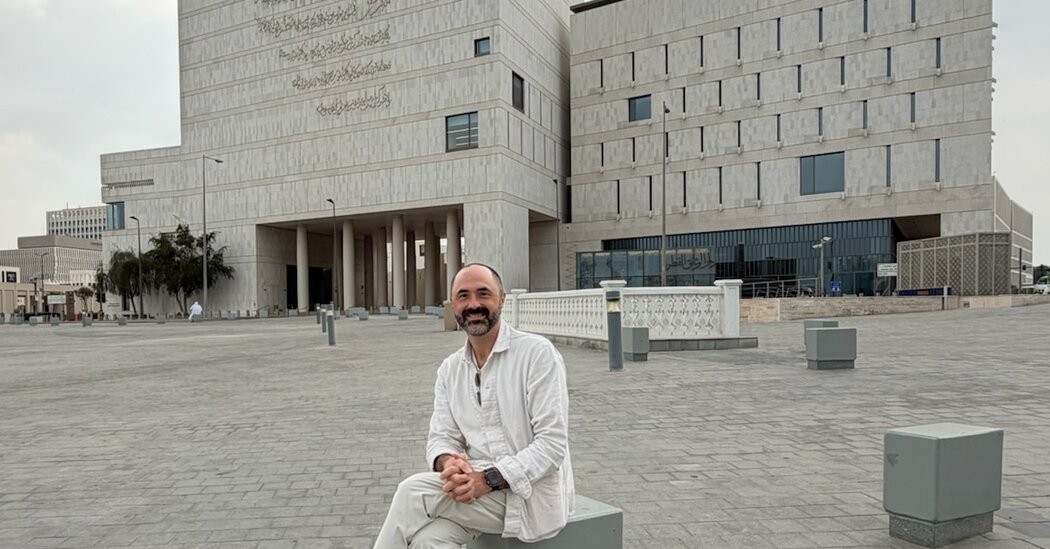
An American physician, Dr. Jay Miller, faced an extraordinary journey home after being stranded in Doha, Qatar, when airspace across the Middle East abruptly closed following a U.S.-Israeli strike on Iran. The incident left tens of thousands of travelers marooned, forcing Dr. Miller to navigate a complex and desperate route back to the United States.
The Sudden Shutdown
On February 28th, Dr. Miller’s Qatar Airways flight to Dallas made an abrupt U-turn just an hour after takeoff. The reason? Escalating tensions between Israel, the United States, and Iran had boiled over, with Iran retaliating with drone and rocket attacks. In response, multiple countries in the region, including Qatar, immediately shut down their airspace to civilian traffic. This left Dr. Miller, along with countless others, stranded with no clear path home.
A Nine-Hour Drive to Freedom
Faced with indefinite delays, Dr. Miller made a decisive move: a nine-hour overland journey by car to Riyadh, Saudi Arabia. Saudi airspace remained open, offering a precarious but viable escape route. The decision was driven by necessity, as airlines suspended operations and borders tightened. This desperate measure highlights how quickly geopolitical events can disrupt global travel and force individuals into extreme situations.
The Long Way Home
Dr. Miller’s journey didn’t end in Riyadh. From there, he boarded a flight that took him through a series of unexpected stops: Ethiopia, Rome, and finally, Chicago, before reaching his destination of New Orleans. The entire ordeal spanned 62 hours, documented through photos, videos, texts, and voice memos. His story is a stark reminder of how fragile modern travel is, and how quickly geopolitical instability can turn routine journeys into high-stakes survival missions.
Personal Impact
Dr. Miller, a pulmonary and critical care specialist, had left his family in India a week earlier to return to work. The timing meant his wife and 5-year-old daughter, Devi, were still abroad when the crisis hit. The experience forced him to spend five nights alone in Doha, navigating fear and uncertainty while trying to distract himself until an escape route opened.
This situation underscores the human cost of international conflicts, forcing individuals to make life-altering decisions under immense pressure. The rapid closure of airspace, while necessary from a security standpoint, created chaos for travelers worldwide.
Dr. Miller’s story serves as a potent example of how global events can upend personal lives in an instant. It raises questions about contingency planning for airlines and governments, as well as the resilience required for travelers caught in such crises.