


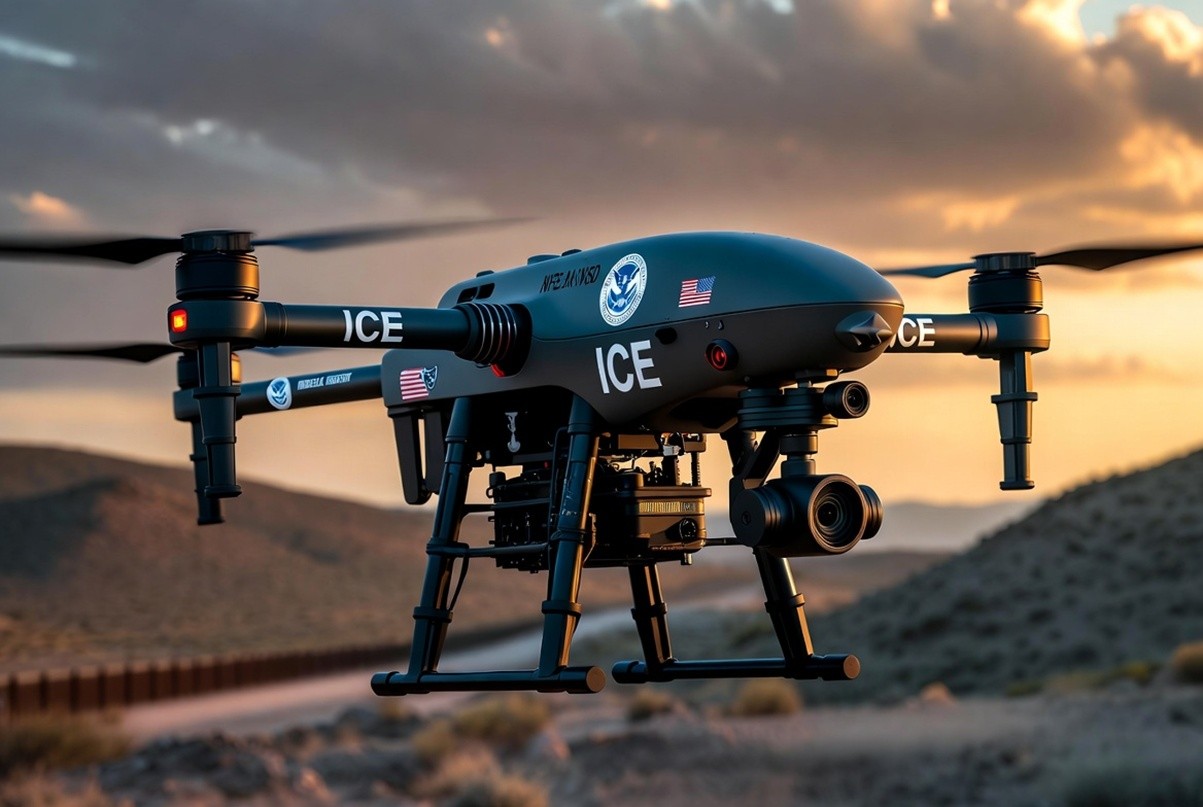
A sweeping new Federal Aviation Administration (FAA) directive has introduced a massive, long-term flight restriction that covers the entire United States. Unlike typical temporary flight restrictions (TFRs) that address localized emergencies, this mandate imposes a nearly two-year ban on drone operations near specific government assets, raising significant questions regarding privacy and oversight.
A Departure from Standard Protocol
Traditionally, the FAA issues TFRs to manage short-term risks. These restrictions are usually brief, lasting only a few hours, and are designed to protect airspace during:
– Natural disasters (to keep paths clear for rescue helicopters);
– Major sporting events ;
– High-profile dignitary movements, such as presidential travel.
However, restriction FDC 6/4375 breaks this pattern. Effective January 16, 2026, and set to remain in place until October 29, 2027, this TFR applies to the entire nation.
The Scope of the Ban
The directive prohibits the operation of any unmanned aircraft within 3,000 feet (approximately half a mile) horizontally of various government “facilities and mobile assets.” The restriction specifically targets assets belonging to four major departments:
1. Department of Defense (DoD)
2. Department of Energy (DOE)
3. Department of Justice (DOJ)
4. Department of Homeland Security (DHS)
Crucially, the term “mobile assets” includes ground vehicle convoys and their associated escorts. This means that any drone flying near a moving convoy belonging to these departments is in violation of federal law.
Legal Risks and Enforcement
The enforcement measures for this restriction are severe. Individuals found violating this TFR face:
– Criminal and civil penalties ;
– Seizure of equipment ;
– The potential destruction of the drone.
Because the Department of Homeland Security (DHS) oversees agencies such as Immigration and Customs Enforcement (ICE) and Customs and Border Protection (CBP), this rule has immediate practical implications. An agent driving a DHS vehicle is classified as a “mobile asset,” meaning any drone operator flying within a half-mile radius of that vehicle could face immediate legal action or the loss of their aircraft.
Why This Matters: The Context of Oversight
This massive regulatory shift is


