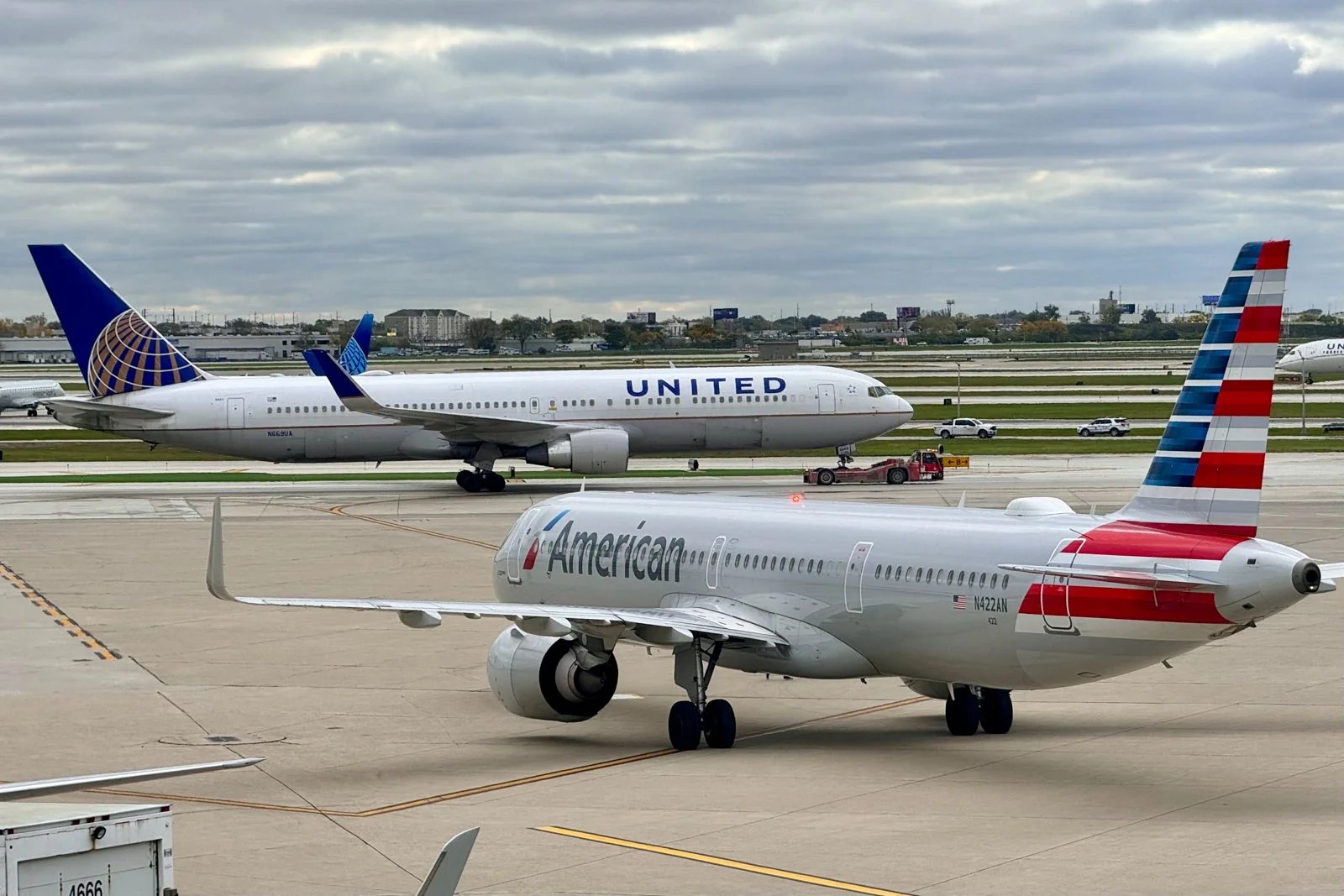
United Airlines and American Airlines are intensifying their rivalry over Chicago’s O’Hare International Airport (ORD), with a recent escalation involving unexpected route expansions to smaller regional markets. This conflict isn’t about the cities themselves but about securing dominance at one of the nation’s busiest aviation hubs.
The Battle for O’Hare
The dispute centers on access to gates at ORD, where both carriers operate major connecting hubs. Limited gate availability restricts growth, making the competition particularly fierce as United seeks to defend its established position while American attempts to gain ground.
The Erie and Johnson City Gambit
The rivalry took a peculiar turn when both airlines simultaneously targeted Erie, Pennsylvania (ERI), and Johnson City, Tennessee (TRI), among other smaller cities. American initially announced new routes from O’Hare to ERI, TRI, and Lincoln, Nebraska (LNK). Within 24 hours, United responded by unveiling its own expansion that mirrored American’s additions, including flights to the same three cities.
This move is a direct challenge, with United reintroducing service to ERI after a year-long absence and initiating flights to TRI for the first time.
Strategic Implications
United’s expansion also appears aimed at undercutting American’s plans for LNK, where American intends to connect to three hubs, including ORD. United has preemptively increased flights between ORD and LNK, signaling a clear intention to compete aggressively on the route.
“As we continue our steady growth at O’Hare…we’re building on the strength of a global network that’s simply unmatched in Chicago,” stated Mark Weithofer, United’s Managing Director of Domestic Network Planning.
This statement is widely interpreted as a pointed jab at American.
What This Means for Passengers
While the dispute is largely strategic, customers are likely to benefit from increased flight options and potentially lower fares as the two airlines battle for market share. The conflict is expected to continue unfolding in 2026, with further expansions and competitive maneuvers.
This latest escalation highlights the high stakes of airline hub dominance in major US cities. The battle for Chicago is far from over, and passengers may find themselves caught in the crossfire—though, in this case, the result could be more convenient travel options.