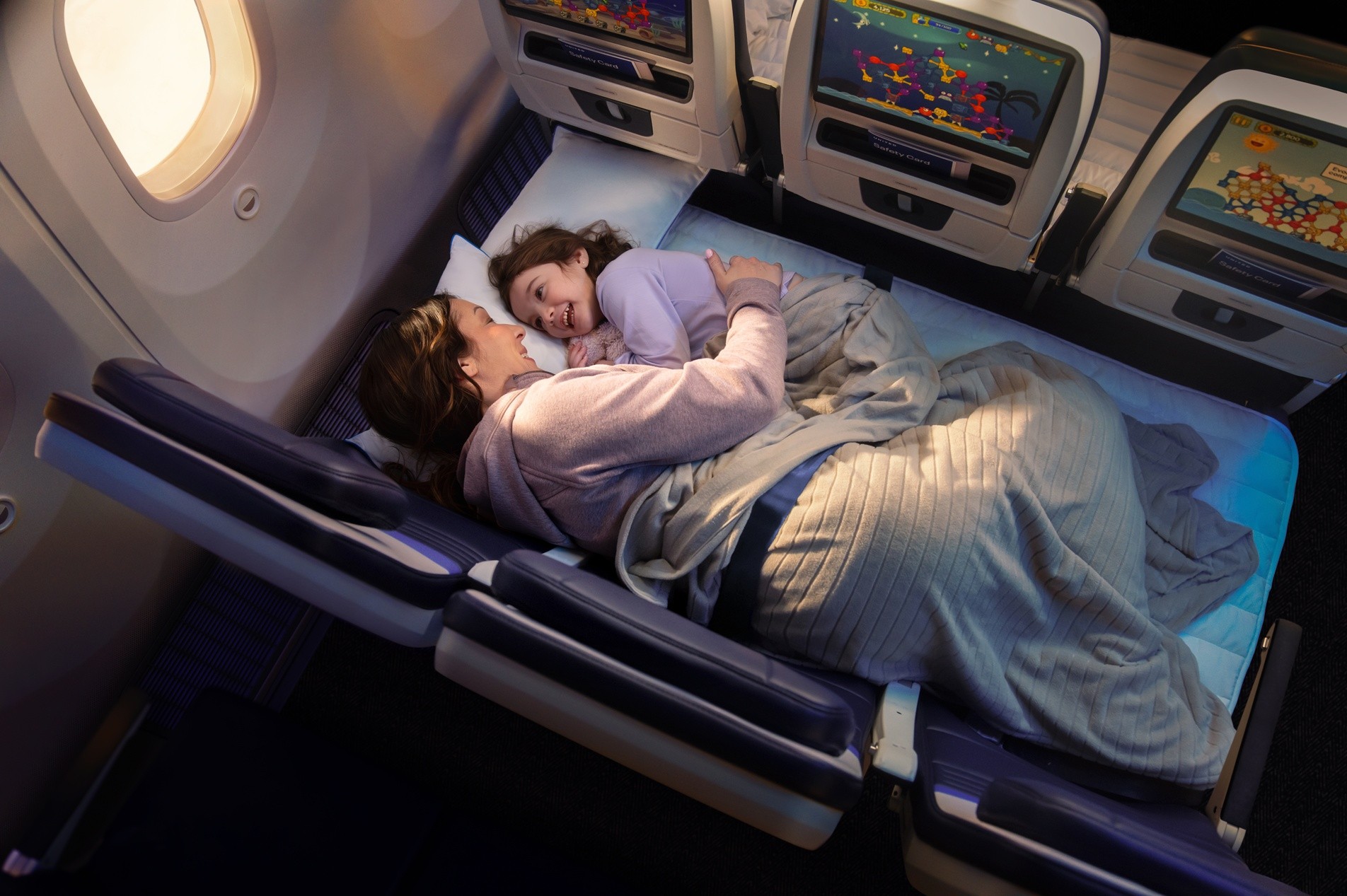
United Airlines is introducing a new travel option next year, dubbed “Relax Rows,” which allows passengers to combine three economy seats into a lie-flat surface. This product, directly inspired by Air New Zealand’s successful “Skycouch” concept, aims to fill a gap between standard economy and premium economy, offering an upgraded comfort level at a fraction of the price.
The Concept Explained
The Relax Rows utilize the adjustable leg rests of three adjacent economy seats, which can be raised to 90 degrees to create a flat sleeping or lounging surface. Airlines will provide a mattress pad, bedding, and pillows to enhance the experience. The rollout will begin next year and is planned for over 200 widebody aircraft by 2030, with up to 12 sections available per plane.
Pricing and Profitability
The key to this model lies in its pricing structure. Air New Zealand’s Skycouch add-ons already show a clear pattern:
- Solo Travelers: $499 – $1,400
- Couples: $300 – $700
- Groups of Three: $100 – $200
While solo travelers represent the highest revenue per seat, couples present the most appealing scenario for airlines, as they occupy seats that would otherwise be sold individually. The potential for additional revenue is substantial; a few thousand dollars per flight could be generated across a fleet of 200 aircraft. Beyond direct profit, the product enhances United’s brand perception as innovative.
Strategic Implications
United’s move signals that the Skycouch model is effective. Air New Zealand has maintained the product for years, even licensing it to other airlines like Air Austral, Azul, and China Airlines. This demonstrates a viable market for this niche upgrade.
The decision to copy a successful product from a joint-venture partner is not only practical but also a strategic indicator that the airline believes the demand exists and the revenue potential is real.
Potential Risks
The rollout isn’t without risks. Customers may have unrealistic expectations, mistaking the “couch” for a luxurious lounge experience rather than a modified economy seat. Revenue leakage is another concern: some passengers who might have purchased premium economy could instead opt for Relax Rows, potentially reducing higher-margin sales.
Broader Trends
This move aligns with United’s broader strategy of premium segmentation, having already increased premium seating by 40% in the last five years. The airline is actively seeking ways to upsell passengers who would otherwise settle for standard economy, providing an additional revenue stream. The success of this model depends on attracting families and leisure travelers willing to pay for a more comfortable journey.
Ultimately, the introduction of Relax Rows is a calculated move by United Airlines to capitalize on an existing, proven concept. By offering a mid-tier option between economy and premium, the airline aims to capture incremental revenue and reinforce its position as an innovator in passenger experience.