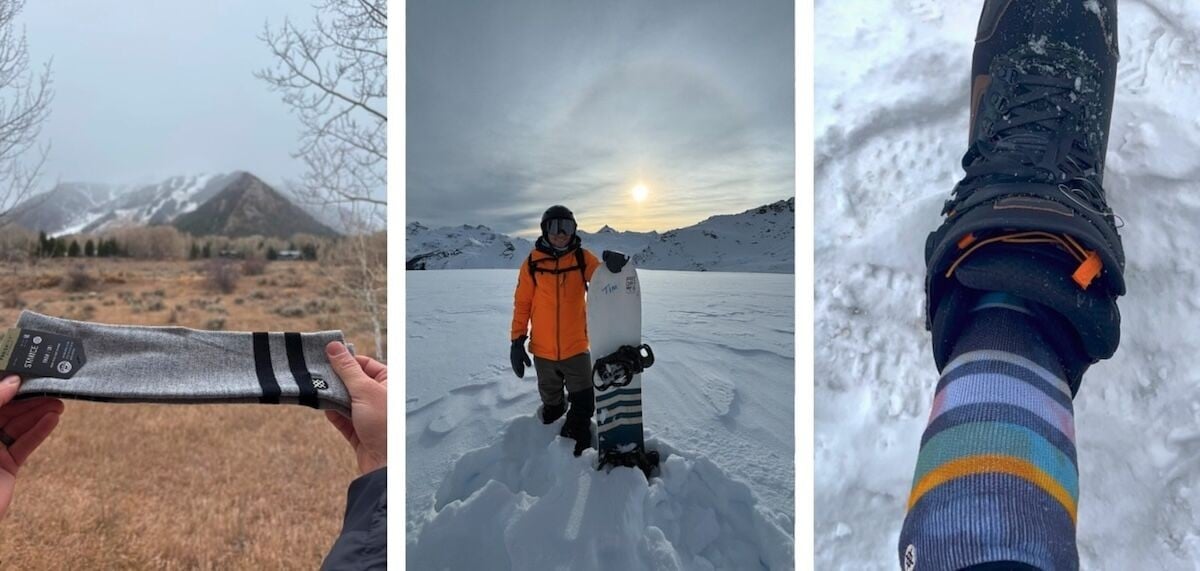
Cold weather can ruin a ski or snowboard day faster than a broken lift. After decades of riding in all conditions, one thing is clear: staying warm isn’t about bulky layers, it’s about a smart system that starts with your feet. This guide breaks down how to build that system, so you can keep riding when others head for the lodge.
The Foundation: Warm, Dry Feet
The biggest mistake skiers and snowboarders make is neglecting their socks. Cold feet make every other layer useless. Tight boots, cotton socks, and wrinkled seams cut off circulation, turning toes into ice within runs.
The solution? A thin to medium-thickness, technical over-the-calf sock designed to keep feet dry, supported, and comfortably locked into boots. Stance Ultralight Performance Wool Snow Over The Calf Socks are ideal for most days, accommodating even problem feet by stretching with the foot as you put them on.
For backcountry touring or colder conditions, Stance’s Poly OTC Snow Socks provide flexibility with a polyester blend, medium cushioning, and moisture-wicking FreshTek technology. Infiknit reinforcement in high-wear areas adds durability, while arch support reduces pressure points.
If you prefer natural fibers, Stance Wool OTC Snow Socks use merino wool for better temperature regulation and FreshTek odor control. Graduated compression aids circulation, ensuring warmth without constriction.
Hard-Earned Foot Rules:
- Wear only one pair of socks. Doubling up restricts circulation.
- Ensure boots are snug, not crushed, with thicker performance socks.
- Smooth socks completely. Wrinkles mean blisters.
Layering for Performance: Base, Mid, and Outer Shell
Once your feet are covered, focus on a layered system.
Base Layers: Synthetic or merino wool is essential. The goal is to move moisture away from the skin, not provide insulation. Choose a snug, second-skin fit to prevent warm air leakage. Avoid cotton at all costs.
Mid-Layers: Fleece is often overlooked but highly effective. A medium-weight fleece provides insulation without bulk, breathes well, and fits comfortably under a shell. Adjust thickness based on cold tolerance, but don’t rely on this layer for primary warmth.
Outer Shell: The final layer combines insulation and weather protection. A puffy jacket (synthetic or down) adds warmth without weight. Synthetic excels in wet conditions, while down is lighter for dry, frigid days. Pair this with a waterproof, breathable shell jacket with a helmet-compatible hood, long pit zips, and a powder skirt.
Moisture Management: The Key to Staying Warm
Even the best layering system fails if sweat isn’t managed. Open vents during exertion, close them when resting. Keep gloves, neck gaiters, and hats dry.
Moisture-wicking socks, like Stance’s Poly and Wool OTC Snow Socks, are vital. Their FreshTek treatment pulls sweat away from the skin, reducing chills when you stop moving. Avoid taking boots off completely during breaks, as this lets warm air escape.
Details That Matter
- Hands: Insulated, waterproof gloves or mittens with liners. Mittens are generally warmer.
- Head and Neck: A breathable balaclava or neck tube is superior to a thick beanie.
- Hydration and Food: Dehydration and low calories make you cold. Drink water and keep snacks handy.
- Fit: Layers shouldn’t restrict movement or blood flow.
Upgrade your socks first. A well-cushioned, over-the-calf, moisture-wicking sock like the Stance Poly or Wool OTC Snow Socks transforms boots from tolerable to comfortable, unlocking the true joy of time on snow. Once your feet are warm, the rest falls into place, turning the storm into a reason to ride.