


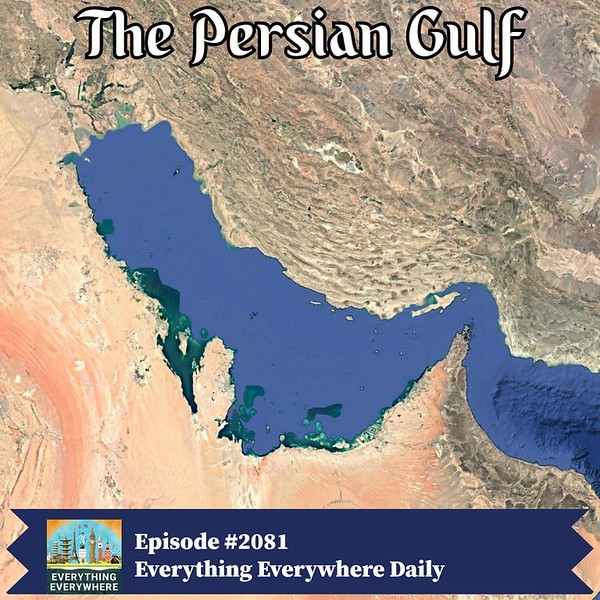
For millennia, the Persian Gulf – a narrow waterway nestled between Arabia and Persia – has dictated the fates of empires, economies, and the modern world. From ancient trade routes to modern energy markets, control of its waters has sparked both conflict and immense wealth. This is the story of how a relatively small region came to exert such outsized influence on global affairs.
A Historical Name, A Contested Identity
The name “Persian Gulf” itself is a point of contention. While historically used for over 2,000 years in Greek, Roman, and Islamic texts, as well as in most international maps, some Arab states in the 20th century began promoting “Arabian Gulf” as part of rising Arab nationalism. The name reflects deeper regional power dynamics: who gets to define the narrative, and who controls the historical record.
The Strait of Hormuz: A Global Chokepoint
The Gulf’s geography makes it uniquely important. It’s a nearly landlocked body of water, fed by the Indian Ocean through the Strait of Hormuz – just 21 miles wide at its narrowest point. This strait is the Gulf’s sole connection to the open sea, making it one of the world’s most critical trade chokepoints, comparable to the Strait of Gibraltar. Control over this passage equates to influence over global energy flows.
Unique Conditions, Resilient Ecosystems
The Persian Gulf is one of the saltiest bodies of water on Earth, due to high temperatures and low circulation causing extreme evaporation. Despite harsh conditions – including summer temperatures near 100°F (37°C) – the Gulf harbors resilient coral systems that don’t bleach under heat stress. Biologists are studying these corals, hoping to unlock survival strategies for reefs worldwide. The region also boasts thriving mangrove forests and seagrass meadows, crucial for carbon absorption.
A Region Dependent on Desalination
Over 100 million people depend on the Persian Gulf for water, but the region lacks freshwater. This dependence has spurred the construction of nearly 500 desalination plants along the coast, providing drinking water and supporting agriculture. This reliance on technology highlights a fundamental vulnerability: access to resources is not guaranteed in this environment.
The Cradle of Maritime Trade
The Persian Gulf has been economically vital since the dawn of Near Eastern civilization. As early as 3000 BC, it served as a primary artery for global trade, connecting Mesopotamia with other urban centers in Egypt and the Mediterranean. The Gulf’s sheltered geography fostered the development of specialized shipbuilding techniques and coastal navigation, allowing early mariners to expand trade networks into the Indian Ocean.
From Mare Liberum to Portuguese Control
For centuries, trade in the Indian Ocean and the Persian Gulf operated under the principle of mare liberum – “free seas,” open to all merchants. This changed in 1507 with the arrival of the Portuguese, who imposed a cartaz system: ships had to pay for permits to trade. This was seen by locals as institutionalized piracy, disrupting established customs and challenging the traditional flow of goods.
The Rahimi Incident and the Rise of British Influence
The Portuguese disrupted not only trade but also religious pilgrimage routes. The 1613 Rahimi incident – where a ship carrying the Mughal emperor’s mother and Muslim pilgrims was looted by Portuguese forces – triggered a shift in allegiance. The Mughals turned to the British East India Company, accelerating British dominance in the region. This illustrates how seemingly isolated events can reshape geopolitical alliances.
From Pearls to Oil: A Shifting Economy
For centuries, the Persian Gulf was the world’s primary source of pearls. But in 1908, the Japanese pearl industry emerged, diminishing the Gulf’s dominance. Then, in 1930, oil was discovered near Masjed Soleyman, Iran, transforming the region’s fortunes. This discovery coincided with growing demand from the automobile and aviation industries, fueling a rapid expansion of oil exploration.
OPEC and the Assertion of Control
Until the 1960s, foreign oil companies controlled the region’s vast reserves. The formation of OPEC in 1960 – with founding members Iran, Iraq, Kuwait, and Saudi Arabia – marked a turning point. These nations began reclaiming control over their resources, shifting power from Western corporations to sovereign states.
The 1973 Oil Embargo: A Demonstration of Power
The Gulf states demonstrated their newfound economic leverage during the 1973 Yom Kippur War, imposing an oil embargo on the United States in response to American support for Israel. Production cuts led to soaring gas prices and shortages, proving the region’s ability to disrupt the global economy. The Carter Doctrine, articulated by President Jimmy Carter, made it clear that the United States would defend its interests in the Gulf “by any means necessary.”
Diversification and Future Outlook
Today, Gulf states are diversifying their economies through investments in tourism, finance, technology, and renewable energy. This shift reflects a long-term strategy to reduce dependence on oil and prepare for a future where fossil fuels may decline. The Persian Gulf remains a vital artery of global trade and a flashpoint for geopolitical tension.
The Persian Gulf has served many roles over five millennia: a central hub for early Indian Ocean traders, a contested highway for European empires, and the energy engine of our modern world. Today, it remains exactly what it has always been, the world’s most vital and most vulnerable, global artery of trade.


