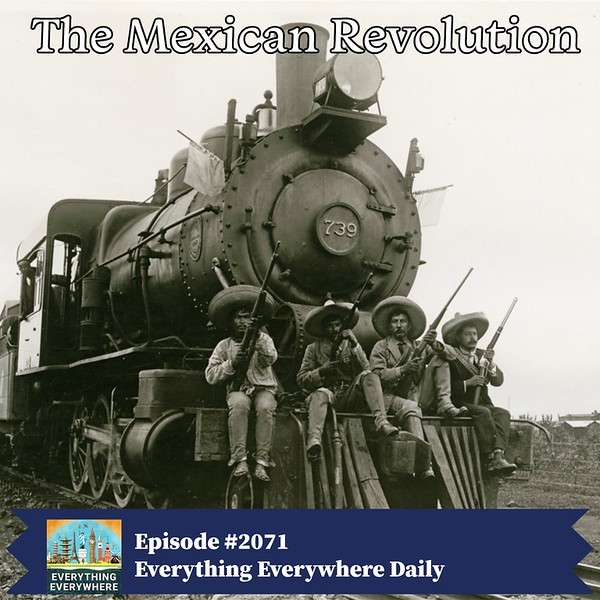
The Mexican Revolution remains one of the most violent and transformative events in 20th-century Latin America. What began as a rebellion against decades of authoritarian rule under Porfirio Díaz spiraled into a decade of bloodshed, shifting alliances, and enduring social change. This period reshaped Mexico’s political landscape, strengthened state power, and laid the groundwork for modern labor rights and land reform, though at a staggering human cost.
From Colonial Roots to Díaz’s Dictatorship
Mexico’s struggle for stability dates back to its independence from Spain in 1821. Early hopes for democracy quickly dissolved into cycles of instability, coups, and military dictatorships. By the early 1900s, Porfirio Díaz had consolidated power, creating a regime that favored foreign investment, particularly from the United States, while suppressing dissent and widening the wealth gap.
The roots of this imbalance trace back to the Spanish colonial era, where the casta system rigidly stratified society by race and origin, favoring those born in Spain over indigenous populations. This legacy persisted into the 19th century, with criollos (Spanish-born Americans) dominating land ownership and political life while the growing mestizo population remained marginalized. Díaz’s regime exploited this structure, offering lucrative deals to American businesses while neglecting the needs of the majority. As Díaz himself wryly noted, Mexico was “so far from God and so close to the United States,” a reflection of its vulnerable economic and political position.
The Spark of Revolution
Díaz’s rule grew increasingly unpopular as the gap between the elite and the working class widened. Land ownership became highly concentrated, with the top 1% controlling over 95% of national wealth. Agricultural laborers toiled under a feudal-like system, beholden to powerful hacendados. Despite the pretense of democracy, Díaz manipulated elections, promising reform while clinging to power for over three decades.
The breaking point came in 1910 when Francisco Madero, a wealthy landowner with populist leanings, challenged Díaz’s authority. Madero’s call for free and fair elections resonated with a frustrated electorate. Díaz responded by arresting Madero and rigging the election, igniting open rebellion.
The War of Factions
Madero escaped and called for armed resistance, drawing support from disillusioned farmers and laborers. The revolution quickly fractured into competing factions. Pancho Villa emerged in the North, leading a guerrilla force that disrupted rail lines and challenged Díaz’s control. In the South, Emiliano Zapata championed land reform for indigenous communities, refusing to compromise with Madero’s gradualist approach.
These divisions escalated after Díaz was overthrown in 1911. The ensuing power struggle, known as the War of the Winners, pitted revolutionary leaders against each other in a brutal cycle of violence. General Victoriano Huerta seized power in 1913, assassinating Madero and establishing a ruthless dictatorship. This betrayal further radicalized the revolution, leading to even greater bloodshed.
The Constitution of 1917 and its Aftermath
Huerta’s regime fell in 1914, but the conflict continued as revolutionary factions turned on each other. Venustiano Carranza eventually emerged as the dominant leader, calling for a constitutional convention. The resulting Constitution of 1917 was a landmark document, guaranteeing labor rights, recognizing women’s suffrage, and enshrining the principle of Mestizaje, which sought to unify Mexicans regardless of their ancestry.
Despite these advances, the revolution’s legacy remained incomplete. Violence persisted under the one-party rule of the National Revolutionary Party (PRI), which dominated Mexican politics for over seven decades. Zapata and Villa, both assassinated in the 1920s, became symbols of unfinished justice.
Lasting Impact
The Mexican Revolution resulted in an estimated 2 million deaths, nearly one-eighth of the population. While it did not solve all of Mexico’s problems, it fundamentally reshaped its political and social order. The Constitution of 1917 laid the foundation for modern Mexico, strengthening state control, protecting workers’ rights, and challenging centuries of racial and social hierarchy. The revolution’s scars remain visible today, a testament to the brutal struggle for a more just and equitable nation.