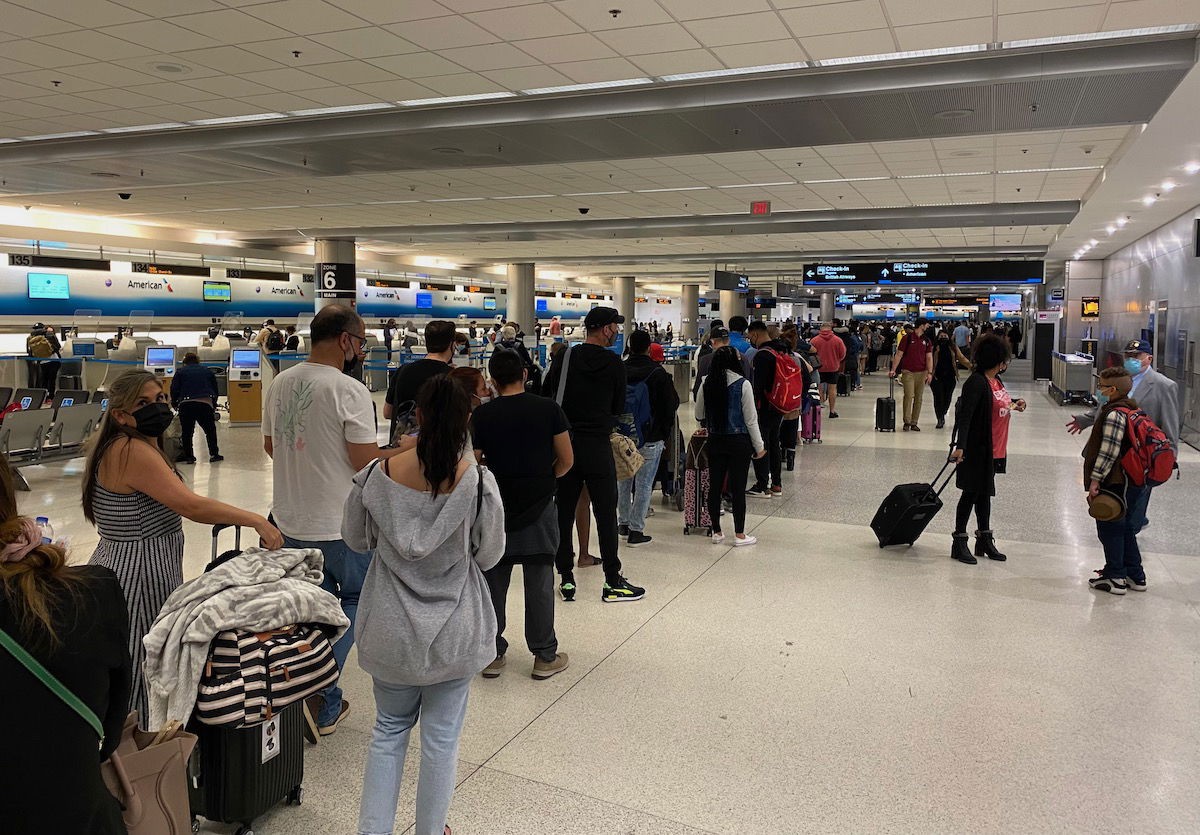
The ongoing partial government shutdown is escalating disruptions at U.S. airports, with TSA officers increasingly calling out sick due to unpaid wages. While long security lines are the most visible impact, the underlying issue is a growing staffing crisis that threatens to overwhelm the system.
The Scale of Absenteeism
Nationwide, roughly 10% of TSA officers were absent on March 15, 2026, a fivefold increase from the usual 2%. The situation is particularly acute at Houston Hobby Airport (HOU), where 55% of screeners called in sick on the same day – up from 41% the previous week. Over the course of the shutdown, 366 TSA officers have quit entirely, representing about 0.7% of the 50,000-person workforce.
This surge in absenteeism is directly linked to financial hardship. Unpaid federal employees struggle to afford basic expenses like childcare and transportation, making it impossible for many to report to work. Weekends and school breaks are likely to see even higher call-out rates, as parents without income cannot cover the cost of supervision.
Why This Matters
Government shutdowns have historically forced resolutions due to disruptions in critical services, notably air traffic control. However, this time, air traffic controllers are being paid while TSA agents are not – a distinction caused by funding allocations within different departments. This imbalance creates a dangerous pressure point: if air traffic controllers were also unpaid, the immediate impact would be far more severe and likely trigger a swift end to the shutdown.
The Breaking Point
The trend is clear: sick calls are rising weekly, and the system is reaching its breaking point. At Houston Hobby, absenteeism is increasing by 7-8% per week, suggesting that complete operational failures are imminent at some locations.
The political rhetoric surrounding the crisis is sharp. Former President Trump urged TSA officers to return to work, while House Speaker Johnson blamed Democrats for prioritizing “illegal aliens” over TSA paychecks. These statements underscore the highly polarized nature of the shutdown and its impact on essential personnel.
In conclusion, the TSA staffing crisis is not merely a bureaucratic inconvenience but a growing threat to air travel security. Unless a resolution is reached quickly, further disruptions – and potential shutdowns of entire airports – are almost inevitable.