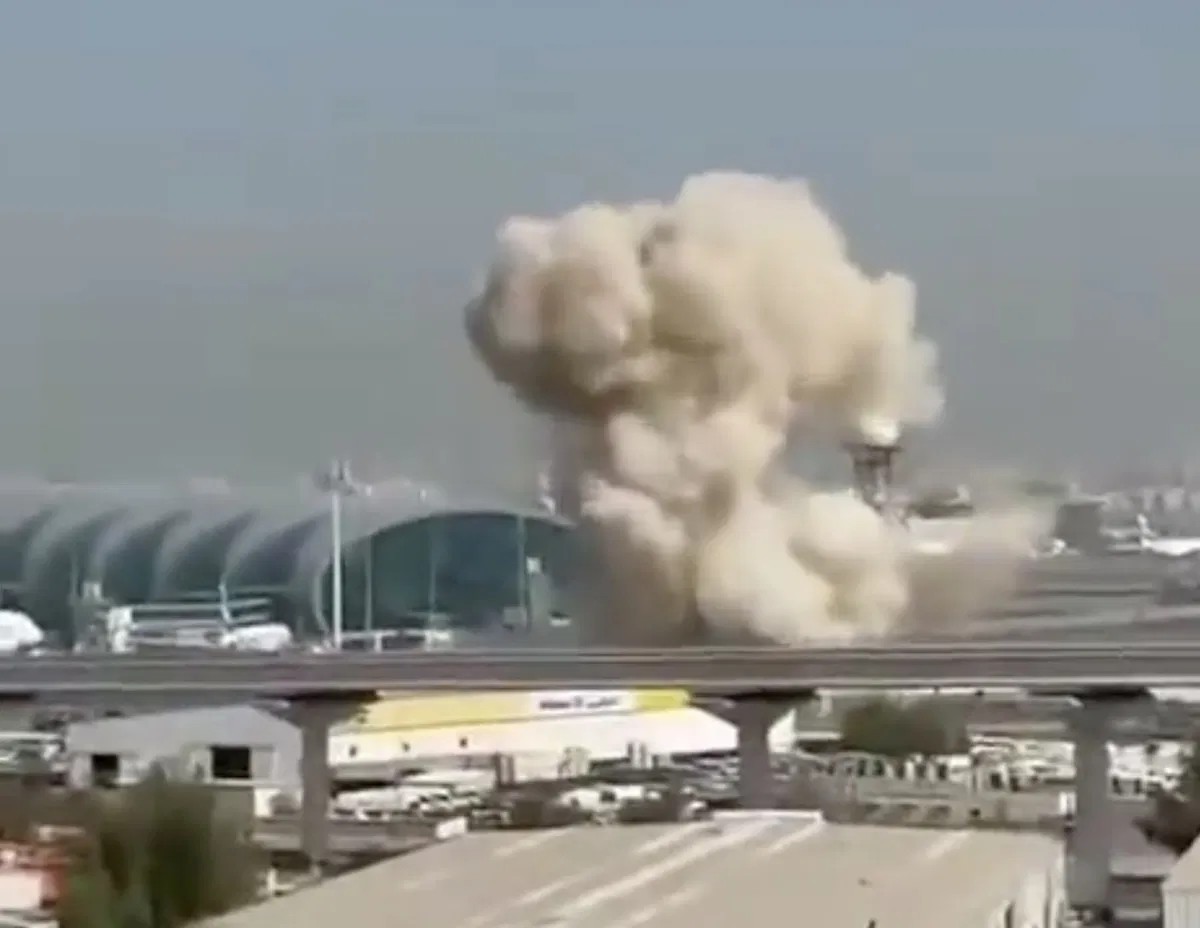
Recent escalations in the Middle East have seen Iran repeatedly target neighboring countries with missile strikes, most recently striking Dubai International Airport (DXB) earlier today. The attacks, which began in response to U.S. and Israeli strikes on Iranian territory, have severely disrupted air travel and prompted widespread concern over regional stability.
Recurring Attacks on UAE Infrastructure
Over the past week, Dubai has experienced multiple explosions, including a drone strike on DXB that damaged the terminal and forced operational halts. The latest incident involved an Iranian missile detonating near the terminal, though preliminary reports suggest minimal physical damage to aircraft or infrastructure. Despite these disruptions, Emirates airline resumed limited repatriation flights within hours, though scaling up operations remains difficult given the ongoing threat.
The UAE government has consistently downplayed the severity of these incidents, describing them as “minor.” However, the frequency of attacks raises questions about Iran’s intent: whether these strikes are deliberately restrained to avoid maximum damage or simply reflect poor targeting.
Iran Announces Suspension of Regional Attacks
In a surprising move, Iranian President Masoud Pezeshkian announced today that the country’s temporary leadership council has approved a suspension of missile strikes against neighboring states. The decision comes with a caveat: Iran will not retaliate unless provoked by an attack originating from those territories.
Pezeshkian issued an apology to affected countries, stating, “I must apologise on my own behalf and on behalf of Iran to the neighbouring countries that were attacked by Iran.” This apology, however, does not extend to the U.S. or Israel, with Pezeshkian adding that “the enemies must take their wish for the surrender of the Iranian people to their graves.”
Implications and Uncertainties
The Iranian government’s history of unreliable statements makes the promise of restraint difficult to trust. While the announcement is generally encouraging, the situation remains volatile and could escalate rapidly. The core issue remains: the underlying tensions between Iran, Israel, and the United States.
The future trajectory of this conflict will depend on whether all parties adhere to de-escalation measures or if further provocations lead to renewed hostilities. For now, the temporary cessation of missile strikes provides a fragile moment of stability in a region on edge.