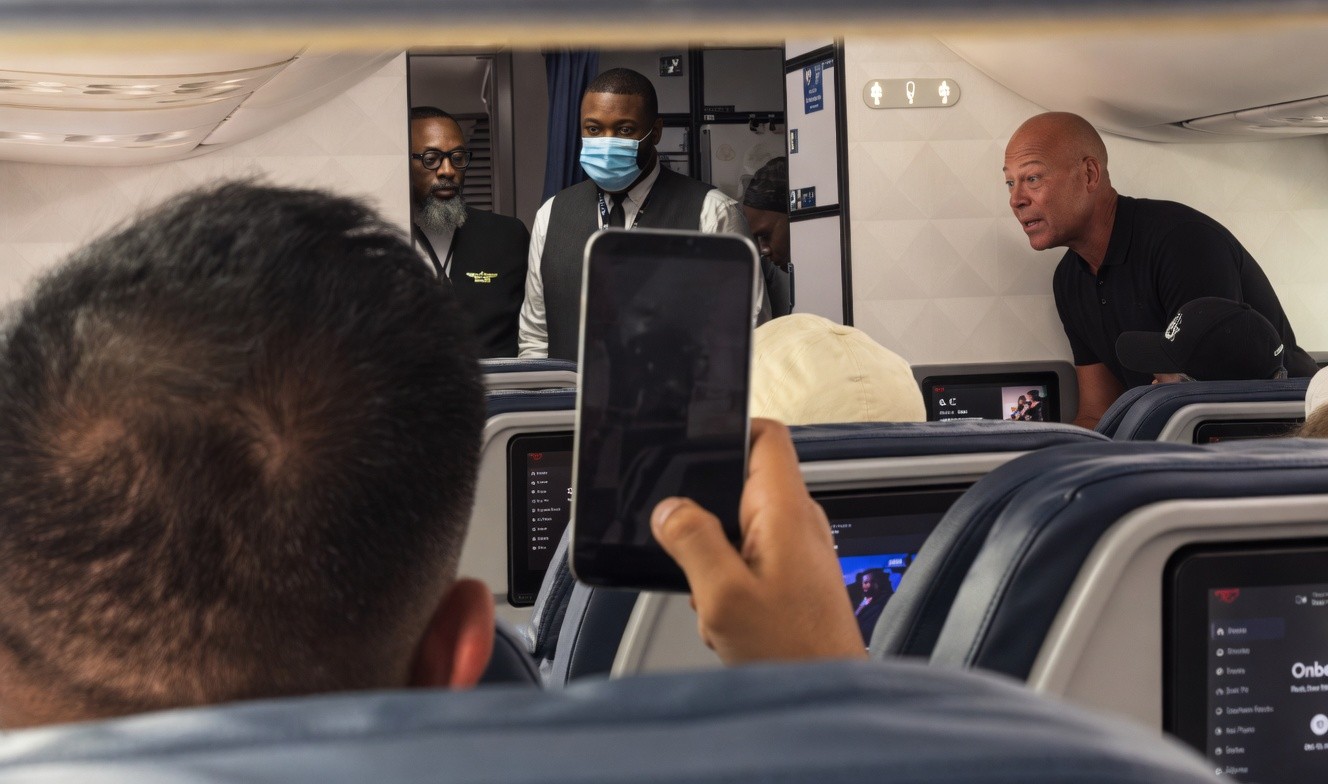
A routine flight from Miami to Atlanta turned into a logistical nightmare this week when a Delta Air Lines passenger refused to comply with standard safety protocols regarding mobile device usage. The standoff resulted in the entire aircraft being deplaned, leaving hundreds of travelers inconvenienced to resolve a single passenger’s non-compliance.
The Incident: A Breakdown in Compliance
While specific details of the individual’s motivation remain unknown, the impact was immediate and widespread. Reports indicate that the passenger refused to either end a phone call or switch their device to “airplane mode” after the flight was prepared for departure.
As the situation escalated, flight attendants and crew members were forced to manage a growing sense of frustration among the passengers. The disruption reached a breaking point where the airline determined the only course of action was to remove the individual from the aircraft, necessitating that all other passengers exit the plane as well.
Why “Airplane Mode” Still Matters
To the average traveler, the rule against using cellular service mid-flight can seem arbitrary or even outdated. However, the regulations enforced by the Federal Aviation Administration (FAA) and the FCC are rooted in two primary technical concerns:
- Signal Interference: While a single smartphone is unlikely to disrupt a modern aircraft’s systems, the cumulative effect of hundreds of devices transmitting simultaneously is a variable the industry prefers to avoid. There is a theoretical risk that multiple transmitters, particularly from uncertified or low-quality electronics, could interfere with sensitive cockpit instruments.
- Ground Network Strain: When a plane moves rapidly through the sky, mobile devices constantly attempt to “hand off” connections between ground towers. This causes phones to increase their transmission power to maintain a link, which can create unpredictable patterns of electronic noise.
The Technological Gap: Why Some Planes Allow Calls
The frustration felt by passengers often stems from the fact that cellular connectivity is becoming a standard feature on many modern aircraft. This discrepancy exists because of how the technology is implemented:
- Standard Commercial Flights: Most large carriers rely on passengers switching to airplane mode to prevent direct cellular transmission.
- Onboard Picocells: Many modern planes now use approved mobile systems. These use a “picocell” (a small, low-power cellular base station) inside the aircraft. This allows phones to transmit at very low power to the plane, which then relays the data via satellite or air-to-ground links.
- Specialized Carriers: Certain regional or private operators (such as JSX) utilize high-speed satellite internet like Starlink, allowing for seamless Wi-Fi calling without violating safety protocols.
The Bottom Line for Travelers
The incident serves as a stark reminder of the “social contract” of air travel. While airline rules can sometimes feel rigid or selectively enforced, the cost of non-compliance is disproportionately high.
For a passenger, a single phone call is rarely worth the consequence of causing a multi-hundred-person delay and a complete deplaning event.
Conclusion: This incident highlights the tension between increasing digital connectivity and strict aviation safety protocols, proving that a single refusal to follow cabin rules can disrupt the travel plans of hundreds.