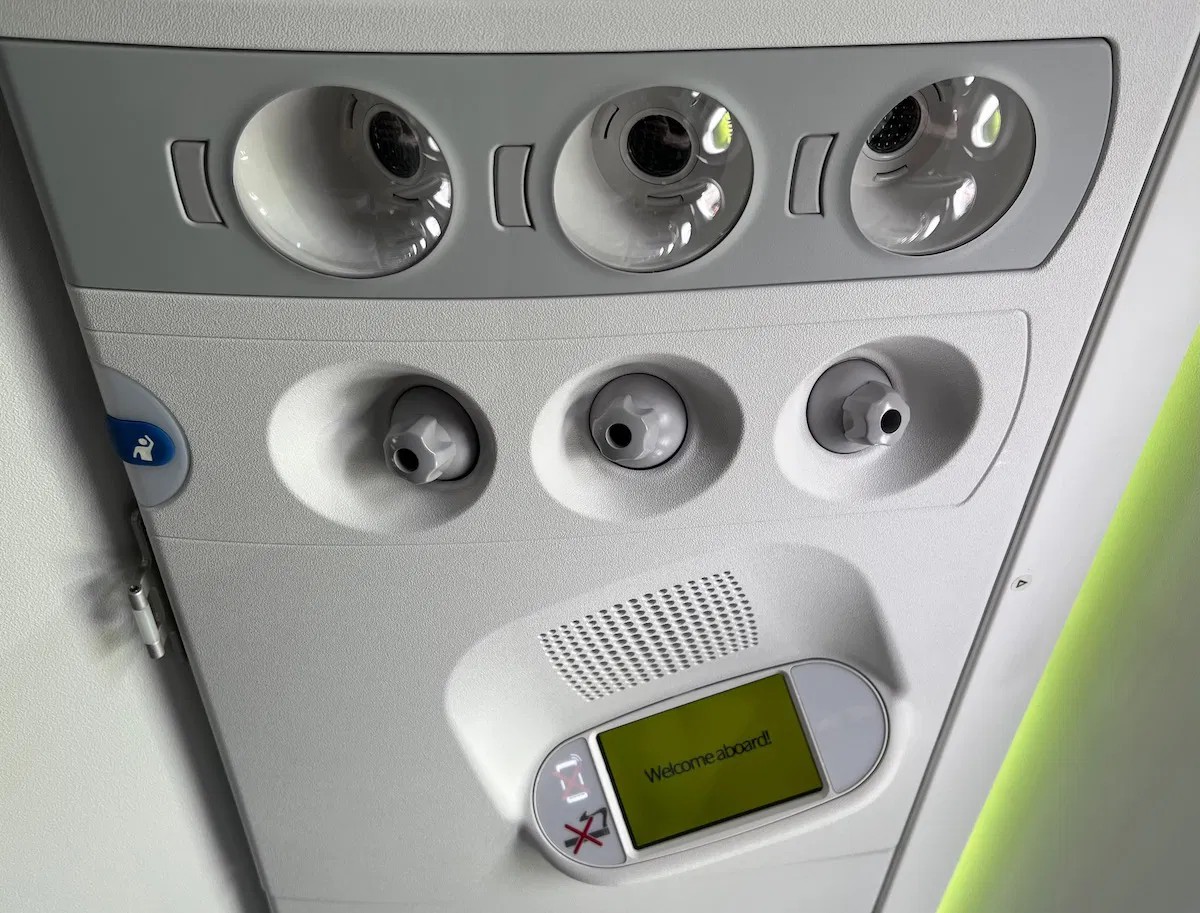
Many airlines prioritize passenger experience with luxury seating, better food, and entertainment options. Yet, a surprisingly simple feature is often overlooked: individual air nozzles in overhead consoles. These allow passengers to directly control airflow, a small detail that significantly impacts comfort, especially for those who prefer cooler temperatures while sleeping.
The Value of Personal Airflow
For frequent flyers, particularly from the United States, individual air nozzles are a valued amenity. While aircraft air is filtered through HEPA systems and is generally safe, the sensation of directed airflow can combat stuffiness and improve sleep quality. Passengers have different temperature preferences, and personal control is a valuable addition.
Modern aircraft manufacturers offer this as an option, but airlines don’t always include it. For instance, Virgin Atlantic’s Airbus A350s have them, while British Airways’ versions do not.
Why Airlines Don’t Always Install Them
The primary reason airlines skip this feature is cost. Though the exact price is unclear, adding air nozzles requires additional parts, wiring, and potential maintenance. Weight is also a factor, though marginal. However, it’s not necessarily about the money: some airlines simply don’t see the demand.
There’s a regional bias at play. Executives in Asia and Europe may assume passengers prefer warmer sleeping conditions, and thus skip the option during aircraft orders. Spirit Airlines includes them on its A321s, while Singapore Airlines omits them on Boeing 787s, proving it’s not a universal decision.
The Bottom Line
Individual air nozzles offer a simple but effective way to customize comfort on flights. While airlines may weigh the costs, the fact that even low-cost carriers include them suggests it’s not a major expense. Ultimately, the decision comes down to whether executives believe passengers will notice—and appreciate—the difference.