The global travel industry is undergoing a stress test, and Asia is emerging as the region adapting most rapidly to escalating geopolitical and economic pressures. Current airspace disruptions – particularly in the Middle East – are forcing airlines into immediate, high-stakes trade-offs between flight frequency and profitability. Network planning is now a day-to-day necessity, with little margin for error. This isn’t just about where to fly, but whether to maintain schedules at all costs.
Regional Routes Absorb Displaced Demand
As traditional long-haul routes become less reliable, travel flows are reorganizing across Asia. Secondary cities are gaining prominence as primary hubs come under pressure. Southeast Asia is solidifying its role as a key regional loop, while Indian outbound travel continues its expansion, though travelers are becoming increasingly price-sensitive. This shift highlights a broader trend: demand is consolidating in regions less affected by global instability.
The Shift from Volume to Value
Travelers are prioritizing quality over quantity, seeking fewer, higher-value trips. This transition is pushing hospitality towards optimizing revenue per guest rather than simply maximizing occupancy. Operators are now designing experiences around personalization and exclusivity, recognizing that scale alone is no longer sufficient.
Platforms Gain Control Through AI
Artificial intelligence (AI) and super-app ecosystems are accelerating decision-making and concentrating demand into fewer, more powerful channels. Distribution is no longer just logistics; it’s a strategic advantage. Platforms that can quickly adapt to shifting preferences and offer seamless booking experiences will dominate.
Policy and Investment Align with Change
Governments are actively recalibrating visa policies, bilateral agreements, and tourism strategies as economic tools. Capital is flowing into infrastructure that supports connectivity, demand-controlling platforms, and operators prepared for volatility – not just stability. This indicates a recognition that travel resilience now requires proactive investment in adaptability.
Why Focused Insight Is Critical Now
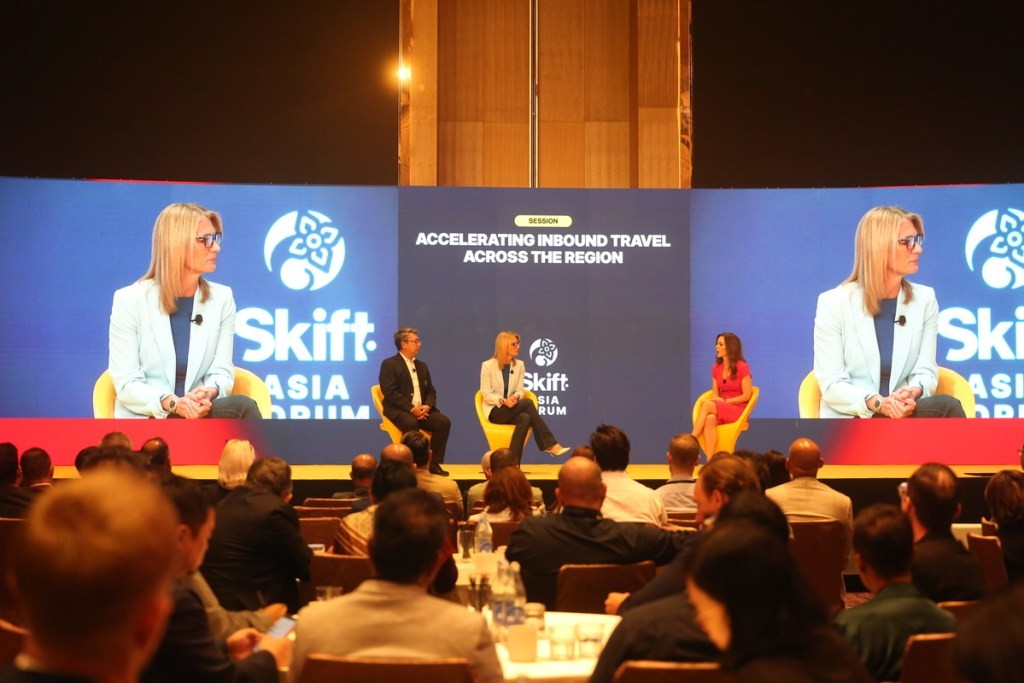
In times of rapid change, assumptions become obsolete quickly, and decisive action is paramount. Skift Asia Forum is designed to provide direct, actionable intelligence into how leading travel companies are restructuring routes, pricing strategies, and partnerships.
“The current environment demands market-level insight. Asia is where the industry is reorganizing fastest, and leaders must understand these changes to stay competitive.”
The forum will offer a clear view of demand consolidation and access to key decision-makers actively reshaping the region’s travel landscape. For those responsible for network strategy, market expansion, distribution, or capital allocation, these shifts are already impacting their businesses.
Asia is not just weathering the storm; it is actively building a more resilient travel future. The Skift Asia Forum in Bangkok this April will provide the insights needed to navigate this new reality.