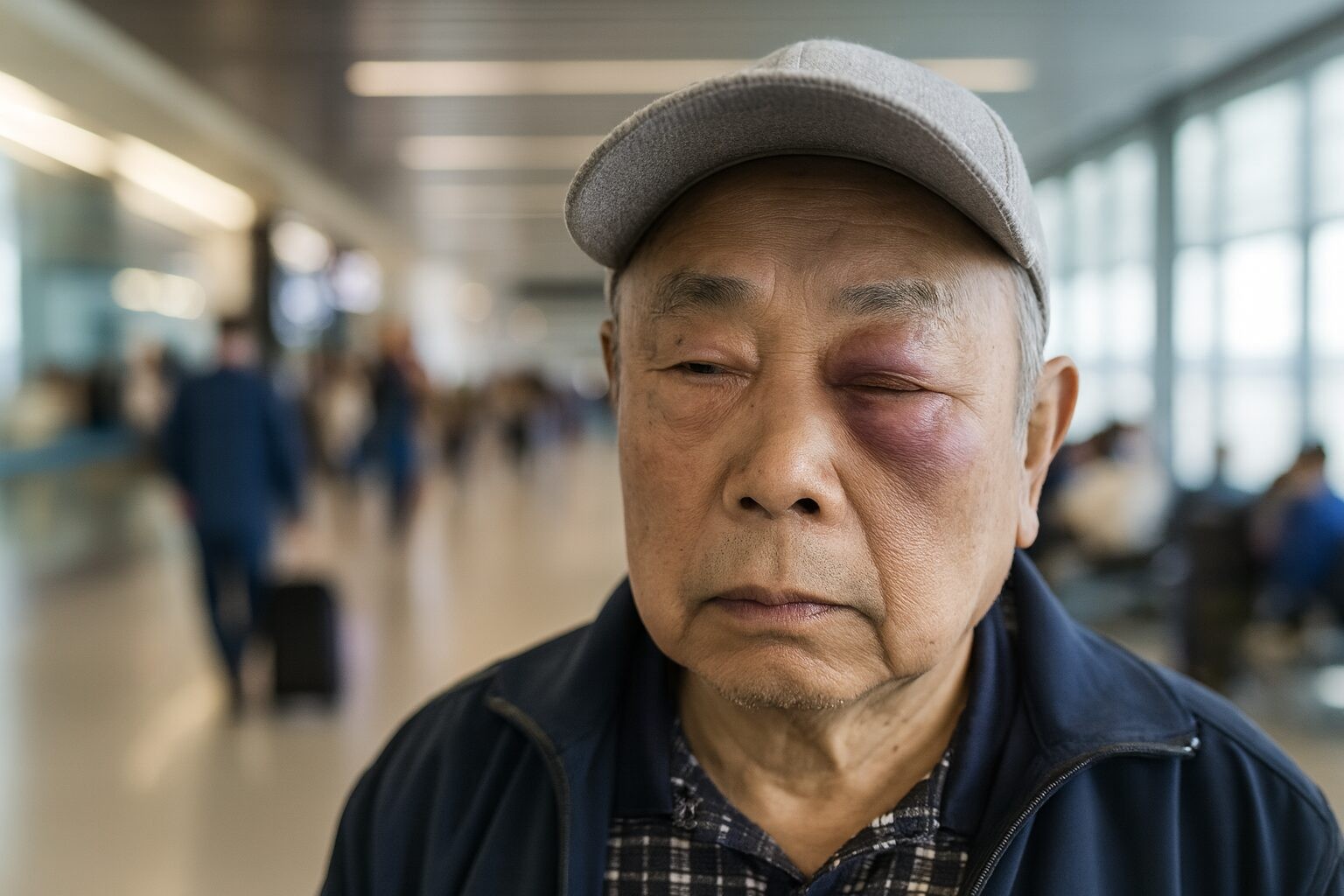
A WestJet airline agent physically attacked a 73-year-old passenger after the man attempted to record an interaction regarding a forced flight change. The incident, which left the elder man with a swollen eye, highlights the escalating tension between airlines and passengers asserting their rights to document service disputes.
Forced Flight Change and Recording Dispute
Jason Huang and his family were scheduled to fly from Edmonton to Toronto when their boarding passes were unexpectedly switched for a later flight. WestJet had swapped aircraft, leading to involuntary bumping of passengers, but offered no immediate compensation. When Huang began recording the conversation with airline staff, an agent threatened to call the police if he didn’t stop.
The situation escalated when Huang’s father joined in, filming the interaction. The agent then grabbed the 73-year-old’s phone and, in the process, struck him in the eye. This occurred despite Canada’s one-party consent laws for recording private communications, meaning passengers can legally record conversations they are part of without informing others.
Compensation and Passenger Rights
Huang sought to document the interaction to support a claim under Canada’s Air Passenger Protection Regulations. When airlines bump passengers for reasons within their control, such as aircraft swaps, compensation is legally required. WestJet initially denied any obligation, prompting the recording attempt.
Canada’s regulations differ from those in the U.S., where airlines are often exempt from involuntary denied boarding compensation when swapping aircraft. However, Canada mandates compensation if the swap is for commercial reasons rather than safety.
The Importance of Passenger Recordings
This incident underscores the critical role of passenger recordings in holding airlines accountable. A recent Canadian court ruling emphasized the importance of such evidence, stating that video footage can reveal abusive customer service. The judge in a separate case, Air Transat, condemned the airline for demanding passengers delete recordings before being allowed to fly.
Without passenger videos documenting incidents like the United Airlines dragging of David Dao in 2017, airlines may not have revised their denied boarding practices, nor would the Department of Transportation have updated its rules.
WestJet issued a standard apology and stated the incident was “promptly investigated internally.” However, the attack raises questions about the airline’s handling of passenger disputes and its willingness to escalate conflicts rather than address legitimate concerns.
Ultimately, this case serves as a stark reminder of the power imbalance between airlines and passengers and the necessity for passengers to document their experiences to protect their rights.