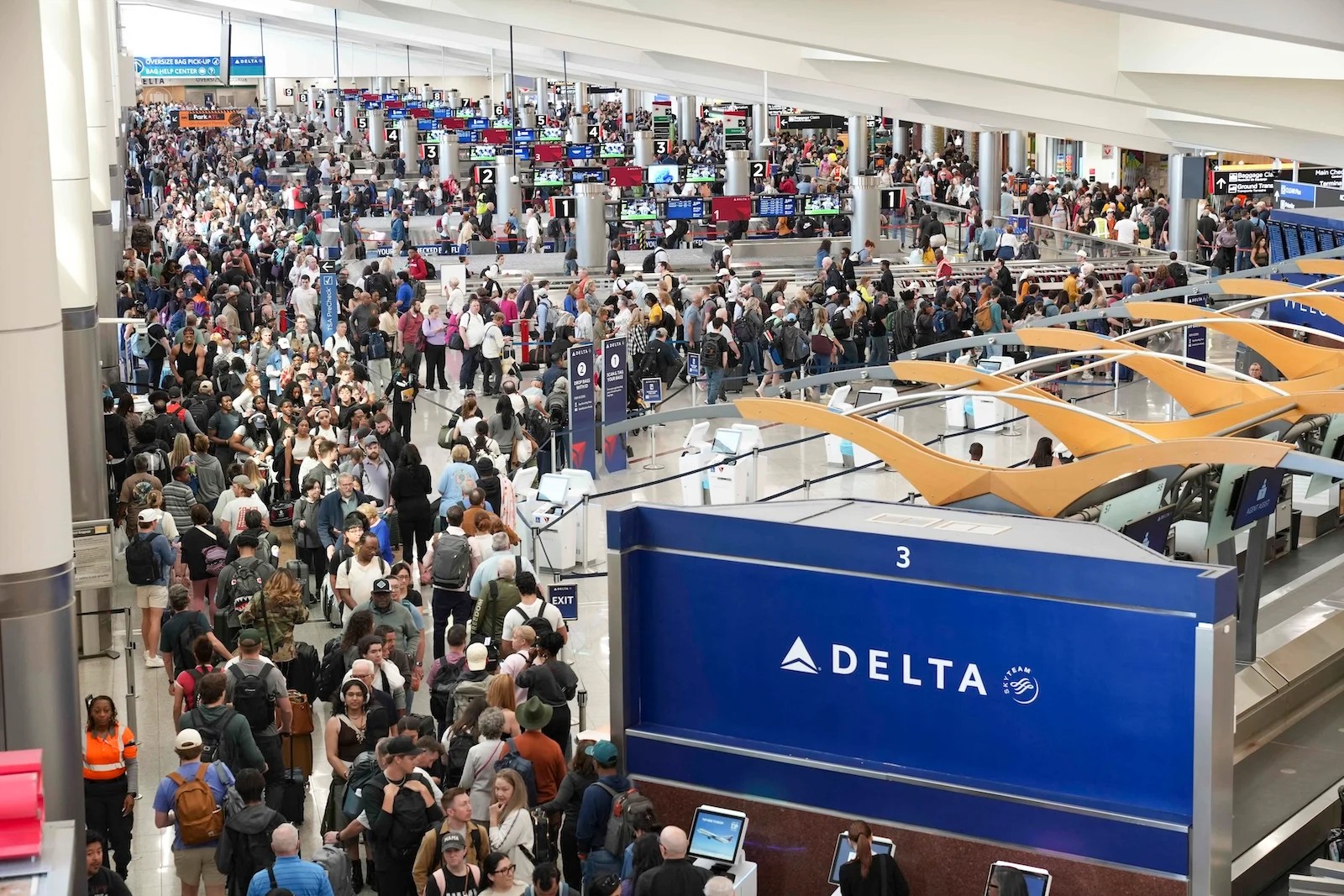
Lengthy security lines at major US airports have become a defining feature of spring travel, with backups stretching for hours in cities like Houston, Atlanta, and New York. The situation has forced airlines to delay flights, and even prompted the deployment of Immigration and Customs Enforcement officers to overwhelmed terminals. However, while many passengers face chaos, nearly two dozen airports across the country are bypassing these disruptions entirely – thanks to a little-known program that relies on private security contractors.
The Screening Partnership Program: A Quiet Solution
The key lies in the TSA’s Screening Partnership Program (SPP). This initiative allows select airports to outsource security checkpoint operations to private companies. These contractors are still bound by all TSA regulations (the 3-1-1 liquids rule remains in effect), but unlike federal TSA employees, they are unaffected by the ongoing partial government shutdown at the U.S. Department of Homeland Security. Consequently, they continue to operate checkpoints with minimal delays.
This approach is not new. San Francisco International Airport (SFO) notably publicized its smooth operations, stating it is “not experiencing” the long lines plaguing other hubs. SFO is the largest airport to fully utilize private screeners, but it’s part of a wider trend: 20 airports nationally currently rely on private security through the SPP.
The List of Airports with Private Security
Here’s the full list of airports that use the TSA’s Screening Partnership Program:
- Atlantic City International Airport (ACY), New Jersey
- Charles M. Schulz Sonoma County Airport (STS), California
- Dawson Community Airport (GDV), Montana
- Frederick Douglass Greater Rochester International Airport (ROC), New York
- Glacier Park International Airport (FCA), Montana
- Great Falls International Airport (GTF), Montana
- Havre City-County Airport (HVR), Montana
- Kansas City International Airport (MCI), Missouri
- L. M. Clayton Airport (OLF), Montana
- Orlando Sanford International Airport (SFB), Florida
- Portsmouth International Airport (PSM), New Hampshire
- Punta Gorda Airport (PGD), Florida
- Roswell Air Center (ROW), New Mexico
- San Francisco International Airport (SFO), California
- Sarasota Bradenton International Airport (SRQ), Florida
- Sioux Falls Regional Airport (FSD), South Dakota
- Sidney-Richland Regional Airport (SDY), Montana
- Tupelo Regional Airport (TUP), Mississippi
- Wokal Field-Glasgow Valley County Airport (GGW), Montana
- Yellowstone Airport (WYS), Montana
What This Means for Travelers
If you’re flying in the coming weeks, consider flying out of one of these airports if feasible. You may be able to arrive at your normal check-in time, avoiding the four- or five-hour early arrival recommended by some affected hubs. If possible, check whether you can change your flights to originate from one of these airports, even if it incurs a small extra cost.
The SPP offers a simple workaround to the current travel disruptions. By shifting to airports with private security, travelers can sidestep the worst of the chaos – a solution that highlights the vulnerabilities of relying solely on a federal system during a shutdown.