


It was 6 a.m. on a Tuesday. July 21.
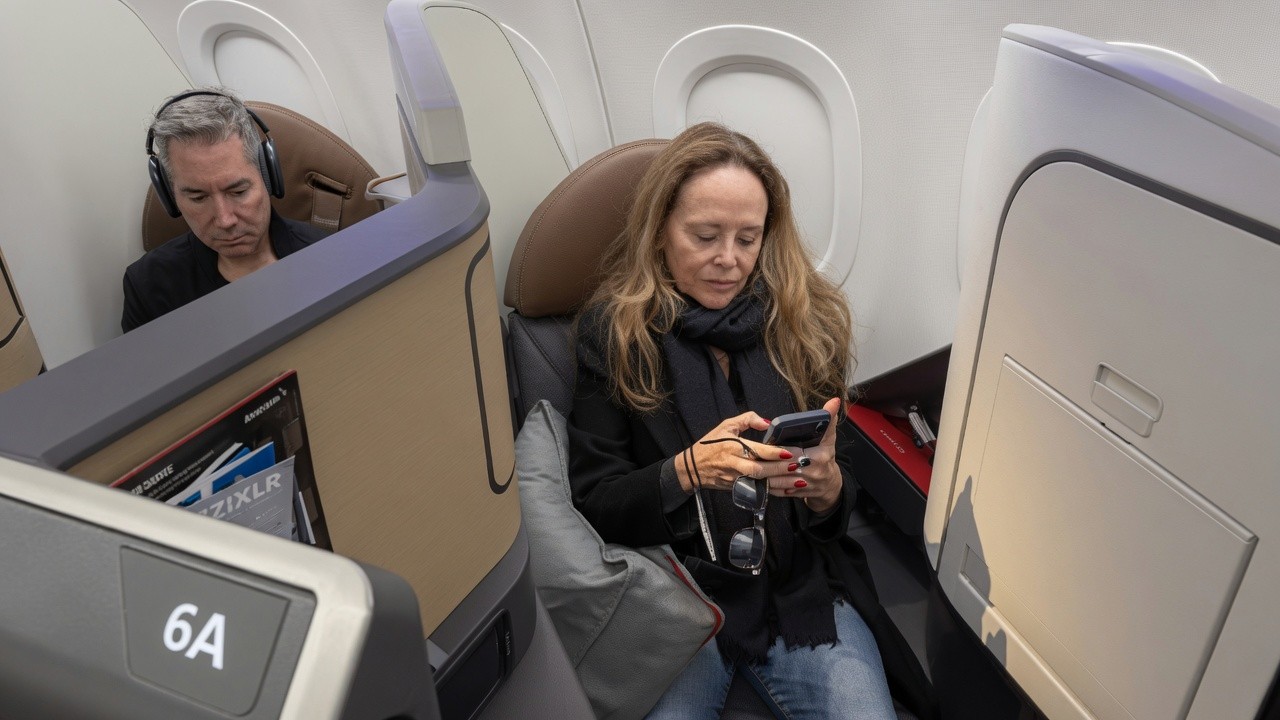
American Airlines flight AA171 had just pushed back from JFK, bound for Los Angeles. The Airbus A321neo hummed with the low-level anxiety of early-morning travelers. Inside, a passenger wearing an AAdvantage Executive Platinum status card had done everything right. He’d secured a complimentary upgrade. He had ticket 6A. It was a lie-flat business class suite.
He put on his earplugs. He pulled a beanie over his eyes. He tried to sleep.
He did not expect to be woken up by a stranger demanding he vacate his own ticketed seat. He did not expect the crew to suggest he either accept an economy downgrade or walk off the plane. He did not expect to end up in a physical standoff over a reclining mechanism.
And yet, there he was. Half-awake, indignant, and staring down a woman who had already made herself at home in 6A.
The Upgrade That Became a Trap
The passenger’s account is messy, fragmented by sleep and stress. But the timeline holds up enough to trace the failure points.
He had boarded a new plane—service history just seven months old. Seat 6A was his. Or it should have been.
A woman seated in 3F discovered her seat controls were broken. The recline function was dead. Instead of calling maintenance or being re-seated to a functional suite elsewhere on the plane, she apparently flagged a flight attendant. She wanted to move. Specifically, she wanted to move to 6A.
A crew member approached the sleeping passenger. They woke him. They asked if he would switch.
Crucially, they didn’t tell him why.
He agreed, half-coherent. Then a second attendant stepped in. They clarified that the replacement seat was defective.
He immediately revoked his consent.
At this juncture, proper procedure should have kicked in. The airline owes a passenger the cabin they paid for—or were upgraded to—until the end of the journey. If 3F was broken, that is a maintenance issue. Not a passenger dispute.
Instead, the crew let the woman move. She gathered her belongings. She sat in 6A. She spread out. She waited for him to accept reality.
When he refused? She doubled down.
“You were moved, sir,” she reportedly told him. As if he had signed a waiver. As if her premium fare gave her seniority over a Platinum elite.
“You Almost Got Robbed, Bro”
The situation devolved from logistical error to interpersonal conflict.
The passenger recorded the exchange. The audio is jagged.
“You’ve got to get out of my seat,” he told her.
“I’m going to UCLA,” she replied.
A nearby passenger couldn’t believe what was happening. “Bro, you almost got robbed,” they shouted. “You saw that? You almost got robbed.”
The victim responded with the only defense available to an insulted alumni of USC: “I went to USC, so that makes even worse.”
It’s a stupid detail. It’s also the kind of detail that proves this was personal. This wasn’t about seating charts anymore. It was about turf. And in the confined, pressurized box of a business class cabin, turf is the only currency that matters.
The woman didn’t budge. The flight attendants didn’t enforce the manifest. They offered him a binary choice: economy or get off.
He didn’t get off. He put his earplugs back in. He slept through the rest of the argument.
Where American Airlines Fell Short
This is not a “Karen” story. It’s an airline liability story.
The term “Karen” has lost all semantic precision. It’s now shorthand for anyone who makes a scene. But looking at the mechanics here, the entitlement isn’t the problem. The lack of policy enforcement is.
Let’s break down the operational failures:
- Seat Assignment Integrity: Once a passenger is assigned to a suite, the seat is theirs. Period. Upgrades can be reversed if the original cabin is fully operational elsewhere. They cannot be reversed because the upgrade recipient is being bullied by a disgruntled passenger in a broken seat.
- Maintenance Ignored: If 3F’s recliner was broken, American should have dispatched a mechanic to fix it. Or moved the passenger in 3F to an unoccupied functional suite. Letting them roam like a gazelle in a predator zone is negligent.
- Crew Inaction: Allowing a passenger to occupy a seat they were not assigned to—while the original ticket holder watches—is a failure of cabin management. It turns crew into bystanders. It encourages the behavior.
If the airline had forcibly moved the woman back to 3F (broken or not) while offering the Platinum member compensation or a different functional seat, the plane would have left on time. No videos. No “robbery” accusations. No ego trips.
Compensation and the Contract of Carriage
Here is the cold, hard reality of what should have happened to the Platinum passenger.
If American Airlines effectively downgraded him—by allowing another passenger to usurp his suite without his final consent—that is an involuntary downgrade.
Under American’s Contract of Carriage, passengers facing an involuntary downgrade are entitled to a refund. Specifically, the airline has stated they provide a 40% refund on the fare difference in such cases.
But here, the math is weird. He paid nothing extra for the upgrade. His base fare was Coach. The upgrade was complimentary. So the “fare difference” is zero.
Does that mean he gets nothing?
No. That’s a loophole. But the spirit of the contract—and recent Department of Transportation pressures—suggests that being bumped from a paid product, even a free upgrade, warrants restitution. He lost the lie-flat seat he was promised. He endured a harassment incident. He flew in his original seat but with a stranger in his space.
A good customer service representative would have offered him vouchers, status credits, and an apology. They wouldn’t have let him sleep through a mutiny.
The Aftermath
The plane arrived in L.A. at 8:46 a.m. Thirty minutes late.
The passenger got his seat back eventually. Or rather, the situation resolved itself because the plane landed. There was no police intervention. No deplaning. Just exhaustion.
One travel blog, One Mile at a Time, suggested the passenger was “bullied his way back into the original seat.” That’s a convenient narrative. It absolves the airline of incompetence by blaming the victim for being stubborn.
But if he had been formally downgraded to Economy and refused to leave Business, he would have been offloaded. Period. The fact that he stayed implies the crew never actually cut his contract. They just hoped he’d get tired of arguing.
The woman who took the seat? She flew to UCLA. Did she get offloaded? Probably not. Did she get compensated? Unlikely.
In the end, American Airlines managed to satisfy no one.
The Platinum member got a ruined sleep and a story to post online. The woman in 3F got a functional seat but likely no apology for her aggressive behavior. The airline lost time, goodwill, and potentially faced scrutiny over their handling of a known mechanical defect.
The recliner still doesn’t work on 3F, we assume. The crew is probably still shaking. And the passenger in 6A?
He probably checked his bank account for vouchers that haven’t arrived yet.
Or maybe he’s just tired.


