Most tourists walk right past the official residence of the Bulgarian Prime Minister without looking up. They are too busy chasing the massive golden domes of the Alexander Nevsky Cathedral or hunting for the best banitsa in town. But if you pause near the presidential palace, you will find two structures that define Sofia’s complicated soul.
One is modest. The other is ancient.
Why Visit St. Petka Church in Sofia?
Located in one of the city’s most prestigious districts, Aziz St. Petka Kilisesi sits in the shadow of power. It is only a short walk from the Prime Minister’s office. Despite its high-profile address, the church refuses to be grand.
It was built in the 11th century as a humble monument to St. Petka. Do not expect a cavernous space. It is small. Intimate. The walls were painted during the Ottoman occupation, preserving layers of history that survived centuries of regime changes.
Inside, you are not just looking at religious art. You are standing in the presence of national memory. The tomb of Vasil Levski, Bulgaria’s national hero and apostle of freedom, rests here. His presence gives the space a weight that no amount of gold leaf can match.
The logistics are simple. It costs 2 Lev (roughly $1.10 USD or 35 TRY) to enter. That is a small price for a direct line to 19th-century Bulgarian resistance.
The History Behind St. George Rotunda
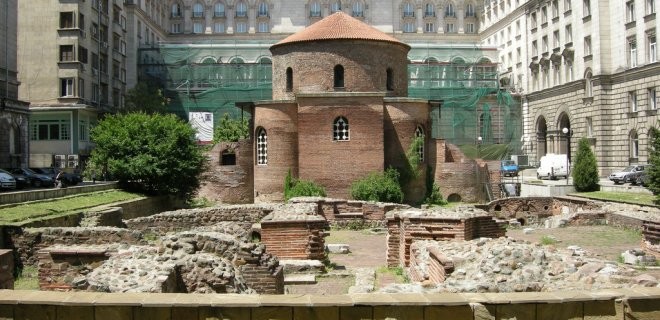
If St. Petka is about the Ottoman era and national heroes, the Aziz St. George Kilisesi is about deep roots.
This building is the oldest surviving structure in Sofia. It dates back to the 4th century, built when Roman soldiers were still marching through these streets. While it is small compared to modern cathedrals, its age makes it a landmark of historical importance.
The building has seen it all. When the Ottoman Empire took control of the region, the structure was converted into a mosque. It underwent minor restorations during this period. The conversion lasted until the Ottomans lost their grip on the land. Once Bulgaria regained sovereignty, the building was returned to its original purpose.
Today, there is no entrance fee. It is free to walk inside and touch walls that have stood for sixteen hundred years.
Practical Tips for Your Itinerary
These two sites are close to each other. You can visit both in under an hour.
- Timing: Go early in the morning. The light hits the ancient stone of St. George’s rotunda beautifully. The streets around St. Petka are quieter before the lunch rush.
- Cost: Bring small change for St. Petka. St. George is free.
- Context: Read up on Vasil Levski before you go. Knowing who lies beneath the floor of St. Petka changes how you see the paintings on the walls.
Sofia is a city of layers. You peel back one, and you find another. These churches are not just places of worship. They are time capsules. They show you who ruled here, who resisted, and who stayed.
The next time you are in the center of Sofia, skip
Sofya’daki rotanızda en belirgin duraklardan biri olacak. Adı Banyabaşı Camii. 1567’de tamamlandı. O dönemdeki diğer yapıtların çoğu zamanın veya savaşın acımasızlığıyla silinip gitti. Bu cami ise ayakta kaldı. Neden? Mimar Sinan’ın imzası var üstünde. Osmanlı mimarisinin zirvesi sayılan Sinan’ın Balkanlar’daki nadir eserlerinden biri burası.
Neden Bu Camiye Gitmelisiniz?
Sofya’nın tarihi dokusunda, Osmanlı’dan kalma izler artık her köşede görünmüyor. Bazı yapılar restore edildi. Bazıları yok oldu. Banyabaşı Camii farklı. Orijinal haliyle günümüze ulaşabildi. İçerisi sade. Ama detaylarda Sinan’ın ince hesapları okunur. Kubbe sistemi, ahşap minber, kalem işleri… Hepsi o dönemin ruhunu yansıtıyor.
Ziyaret İpuçları
- Konum: Şehrin tarihi merkezine yakın. Yürüyerek ulaşmak mümkün.
- Ziyaret Zamanı: Namaz vakti dışındaki saatlerde ziyaret edebilirsiniz.
- Giriş: Genellikle ücretsiz. Ancak küçük bir bağış beklenir.
- Giysi: Kadınlardan başörtü istenebilir. Yanınızda bir fular bulundurmak iyi fikir.
- Fotoğraf: İç mekan sakin ve aydınlık. Dış cephesinden çekim yapmak da güzel.
Sinan’ın Balkanlar’daki İzleri
Bu cami, Sinan’ın İstanbul dışındaki önemli çalışmalarından biri. Balkanlar’daki Osmanlı mimarisi incelendiğinde, bu tür yapıların stratejik ve kültürel önemi daha net görülür. Sofya’yı gezerken sadece Hristiyan kiliselerine değil, bu Osmanlı mirasına da şans tanıyın.
The Real Story Behind Sofia’s Oldest Park
Look at Sofia City Park and you see green space. You see families picnicking. You see joggers. But the ground beneath your feet holds a different memory. This isn’t just a place to rest. It was built for a specific, somewhat arrogant reason.
The park dates back to the aftermath of the 93 War (the Russo-Turkish War of 1877-78). The Russians won. And in their wake, they left a monument to their own ego.
A Gift to Tsar Alexander II
The original name tells the whole story: Alexander II Garden.
The Tsar of Russia visited Sofia after the war. He wanted to be impressed. The local builders, eager to please their new overlords, threw up this park specifically to make the Tsar feel good. It was a power move disguised as public infrastructure.
Over time, the imperial naming faded. The “City” part took over. But the origin remains embedded in the park’s layout. You aren’t just walking through nature. You are walking through a diplomatic gesture.
Why It Matters Today
The park has evolved. It’s no longer just about Russian prestige. It’s the heart of Sofia’s recreational life. But knowing why it exists changes how you see it.
- The View: The park sits on a hill. You get a vantage point over the city that wasn’t intended for tourists. It was intended for observation.
- The Atmosphere: It’s quieter than other green spaces. Less frantic. More reflective.
- The History: Every tree was planted with a political agenda in mind. Now, those trees provide shade for everyone.
What to Actually Do Here
Don’t just walk through. The park is large. It demands engagement.
- Find the statues. The original Russian-era monuments are scattered around. They’re not just decorations. They’re artifacts of a complex relationship between two empires.
- Walk the perimeter. The edges are less crowded. You can see the city sprawl in a way that feels immediate.
- Visit the zoo. It’s small. It’s old-school. But it fits the park’s character. No glossy exhibits. Just animals in spaces that feel lived-in.
Timing Your Visit
Go in the late afternoon. The light hits the hills differently. The shadows stretch. The park transforms from a daytime playground into something more atmospheric.
You’ll see locals here. Not tourists. Locals. They know the paths. They know the benches. They know where the wind is strongest.
A Note on Access
The park is free. No tickets. No gates. Just open space. But the history inside isn’t free. It’s layered. You have to read it.
Some benches face the city. Some face the hills. Where you sit determines what you see. And what you see determines what you feel.
The park is old. It’s seen wars. It’s seen occupations. It’s seen revolutions. It’s still here.
So is Sofia.
The question isn’t just what you see. It’s what you ignore.
The Iconic Center of Sofia’s Skyline
Every city has a face. For Sofia, that face is unmistakably the Alexander Nevsky Cathedral. You can’t miss it. It dominates the center of the city. Built in the Byzantine style, the structure is a heavy, golden statement against the Bulgarian sky. It wasn’t built for beauty alone. It stands as a monument to Russian soldiers who died in the Russo-Turkish War of 1877. Construction finished in 1912. The scale is hard to grasp until you are standing in the shadow of it. The nave stretches fifty-three meters long. The domes are clad in gold.
Navigating the Interior and Exterior
Visiting the cathedral requires a bit of strategy. It is vast. The main dome rises high above the congregation space. Inside, the air is cool and smells faintly of incense. The mosaics cover every inch of the walls. They depict saints and biblical scenes. The light filters through the windows. It creates a specific atmosphere. Serious. Quiet.
The interior is a dense tapestry of religious art. It overwhelms the senses before it calms them.
Outside, the grounds are paved. There are benches. You can sit and look up at the gold. The contrast between the white stone and the yellow metal is sharp. It is a classic photography spot. Tourists flock here. Locals pass through. It is a meeting point.
Timing and Logistics
When should you go? Morning is best. The light hits the domes directly. The sun reflects off the gold. It glows. By noon, the crowds arrive. They come with guidebooks. They come with selfie sticks. If you want quiet, wait until late afternoon. The light softens. The shadows lengthen.
Entry is free. This is important. Many cathedrals charge a fee. This one does not. You just need to dress appropriately. Shoulders covered. Knees covered. No loud talking.
Why It Matters Beyond the Postcard
People visit for the photo. They leave with a memory of the size. But the history is what gives it weight. The war it commemorates changed the region. The Russian soldiers are buried in the crypt below. You cannot visit the crypt. You can only imagine what lies beneath the floor.
Is it worth the detour? If you are in Sofia, yes. It is central. It is accessible. It is the anchor of the city. Without it, Sofia is just a collection of streets. With it, Sofia is a story.
The gold fades slightly in the rain. But the shape remains. Solid. Permanent. Like the memory of a war that ended over a century ago.
Why the National Gallery of Sofia Is Worth the Detour
You are walking away from the golden domes of the Alexander Nevsky Cathedral. The air is still thick with incense and tourist chatter. But just a few blocks away, the vibe shifts. The National Gallery of Sofia isn’t just another museum. It is Europe’s largest art gallery complex, and it holds a mirror to Bulgaria’s soul.
Most visitors rush past. They see a long, sprawling campus rather than a single building. They miss the point. This isn’t a place for quick selfies. It’s for staring.
The collection is dense. It focuses heavily on Orthodox Christian art, but not the glossy, tourist-trap kind. You will see icons that have survived wars, fires, and political purges. The walls are lined with works from the 17th and 19th centuries. These aren’t just paintings. They are historical documents rendered in wood and pigment.
What You Actually See Inside
The gallery is split into different sections across several buildings. Don’t try to see it all in an hour. You won’t.
The core of the collection revolves around the Bulgarian National Revival period. This is when art stopped being purely religious and started becoming nationalistic. You will see portraits of merchants who funded churches. You will see landscapes of the Balkans before the borders were drawn by politicians.
“The gallery is less about aesthetic perfection and more about historical survival.”
Many pieces date back to the 17th and 19th centuries. The 17th-century icons are rougher. Darker. The brushwork feels urgent. The 19th-century works are brighter. They reflect a country waking up from Ottoman rule. The contrast is jarring. It works.
The Cost and The Logistics
Let’s talk numbers. The entry fee is 6 Lev. That is roughly 9 Turkish Lira. In modern currency terms, it is about $3.50 USD. It is cheap. Unbelievably cheap for a major European cultural institution.
You need to buy tickets at the main entrance. There are usually two or three buildings involved. Check the map when you arrive. Some exhibitions rotate. Sometimes you walk into a wing expecting oil paintings and find only archival photographs of 19th-century life. That’s fine. It’s often more interesting.
Practical tips for the visit:
- Timing: Go early. The light in the older buildings is low. Artificial lighting can wash out the colors of the icons. Morning light is cooler. It renders the gold leaf on the icons differently.
- Location: It is very close to Alexander Nevsky Cathedral. You can walk there in five minutes. Use that time to stretch your legs. The walk is flat. Easy.
- What to look for: Don’t just scan. Find one icon. Stand in front of it for five minutes. Notice the cracks in the wood. Notice the layers of varnish. That is where the story is.
Why This Matters For Your Trip
Most travelers go to Sofia for the churches. They see the red-brick beauty of St. George and call it a day. They miss the context. The National Gallery provides the context. It explains why the churches look the way they do. It explains the colors. The deep reds. The gold
The Coast Road: Why It’s Not Just a Drive, It’s a Decision
You don’t take this route because you have time. You take it because you need to remember how to look at the horizon.
The coastal highway between Cape Town and Mossel Bay is less about the distance and more about the pauses. The asphalt is good, mostly. But the real currency here is the side road you almost miss. The one marked with peeling paint and a sign that says “Lookout” in faded blue letters.
Most tourists stick to the N2. It’s efficient. It’s safe. It gets you from point A to point B with minimum friction. But if you’re planning a road trip along the Garden Route, efficiency is the enemy of memory.
Where to Stop When the Map Ends
The primary reason people drive this stretch is the Garden Route road trip itinerary, but the real magic happens in the gaps between the official stops.
Take Plettenberg Bay. Everyone goes to the main beach. It’s crowded. It’s loud. The ice cream lines stretch for twenty minutes. Skip it for now.
Instead, head south to Robberg Nature Reserve. It’s a short drive. The entrance fee is nominal. The hike takes two hours. You’ll see seals. You might see whales if you’re lucky and the season is right (June to November). But mostly you’ll see water. Endless, shifting, gray-blue water. The air smells like salt and dried kelp. It’s grounding.
“The best views aren’t the ones you pay for. They’re the ones you stumble into.”
From there, don’t rush to Knysna. The lagoon there is beautiful, yes. The oysters are legendary. But the traffic into town is a nightmare. Arrive early. Or arrive late. The midday sun beats down on the asphalt, turning the drive into a sauna.
The Logistics of Slow Travel
If you’re wondering how long to spend on the Garden Route, the answer depends on your tolerance for boredom.
Three days? You’ll see the highlights. You’ll take the photos. You’ll eat the oysters. You’ll leave feeling like you’ve done the thing, but not felt the place.
Five days? That’s the sweet spot. That’s enough time to let the rhythm of the coast settle in. To eat breakfast twice. To get lost in Knysna’s forest trails. To watch the light change on the Tsitsikamma mountains.
The costs add up, obviously. Accommodation in peak season (December to February) can double or triple. Book weeks in advance. If you’re traveling in the shoulder months (April-May or September-October), you’ll find better rates and quieter roads. The weather is unpredictable, sure. You might get rain. But you’ll also get clouds that break just in time for sunset, painting the sky in violent shades of orange and purple.
Which Route Offers the Best Scenery?
It’s not the coastal road for the whole stretch.
Cut inland through the Tsitsikamma Forest. The trees are huge. Ancient. The air is cool and damp. The silence is heavy. It feels like a different planet. This is where you reset.
Then drop back down to the coast at Storms River. The boat ride to the Mouth is worth the