Forget the crowds along the coast for a moment. Heading into the interior of northwestern Spain, the Minho River flows through the landscape near Ourense. This city is the heart of Galicia and one of the most underrated destinations in Galicia. It is located south-southeast of La Coruña, hidden on the east bank of the river. The name itself expresses the main attraction of this city. It comes from hot springs that are characteristic of its history. The Romans called it “Aquae Originis”. They called it “Urentae”. This roughly means “burning water”. Although the spring still gushes today, it is mainly used for domestic use rather than as a luxury bath as it once was.
Crossing the Stone Arches
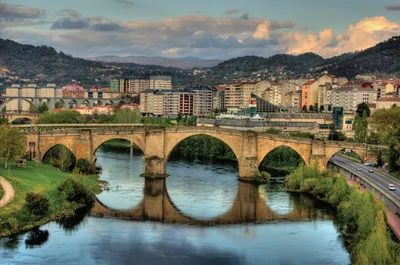
When you come to Ourense, you cannot miss this bridge. Probably one of the most impressive stone buildings in all of Spain. Bishop Lorenzo ordered its construction in 1230. This bridge has been around for centuries and has surviving floods and time and repeated repairs. The structure has seven arches. The center span is 150 feet (45 meters) long. Traveling there will make you feel like you have traveled back in time to the Middle Ages. The Minho River flows below, carrying the weight of history with it.
Three Layers of the City
This city does not exist in just one era. It covers three different areas. This is the medieval core and the ancient stones still live on. This was followed by a 19th century addition that revealed a different architectural rhythm. Finally, the modern border wraps around the edges, connecting modern life with the historic center. It’s easy to move between them, but the contrast is striking.
Renaissance mansion and Gothic church
Dive deeper into the medieval area and you’ll find the Palace of Oca-Valladares. Built in the mid-16th century, it is an important example of the area’s Renaissance architecture. Look closer at the facade. On display are five coats of arms of different origins from the region of Galicia. This is a visual record of the families that formed the power structure of the region.
The nearby Gothic cathedral is impressive. Founded in 572 and rebuilt in the 13th century. hangs a crucifix in Christ’s Chapel. This is not just decoration. Appreciated throughout Galicia. Pilgrims and locals alike stop here. Here faith is within reach.
History written in stone and fire
Ourense experienced destruction and rebirth. It was an important part of the Suebi Empire in the 5th, 6th and 7th centuries. Then came the Moors. In 716 they destroyed the city. It did not rise again until about 877, when King Alfonso III of Asturias ordered its reconstruction. This reconstruction laid the foundation for the present city. The former bishop’s palace is now the Provincial Archaeological Museum. If you want to understand the layers of history beneath your feet, start here.
Economy and everyday life
Although tourism is in the spotlight, the local economy works differently. Cattle breeding and agriculture are the main forces. Alongside the iron foundries, you can see sawmills and flour mills in action. The role of light industry