The cedar is on Lebanon’s flag. It’s a symbol of resilience. It’s also a ghost. The forests are gone. Almost all of them.
This isn’t just about trees. It’s about energy. In the ancient world, wood wasn’t a renewable resource in the way we think of it today. It was everything. It was fuel. It was structure. It was the engine of civilization.
As empires grew, so did their appetite for timber. The result was systematic destruction. We see the scars in Mesopotamia, Greece, Rome, and the Maya. Deforestation in the ancient world wasn’t a side effect of progress. It was a driver of it—and a cause of collapse.
The Roots of Clearance
Humans didn’t wait for cities to start clearing land. Paleolithic peoples used controlled burns to thin out forests. Fewer trees meant easier hunting. Early stone tools, like hand axes, were used to fell smaller growth. It was practical. It was survival.
When the Neolithic revolution brought settled life, the pace accelerated. People moved into river valleys. They needed space. They needed soil.
They practiced slash-and-burn agriculture. Burning trees added nutrients to the dirt. Yields went up. For a while. Then the soil exhausted itself. Erosion set in without tree roots to hold the earth. The community packed up. They moved on.
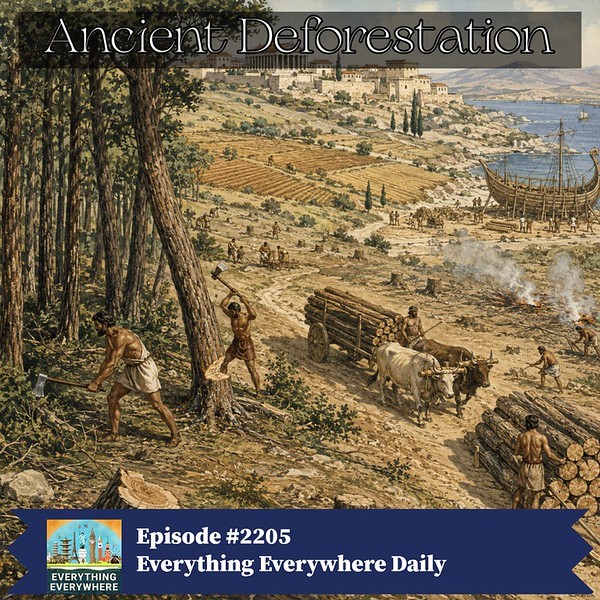
This cycle worked when populations were small. But tribes became civilizations. Needs changed. Lumber was no longer just for firewood. It was for city walls. For temples. For ships.
Mesopotamia: The Salinization Trap
Southern Mesopotamia was a problem. The land was arid. There were no big trees. No timber. Yet the Sumerians built ziggurats. They built fleets.
They looked north. To the forested highlands. They launched massive logging campaigns. When the northern woods thinned, they looked further. The Epic of Gilgamesh records King Gilgamesh journeying to Lebanon specifically to cut cedar trees.
The cost was catastrophic. Without the trees, the river valleys lost their protective canopy. Soil erosion choked the water systems. Salinity rose. Toxic salts, pushed up from deep underground, coated the surface.
The soil turned white and toxic. Agriculture failed. The cradle of civilization became a barren desert. The deforestation of Mesopotamia didn’t just damage the land; it destroyed the foundation of the society.
The Indus Valley: Fire and Floods
Further east, the Indus Valley cities of Harappa and Moenjodaro faced similar traps. To build sprawling urban centers, they needed bricks. Millions of water-resistant, baked bricks.
They needed fire. Vast amounts of it. Kilns ran constantly, fueled by surrounding woodlands. Bronze industry added to the demand. Trees disappeared.
The ecological feedback was immediate. The Indus River basin destabilized. Without the deep root systems of riverbank forests to act as natural sponges, seasonal monsoons and Himalayan snowmelt turned from manageable flows into violent, unpredictable floods.
The chaos terrified the population. Devotion spiked. People turned to Indra, the god of storms. They implored him to tame the waters. Deforestation made the gods’ job impossible.
Greece and Rome: Naval Arms Races
Greece wasn’t dependent on river irrigation like Egypt. It was a maritime power. A network of competing city-states.
If Athens built a navy, Corinth and Thebes had to match it. Triremes were massive. They required long, strong oars and hulls from quality timber. Mediterranean forests are thin. They don’t bounce back quickly.
The arms race stripped the hills bare. Plato wrote about the aftermath. He noted that only the “bones” of the land remained. The soft, rich soil had eroded away. What was left was a skeleton.
This timber scarcity forced colonization. Greeks spread across the Mediterranean, partly in search of more trees.
Rome took this to another level. They called the Mediterranean Mare Nostrum —“Our Sea.” Controlling it required a massive navy. But Rome wanted more than ships.
They wanted luxury. They built public bathhouses everywhere. These complexes were energy black holes. Furnaces ran continuously under the floors to keep water hot. They burned wood day and night.
The deforestation of the Italian peninsula had lethal consequences. Hillsides lost their ability to absorb rainwater. Erosion choked river deltas, including the Tiber. Fertile valleys turned into stagnant swamps.
The Pontine Marshes southeast of Rome became a breeding ground for mosquitoes. Malaria, carried from Africa, found a home in these human-made wetlands. Epidemics ravaged the rural population. Agriculture collapsed. Labor forces shifted. The empire bore a permanent scar.
The agriculturalist Columella warned against this under Nero. He described the stench of marshes and the swarms of insects. He understood the link between the environment and disease. Science couldn’t stop the consumption.
The Maya: Plaster and Drought
The Maya suffered one of the most dramatic ecological collapses driven by architecture.
They built pyramids and plazas. They wanted them to look pristine. They encased them in thick stucco. Plaster.
Making lime plaster requires burning limestone. Temperatures must exceed 800°C (1,500°F). That requires fuel. Wood.
When the Maya civilization began, dense tropical rainforests shaded everything. Villages were nestled in the canopy. As the architectural competition intensified, the forests vanished.
Historian Jared Diamond noted that the deforestation was likely driven by plaster production. The loss of trees had cascading effects. Forests regulate the water cycle. Without them, rainfall dropped. The naked soil baked under the sun. It dried out. It eroded.
This wasn’t just an aesthetic choice. It triggered a man-made drought. The southern lowlands became uninhabitable. The Classic Maya era ended.
The center of Maya civilization shifted north to the Yucatán Peninsula. New cities like Chichén Itzá rose. But the social contract was broken.
Mayan kings claimed divine right. They were supposed to ensure rain. When the rains failed, and the elites couldn’t provide surplus food, the people revolted. The collapse was violent. It happened in the 10th century.
The Island of Rats
Easter Island offers a stark, final case study.
Polynesians arrived in the 13th century. The island was lush. Covered in trees. Specifically, giant palms.
They stripped the island bare. Rapidly. The lack of tree cover combined with intense ocean winds caused severe soil erosion.
To make it worse, they brought rats. The rats ate the palm seeds. Reforestation became impossible.
The ecosystem collapsed. The island became a hollow shell. It’s a cautionary tale of how quickly resources can vanish when consumption outpaces regeneration.
The Ancient Oil
Wood was the oil of the ancient world.
It provided energy. It built tools. It constructed ships. It created farmland. It did the job that coal, petroleum, steel, and plastics would later do. Ancient economies were built on this dependency.
States could delay the crunch. They could import timber. They could conquer new territories to seize new forests. But they couldn’t escape the fundamental limit.
Deforestation didn’t always cause total collapse. But it was a major factor. The thirst for wood—a commodity used for almost everything—had unforeseen and devastating consequences.
We are still feeling them. In Lebanon. In Mesopotamia. In the swamps of Italy. The trees are gone. The bones of the land remain.