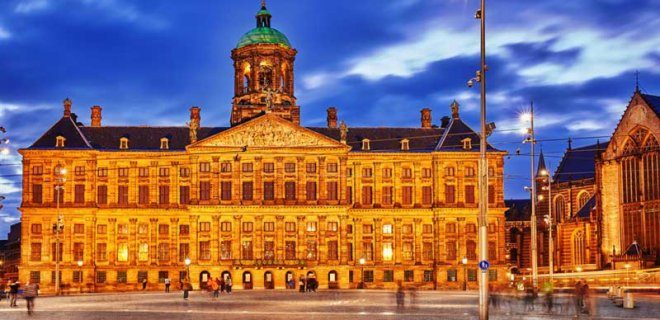
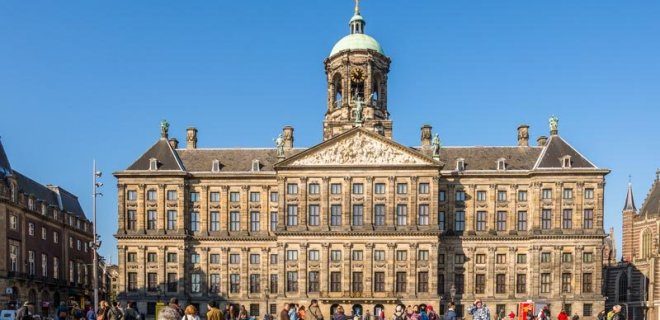
If you are walking through Dam Square, you might assume the massive building staring back at you is just another piece of grand architecture. It is not. It is the Royal Palace of Amsterdam, but for nearly two centuries, it wore a different crown. It opened as the Town Hall on June 20, 1655. It served the city’s leaders long before it served the Dutch monarchy. This distinction matters. It changes how you see the gold leaf on the ceiling and the stone beneath your feet.
The architect, Jacob van Campen, took the lead in 1648. He was tasked with building something that screamed power without saying a word. The result was a structure that cost a staggering 8.5 million Dutch guilders. That number is hard to grasp today. To put it in perspective, that was an astronomical sum for the 17th century. It bought more than just labor. It bought materials that had to travel far to get to Amsterdam.
Where the Stone Came From
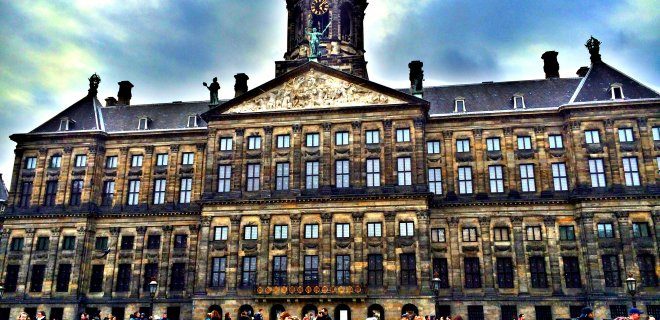
Walk up the steps. Look at the walls. You will notice a specific hue. It is not pure white. It is a warm, yellowish stone. This choice was deliberate. The stone came from Germany. It was shipped to Amsterdam specifically for this project. The material gives the palace its distinctive, earthy tone. It stands in contrast to the sharp, gray canals that surround the square.
Why did they choose this stone? It had to be durable. Amsterdam is built on water. The ground is soft. The foundation had to be solid. The yellowish sandstone provided that strength. It also looked impressive. Under the Dutch sky, it glows. In the rain, it darkens. It changes with the weather. That is part of the charm.
From Town Hall to Royal Palace
The building’s purpose shifted. It was not designed as a palace initially. It was built to house the city’s government. The Town Hall was the center of civic life. Merchants, officials, and citizens moved through its halls. The design reflected the values of the Dutch Republic. It was meant to be a symbol of civic pride. Not royal arrogance.
That changed later. The building became a palace. When did that happen? Not immediately. It took time for the structure to adapt to its new role. Today, it is used for state ceremonies. It hosts royal events. It is open to the public for much of the year. You can walk the same halls where officials once debated. You can stand where kings and queens have received guests.
Is It Worth the Visit?
For travelers planning a trip to Amsterdam, this is a key stop. It sits right in the heart of the old town. You cannot miss it. The question is whether it is worth the ticket price. Most visitors say yes. The interior is opulent. The ceilings are high. The floors are intricate. The details are worth seeing.
You should plan your visit carefully. The palace can be crowded. Go early in the day. Or late in the afternoon. The light is better for photos. The crowds are thinner. You can see the craftsmanship up close. You can read the plaques. You can understand the history.
How do you get there? It is right on Dam Square. Trams stop nearby. Buses too.
The Palace of Versailles: A Stone That Changed Color
Look closely at the stone. It isn’t the pristine white you see in brochures or the bright sunlight of a mid-July afternoon. It’s dark. Mottled. Deeply stained by centuries of rain, pollution, and history. The limestone has absorbed the weight of time, turning a somber, charcoal gray that speaks of endurance rather than elegance. This discoloration is real. It’s the visible cost of longevity.
The architecture, however, tells a different story. One of intention. Designers borrowed heavily from the Roman style, specifically the grandeur of Rome’s administrative palaces. The goal wasn’t just to build a house. It was to create a symbol. They wanted a new type of ruling edifice in the north. Something that screamed authority. Something that looked like it could stand for millennia.
“The building was frequently called the Eighth Wonder of the World.”
This wasn’t just hyperbole from admirers. It was a widely held belief. In its prime, the Palace of Versailles held the title of the largest administrative building in Europe. It dwarfed competitors. It dominated the landscape not just in size, but in sheer audacity.
Why does this matter to a traveler? Because you’re not just visiting a museum. You’re walking through a statement of absolute power. The dark stone grounds the myth. The Roman-inspired halls elevate it.
When you plan your visit, ignore the crowds in the main gallery for a moment. Step outside. Touch the walls. Feel the roughness of the aged stone. That’s where the real story lives. Not in the gold leaf of the ceilings, but in the texture of the walls that refused to stay white.
How do you experience this today? You book tickets months in advance. You arrive early. You look past the king’s bed. You focus on the scale. The building was designed to overwhelm. It still does. The darkness of the stone helps. It makes the gold shine brighter. It makes the space feel heavier. More real.
Is it worth the hype? Yes. But only if you accept that the “Eighth Wonder” is also a relic. A crumbling, magnificent relic. The Romans built for eternity. This structure did too. And time has marked it. You can see that mark. You can’t miss it.
The north sought a new center. It found one. It remains the largest administrative complex in Europe. Not by recent measure. By historical one. The stone remembers.

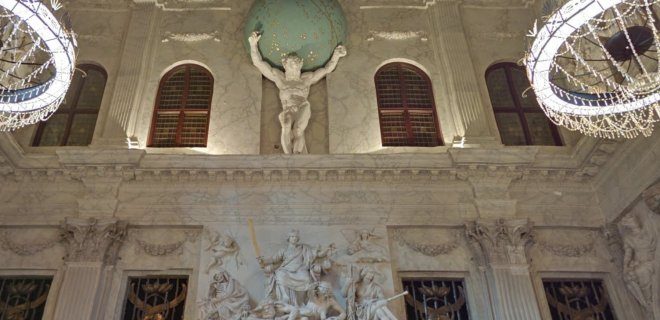
Inside the Royal Palace: A Guide to the Masterpieces
Most visitors rush through Amsterdam’s Dam Square, eyes fixed on the canal boats, only to slip into the Royal Palace with half an hour to spare. It’s a mistake. You aren’t just entering a building; you’re walking into a curated museum where the walls themselves are the art. The palace houses over 2,000 works of art, ranging from priceless paintings to heavy oak furniture that has seen kings, presidents, and revolutionaries.
You are looking at Amsterdam Royal Palace interior exhibits —a collection so dense it feels less like a tour and more like an archaeological dig. The space is divided into 17 rooms, each one a time capsule. There is no “skip” button here. You have to walk the marble floors. You have to look up at the hand-painted ceilings. You have to stand in the silence and let the weight of the bronze chandeliers hit you.
The preservation is aggressive. These aren’t dusty relics behind glass; they are active spaces. When you enter the Hall of State, the ceiling isn’t just painted; it’s a narrative. The floors aren’t just stone; they are a mosaic of status and power. The 17 rooms offer a chronological punch. You start with the Baroque opulence, move through the Neoclassical restraint, and end up in spaces that feel more like a living room than a monument.
Why does this matter for your trip? Because most tourists treat the palace as a photo op. They snap a picture of the facade and leave. But the real value is inside the Royal Palace Amsterdam main halls. The marble here is genuine. The wood is ancient. The light is filtered through high windows that haven’t changed since the 17th century. It’s a lesson in scale.
Don’t just look at the paintings. Look at the space between them. Look at how the light hits the bronze. Look at the way the rooms connect. It’s not just about seeing art. It’s about understanding the architecture of power.
The cost is reasonable. The time is short. But the impact? It lingers. You’ll walk out onto Dam Square, the noise of the city hitting you like a wall, and for a second, you’ll still feel the quiet of those 17 rooms. You’ll wonder who else stood there. You’ll wonder what they saw. You’ll keep walking.
Amsterdam Kraliyet Sarayı Giriş Ücretleri ve Ziyaret Detayları
Amsterdam Kraliyet Sarayı’na girmek için cepten ayırmanız gereken miktar, diğer birçok Avrupa başkentinin saraylarına kıyasla oldukça makul. Kişi başı 7,5 Euro ödeyerek bu tarihi mekana adım atabiliyorsunuz.
Bu fiyatlandırma, özellikle ailelerle seyahat edenler için bir avantaj. 0-15 yaş aralığındaki çocuklar saraya girişte ücretsiz kabul ediliyor. Bu da, aile bütçenizi korurken hem tarihi hem de mimariyi çocuklarınıza gösterme şansı tanıyor.
Amsterdam Kraliyet Sarayı giriş ücretleri genellikle turistik mekanların pahalı algısıyla yarışmıyor. 7,5 Euro’luk bu bilet, sadece bir kapı açmıyor; aynı zamanda 17. yüzyıldan günümüze ulaşan muazzam bir geçmişin içine açılıyor. Bu nedenle, Hollanda seyahatinizin programına mutlaka eklemelisiniz.
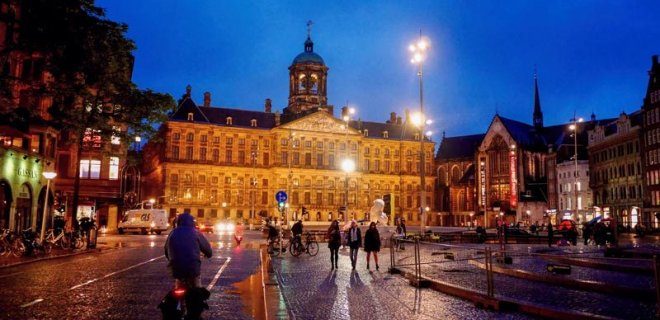
When Can You Actually See the Palace?
Most travelers assume royal palaces are open seven days a week. They aren’t. The Amsterdam Royal Palace operates on a strict, somewhat confusing schedule that can ruin a trip if you don’t check it before buying tickets. You need to plan around its limited access hours. The palace is only open to the public on Tuesdays and Sundays. That’s it. If your itinerary relies on Wednesday or Friday visits, you’re out of luck.
During those specific days, the visitor window runs from 12:00 to 17:00. This isn’t a suggestion. It’s a hard stop. You have exactly five hours to wander the state rooms, admire the chandeliers, and navigate the crowds. Arrive at 16:45 and you’re risking being turned away at the door.
There is a crucial distinction between the interior and the exterior. The grounds themselves are accessible outside of these hours, allowing you to take photos of the Neoclassical facade and walk the plaza. But the actual tour—inside the gilded halls where the Dutch royal family once held court—requires you to be there during that Tuesday or Sunday slot.
Tip: The exterior is free to access. Use any other day to scout the building and take your best photos from the Dam Square side. Save your ticket purchase for the Tuesday or Sunday visit.
Why the Limited Schedule Matters
This isn’t just bureaucracy. The palace serves multiple functions. It hosts state dinners, royal events, and official ceremonies. When those happen, the public is locked out. The Tuesday-Sunday schedule is a compromise between preserving the building’s ceremonial role and allowing tourists to see it. But it means you have zero flexibility.
If you’re visiting in peak season, crowds swell quickly. The 12:00 start time means you’ll be joining hundreds of other tourists as the doors open. By 14:00, the main halls can feel claustrophobic. If you can, aim for the earlier slots on Sundays when local traffic is lighter. Tuesdays tend to be quieter among international tourists but busier with domestic day-trippers.
What to Expect Inside
Inside, the scale is overwhelming. The ceiling frescoes, the marble columns, the sheer weight of history—it hits you hard. The palace is located right on the Dam Square, the historical heart of Amsterdam. Its location means you’re often juggling street performers, tour groups, and cyclists just to get to the entrance. Once inside, however, the noise fades. The acoustics change. You’re in a different world.
The tour itself is self-guided. You get a map or an audio guide. There are no docents herding you. This freedom is good if you hate rushing, but bad if you get distracted by the tapestries. You can easily spend two hours here and still feel rushed. Plan accordingly.
Don’t expect the palace to be a typical museum. It’s a working royal residence and a national monument. The artifacts aren’t just displays; they’re part of an active heritage. The difference is palpable. You’re not just looking at old furniture. You’re standing in rooms where kings and queens actually lived and died.
Logistics and Costs
Tickets usually cost around €12.50 for adults. That
Getting to the Royal Palace in Amsterdam
Forget the confusion of trying to read Dutch street signs backwards. The Royal Palace (Koninklijk Paleis) sits right in the center of everything at Dam Square, so you do not need a map to find it. You are already there.
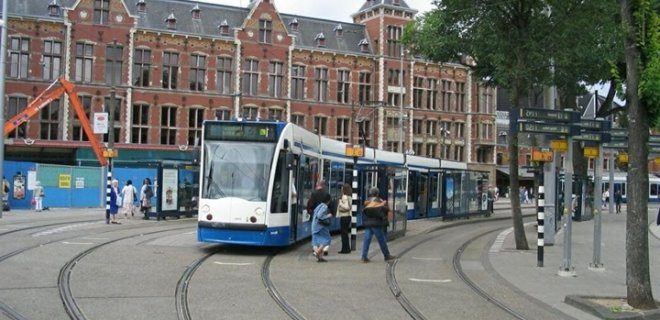
Getting there is effortless. Buses and trams run constantly through the square. If you are relying on public transport, look for these specific stops which drop you within a stone’s throw of the palace doors:
- Dam / Paleisstraat
- Dam / RaadHuisstraat
- Dam 14
It is that simple. No transfer required. No taxi ride needed. Just step off the tram and look up.
Hitting the Highlands: The Road Less Traveled
The map shrinks as you leave the coast.
Inland, the air gets thinner, sharper. This is where the real Scotland hides. Not in the postcards of Edinburgh’s castle, but in the mist-shrouded glens of the North Coast 500 ’s hinterlands. You aren’t just driving here; you’re navigating a landscape that doesn’t care if you’re late.
Take the A832 north from Ullapool. It’s a two-lane ribbon of asphalt that hugs the water, then climbs. The views are brutal in the best way. Green hills roll into grey seas. Deer stand like statues in the fog. You’ll stop. You always stop.
Where to Stay When the Rain Hits
Forget the luxury lodges for a moment. Look for the guesthouses. Small, family-run spots with names like The Croft or The Bay View. They’re everywhere in the Highlands.
Booking early is non-negotiable. Not for the big hotels, but for the B&Bs with five rooms and a host who makes proper scones. Prices range from £80 to £120 per night. It’s a steal. You get breakfast. You get a story. You get a room that smells like wool and rain.
If you’re camping, go wild camping legally. It’s allowed here with care. Find a spot away from the road. Pitch your tent. Cook on a stove. Leave no trace. But check the weather. Highland weather changes in minutes. One minute it’s sunny. The next, you’re drowning in horizontal rain.
Eating Like a Local (Without Breaking the Bank)
You don’t need a Michelin star to eat well here. You need a pub. And not just any pub. Look for the ones with a fireplace and a menu that changes based on what the hunter brought back that morning.
Cullen skink is the starter to beat. It’s a soup made from smoked haddock, potatoes, and onions. Simple. Hearty. It costs about £8. It warms you up from the inside out.
For the main course, try venison. Or haggis. Yes, it’s cliché. Yes, it’s delicious. It’s made from sheep’s pluck, oatmeal, and spices. Served with neeps and tatties. A full dinner runs £15-£20. In London, that’s a snack. Here, it’s a meal.
Drink the local beer. Ask for it by name. Munro’s or Dornoch Castle. They’re crisp. They cut through the rich food.
Activities That Don’t Feel Like Tourism
Hiking is obvious. But which hike?
Ben More Assynt is steep. It’s 999 meters high. It takes three hours up. Three down. The view from the top is a 360-degree panorama of some of the most rugged mountains in Europe. If you’re fit, do it. If you’re not, look at the pictures. Both work.
For something slower, try coastal foraging. Grab a guide. Learn which seaweed is edible. Which shells are protected. It’s a different way