


Route 66 isn’t just a highway; it’s a cultural artifact. The “Mother Road” remains a magnet for those seeking the heart of American nostalgia, where kitsch, adventure, and history collide. While mainstream attractions draw crowds, the real magic lies in the offbeat, delightfully weird roadside stops that define the Route 66 experience. Here’s a curated guide to 12 of the most unique places you’ll encounter along the way.
The Cadillac Ranch: A Canvas for Expression
Perhaps the most iconic symbol of Route 66’s eccentric spirit, Cadillac Ranch consists of ten vintage Cadillacs buried nose-first in a field just west of Amarillo, Texas. Created in 1974, this isn’t a polished tourist trap; it’s an open-air art installation. Visitors are encouraged to bring spray paint and contribute to the evolving graffiti that covers the cars. It’s free, accessible 24/7, and unapologetically raw.
Address: 13651 I-40 Frontage Road, Amarillo, TX 79124
The Painted Desert: Where Geology Meets the Open Road
Route 66 cuts directly through the breathtaking landscapes of northern Arizona, including the Petrified Forest National Park. The park’s 28-mile scenic drive offers overlooks, short hikes, and remnants of the original highway. This isn’t just a roadside distraction; it’s a reminder of the raw, natural beauty that Route 66 was built to traverse.
Address: 1 Park Rd., Petrified Forest National Park, AZ 86028
Ed Galloway’s Totem Pole Park: A Folk Art Oasis
Just off the highway near Foyil, Oklahoma, lies Ed Galloway’s Totem Pole Park – a sprawling testament to one man’s artistic vision. Built between 1937 and 1948, the park features a towering 90-foot concrete totem pole surrounded by carved figures and an eccentric museum known as the “Fiddle House.” Unlike typical roadside stops, this feels more like an immersive art experience than a quick photo op.
Address: 21300 OK-28 A, Chelsea, OK 74016
Shea’s Gas Station Museum: A Ghost of Nostalgia
Shea’s Gas Station Museum in Springfield, Illinois, is a fading relic of Route 66’s past. Originally a Texaco station from 1946 to 1982, it was later converted into a vintage museum before falling into disrepair after the owner’s death in 2013. While much of the collection has been auctioned off, the building remains a poignant pull-over spot, a reminder of the road’s fading glory. The owner occasionally opens it during special events, so checking Facebook for updates might be worthwhile.
Address: 2075 N Peoria Rd., Springfield, Illinois 62702
The Leaning Tower of Texas: A Deliberate Illusion
In Groom, Texas, the Leaning Tower of Texas is a water tower intentionally tilted to create an eye-catching illusion. Originally built to lure drivers into a now-defunct truck stop, the tower remains a popular photo op. It’s a prime example of how Route 66’s roadside attractions often blurred the line between function and absurdity.
GPS coordinates: 35.19816, -101.08190
The World’s Largest Rocking Chair: A Pointless Monument
The former world’s largest rocking chair, a 42-foot behemoth in Fanning, Missouri, is a classic example of Route 66’s penchant for the oversized and unnecessary. Its sole purpose is to attract drivers for a photo opportunity. While surpassed in size by a 56-foot chair in Casey, Illinois, the Fanning chair embodies the road’s spirit: build something ridiculous and wait for the crowds.
Address: 5957 State Hwy ZZ, Cuba, MO 65453
The World’s Largest Ketchup Bottle: A Towering Condiment
For those who prefer scale over subtlety, the 170-foot-tall ketchup bottle in Collinsville, Illinois, delivers. Built in 1949 to advertise a local ketchup plant, this water tower is a testament to mid-century novelty architecture. It’s open 24/7 and has its own website (catsupbottle.com) for the truly dedicated.
Address: 800 S. Morrison Ave, Collinsville, Illinois 62234
Roy’s Motel and Cafe: Desert Isolation and Googie Style
In the middle of the Mojave Desert, Roy’s Motel and Cafe is a striking example of Googie architecture. Built in 1938, the complex served travelers passing through the otherwise empty landscape. The motel and cafe are being restored, but the gas station and shop remain open, offering a glimpse into a bygone era.
Address: 87520 National Trails Hwy, Amboy, CA 92304
The Wigwam Motel: Sleeping in a Teepee… Sort Of
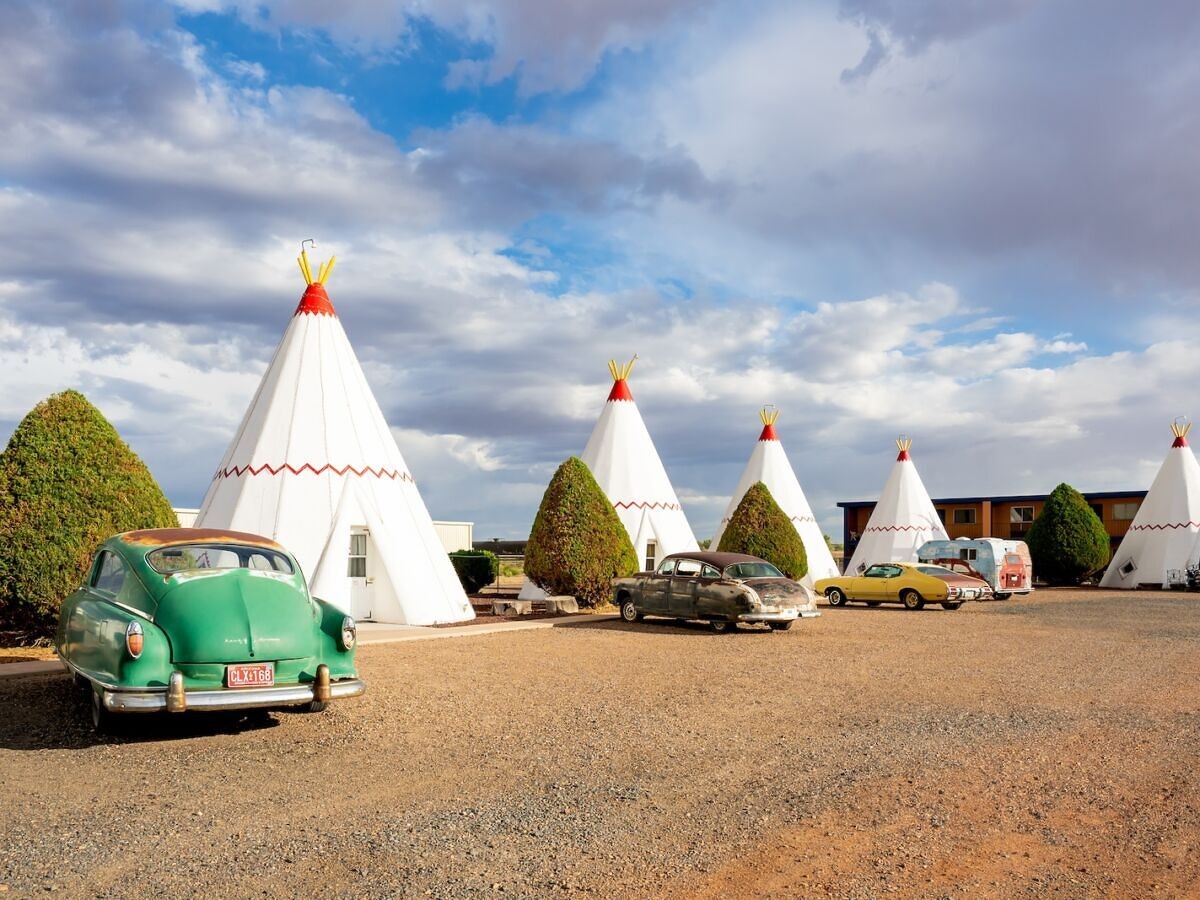
The Wigwam Motel in Holbrook, Arizona, allows guests to sleep inside concrete teepee-shaped structures. Built in 1950 as part of a small chain, it’s one of only two surviving Wigwam Motels on Route 66. The layout remains largely unchanged, offering a unique and nostalgic lodging experience.
Address: 811 W Hopi Dr, Holbrook, AZ 86025
Jack Rabbit Trading Post: The Power of Persistent Advertising
Jack Rabbit Trading Post isn’t remarkable in itself but became famous for its relentless advertising campaign. Billboards counting down the distance to the store appeared for hundreds of miles, drawing drivers in with a simple yet effective strategy. It’s a lesson in how repetition can turn the mundane into a must-see destination.
Address: 3386 U.S. Rte 66, Joseph City, AZ 86032
Red Oak II: A Reconstructed Ghost Town
Red Oak II near Carthage, Missouri, is a 60-acre site featuring relocated and restored buildings from the original Red Oak. Created by artist Lowell Davis, it’s a fully reconstructed early 1900s town, complete with a general store, gas station, and even a cemetery. Though free to visit, respecting the residents who live there is crucial.
Address: 10917 County Loop 122, Carthage, MO 64836
Shaffer’s Fish Bowl: A Desert Oasis for Goldfish
Shaffer’s Fish Bowl in Arizona is perhaps the strangest stop on this list: a small pool of water in the middle of the desert inexplicably full of goldfish. It’s a natural spring that somehow became a home for aquatic life, a bizarre anomaly that embodies Route 66’s unpredictable charm.
GPS coordinates: 35.0386°N 114.35662°W
Route 66’s lasting appeal lies in its refusal to conform. These quirky stops aren’t just roadside attractions; they’re fragments of American subculture, preserved in concrete, steel, and the occasional goldfish bowl. Whether you’re seeking kitsch, nostalgia, or simply a good story, the Mother Road delivers.


